+86 13638632902
 Jason@cleanroomequips.com
 MENU
MENU
Fire stopping is the final line of defense in any building. In a cleanroom, an unsealed penetration can rapidly transport large quantities of smoke at high velocity through the various zones of the facility. In a matter of minutes, that smoke can penetrate through adjacent cleanrooms and compromise both the fire stopping and the air quality rating (i.e. iso classification) of the space. In selecting a Cleanroom Fireproofing material, specifiers and facility managers are faced with a dual criterion: the material must have appropriate fire-resistance, as well as low particle and VOC emissions. Unfortunately, many firestop products on the market fail to meet one or both of these criteria. This article will serve as a guide for the cleanroom firestop material selection process as well as for the cleanroom sealing process for various penetration types.
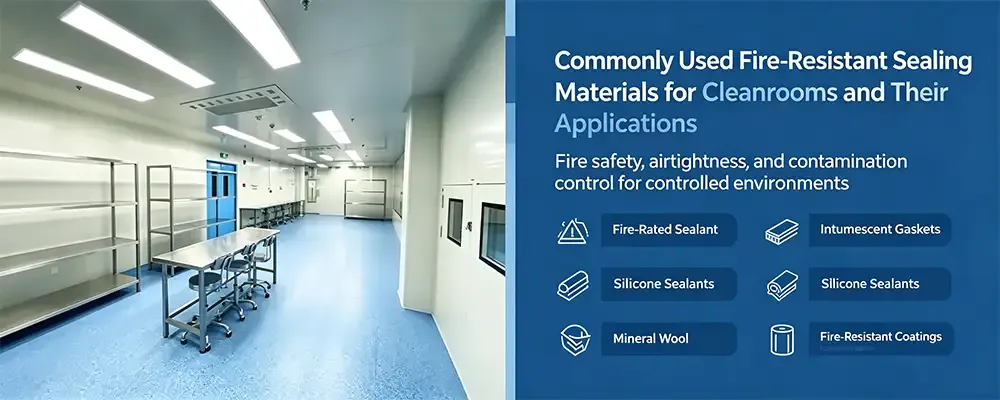
Why fire-stopping in cleanrooms is different
Typical passive fire-stopping solutions are designed and tested under standard indoor environment conditions. Cleanroom Fireproofing however is governed by two independent disciplines – the iso 14644-1 through -14 requirements for control of airborne particles and the NFPA 101, IBC Chapter 7 and EN 13501-1/-2 requirements for fire-resistance of building components. The fundamental conflict exists within the material’s chemistry where typical intumescent seal fire-stopping materials off-gas VOC’s typically in excess of 50 µg/m³ and also shed particles down to 0.5 µm at rates that would breACH the ISO Class 6/7 requirements for particulate clean room levels. Conversely Cleanroom Sealing solutions require to maintain a barrier to prevent leakage of less than 0.5 L/s·m² at 50 Pa and in the same area also achieve a 2-hour F-rating when tested in accordance with the UL 1479 test for fire-stopping of air and structural cavity penetrations.
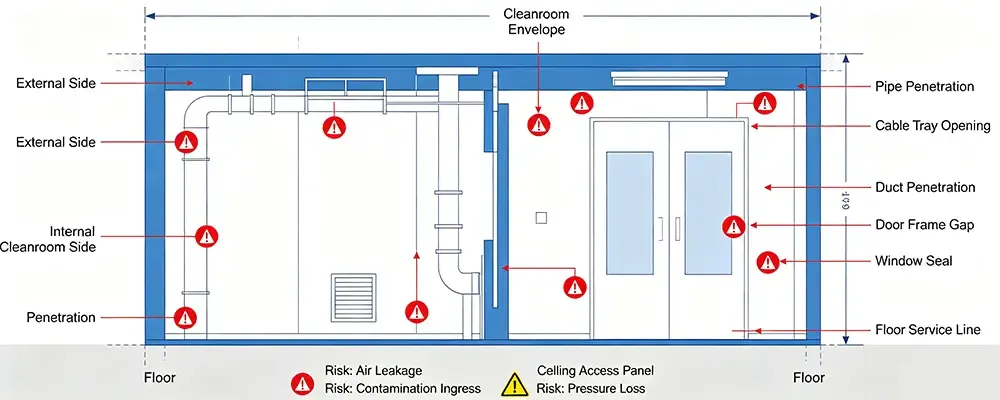
Cleanroom enclosure with penetration risk points (schematic)
These specialized materials are also subject to constraints related to ESD, surface resistivity (greater than 10⁶Ω/sq typically) and chemical resistance to solutions such as 70% IPA, 6% H₂O₂ vapor and quaternary ammonium compounds used for surface disinfection.
Importantly, a Cleanroom Fireproofing Material that degrades as a result of typical quarterly VPHP (virial phenoxyethanol-based) sanitizing cycles will fail, notwithstanding a UL rating for a similar material used in non-cleanroom fire protection applications. Deiiang™ has conducted numerous field surveys of cleanroom penetrations and notes that 35% or so of all such penetrations that are non-compliant fail due to reasons related to chemical incompatibility, as opposed to the fire-protection-related failure.
Codes, standards and test methods to know
Cleanroom Fireproofing can present challenges of the various governing regulations for fire-stopping penetrations through fire-resistance rated construction appearing to be mostly duplicative in their intent. For North America penetration fire-stopping is governed by NFPA 101/70/90A and IBC Section 714. The test method for determining the F-rating and T-rating for penetration fire-stopping is UL 1479 (ASTM E814).
Within the cleanrooms space specific products have been specified based on the requirements of FM 4910, requiring a product to have a Flame Propagation Index ≤ 6 and Smoke Damage Index ≤ 0.4, many of these products having been specified by the insurers of the owners and operators of these facilities. In Europe EN 13501-1/-2 classifications are used for Classifying Fire Resistant Products and confirmation that such products have been appropriately certified is confirmed by inspection of the ETA/DoP documentation.
China governing regulations for fire-resistance include GB 8624 (B1, A2-s1,d0) for General Building Components, GB/T 9978 for Penetration Fire-Stops and GB 50016 for Design of Buildings of Non-Composite Construction.
Third-party test report with system number (UL / ETA / CCCF)
SDS/MSDS + low-VOC / ionic contamination reports
Installation guide with penetration detail drawings
Ongoing maintenance & inspection plan
Common fire-stopping materials for cleanrooms and where they fit
Selecting appropriate Cleanroom Fireproofing Materials means matching physical properties to both fire-resistance demand and洁净 environmental constraints. Below are six core categories validated by Deiiang™ through dual ASTM E814 / ISO 14644-14 testing.
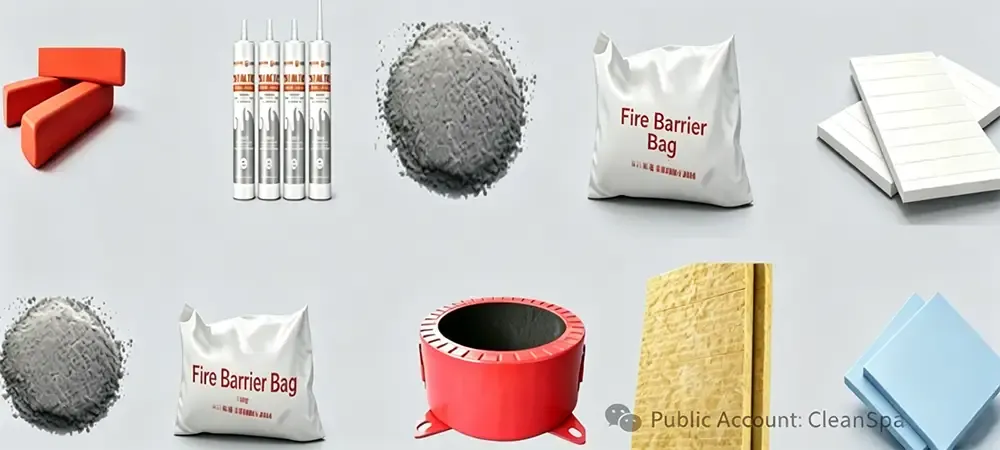
Intumescent sealants (expansion-type)
These sealants expand 3×–8× volumetrically above 200°C, forming an insulating char. Suitable for annular gaps of 6–30 mm around cable bundles and small metallic pipes.
Key concerns: TVOC < 100 g/L; halogen-free formulation preferred for semiconductor fabs; cured surface must withstand IPA wipe-down without particle release > 50 particles/m³ (≥ 0.5 µm) per ISO 14644-14.
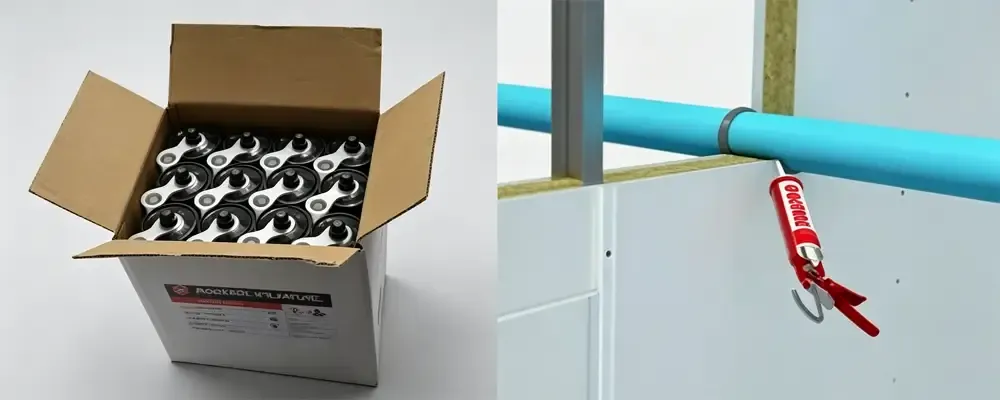
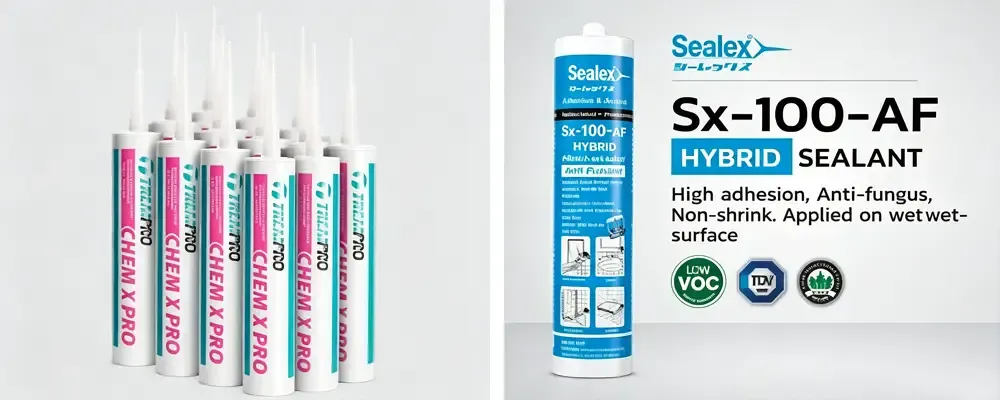
Silicone / Hybrid low-VOC sealants
For envelope perimeter joints—wall-to-ceiling interfaces, window frames, panel seams—low-VOC silicone achieves emissions below 30 µg/m³ at 24h (ASTM D5116), suitable for iso class 5–7.
Key concerns: Resistance to 6% H₂O₂ vapor and 70% IPA; ESD variants with volume resistivity 10²–10⁴ Ω·cm; ±25% minimum movement capability per ASTM C920.
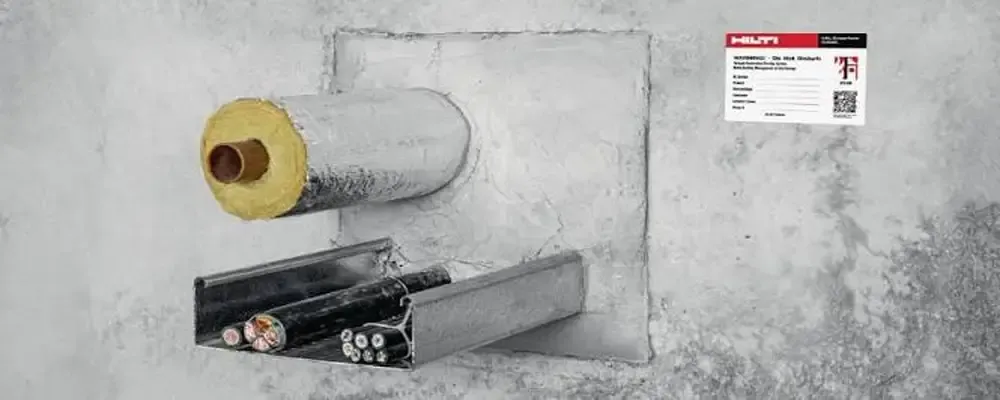
Firestop mortars & putties
For large openings (> 0.2 m²), cementitious mortars provide compressive strength > 20 MPa; intumescent putties remain pliable for future cable additions. Shrinkage must stay below 0.5% linear to prevent perimeter cracking that traps particles.
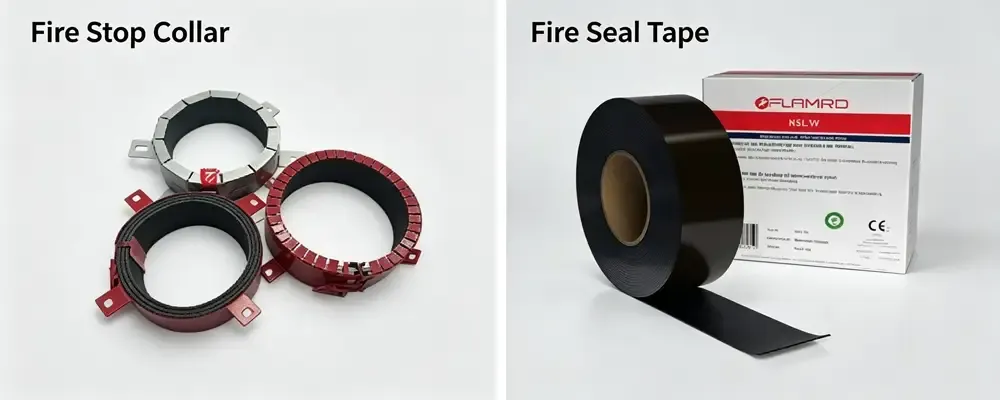
Firestop pillows, collars, wraps
Re-enterable solutions for frequently modified cable bundles and combustible plastic pipes. Pillows require 15–20% compression overfill; collars activate at 150–180°C pipe collapse temperature.
Key concerns: Non-shedding silicone-coated fiberglass casings; exact UL system matching; individually labeled pillows for ISO audit traceability.
FM 4910-compliant wall/ceiling liners & panels
For interior surfaces in iso 5–7 cleanrooms: FPI ≤ 6, SDI ≤ 0.4. Deiiang™ panel systems achieve FPI < 3 and SDI < 0.2 with non-combustible mineral cores and PET-laminated surfaces.
Cleanroom tapes & gaskets (low-particle)
For micro-gaps at panel joints and HEPA housings: total mass loss < 1.0% (ASTM E595), ion contamination < 1.0 µg/cm² chloride, UL 94 V-0/V-1 rated.
| Material | Application Zone | Fire Rating | Cleanroom Focus | Key Standards |
|---|---|---|---|---|
| Intumescent Sealant | Cables, small pipes | Up to 3h | Low VOC, halogen-free | UL 1479, ISO 14644-14 |
| Silicone/Hybrid Sealant | Joints, frames | Up to 2h | ≤30 µg/m³, ESD variants | ASTM C920, ISO 11600 |
| Mortar/Putty | Large openings | Up to 4h | Low shrink, dust-free | UL 1479, EN 1366-3 |
| Pillows/Collars | Re-enterable trays | Up to 3h | Non-shedding casing | UL 1479, ASTM E814 |
| FM 4910 Panels | Wall/ceiling liners | FPI≤6, SDI≤0.4 | ESD, chemical resist | FM 4910, ASTM E84 |
| Tapes/Gaskets | Micro-gaps, HEPA | UL 94 V-0 | <1 µg/cm² ions | ASTM E595, IEST-RP-CC005 |
| Material | Application | Fire Rating | Cleanroom Key |
|---|---|---|---|
| Intumescent Sealant | Cables, small pipes | Up to 3h | Low VOC, halogen-free |
| Silicone/Hybrid | Joints, frames | Up to 2h | ≤30 µg/m³, ESD |
| Mortar/Putty | Large openings | Up to 4h | Low shrink, dust-free |
| Pillows/Collars | Re-enterable trays | Up to 3h | Non-shedding |
| FM 4910 Panels | Wall/ceiling | FPI≤6, SDI≤0.4 | ESD, chemical resist |
| Tapes/Gaskets | Micro-gaps, HEPA | UL 94 V-0 | <1 µg/cm² ions |
Always pair the fire-resistance system number (e.g., UL System W-L-XXXX) with clean compatibility data when submitting for review. A listed system without particle/VOC verification is insufficient for ISO-classified environments.
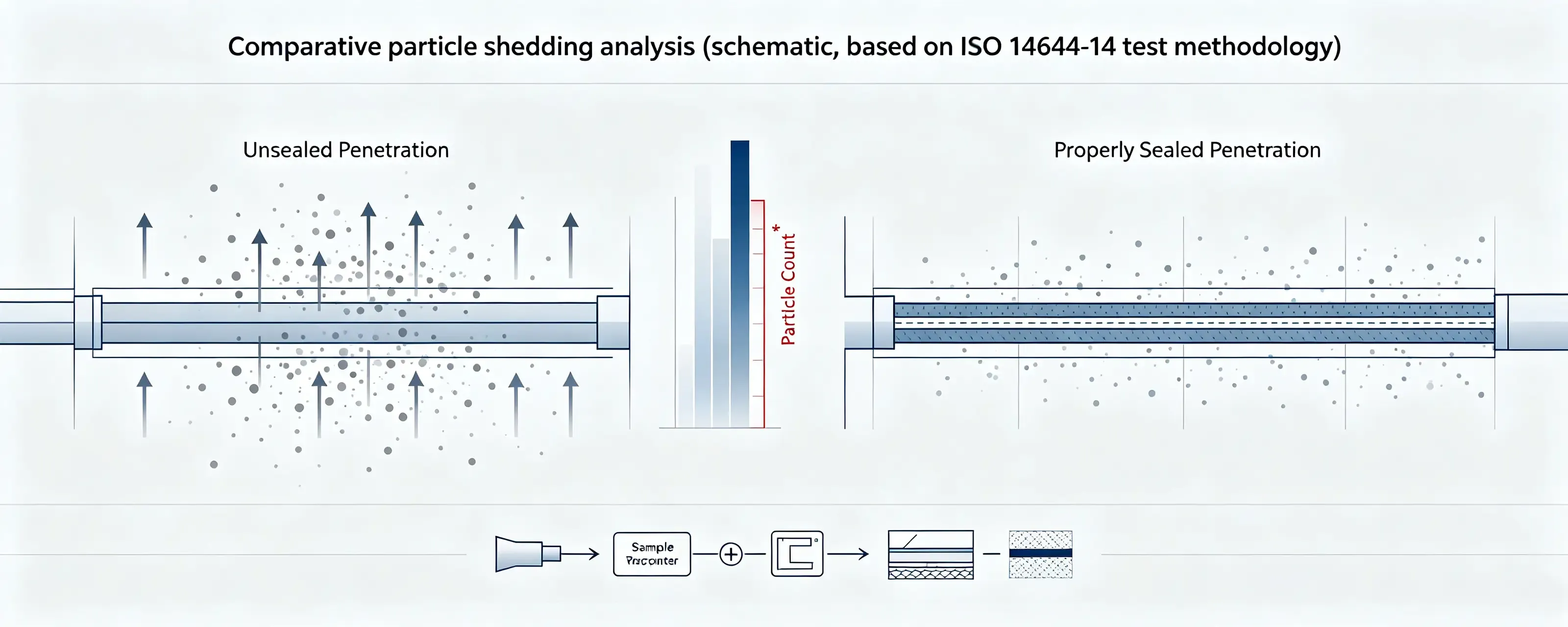
Comparative particle shedding analysis (schematic, based on ISO 14644-14 test methodology)
Cleanroom sealing: achieving airtightness without compromising fire rating
The conflict between Cleanroom Sealing and fire-stop performance is one of the greatest challenges in construction today. Seals in Pharmaceutical iso 7 cleanrooms require 15–30 Pa of pressure to maintain a clean environment and are allowed to leak only 0.3 L/s·m² at 50 Pa. Semiconductor wafer manufacturing ballrooms are typically designed to maintain ≤ 0.05 ACH. Each seal is expected to stop rated fire-size opening, and perform as cleanroom seal. Deiiang™ advocates that all penetration seals be tested with smoke pencil prior to occupation of the space, and that quantitative testing with blower-door be completed prior to installation of tool. Retroactive sealing of installed tools can run upwards of $12,000 per linear meter of seal when considering cost of lost production time.
Three-sided adhesion: Bond to two opposing surfaces only; use backer rod or bond-breaker tape on the third side to prevent cohesive splitting.
Minimum lap width: ≥ 25 mm for flexible membrane-to-rigid substrate overlaps at penetration perimeters.
Corner detailing: 45° fillet profile with ≥ 6 mm leg length to distribute stress concentrations.
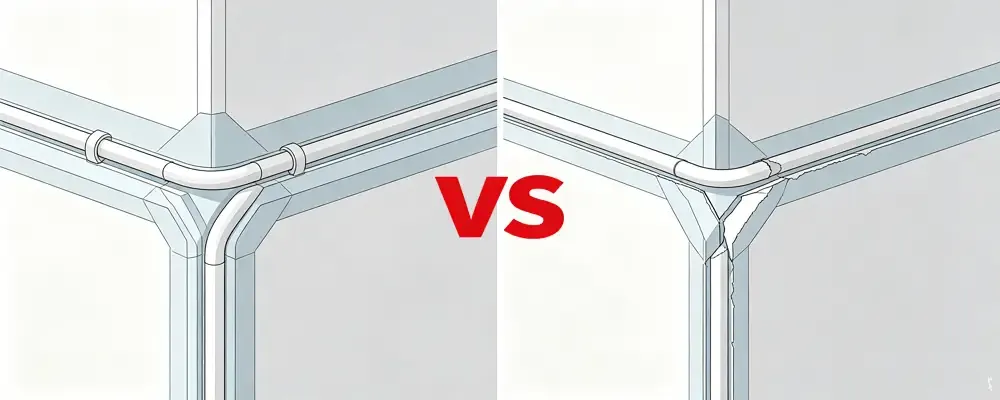
Correct vs. incorrect penetration sealing detail
Typical mistakes with sealants are that they are applied only as a surface ‘beauty bead’, with no depth to them, no backer rod and then adhered to three surfaces. They typically fail after 6–12 months due to cohesive failure. This can be contrasted with correct applications where sealants are used as full-depth annular fills with a backer rod at mid-depth and then a bond-breaker tape applied over the joint before it is tooled into a concave form to shed cleaning agents rather than to pool them. Quantifiable leakage figures can be obtained from relevant test work, e.g. SMACNA or EN 12207.
Deiiang™ product data that specifiers care about
When evaluating Cleanroom Fireproofing Materials from Deiiang™, request the following independently verified data points. All values are representative and should be confirmed against the latest TDS and third-party reports for the specific SKU.
| Data Point | Test Method | Typical Deiiang™ Value | Relevance |
|---|---|---|---|
| Flame Spread Index | ASTM E84 | ≤ 25 | Interior finish, insurance |
| Smoke Developed Index | ASTM E84 | ≤ 50 | HEPA/ULPA filter protection |
| Fire Resistance | UL 1479 / ASTM E814 | 1h, 2h, or 3h | Barrier rating match |
| FM 4910 FPI / SDI | FM 4910 | FPI < 3, SDI < 0.2 | Cleanroom material qualification |
| Particle Release (≥0.5 µm) | ISO 14644-14 | < 50 particles/m³ | ISO Class 5–7 verification |
| TVOC Emission (24h) | ISO 16000 / ASTM D5116 | < 30 µg/m³ | AMC control in fabs |
| IPA Compatibility (100h) | Immersion test | < 5% hardness change | Wipe-down durability |
| H₂O₂ Vapor Resistance | 6% VPHP, 50 cycles | No visible degradation | Aseptic suite compatibility |
| Surface Resistivity (ESD) | ANSI/ESD STM11.11 | 10⁶–10⁹ Ω/sq | EPA conformance |
Deiiang™ case studies
EU New Build, EN 13501-2 EI 60 + FM 4910
A pharmaceutical facility in Ireland required dual EI 60 / FM 4910 compliance. Deiiang™ delivered a complete DoP + ETA + FM 4910 report package, reducing the submittal review cycle from a projected 6 weeks to 10 business days—the only supplier providing single-point fire +洁净 technical review.
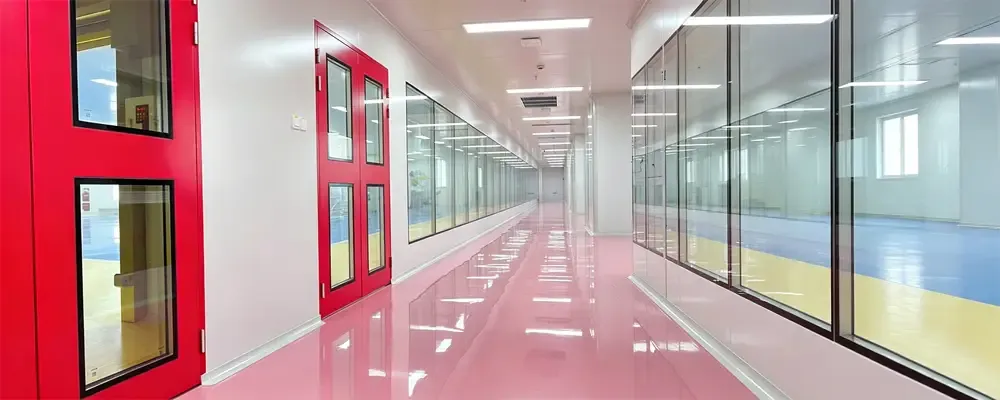
Implementation checklist
FAQs
Q: Is intumescent sealant safe for cleanroom use?
A: Yes, if the specific formulation has documented ISO 14644-14 particle data, TVOC < 100 g/L, and halogen-free chemistry. Allow ≥ 48-hour cure with ventilation before洁净 recertification.
Q: What's the difference between fire stopping and cleanroom sealing?
A: Cleanroom Fireproofing prevents flame/hot gas passage during fire events (tested per UL 1479). Cleanroom Sealing controls ongoing air leakage and particle ingress under normal operating pressure differentials. A comprehensive solution satisfies both simultaneously.
Q: How to document UL system compliance in submittals?
A: Submit the complete UL system number, listing certificate, manufacturer's installation instructions, material batch numbers, and the ISO 14644-14 test report. Deiiang™ provides all documents in a single indexed submittal package.
Micro-Glossary
References
NFPA 101: nfpa.org/nfpa-101
IBC: iccsafe.org/ibc
UL 1479: ul.com/ul-1479
ASTM E814: astm.org/e0814
FM 4910: fmglobal.com/fm-approvals
ISO 14644-14: iso.org/standard/54096
EN 13501-1: en-standard.eu/bs-en-13501-1
GB 8624: chinesestandard.net/GB8624
GB 50016: chinesestandard.net/GB50016
ASTM E84: astm.org/e0084
ASTM E595: astm.org/e0595
SMACNA: smacna.org/manuals
Deiiang™ Resources: deiiang.com