+86 13638632902
 Jason@cleanroomequips.com


 MENU
MENUISO 7 CleanRoom
An ISO Class 7 cleanroom is a controlled environment defined by the ISO 14644-1 standard, which limits the concentration of airborne particles to ensure a clean and controlled atmosphere.
1.Particulate Limit:
The cleanroom must have no more than 352,000 particles per cubic meter (or 10,000 particles per cubic foot) for particles 0.5 microns or larger.
2.Air Changes per Hour (ACH):
ISO Class 7 cleanrooms typically require 30 to 60 air changes per hour (ACH). This helps to maintain the cleanliness of the room by continuously filtering and replacing the air to control particle contamination.
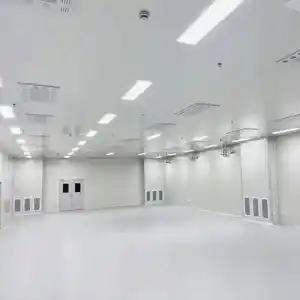
ISO Class vs. FED STD 209E Equivalent
| ISO Class | Maximum Particles/m³ | FED STD 209E Equivalent | |||||
|---|---|---|---|---|---|---|---|
| ≥0.1μm | ≥0.2μm | ≥0.3μm | ≥0.5μm | ≥1μm | ≥5μm | ||
| ISO 1 | 10 | 2 | |||||
| ISO 2 | 100 | 24 | 10 | 4 | |||
| ISO 3 | 1,000 | 237 | 102 | 35 | 8 | Class 1 | |
| ISO 4 | 10,000 | 2,370 | 1,020 | 352 | 83 | Class 10 | |
| ISO 5 | 100,000 | 23,700 | 10,200 | 3,520 | 832 | 29 | Class 100 |
| ISO 6 | 1,000,000 | 237,000 | 102,000 | 35,200 | 8,320 | 293 | Class 1,000 |
| ISO 7 | 352,000 | 83,200 | 2,930 | Class 10,000 | |||
| ISO 8 | 3,520,000 | 832,000 | 29,300 | Class 100,000 | |||
| ISO 9 | 35,200,000 | 8,320,000 | 293,000 | Room Air | |||
Comparison Table: GMP / ISO / FED
| Grade | China GMP / Europe GMP | ISO 14644-1 | FED STD 209E | |||||
|---|---|---|---|---|---|---|---|---|
| Static | Dynamic | |||||||
| ≥0.5μm | ≥5μm | ≥0.5μm | ≥5μm | Static | Dynamic | Static | Dynamic | |
| A | 3,520 | 20 | 3,520 | 20 | ISO 5 | ISO 5 | 100 | 100 |
| B | 3,520 | 29 | 352,000 | 2,900 | ISO 5 | ISO 7 | 100 | 10,000 |
| C | 352,000 | 2,900 | 3,520,000 | 29,000 | ISO 7 | ISO 8 | 10,000 | 100,000 |
| D | 3,520,000 | 29,000 | - | ISO 8 | - | 100,000 | - | |
Ventilation Times (ACH)
| ISO Class | ACH (Air Changes Per Hour) |
|---|---|
| ISO 3 | 360 - 540 |
| ISO 4 | 300 - 540 |
| ISO 5 | 240 - 480 |
| ISO 6 | 50 - 60 |
| ISO 7 | 30 - 40 |
| ISO 8 | 15 - 25 |
ISO Class 7 Clean Room Airflow
|
|
|
|
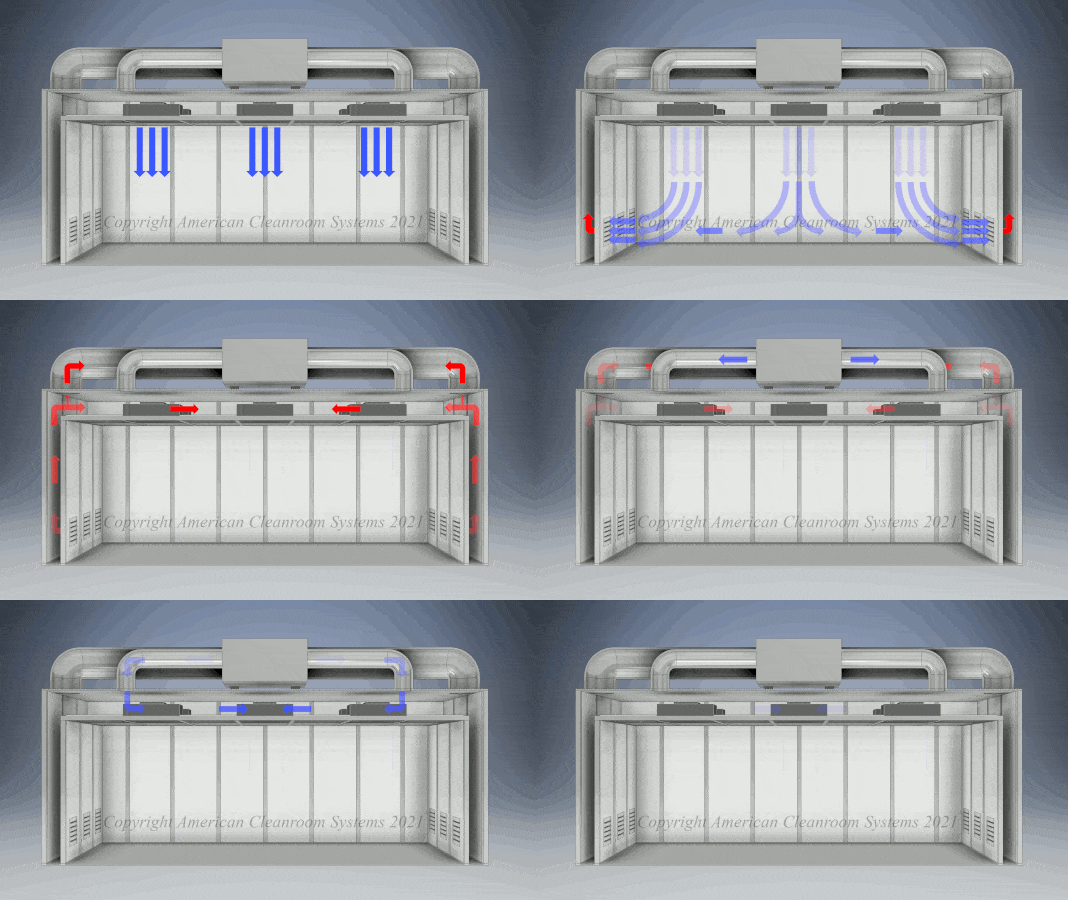
Air supply: The air treated by the air conditioner is sent to the return air layer
Air filtration: The air is deeply filtered through HEPA or ULPA filters.
Air distribution: Laminar flow or mixed flow is used.
Air return: 15% of the return air returns to the air conditioner.

FFU fan: External air is driven by the FFU fan.
Air filtration: Deeply filtered through HEPA or ULPA filters.
Air distribution: Laminar flow or mixed flow.
Air exhaust: Discharged through pressure relief valve or floor elevated layer.
ISO Class 7 Clean Room wall
|
|
|
|
|
|
Clean Room Wall
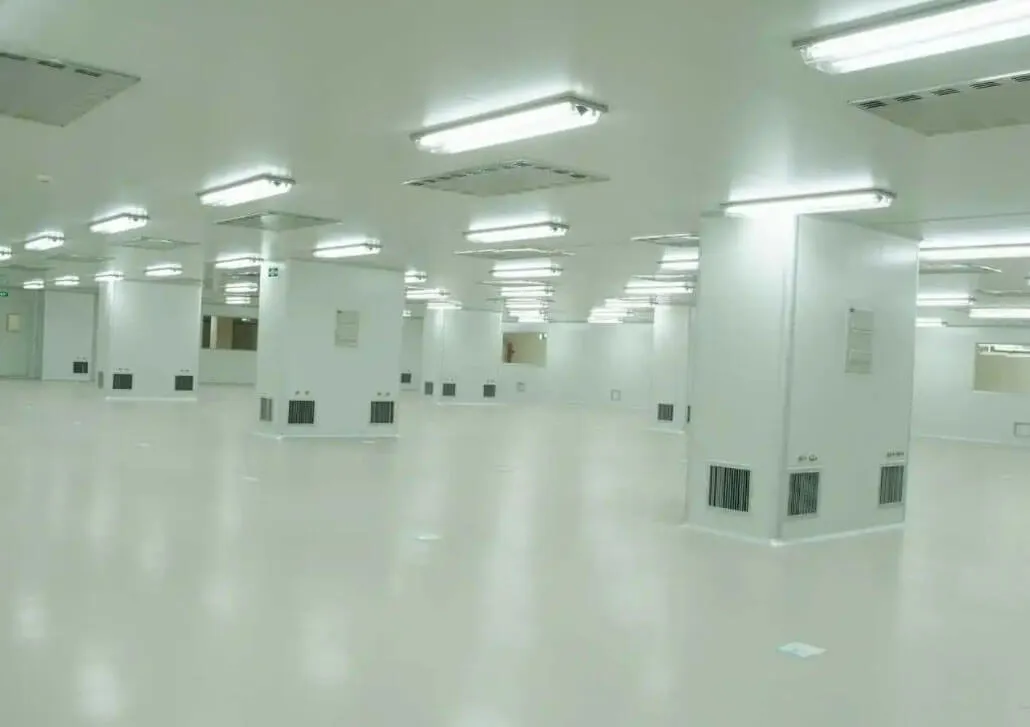
Size/Appearance: Meets design requirements, no defects.
Physical properties: Strong compression, tension, and impact resistance.
Surface: Smooth, uniform coating, no bubbles.
Tests: Fire and corrosion resistance.
Clean Room Door
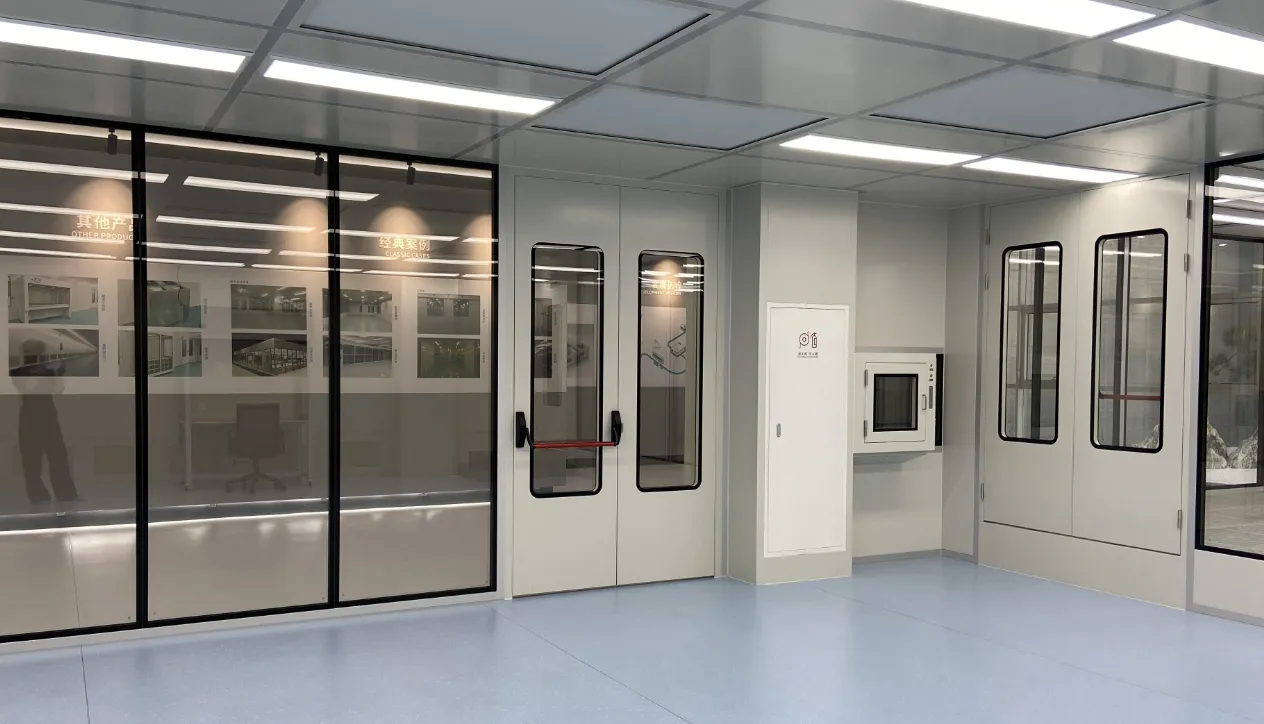
Steel standard: High-quality, corrosion-resistant steel.
Surface treatment: Anti-rust treatment (spraying/anodizing).
Insulation: Polyurethane or rock wool core.
Process: Standardized cutting, welding, and painting.
Clean Room Window
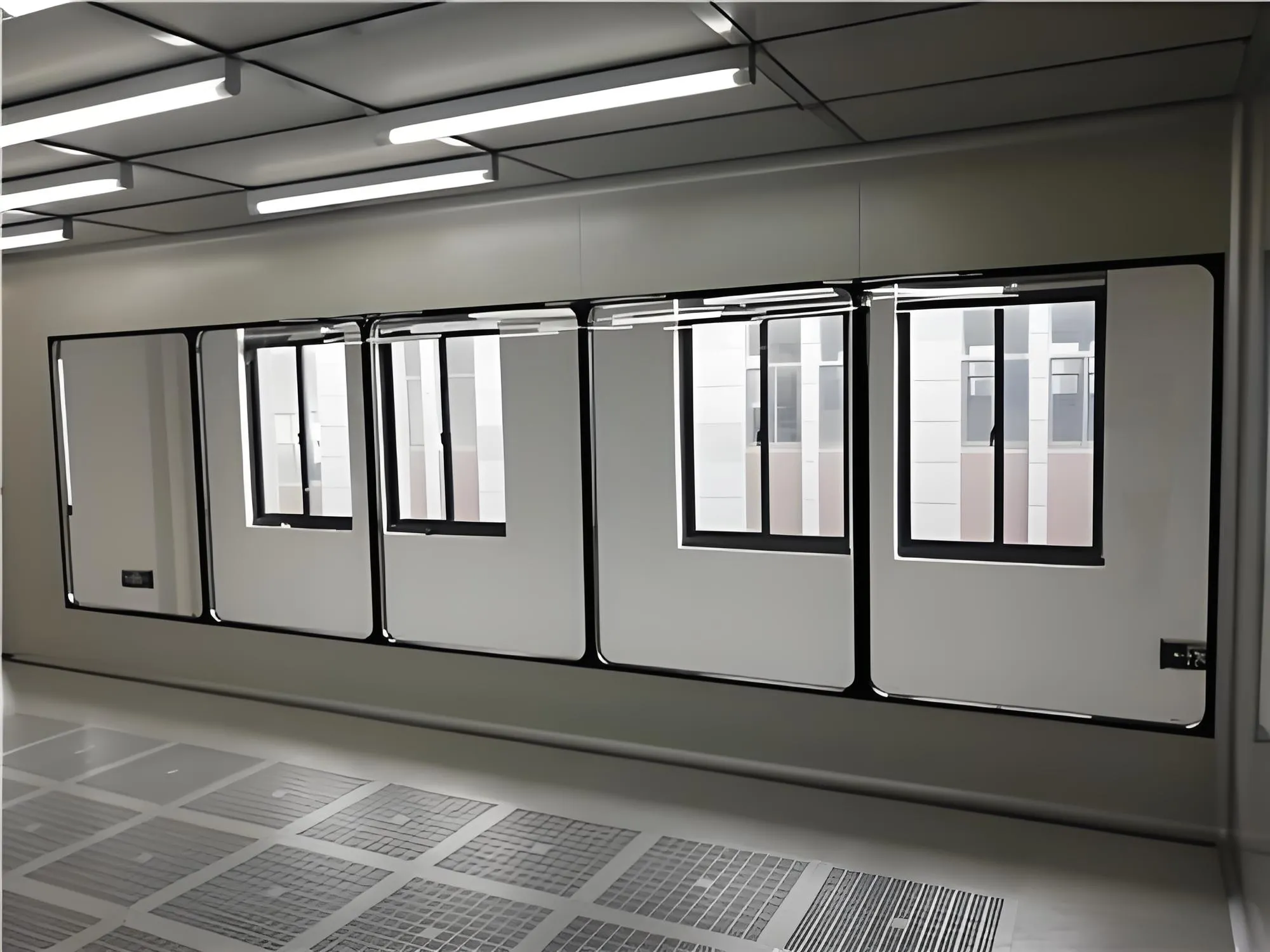
Steel standard: High-quality national/international standard steel.
Surface treatment: Anti-rust for durability.
Insulation: Polyurethane or rock wool.
Process: Strictly standardized production.
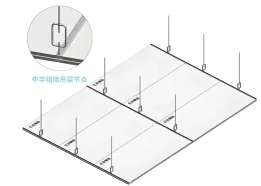
ISO Class 7 Clean Room Celling
 |  |  |  |
|
| ||
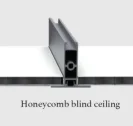
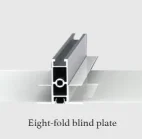
Specifications: Thickness: 980, 1180; Panel: 50/75/100mm
Materials: Color-coated steel, stainless steel, rock wool, etc.
Features: 0.8 thick galvanized steel keels, heavy-duty hanging beam system.
Maintenance: Easy partial replacement, low cost.
Application: Food, medicine.
ISO Class 7 Clean Room Floor
 |  |  |
| ||
 |  |  |
| ||
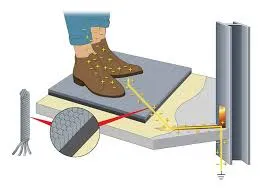
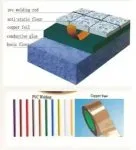
PVC Flooring & Features
Flexibility: Good impact resistance.
Anti-slip: Surface treated for safety.
Easy to install: Roll or tile form.
Diversity: Various colors and textures.
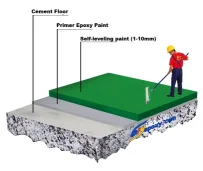
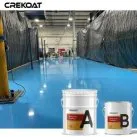
Resin & Self-Levelling
Seamless: No dust/bacteria accumulation.
Chemical resistance: Withstands cleaning agents.
Easy to clean: Smooth surface for easy maintenance.
FAQ
An ISO Class 7 cleanroom regulates particle contamination in a controlled environment. These types of cleanrooms are used in industries such as pharmaceuticals and electronics where small airborne particles can contaminate a product. A cleanroom has a continuous air flow and a controlled environment to provide a low-contamination area to produce a product.
In a Class 7 cleanroom, the pressure is always set to positive pressure in relation to the surrounding area. Setting it to positive pressure prevents contaminants from entering the cleanroom. When the doors or other sealed openings are open, the air in the cleanroom flows out so that the particles remain in the surrounding area.
The guidelines for cleanrooms in the ISO standards are described in the ISO 14644 series. These standards cover the design, construction and operations of cleanrooms and associated controlled environments. These guidelines allow cleanrooms to achieve a specified level of cleanliness and support various industries such as pharmaceuticals, electronics, biotechnology, and aerospace.
The temperature for an ISO Class 7 cleanroom is generally 18°C to 22°C (64°F to 72°F). Exactly controlling the temperature helps prevent static build-up, condensation, and discomfort for the people working in the cleanroom. The temperature and humidity control help to maintain the cleanliness and the quality of the products manufactured in the cleanroom.
An ISO Class 7 cleanroom controls the airborne particles as well as the temperatures, humidities, and pressures of the room. It is used by industries that need better contamination control than what is provided by the higher-class cleanrooms (ISO Classes 5 and 6). Filtration and control of the air and environment, as well as the protocols of the personnel, determine the longevity of the integrity of the cleanroom.
An ISO 7 cleanroom is equivalent to Class 10,000 (US Federal Standard 209E) and Class D (GMP) cleanrooms. It is also equivalent to JIS B 9920 Class 7 in Japan. These equivalences are based on the particle concentration limits, air cleanliness, and general cleanliness of the systems used worldwide. It should be noted that different standards may set additional operational criteria. Therefore, it is always necessary to consult the specific regulatory or industry standards for the cleanroom in question.
Gowning is a method of controlling contamination by personnel in ISO Class 7 and Class 8 cleanrooms. The gowning procedures for the two classes are similar, with full-body coverage, gloves, a face mask, and shoe covers required in both. As expected, the ISO Class 7 gowning procedures are more strict, but the objective of personal protective equipment (PPE) gowning is to prevent personnel from introducing contamination to the cleanroom, and is achieved by similar means in both classes.
Between 30 to 60 air changes per hour (ACH) are required for a cleanroom, but may vary with the specific class and requirements.
The required air changes per hour (ACH) for an ISO 7 cleanroom is in the range of 20 to 30 ACH. This supports adequate ventilation and dilution of particles to help achieve the ISO Class 7 standard, which allows for 352,000 particles per cubic meter (≥ 0.5 microns). It is seen that an air change rate in the range of 20 to 30 ACH helps achieve the desired control of particulate and efficient airflow. Higher air change rates may improve the quality of the air in the cleanroom, but the minimum air change rate is typically in the range of 20 to 30 ACH.