wap_menu MENU
X
Trusted by
companies like
FLIR Logo 1
electrolux Logo 3
abb Logo 4
bmw Logo 5
i-dent Logo 6
SINOPEC Logo 7
CATL Logo 8
INOVANCE Logo 9
EVE Logo 10
HONDA Logo 11
FOXCONN Logo 12

Core Parameters of Semiconductor Cleanroom

Core Parameters of Semiconductor Cleanroom
ISO 14644 Cleanroom Class: ISO 1–7 (Typical Fab: ISO 3–5)SEMI Standards Compliance (SEMI S2 / S8 / F21, etc.)
HEPA / ULPA Filtration: H14–U16, ≥99.995% @ MPPSUnidirectional / Non‑Unidirectional Airflow Design (Laminar / Turbulent)
Air Change Rate (ACH): 200–600+ for Critical Process AreasTemperature Control: 20–24 °C, ±0.5 °C; Humidity: 40–55% RH, ±5% RH
Pressure Differentials: 10–30 Pa Between Zones (Cascade Design)Airborne Molecular Contamination (AMC) Control: Acid/Base/Organic Filters
ESD Control: Conductive Flooring, Grounding, Ionization SystemsVibration & Noise Control: Tool Pads and Low‑Vibration Structural Design

Fast, Integrated Semiconductor Cleanroom Design & Build Partner.

20+ Years,                           1M+ m² Cleanrooms        
300+ Fabs
Front-end & back-end semiconductor projects delivered.
Top
Trusted by leading global IDMs & foundries.

Applicable industries and scenarios

Tackle the toughest semiconductor cleanroom challenges—from extreme contamination control and AMC mitigation to ultra-stable temperature, humidity, and vibration environments for advanced nodes.

Particle contamination icon

Particle & AMC Contamination

Nanoscale particles and airborne molecular contamination (AMC) from tools, chemicals, and people cause pattern defects and yield loss. Deiiang combines ULPA/HEPA, AMC filtration, optimized airflow, and zoning to keep ISO Class 3–5 areas in tight control.

Environment stability icon

Environmental Stability & Yield Drift

Small temperature, humidity, or pressure fluctuations shift CD, overlay, and film properties at advanced nodes. Our data-driven HVAC design, cascade pressure schemes, and precise controls deliver ultra-stable environments with integrated monitoring.

Vibration control icon

Tool Vibration & Lithography Sensitivity

External vibration and structural resonance degrade scanner performance, causing line-edge roughness and overlay errors. Deiiang uses vibration-isolated slabs, structural damping, and optimized tool pad design to protect critical lithography bays.

ESD icon

Electrostatic Discharge (ESD) Failures

Charge buildup on floors, tools, and operators silently damages sensitive devices, driving up latent failure rates. Our ESD-safe flooring, grounding networks, ionization systems, and procedures form a complete ESD control solution for fabs.

Airflow and pressure icon

Cross-Zone Airflow & Pressure Control

Mismanaged pressure cascades and airflow patterns pull contamination from grey to ultra-clean zones. Deiiang engineers room classifications, door schemes, and active pressure control to maintain robust cascades and prevent backflow events.

Compliance and monitoring icon

Compliance & Continuous Monitoring

Meeting ISO 14644, SEMI, and customer audits is difficult without reliable data and documentation. We provide integrated particle, AMC, and environmental monitoring, alarm management, and full IQ/OQ/PQ documentation to streamline compliance.

Our Semiconductor Cleanroom Solution

Cleanroom Engineering

Process-Driven Cleanroom Engineering

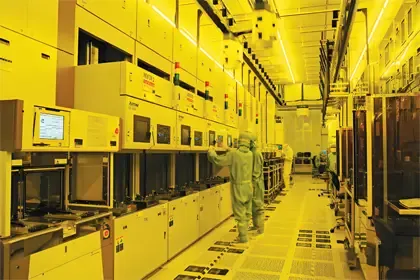
We design semiconductor cleanrooms starting from your process flow, tool set, and yield targets, ensuring every bay, chase, and sub‑fab area supports stable, scalable production.

Learn More
  • Fab / sub‑fab integration for tools, utilities, and service corridors

  • ISO 14644 & SEMI compliant layouts for front‑end and back‑end fabs

  • BIM & CFD‑validated airflow and capacity planning

Semiconductor production.webp
AMC Control

Advanced Contamination & AMC Control

Deiiang engineers filtration and airflow based on real fab risks, combining particle, AMC, and ESD control to protect critical steps like lithography, etch, and deposition.

Learn More
  • HEPA / ULPA filtration up to ISO Class 3 for critical areas

  • AMC filters targeting acids, bases, and organic contaminants

  • ESD‑safe materials, flooring, and grounding systems

Semiconductor cleanroom maintenance.webp
Energy Optimization

Precision Environment & Energy Optimization

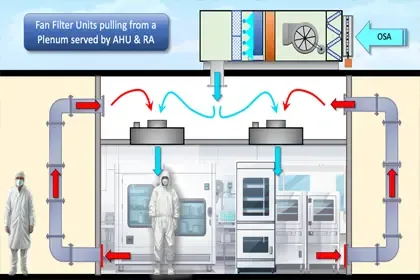
We balance ultra‑tight temperature, humidity, and pressure control with long‑term operating cost, using data‑driven HVAC design and high‑efficiency equipment selection.

Learn More
  • Stable temperature and humidity for sensitive process tools

  • Pressure cascade zoning for clean and grey areas

  • High‑efficiency FFUs and VAV control for energy savings

Semiconductor Cleanroom HVAC + AHU System.webp
Modular Construction

Modular Construction & Fast Ramp-Up

Using prefabricated modules and standardized interfaces, Deiiang shortens construction, simplifies tool hook‑up, and leaves a clear path for phased capacity expansion.

Learn More
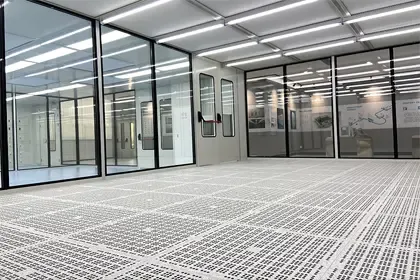
  • Modular walls and ceilings for rapid installation

  • Flexible bay‑and‑ballroom cleanroom layouts

  • Tool hook‑up ready utilities and interfaces

Modular assembly cleanroom completion effect.webp
Compliance, Validation

Compliance, Validation & Lifecycle Service

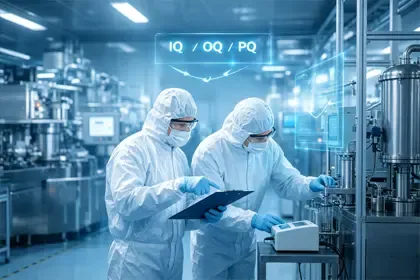
Our team supports qualification, audits, and ongoing optimization with documented procedures, periodic testing, and long‑term maintenance to keep your fab within spec.

Learn More
  • IQ / OQ / PQ and ISO 14644 cleanroom testing

  • SEMI and EHS documentation for audits and approvals

  • Preventive maintenance and performance monitoring plans

IQ : OQ : PQ and ISO 14644 cleanroom testing.webp

Technical Resources

Total 0 resources

Fast, Integrated Semiconductor Cleanroom Design & Build Partner.

20+ Years,                           1M+ m² Cleanrooms        
300+ Fabs
Front-end & back-end semiconductor projects delivered.
Top
Trusted by leading global IDMs & foundries.

Design Review and Approval Ensure the design meets all required specifications. Site Preparation Prepare the location for installation, including structural supports and HVAC infrastructure. Cleanroom Structure Construction Install walls, ceilings, floors, and doors using the specified materials. HVAC and Filtration Systems Install HEPA/ULPA filters, air ducts, and ventilation systems to ensure proper airflow and contamination control. System Testing and Calibration Verify that all systems (temperature, humidity, airflow) are working as designed. Final Inspection and Certification Ensure compliance with international standards such as ISO 14644-1 before the cleanroom is operational.

Learn more about Deiiang cleanrooms

Frequently Asked Questions (FAQ)
  • Q: What is a cleanroom in semiconductor?

    A: A cleanroom in semiconductor manufacturing is a controlled environment designed to maintain extremely low levels of airborne particles, dust, and contaminants. These environments are essential for the production of semiconductor devices, such as microchips and integrated circuits, where even a tiny particle can lead to defects or malfunctions in the final product. Semiconductor cleanrooms are equipped with specialized filtration systems, such as HEPA or ULPA filters, and maintain strict temperature, humidity, and pressure conditions to minimize contamination. Personnel working in these rooms must wear protective clothing to prevent contaminants from being introduced into the environment.


  • Q: Why do semiconductors need a clean room?

    A: Semiconductors need cleanrooms because the manufacturing process for microchips and integrated circuits is highly sensitive to contamination. Even microscopic particles, dust, or impurities can damage delicate components, leading to defects or malfunctioning devices. Cleanrooms help maintain a controlled environment where the number of airborne particles is minimized, ensuring the production of high-quality, reliable semiconductor products. Cleanrooms also regulate factors like temperature, humidity, and electrostatic discharge to ensure that semiconductor fabrication processes are carried out under optimal conditions for precision and efficiency.


  • Q: What is a clean room for microprocessors?

    A: A clean room for microprocessors is a highly controlled environment where microchips, including processors, are designed, fabricated, and tested. These rooms maintain strict cleanliness standards by controlling the concentration of airborne particles and contaminants. Microprocessor manufacturing involves intricate processes, including photolithography, etching, and deposition, all of which require an environment free of dust and other contaminants to avoid defects. The cleanroom is equipped with HEPA or ULPA filtration systems, precise air circulation, and specialized clothing for workers to ensure that contamination is minimized throughout the manufacturing stages.


  • Q: What is CIP in semiconductor?

    A: CIP in semiconductor manufacturing stands for Critical Infrastructure Protection. It refers to the systems, processes, and controls put in place to ensure the safety and security of the semiconductor manufacturing environment, including cleanrooms and equipment. CIP includes measures to protect the facility from contamination, equipment failure, and security breaches that could compromise the production of high-quality semiconductors. This involves continuous monitoring, validation of processes, maintenance of air quality, and safeguarding sensitive manufacturing data and technology.


  • Q: What are the requirements for a semiconductor cleanroom?

    A: Semiconductor cleanrooms require stringent control of several environmental parameters to ensure a contaminant-free environment for chip fabrication. Key requirements include maintaining specific ISO cleanliness classifications (typically ISO Class 1 to Class 5), high-efficiency air filtration (HEPA or ULPA filters), strict temperature and humidity control, and positive pressure to prevent external contaminants from entering. Additionally, the cleanroom must be equipped with specialized air handling systems, automated monitoring equipment, and strict protocols for worker hygiene, including the use of cleanroom suits, gloves, and face masks to avoid contamination from personnel. Continuous monitoring and validation of conditions are essential to ensure the cleanroom remains compliant with manufacturing standards.


  • Q: What are the standards for semiconductor cleanliness?

    A: The standards for semiconductor cleanliness are governed by the ISO 14644 series of cleanroom standards, which define the cleanliness levels based on the concentration of airborne particles of a specific size (usually 0.5 microns or larger). Semiconductor cleanrooms typically operate under ISO Class 1 to Class 5 cleanliness levels, depending on the sensitivity of the process. These standards dictate the maximum allowable number of particles per cubic meter of air, the design and operation of the cleanroom's air filtration systems, and the protocols for maintaining the clean environment. Compliance with these standards ensures that semiconductor fabrication processes remain free from contamination, which is crucial for producing high-quality microchips.


  • Q: What is the temperature requirement for a semiconductor cleanroom?

  • A: The temperature requirement for a semiconductor cleanroom is typically maintained within a range of 20 to 22 degrees Celsius (68 to 72 degrees Fahrenheit). This temperature range is carefully controlled to ensure optimal conditions for both the manufacturing process and the comfort of personnel. Extreme fluctuations in temperature can affect the precision of semiconductor manufacturing processes, such as photolithography and etching, as well as the performance of sensitive equipment. Additionally, temperature control is important to prevent condensation and to maintain the desired airflow characteristics within the cleanroom.


  • Q: What is the classification of a clean room?

    A: Cleanroom classification is based on the concentration of airborne particles of a specified size, typically 0.5 microns or larger. The cleanroom is classified according to standards such as ISO 14644-1, which assigns cleanliness classes ranging from Class 1 (the cleanest) to Class 9 (the least clean). The class designation refers to the maximum allowable number of particles per cubic meter of air. For example, an ISO Class 1 cleanroom allows no more than 1 particle per cubic meter, while an ISO Class 9 cleanroom may allow up to 35,200,000 particles per cubic meter. The cleanroom classification is critical in industries like semiconductor manufacturing, pharmaceuticals, and aerospace, where precision and cleanliness are crucial.


  • Q: What is a semiconductor cleanroom?

    A: A semiconductor cleanroom is a highly controlled environment specifically designed for the manufacturing and testing of semiconductor devices, including microchips, integrated circuits, and other electronic components. The cleanroom is equipped with advanced air filtration systems, such as HEPA or ULPA filters, and is maintained at stringent ISO cleanliness levels to minimize airborne particles and contaminants. These cleanrooms also control factors like temperature, humidity, and electrostatic discharge (ESD) to ensure the integrity of the manufacturing process. Personnel are required to wear specialized protective clothing, such as coveralls, gloves, and face masks, to prevent contamination from human sources. The controlled environment ensures the production of high-quality, defect-free semiconductor products.


  • Q: What is a Class 7 or 8 cleanroom?

    A: A Class 7 or Class 8 cleanroom refers to a controlled environment with specific cleanliness standards as defined by ISO 14644-1. In a Class 7 cleanroom, the maximum allowable concentration of particles that are 0.5 microns or larger is 352,000 particles per cubic meter. For a Class 8 cleanroom, the limit is 3,520,000 particles per cubic meter. These classes are typically used in applications where contamination control is important but not as critical as in higher classes (e.g., Class 1 or Class 5). Class 7 and 8 cleanrooms are commonly found in industries like food processing, certain types of electronic assembly, and non-critical pharmaceutical production.


  • Q: What ISO standard is a semiconductor cleanroom?

    A: A semiconductor cleanroom is typically classified according to the ISO 14644-1 standard, which outlines the cleanliness levels based on the concentration of airborne particles. Semiconductor cleanrooms often require ISO Class 1 to Class 5 standards, depending on the sensitivity of the process. The ISO 14644-1 standard specifies the maximum allowable number of airborne particles of 0.5 microns or larger in a cubic meter of air for each class. The cleanroom may also need to adhere to other ISO standards, such as ISO 14644-2 for performance monitoring, ISO 14644-3 for testing methods, and ISO 14644-4 for design and installation.


  • Q: What are the basic cleanroom requirements?

    A: The basic requirements for a cleanroom include strict control of airborne particle levels, temperature, humidity, and airflow patterns. Cleanrooms must be equipped with high-efficiency air filtration systems (such as HEPA or ULPA filters) and maintain positive pressure to prevent contaminants from entering. Additionally, the room must be designed with smooth, non-porous surfaces that are easy to clean and resistant to contamination. Personnel working in the cleanroom must wear protective clothing, such as coveralls, gloves, face masks, and shoe covers, to minimize the introduction of particles. Regular monitoring, validation, and maintenance of these systems are also essential to ensure the room remains within the required cleanliness classification.


  • Q: What is a Class 2 cleanroom?

    A: A Class 2 cleanroom is a cleanroom classified according to the ISO 14644-1 standard with a specific particle concentration limit of 1,000,000 particles per cubic meter for particles that are 0.5 microns or larger. This class is typically used in industries that require moderate levels of cleanliness, such as assembly areas for electronic components, packaging, or certain pharmaceutical processes. The level of cleanliness in a Class 2 cleanroom is less stringent than higher classes (such as Class 1 or Class 5), but it still ensures that airborne contamination is controlled to prevent defects in sensitive processes.


  • Q: What is a Class 6 cleanroom?

    A: A Class 6 cleanroom is classified according to the ISO 14644-1 standard and allows a maximum concentration of 500,000 particles per cubic meter for particles that are 0.5 microns or larger. Class 6 cleanrooms are typically used in applications where a moderate level of cleanliness is required, such as in the assembly of electronic components or low-risk pharmaceutical production. While they offer a higher level of cleanliness than Class 7 or 8, they are less stringent than higher classes like Class 1 or Class 5, which are required for more critical applications like semiconductor manufacturing or sterile pharmaceutical production.


  • Q: What are Class 3 clean room requirements?

    A: A Class 3 cleanroom is one of the highest cleanliness levels as per ISO 14644-1. It must maintain an environment where the

Home

PHONE

Email

Inquiry