+86 13638632902
 Jason@cleanroomequips.com


 MENU
MENUClass 100 Cleanroom
In the modern metric ISO system, this translates to 3,520 particles per cubic meter.Achieving Class 100 status means maintaining fewer than 100 particles (≥0.5 µm) per cubic foot of air.
But here is the catch that many generic guides miss: You cannot achieve this by simply scrubbing the air. You must change the air aggressively. This requires a massive volume of air movement—often 300 to 600 times every hour. This distinction is the core of effective Class 100 CleanRoom Design.
A Class 100 CleanRoom (or ISO 5) is the unforgiving territory of high-precision manufacturing. Here, a single particle 0.5 microns wide—invisible to the naked eye—is a boulder capable of destroying a microchip or contaminating a sterile injectable.

Cleanroom Class Comparison: The Translation Table
Below is the comparison data we use when training new site managers. Notice the exponential jump in Air Changes Per Hour (ACH) required when moving from ISO 7 to a Class 100 CleanRoom.
| FED STD 209E Class | ISO 14644-1 Class | Max Particles per m³ (≥0.5 µm) | Max Particles per ft³ (≥0.5 µm) | Typical ACH Range |
|---|---|---|---|---|
| Class 10,000 | ISO 7 | 352,000 | 10,000 | 60-90 |
| Class 1,000 | ISO 6 | 35,200 | 1,000 | 90-180 |
| Class 100 | ISO 5 | 3,520 | 100 | 240-600+ |
| Class 10 | ISO 4 | 352 | 10 | 500-750+ |
The Physics of Clean: Unidirectional (Laminar) Flow Design
Elimination of Turbulence: Unlike swirling air which picks up dust from the floor and deposits it onto workbenches, laminar flow suppresses lateral movement.
Immediate Particle Removal: With a constant velocity of 0.45 m/s, any particle generated by a worker is immediately pushed straight down to the floor return, ensuring it never touches the product.
The "Piston" Effect: This creates a continuous wash of clean air that acts as a physical barrier against contaminants.
Coverage Requirement: To achieve this effect for ISO 5 standards, Deiiang™ typically specifies 60% to 100% ceiling filter coverage.
The Non-Negotiable Technical Specs (Key Requirements)
When we at Deiiang™ draft a scope of work for a client, these are the hard metrics. If a contractor offers you a Class 100 CleanRoom without guaranteeing these numbers, run the other way.| Specification | Target Range / Value | Importance & Notes from Deiiang™ |
|---|---|---|
| Air Changes Per Hour (ACH) | Target 240 to 600 ACH. | For high-heat load rooms (like semiconductor bake ovens), we lean towards 500+ ACH to manage thermals as well as particles. This is a core principle in Deiiang™ designs. |
| Filter Efficiency | ULPA (99.999% @ 0.12µm) | Standard HEPA (99.99% @ 0.3µm) is often not enough for modern nanotech. We increasingly specify ULPA filters for our Class 100 designs. |
| Airflow Velocity | 0.35 - 0.45 m/s (70-90 fpm) | This is the "sweet spot." Too slow, and particles settle. Too fast, and you create turbulence that stirs up dust. Calibrated by Product Designer: Jason.peng. |
| Positive Pressure | +15 Pascals minimum | The ISO 5 room must "leak" air out into the corridor. If the pressure drops, dirty air from the hall rushes in. |
| Humidity Control | 45% RH ±5% (Typical) | Often overlooked but critical. In electronic manufacturing, low humidity causes Electrostatic Discharge (ESD)—a chip killer. We specify precise control. |
Air Changes Per Hour (ACH)
Target: 240 to 600 ACH.Deiiang™ Note: For high-heat load rooms (like semiconductor bake ovens), we lean towards 500+ ACH to manage thermals as well as particles.Filter Efficiency
Target: ULPA (99.999% @ 0.12µm)Deiiang™ Note: Standard HEPA is often not enough for modern nanotech. We increasingly specify ULPA filters.Airflow Velocity
Target: 0.35 - 0.45 m/s (70-90 fpm)Deiiang™ Note: This is the "sweet spot." Calibrated by Product Designer: Jason.peng.Positive Pressure
Target: +15 Pascals minimumDeiiang™ Note: The ISO 5 room must "leak" air out into the corridor to prevent dirty air ingress.Humidity Control
Target: 45% RH ±5% (Typical)Deiiang™ Note: Critical to prevent Electrostatic Discharge (ESD)—a chip killer in electronics.Class 100 CleanRoom Industry Applications
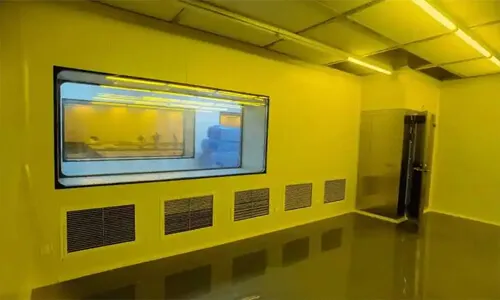
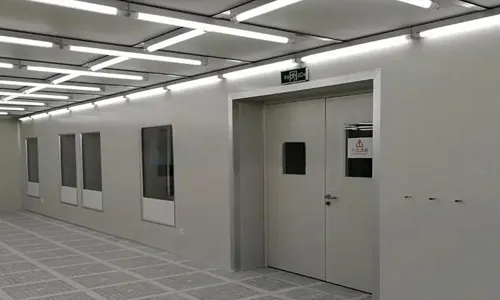
From our project history at Deiiang™, we see the demand for Class 100 CleanRoom Requirements spiking in four specific areas. This isn't just about cleanliness; it's about yield rates and regulatory compliance.
Solving a High-Humidity ISO 5 Challenge
The Theory is easy. The Reality is hard. Here is a recent example of how we applied Class 100 CleanRoom Standards in a challenging environment.
Project Overview: Opto-Electronics Fabrication Plant (Suzhou)
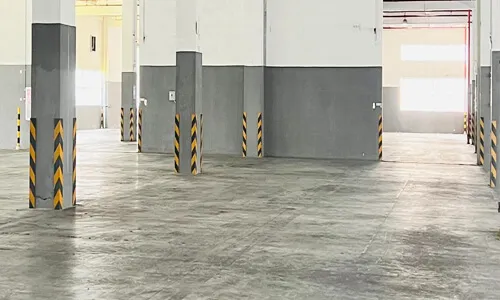
Client Problem: A manufacturer of smartphone camera lenses was experiencing "haze" defects on their lens coatings. Their existing room claimed to be Class 100, but yield was dropping. The facility was located in a high-humidity zone, and condensation was a major threat.
The Deiiang™ Solution:
Diagnosis: Our audit revealed the old system had "dead zones" where air velocity dropped to 0.15 m/s, allowing moisture and particles to settle on the lenses.
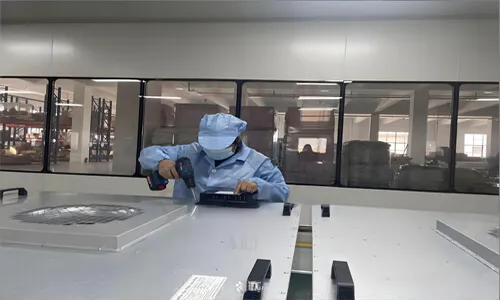
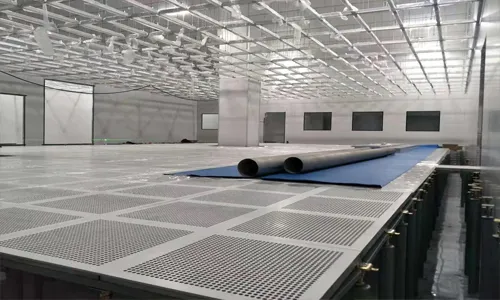
The Retrofit: We tore out the partial filter ceiling and installed a 95% coverage Fan Filter Unit (FFU) grid. This ensured a true "piston" of air.
Humidity Control: We integrated a dedicated desiccant wheel dehumidifier into the MAU (Make-up Air Unit) to aggressively strip moisture before it entered the recirculation loop, stabilizing RH at 40% ±3%.
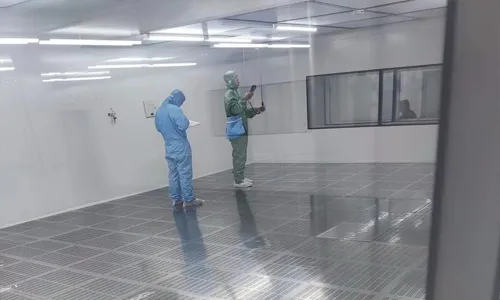
Result: Post-installation validation showed a particle count of < 10 particles (0.5µm) per ft³. Yield rates improved by 22% in the first month. A testament to Deiiang™ engineering.
Essential Equipment & Construction by Deiiang™
You can't build a Class 100 CleanRoom with drywall and standard AC. The materials must be non-shedding, anti-static, and seamless. Here is the hardware we rely on:
Fan Filter Units (FFUs) with EC Motors
This is the heart of the room. We use FFUs with Electronically Commutated (EC) motors. Why? They allow us to dial in the speed of each individual fan via software. If one corner runs hot, we speed up the fans there without disrupting the whole room. A standard set by Product Designer: Jason.peng.
Anti-Static Panel Walls
Standard epoxy paint isn't enough. We use modular sandwich panels with anti-static coatings. Dust loves static electricity; by grounding the walls and the raised floor, we prevent particles from sticking to surfaces. This is a Deiiang™ hallmark.
Air Showers & Pass-Throughs
Air Shower: A mandatory decontamination airlock for personnel. High-velocity HEPA air jets (25-30 m/s) remove particles from garments. 30-second cycle minimum. Pass-Through (Pass Box): Interlocked chambers for material transfer. Eliminates the need to open the main room door, preserving pressure differentials.
Monitoring & Control System
Continuous particle counters (likely multiple), pressure sensors, and temp/RH probes feed into a Building Management System (BMS) or dedicated cleanroom controller. Alarms for any parameter out of spec are non-negotiable for GMP and semiconductor operations.
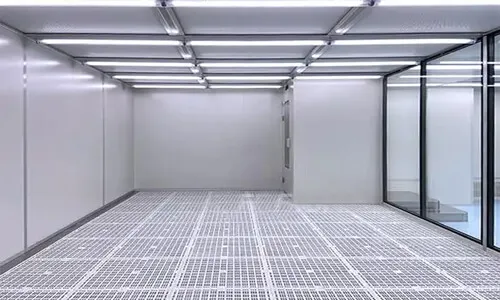
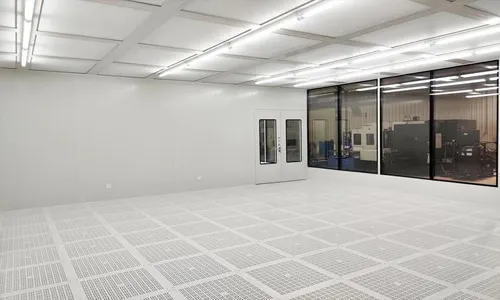
Full FFU Ceiling
Perforated Floor
Deiiang™ Core Zone
FAQ
The main difference between a Class 100 cleanroom (ISO Class 5) and a Class 1000 cleanroom (ISO Class 6) is the allowed concentration of airborne particles. A Class 100 cleanroom allows no more than 100 particles per cubic foot of air at 0.5 microns, or 3,520 particles per cubic meter. A Class 1000 cleanroom allows 1,000 particles per cubic foot of air at 0.5 microns, or 35,200 particles per cubic meter. So the air in a Class 100 cleanroom is ten times cleaner than in a Class 1000 cleanroom. Therefore, Class 100 cleanrooms have more advanced air filtration systems, higher air change rates, and more strict procedures than Class 1000 cleanrooms. This makes Class 100 cleanrooms suitable for more contamination-sensitive applications.
An ISO Class 8, or Class 100,000 cleanroom, is able to control its environment to a degree where the concentration of airborne particles is limiting to a specific standard. In particular, this class of cleanroom allows for a maximum of 100,000 particles of 0.5 microns or greater, per cubic foot of air, which equals a greater overall standard of 3,520,000 particles per cubic meter. In order to achieve this standard, cleanrooms implement HEPA filters as a means of air filtrations and maintain a moderate air change rate of 10-25 air changes per hour. The generation of particles is also affected by the type of materials used in the cleanroom's construction, as smooth, easily cleanable materials are necessary for optimal function. Contamination is reduced through basic gowning procedures by personnel, which includes the use of lab coats, hair covers, and shoe covers. Cleanrooms are routinely cleaned and maintained to continue to provide an integrity surface that meets the required standard of cleanliness for various manufacturing, electronic assembly, and quality inspection tasks.
A class A cleanroom, as defined by the European union's GMP standards, is a clean environment used for critical processes such as aseptic filling and the manufacturing of sterile products. An analogy to an ISO Class 5 cleanroom allows a maximum of 3,520 particles per cubic meter for particles 0.5 microns and greater. To achieve and maintain this level of cleanliness, a combination of advanced HEPA filtration, high air change rates, and strict construction standards using smooth, non-shedding materials is required. Full-body sterile suits, gloves, masks and shoe covers are worn by personnel who then follow strict gowning procedures. Continuous environmental monitoring and strict cleaning protocols are required to ensure compliance. Class A cleanrooms are essential for the production of sterile pharmaceuticals and other products of similar sensitivity.
A Class 100 cleanroom, equivalent to ISO Class 5, has stringent standards of cleanliness which requires a high number of air changes per hour, typically between 240 and 480. This high standard is achieved through an advanced HVAC system which uses HEPA filters to remove particles from the air. Continuous flow of filtered air helps to dilute and remove contaminates. This ensures that the concentration of particles remains within the specified limit of 100 particles per cubic foot for particles 0.5 microns and greater. This standard of air change is essential for ultraclean environments needed for semiconductor manufacturing, biotechnology and pharmaceutical productions.
An ISO 5 cleanroom, or a Class 100 cleanroom, allows 3,520 particles of 0.5 microns or larger per cubic meter. Constructing an ISO 5 cleanroom requires the use of advanced HEPA filters and results in a need for a high rate of air changes, between 240 and 480. The materials used in the construction of the cleanroom must be smooth and non-shedding in order to be easily cleanable. Personnel enter the cleanroom through a strict gowning process during which they don full-body suits, gloves, masks and shoe covers. ISO 5 cleanrooms are necessary for industries such as the manufacture of semiconductors, biotech, and pharma, because of the ultra-clean conditions these industries require. Environmental monitoring and strict cleaning protocols make ISO 5 cleanrooms very expensive to operate, but necessary in order to maintain compliance.
The classifications of cleanrooms and the relevant ISO standards establish requirements for the controlled environments based on the concentration of airborne particles. The ISO 14644-1 standard establishes cleanrooms from ISO Class 1 through ISO Class 9, with Class 1 representing the cleanest. For each class, there is a specific particle size and a maximum allowable count at that size. As an example, an ISO Class 5 (Class 100) cleanroom allows 3,520 particles of 0.5 microns or larger per cubic meter. These standards help to verify that cleanrooms meet the requirements for contamination control for various industries, such as pharmaceuticals and electronics, by establishing requirements for air filtration, air change rates, construction materials, and operational procedures.
A Class 100 clean room, or an ISO Class 5 clean room, is a type of room that limits the number of airborne particles to 100 or less in a cubic foot of air that is 0.5 microns or greater. This type of room has a cleanliness level of 3,520 particles per cubic meter. Maintaining this level of cleanliness is very difficult and requires an advanced HEPA filtration system, a high rate of air changes (240 to 480 per hour), and extremely clean protocols. The materials used in the construction of these rooms must be smooth and non-shedding. The personnel working in these rooms must wear full body suits that include gloves, masks and shoe covers. These types of rooms are used in semiconductor manufacturing, biotechnology, and pharmaceuticals, for example, where even a minor contamination of the product can occur.
A class 100 clean room, or an ISO Class 5 clean room, is a room that limits the number of airborne particles to 100 or less in a cubic foot of air that is 0.5 microns or greater. These types of rooms require advanced HEPA filtration systems and a high rate of air changes (240 to 480 per hour), as well as rigorous cleanliness protocols. The construction materials must be smooth and non-shedding. These types of clean rooms are used in semiconductor manufacturing, biotechnology, and pharmaceuticals, for example, where even a minor contamination of the product can occur.
A Class 100,000 clean room, or an ISO Class 8 clean room, allows no more than 100,000 particles per cubic foot of air (3,520,000 particles per cubic meter) of cultivable particles of 0.5 microns and above. To achieve and keep this standard of cleanliness, an air filtration system containing HEPA filters, along with an air change rate of 10-25 times per hour, is necessary. The smoother the construction materials, the easier they are to clean. Personnel in these clean rooms have to wear lab coats, hair covers, and shoe covers. Clean rooms of this class support less contamination-sensitive applications such as general manufacturing, electronics assembly, and quality inspection.
Constructing a Class 100 clean room (ISO Class 5) begins with 240-480 air changes per hour and the installation of advanced HEPA filtration systems to achieve high quality air. Non-shedding, smooth, and cleanable construction materials must be used. Stringent entry procedures, including air locks and gowning areas where personnel don full body suits along with gloves, masks, and shoe covers, must be employed, along with rigorous cleaning and maintenance schedules. Continuous environmental monitoring is required to maintain the needed particle levels. This ensures that the clean room meets the standards for semiconductor manufacturing and pharmaceuticals.
An ISO Class 8/Class 100,000 clean room allows no more than 100,000 particles per cubic foot of 0.5 microns and larger in a given volume of air. Effective HEPA filtration results in an air change rate of 10-25 times an hour. The room is constructed of easy to clean smooth wall materials and personnel follow a basic gowning procedure of a lab coat, hair cover and shoe covers. Clean rooms at this classification are used for less contamination sensitive activities such as basic manufacturing and electronic assembly.
A Class 5/ISO 100 clean room allows no more than 100 particles per cubic foot of 0.5 microns and larger in a given volume of air. Advanced HEPA filters allow for an air change rate of 240-480 times an hour. Personal grooming and a gowning procedure of a full body suit, gloves and mask, and shoe covers is mandated. These clean rooms are essential for semiconductor manufacturing, biotechnology and pharmaceuticals.
A Class 100 clean room, or an ISO Class 5 clean room, is an environment where the number of airborne particles is limited to no more than 100 particles per cubic foot of space where particles are 0.5 microns or larger (3,520 particles per cubic meter). To achieve and maintain this level of air purity, a Class 100 clean room uses HEPA filtration and controls the air changes in the room at a rate of 240 to 480 changes per hour. The walls and other surfaces in a Class 100 clean room are smooth and do not shed particles. When working in a Class 100 clean room, personnel wear full body suits with gloves, masks, and shoe covers. This type of clean room is essential for industries such as semiconductor manufacturing, biotechnology, and pharmaceuticals where the highest level of contamination control is required.