wap_menu MENU
X
Deiiang™ Class 10000 Cleanroom-Professional cleanroom solutions

We provide cleanroom design, construction, and installation services that meet international standards, satisfying the stringent requirements of cleanrooms across various industries.

More Contact US

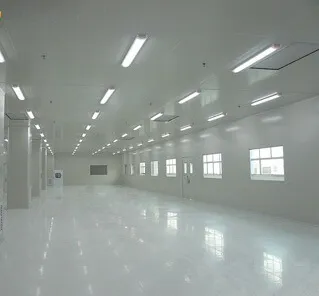
Class 10000 Cleanroom

A Class 10000 cleanroom, also known as an ISO Class 7 cleanroom under the ISO 14644-1 standard, is a controlled environment designed to maintain low levels of airborne particles. Specifically, it allows no more than 10,000 particles per cubic foot of air for particles 0.5 microns, which translates to no more than 352,000 particles per cubic meter.

Particle Concentration Limits

  • Particles 0.5 microns: 10,000 particles per cubic foot (352,000 particles per cubic meter)

  • Particles 5.0 microns: 2,930 particles per cubic meter


Airflow and Filtration

  • HEPA Filters (High-Efficiency Particulate Air filters): These filters must remove at least 99.97% of airborne particles 0.3 microns in diameter.

  • Turbulent Flow: Often utilized to mix the air in the room, ensuring contaminants are diluted and removed by the filtration system.

  • Moderate Air Change Rates: Typically around 60-90 air changes per hour to maintain the required cleanliness.
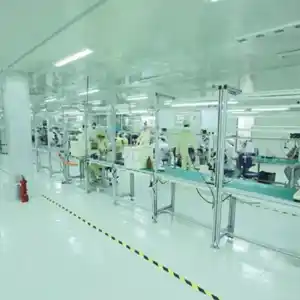

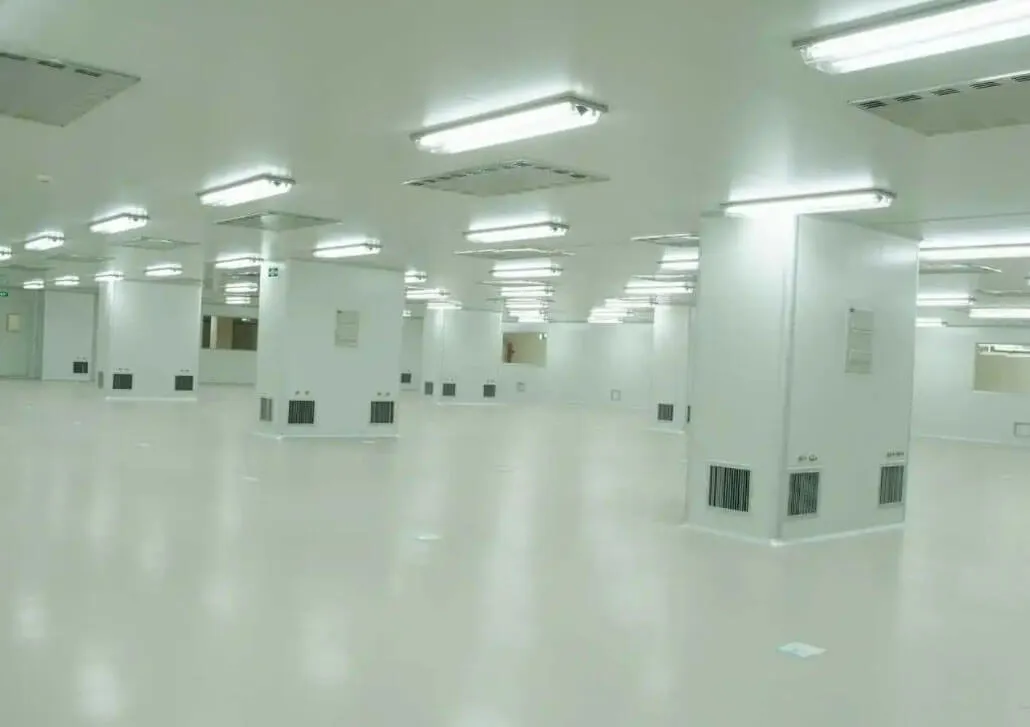
Class 10000 Cleanroom

Class 10000 Cleanroom Air Changes Per Hour

Class 10000 clean room


Class 10000 Cleanroom (ISO Class 7 Cleanroom)

  • ISO 5 zone | 240–360 air changes per hour

  • ISO 6 zone | 90–180 air changes per hour

  • ISO 7 zone | 30–60 air changes per hour

  • ISO 8 zone | 15–25 air changes per hour (ante-room)


Clean room grade table


ISO Class FED STD 209E Equivalent
ISO ClassMaximum Particles/mFED STD
209E
equivalent
≥0.1μm≥0.2um≥0.3um≥0.5um≥11m≥5um
ISO1102


ISO210024104


ISO31,000237102358
Class1
ISO410,0002,3701,020352833Class10
ISO5100,00023,70010,2003,52083229Class100
ISO61,000,000237,000102,00035,2008,320293Class 1,000
ISO7


352,00083,2002,930Class10,000
ISO8


3,520,000832,00029,300Class
100,000
ISO9


35,200,0008,320,000293,000Room Air


Comparison table of ISO grade standards and ventilation times

ISO ClassACH(AIRCHANGE PER HOUR)
ISO 3360-540
ISO 4300-540
ISO 5240-480
ISO 650-60
ISO 730-40
ISO 815-25


Comparison Table GMP/USP/ISO/FED209E 
projectChina GMP/Europe GMP
ISOFED STD
209E
Suspended
particles
P/m3
levelStaticdynamiclevelStaticleveldynamic
≥0.5um≥5μm≥0.5μm≥5μm≥0.5um≥5μm≥0.5um≥5μm
A352020352020M3.535301005222020100
B3520293520002900
--63520291000
C3520002900352000029000M5.5353000100007352000293010000
8.352000029300100000
D352000029000No regulationsNo regulationsM6.535300001000009352000029300100000


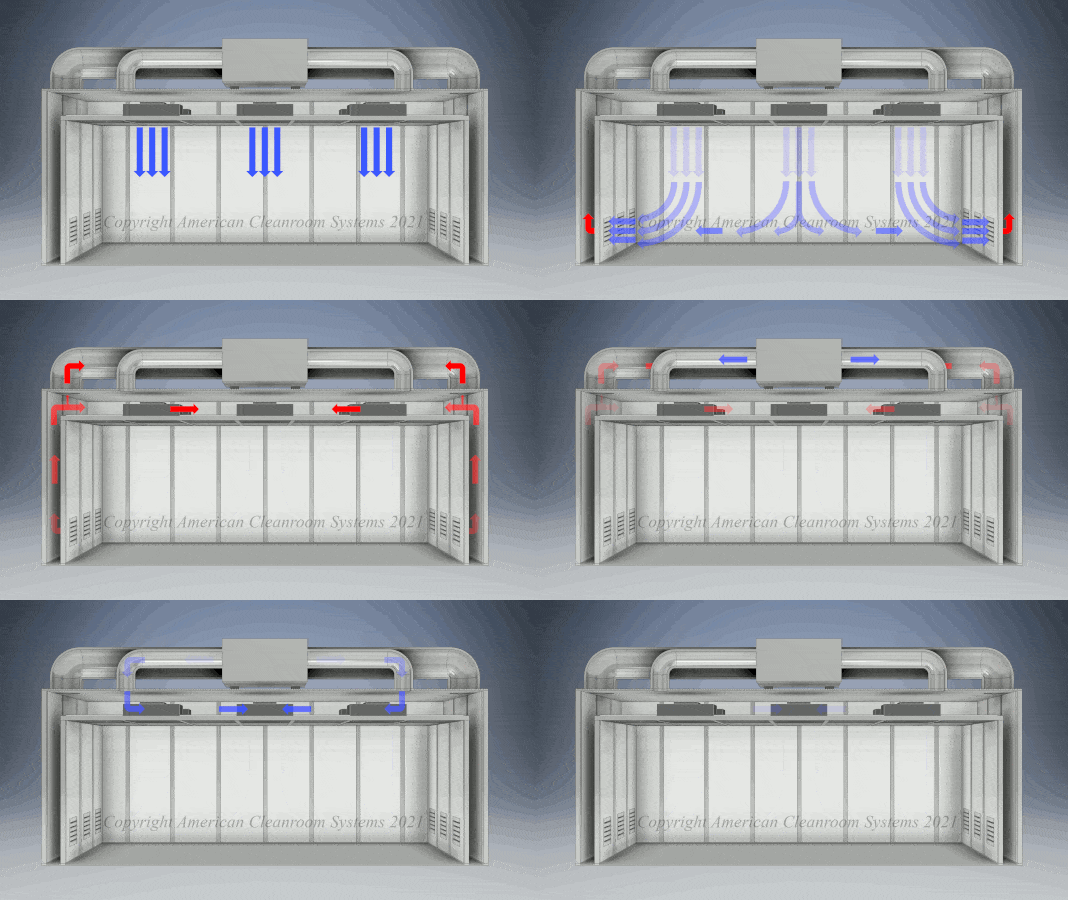
Class 10000 Clean Room Airflow 


Cleanroom-Systems-air-flow-gif-copyright-2021-resized-1.gif


  • Air supply from air conditioner:

    The air treated by the air conditioner is sent to the return air layer

  • Air filtration:

    The air is deeply filtered through HEPA or ULPA filters to ensure that the cleanliness meets the required ISO level.

  • Air distribution:

    Laminar flow (such as unidirectional flow) or mixed flow is usually used to maintain the uniformity and fluidity of indoor air.

  • Air return:

    The clean room air passes through the return air layer, and 15% of the return air returns to the air conditioner for further treatment



Cleanroom-Systems-Softwall-cleanroom-air-flow.gif

  • FFU fan:

    External air is driven by the FFU fan to be sent in

  • Air filtration:

    The air is deeply filtered through HEPA or ULPA filters to ensure that the cleanliness meets the required ISO level.

  • Air distribution:

    Laminar flow (such as unidirectional flow) or mixed flow is usually used to maintain the uniformity and fluidity of indoor air.

  • Air exhaust:

    Clean room air is discharged through a pressure relief valve or a floor elevated layer


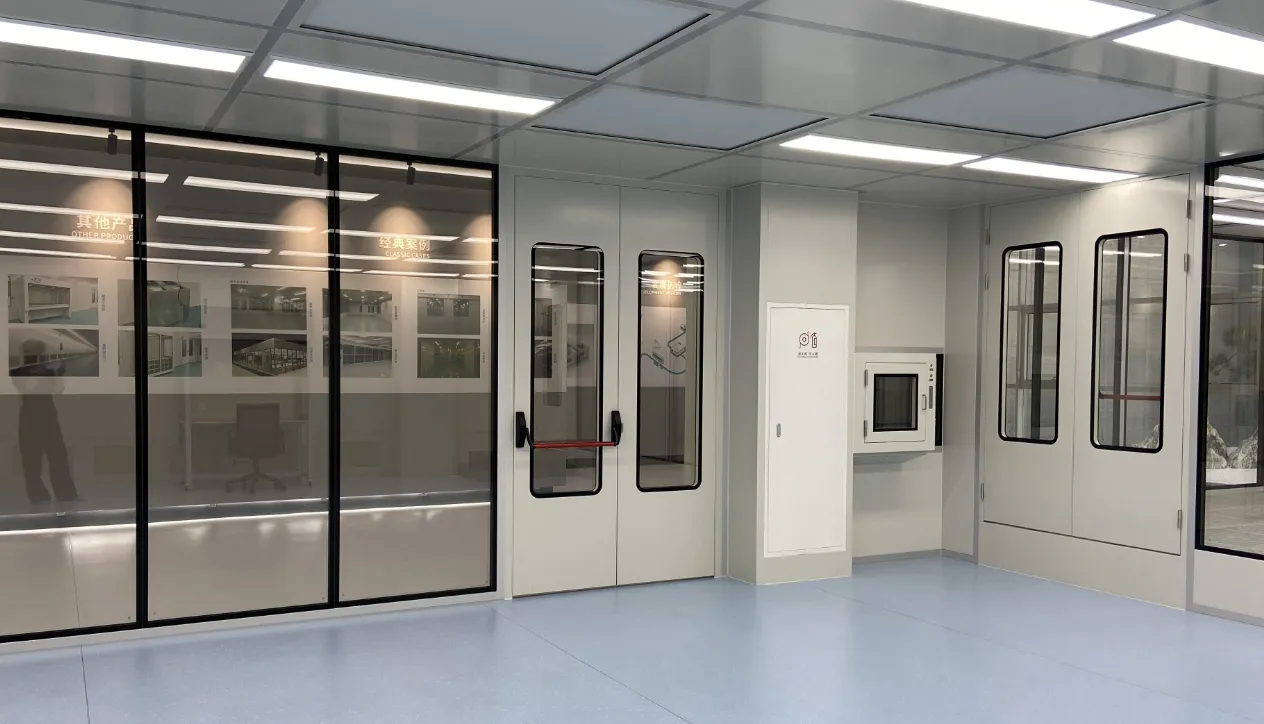
Class 10000 Clean Room wall 


Class 10000 clean room

  • Size and appearance:

    Ensure that the size and shape of the product meet the design requirements and have no obvious defects.

  • Physical properties:

    Such as compression, tension, impact resistance and other tests to ensure the strength and durability of the material.

  • Surface treatment:

    Confirm that the surface is smooth, the coating is uniform, and there are no bubbles, peeling, etc.

  • Test report:

    Fire and corrosion resistance test


Class 10000 clean romm door.jpg

  • Steel standard:

    Select high-quality steel that meets national and international standards to ensure its corrosion resistance and strength.

  • Surface treatment:

    The surface of the door body should be treated with anti-rust treatment (such as spraying, anodizing, etc.) to ensure durability and easy cleaning.

  • Insulation material:

    The door core material should have good heat insulation and sound insulation properties, and insulating materials such as polyurethane or rock wool are usually used.

  • Production process:

    Production is carried out strictly in accordance with standardized processes, including cutting, forming, welding and painting


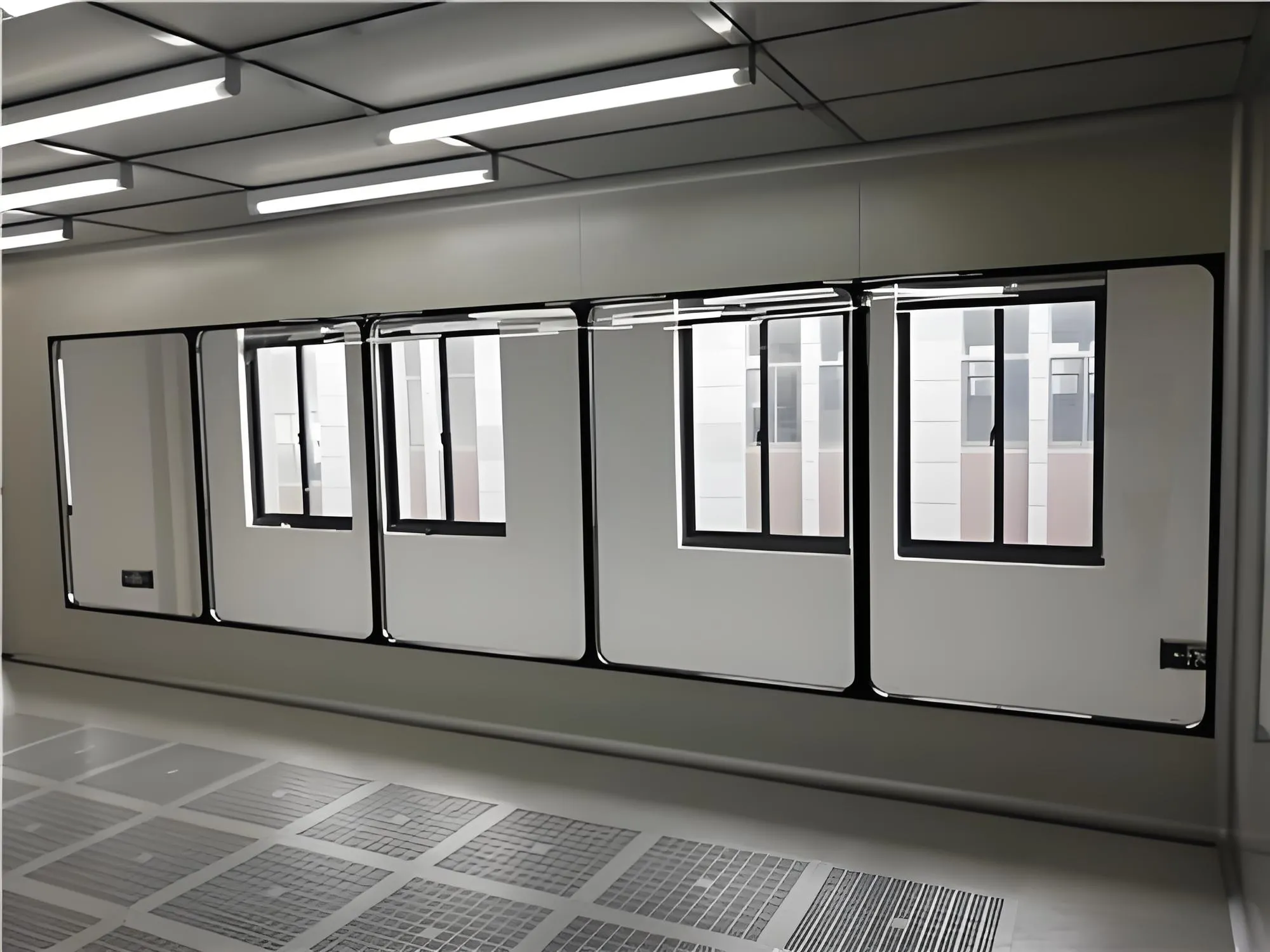
Class 10000 clean romm windows.jpeg

  • Steel standard:

    Select high-quality steel that meets national and international standards to ensure its corrosion resistance and strength.

  • Surface treatment:

    The surface of the door body should be treated with anti-rust treatment (such as spraying, anodizing, etc.) to ensure durability and easy cleaning.

  • Insulation material:

    The door core material should have good heat insulation and sound insulation properties, usually using insulating materials such as polyurethane or rock wool.

  • Production process:

    Strictly follow the standardized process for production, including cutting, forming, welding and painting, to ensure stable quality in each link.


Class 10000 Clean Room Celling 

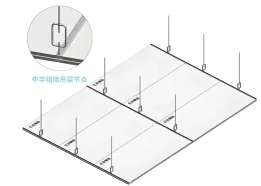
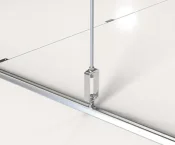
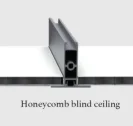
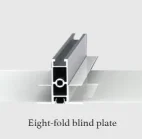
Purification color steel plate ceilingPurification board ceiling.jpgHoneycomb blind ceiling .jpgEight-fold blind plate .jpg
  • Specifications: Thickness: 980, 1180

  • Panel material: 50mm, 75mm, 100mm

  • Core material: color-coated steel plate, stainless steel plate, rock wool, gypsum, glass magnesium, aluminum honeycomb, etc.

  • Accessories: Keel: 0.8 galvanized plate

  • Application scope: food, medicine

  • Others: Coating: PE (polyester), PVDF (fluorocarbon), HDP (high weather-resistant polyester)

  • 0.8 thick galvanized steel keels are used on all four sides to increase the strength and sealing of the board

  • The patented heavy-duty hanging beam system of MasterCard is adopted, which is convenient for installation and improves construction efficiency.

  • No need to remove the entire top plate, reducing replacement costs and high cost performance.

  • This product is also suitable for partial top plate replacement


FAQ

What does class 10,000 clean room mean?

A class 10,000 clean room, or an ISO class 7 clean room, is an environment where the concentration of airborne particles is controlled to specific limits. This class of clean room allows no more than 10,000 particles of 0.5 microns or larger per cubic foot of air.

What are the requirements for a 10k clean room?

Some of the requirements for a 10k clean room include HEPA filtration to capture 99.97% of particles that are 0.3 microns or larger, approximately 60-90 air changes per hour, smooth and non-shedding surfaces, air locks and gowning areas for personnel, and strict regulatory procedures for cleaning and grooming.

What is a 100,000 class clean area?

A class 100,000 clean area, or an ISO class 8 clean area, is an environment where the concentration of airborne particles is limited to 100,000 particles of 0.5 microns or larger per cubic foot of air. This class of clean area is used for less critical production areas.

What is a Class 1000 cleanroom?

A class 1000 cleanroom, or an ISO class 6 cleanroom, is an environment that allows no more than 1000 particles of 0.5 microns or larger per cubic foot of air. This class of clean room requires advanced filtration and laminar air flow.

What is a class 10,000 clean room?

A class 10,000 clean room, or an ISO class 7 clean room, is a controlled environment that allows no more than 10,000 particles of 0.5 microns or larger per cubic foot of air. This class of clean room is used in controlled segments of industries where contamination is critical.

What is a class 10,000 clean room? (Designation)

A class 10,000 clean room (ISO class 7) is a clean room designation that allows no more than 10,000 particles of 0.5 microns or larger in a cubic foot of air to be present to protect process and product from contamination.

How to build a class 10,000 clean room?

Some methods for constructing a class 10,000 clean room include the use of HEPA filtration systems, design of airflow, use of non-shedding materials, and the use of construction and operational protocols to control contamination.

How to clean a class 10,000 clean room?

To clean a class 10,000 clean room, use special cleaning tools that shed no lint, follow a directive of top to bottom cleaning, and strictly adhere to a cleaning schedule to maintain the required levels of particles.

What is the difference between 10k and 1k clean room?

The main difference between the two is the allowed concentration of particles. A class 10,000 clean room allows 10,000 particles of 0.5 microns per cubic foot, whereas a class 1000 clean room allows only 1000 particles, requiring a more controlled environment and a greater number of air changes.

What is a 100,000 level clean room?

A class 100,000 clean room (ISO class 8) allows 100,000 particles of 0.5 microns or larger in a cubic foot of air. This class of clean room designation can protect less stringent manufacturing processes from a greater level of contamination.

What are the major features of a 10,000 class clean room design?

A major feature of a 10,000 class design is a HEPA filtration system with an efficient design to achieve 60-90 air changes per hour. Smooth, non-shedding materials, proper sealing and airlock systems, an ergonomic design that aids in the ease of cleaning, and strict contamination control are also major features.

What are the installation requirements for a 10,000 class clean room?

Installation requires achieving the integrity of HEPA filters and the correct placement, achieving the correct airflow patterns, sealing all joints and entrances, installing the correct lighting and environmental controls, and verifying that the room is isolated to ISO Class 7.

How is a 10,000 class clean room certified?

Certification requires particle count testing using a calibrated particle counter, verification of airflow and pattern filters, and integrity tests, surface cleanliness tests, and meticulous documentation to demonstrate compliance with ISO Class 7.

What equipment is found in a 10,000 class clean room?

Essential equipment includes HEPA filtration systems, air handling units, laminar flow benches, cleanroom-compatible furniture and fixtures, particle counters, and specialized cleaning equipment and consumables. Monitoring and alarm systems for environmental conditions are also essential.

What is the approximate cost for a 10,000 class clean room?

The cost for a Class 10,000 cleanroom can range from $100 to $200 per square foot, with larger and more complex projects ranging from tens of thousands to several million dollars.

Home

PHONE

Email

Inquiry