+86 13638632902
 Jason@cleanroomequips.com
 MENU
MENU
Trapped air is not only a nuisance in any hot or cold water system, but also a performance killer. Cavitation can disrupt water flow, produce knocking noise, reduce heat transfer efficiency by 15% to 30%, and may damage the pump impeller. However, this seemingly insignificant automatic air vent—typically costing less than $25 eACH—is often overlooked during system design and installation.This article delves into how automatic air vents work, their installation location, the consequences of missing air vents, and how Deiiang™ products provide a reliable and easy-to-maintain solution for engineering teams in Shanghai, Singapore, and other regions.
Product design lead: Jason.peng.
By the end of this guide, you’ll see why a properly selected automatic air vent delivers one of the best ROI of all parts in hydronic systems — and learn how to add it to your upcoming projects to boost system stability and energy efficiency
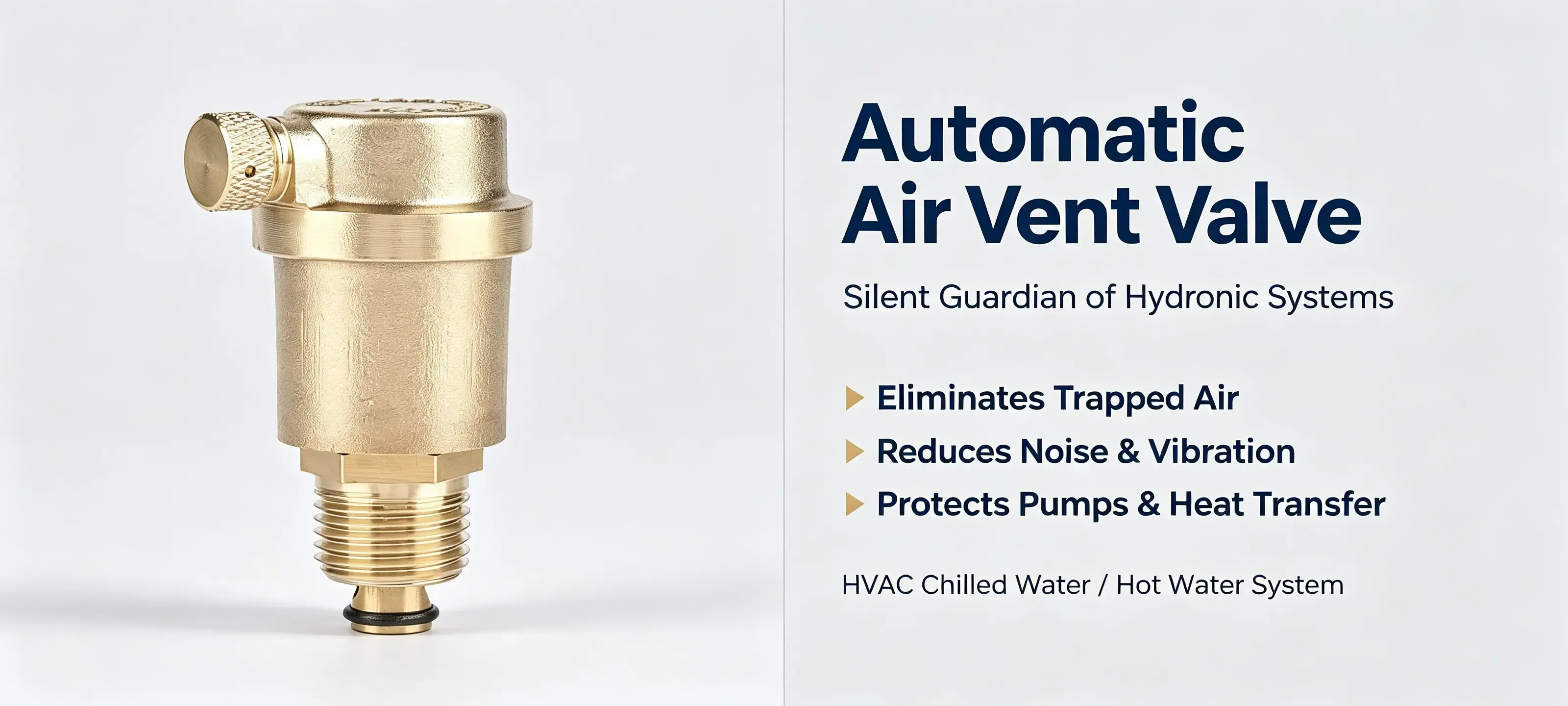
Core Requirements for Automatic Air Vent Valves in HVAC Water Systems
When picking an automatic air bleeder valve for chilled or hot water loops, engineering teams should weigh several vital performance standards. These criteria have a direct bearing on system dependability, energy costs and maintenance frequency. If a valve fails to meet any of these requirements, it can lead to ongoing operational problems, which may even spread to the entire system.
Continuous air release capability — The automatic air vent valve must vent micro-bubbles continuously during normal operation, not just during initial commissioning. Accumulated air reduces effective pipe cross-section, increasing flow resistance by as much as 22% in a DN100 pipe with only 5% air volume fraction.
Water-tight seal integrity — After air is expelled, the sealing mechanism must achieve a drip-free closure. A quality automatic air release valve should maintain seal integrity at pressures ranging from 0.2 MPa to 1.6 MPa without weeping.
Debris tolerance — System water inevitably contains particulates. The valve's internal float and seal mechanism must resist fouling. Deiiang™ models incorporate a 200-micron stainless steel inlet filter to protect the float chamber.
Low particle emission — For semiconductor fab and pharmaceutical HVAC systems operating near iso 5–8 cleanrooms, the auto air vent valve must not shed particulates or outgas volatile compounds into the airstream.
Serviceability — The valve must allow in-line servicing without draining the entire system. A built-in isolation ball valve beneath the air vent is considered standard best practice.
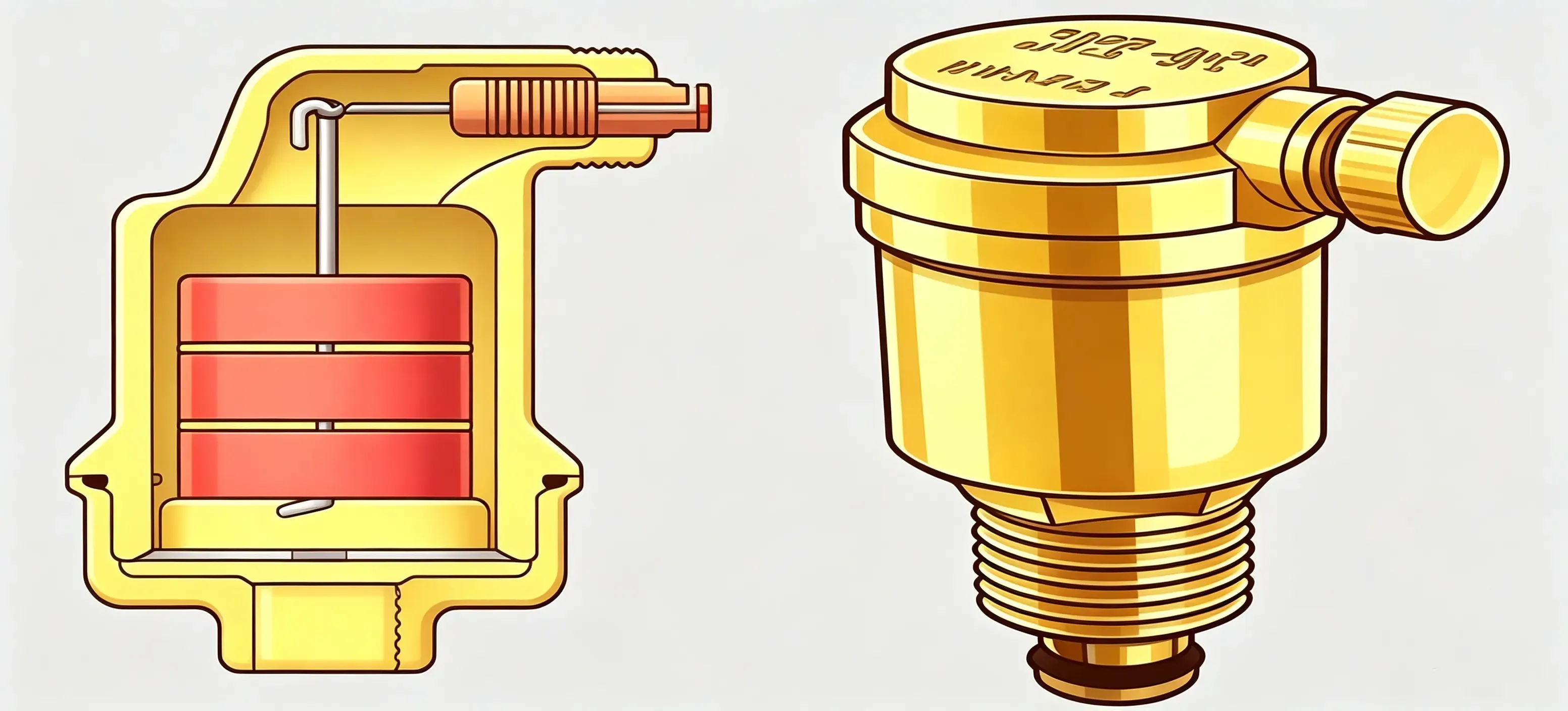
Cross-section of a Deiiang™ automatic air vent valve showing float, lever mechanism, and EPDM seal.
Automatic Air Vent Valve Anatomy: Key Components Explained
To carry out proper troubleshooting and maintenance, you need to be familiar with the internal construction of an automatic air vent valve. Though compact (DN15 versions stand just 80–120 mm tall), the unit features five precision-engineered parts working together to achieve stable gas-water separation.
The exploded diagram below details every component and its role in the automatic exhaust process.
Do not fully tighten the vent cap during system operation. Back it off approximately 1/4 turn from tight to maintain uninterrupted air release.
Top exhaust cap (vent nut) — This cap features a small orifice (typically 1.5–2.0 mm diameter) that allows air to escape while preventing insects and large debris from entering. During routine operation, this cap must remain in a micro-open state. Fully tightening it disables the venting function entirely.
Sealing spring-plunger assembly — The core sealing mechanism consists of a stainless steel spring-loaded plunger with an EPDM or silicone rubber seal disc. When the float rises, the plunger is pressed firmly against the seat, achieving a water-tight closure. When the float drops, the plunger retracts, opening the air path. The spring constant is typically calibrated to 0.3–0.5 N/mm for reliable actuation.
Valve body (housing chamber) — The hollow brass or stainless steel body forms a gas collection chamber. Its internal volume (approximately 15–30 cm³ for standard models) determines how much air can accumulate before triggering a release cycle. Deiiang™ D-AV200 series uses forged brass CW617N with a corrosion-resistant nickel plating.
Plastic float (buoyancy element) + linkage lever — The float is made of PP (polypropylene) or POM with a density of approximately 0.91–0.95 g/cm³, ensuring it readily floats on water (density ~1.0 g/cm³). The attached lever arm provides mechanical advantage, multiplying the float's buoyancy force by a factor of 3–5× to reliably actuate the seal plunger.
Bottom inlet port + filter screen — The threaded inlet (commonly DN15 (½") or DN20 (¾") BSP/NPT) connects to the system pipe via an isolation ball valve. The integral filter screen (200–300 micron mesh) prevents particulates from entering the float chamber and jamming the mechanism.
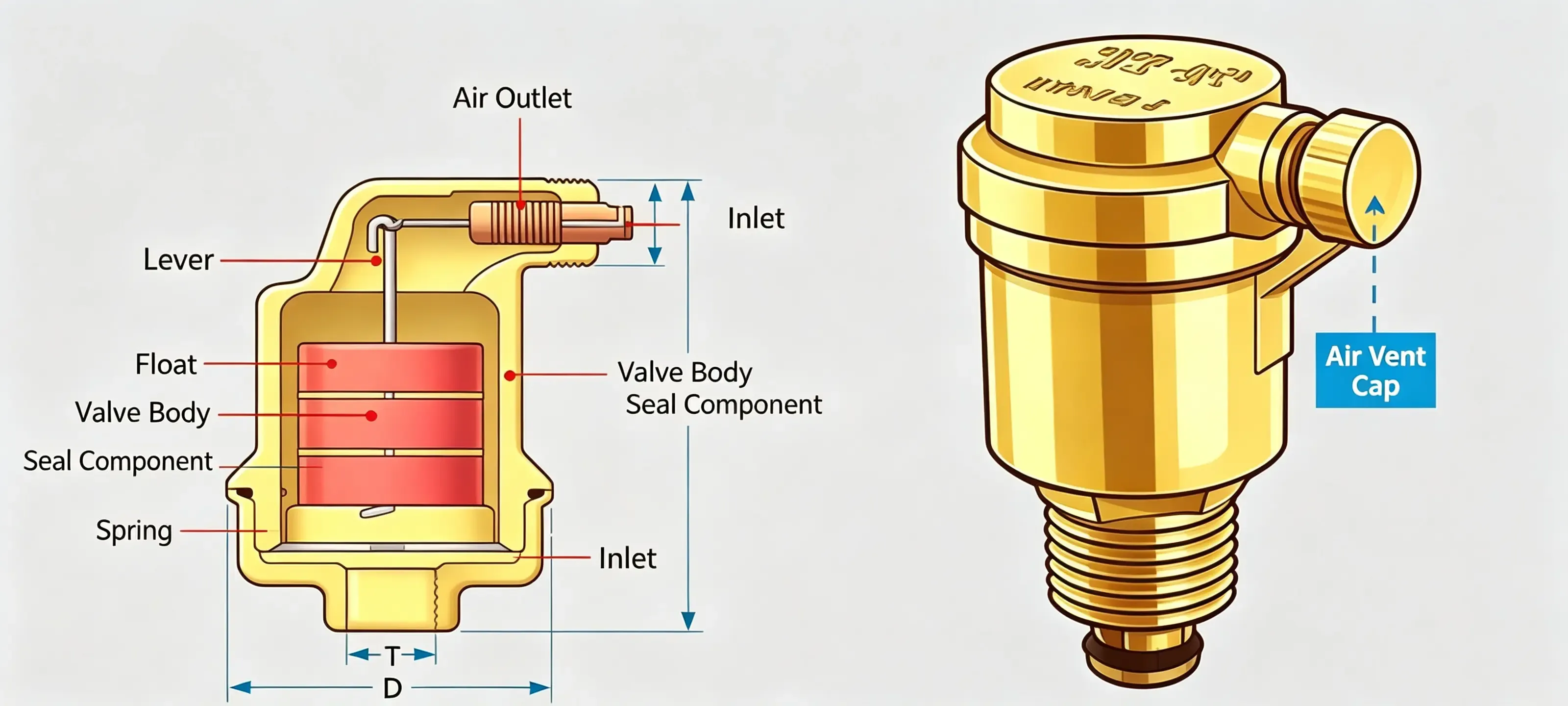
Exploded component view: 1. Exhaust cap, 2. Spring-plunger seal, 3. Valve body, 4. Float + lever, 5. Inlet filter.
How an Automatic Air Vent Valve Works: The Two-Phase Cycle
The operating principle of an automatic air bleeder valve relies on the fundamental density difference between air (approximately 1.2 kg/m³ at 20°C) and water (approximately 998 kg/m³). This 830:1 density ratio ensures that air always migrates to the highest point in any piping system, where the valve is strategically positioned to capture and release it.
Phase 1: Air Accumulation & Automatic Venting
During system filling, commissioning, or normal operation, dissolved air comes out of solution due to pressure and temperature changes. Henry's Law dictates that at 20°C and 0.1 MPa, water can hold approximately 18–20 mg/L of dissolved oxygen. As water warms or pressure drops, this gas is released as micro-bubbles that coalesce and travel upward. The air collects in the valve chamber, progressively lowering the water level. As the float descends with the falling water line, the lever mechanism pulls the sealing plunger away from its seat, opening the exhaust orifice. Compressed air—now at system pressure—rushes out through the vent cap with an audible hiss.
Phase 2: Air Purged, Automatic Water Seal
Once all accumulated gas has been expelled, water from the system pipe refills the valve chamber. The rising water lifts the float, which—through the mechanical lever—drives the spring plunger firmly against the EPDM seal seat. The sealing force is proportional to the float's buoyancy multiplied by the lever ratio. For a standard automatic air release valve with a float volume of 8–12 cm³, the sealing force at the plunger tip ranges from 2.5–5 N, sufficient to hold against system pressures up to 1.6 MPa (16 bar). The valve is now water-tight, and normal circulation resumes with zero air content in that section of pipe.
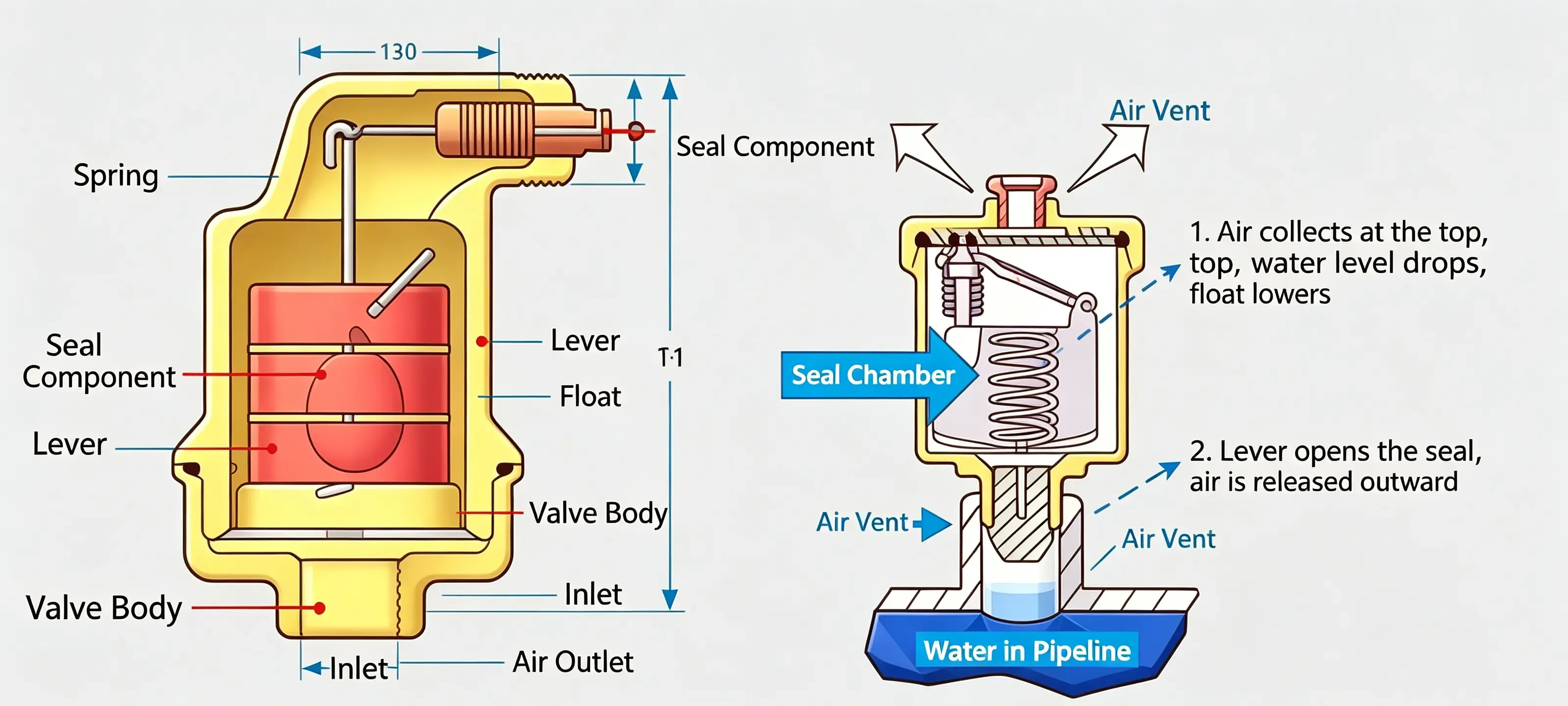
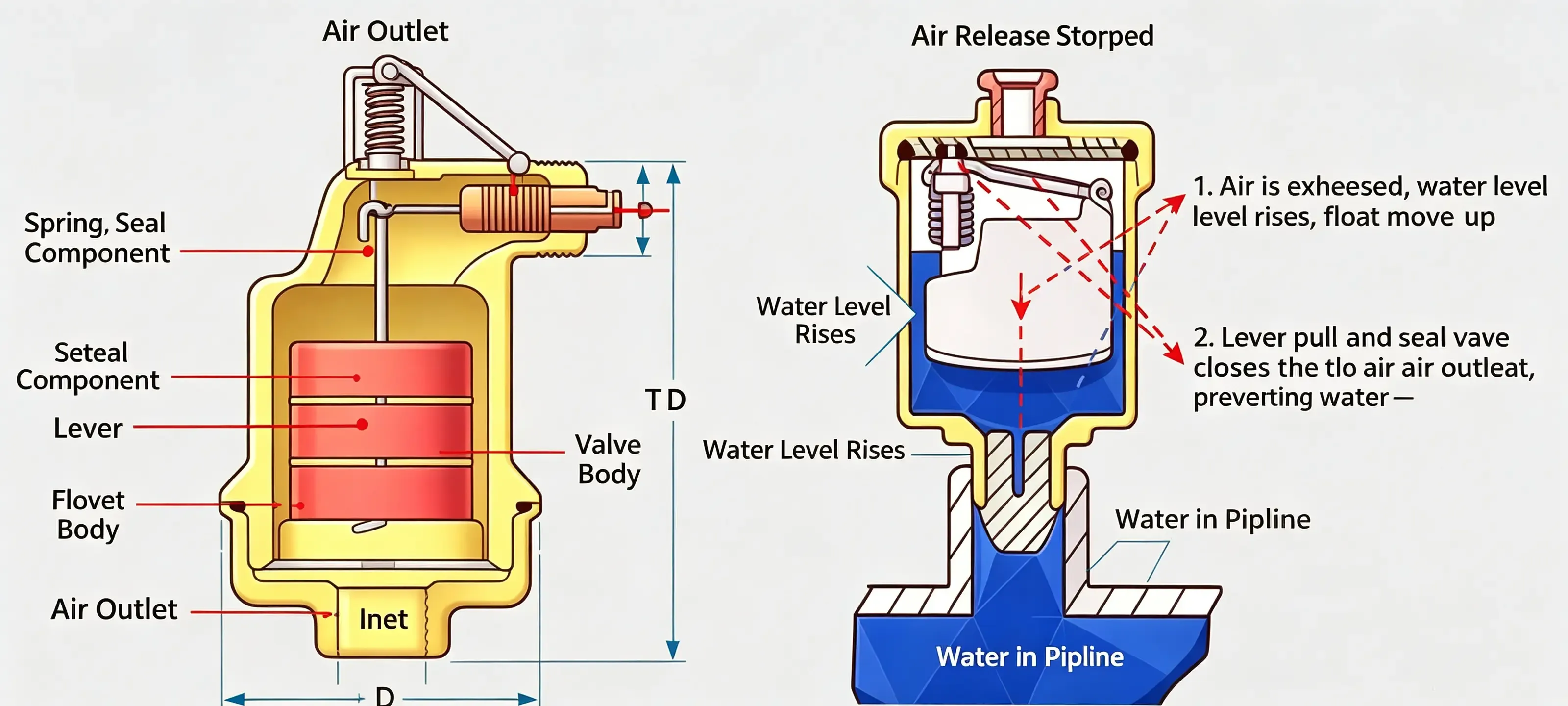
Two-phase operating cycle: Air accumulation triggers vent opening; Water refill forces the float up, sealing the valve.
Automatic Air Vent Valve Types and Performance Comparison
Not all automatic air vent valves are created equal. Selection depends on operating temperature, pressure rating, connection type, and whether the application involves chilled water (2–7°C), hot water (60–90°C), or glycol mixtures. The table below summarizes the most common types encountered in commercial and industrial HVAC projects.
| Valve Type | Body Material | Max Pressure | Max Temp | Typical Connection | Best Application |
|---|---|---|---|---|---|
| Standard Brass Float-Type Auto Air Vent Valve | Brass CW617N | 1.0 MPa | 110°C | DN15 / ½" BSP | Fan coil units, small AHUs, residential |
| High-Pressure Automatic Air Release Valve | Stainless Steel 304 | 1.6 MPa | 120°C | DN20 / ¾" BSP | High-rise chilled water risers, district cooling |
| Micro-Bubble Air Release Valve with Degassing Chamber | Brass + SS mesh | 1.0 MPa | 90°C | DN25 / 1" BSP | Semiconductor fab process cooling, pharmaceutical |
| Combination Automatic Air Vent + Vacuum Breaker | Brass / Ductile Iron | 1.6 MPa | 100°C | DN20–DN50 | Large chilled water headers, thermal storage tanks |
| Deiiang™ D-AV200 Series Auto Air Vent Valve | Nickel-Plated Brass | 1.6 MPa | 120°C | DN15 / DN20 | Universal commercial HVAC, data center cooling |
| Valve Type | Key Specs |
|---|---|
| Standard Brass Float-Type | Brass CW617N | 1.0 MPa | 110°C | DN15 | Fan coils, small AHUs |
| High-Pressure SS304 | Stainless Steel 304 | 1.6 MPa | 120°C | DN20 | High-rise risers |
| Micro-Bubble Degassing | Brass + SS mesh | 1.0 MPa | 90°C | DN25 | Cleanroom process cooling |
| Combination + Vacuum Breaker | Brass/Ductile Iron | 1.6 MPa | 100°C | DN20–DN50 | Large headers |
| Deiiang™ D-AV200 Series | Nickel-Plated Brass | 1.6 MPa | 120°C | DN15/DN20 | Universal HVAC |
Deiiang™ Product Data Reference — Automatic Air Vent Valve Series
The following product data templates illustrate how Deiiang™ presents technical specifications for its automatic air vent valve range. Note: Where specific third-party test report numbers are referenced below, these serve as format examples. Always request the latest certified test documentation from your Deiiang™ representative. Product designer: Jason.peng oversees all valve engineering at Deiiang™.
| Product Model | Description | Fire/Heat Resistance | VOC / Emissions | Pressure Rating | Recommended Application |
|---|---|---|---|---|---|
| Deiiang™ D-AV200 | Brass automatic air vent valve with EPDM seal | Body rated to 120°C continuous | < 5 µg/m³ particulate shedding (iso 14644-1 Class 5 compatible) | 1.6 MPa @ 25°C | Chilled water headers, AHU coils, fan coil units |
| Deiiang™ D-AV300-HP | Stainless steel 304 high-pressure automatic air release valve | Body rated to 150°C intermittent | < 3 µg/m³ (cleanroom-grade) | 2.5 MPa @ 25°C | High-rise building risers, district cooling plants, Shanghai super-tall projects |
| Deiiang™ D-AV100-MB | Micro-bubble degassing automatic air vent with enlarged chamber | 110°C max operating | < 8 µg/m³ | 1.0 MPa @ 25°C | Semiconductor fab process cooling water, pharmaceutical HVAC |
| Model | Key Specs |
|---|---|
| Deiiang™ D-AV200 | Brass + EPDM | 1.6 MPa | 120°C | ISO 5 compatible | Chilled water |
| Deiiang™ D-AV300-HP | SS304 | 2.5 MPa | 150°C | Cleanroom-grade | High-rise risers |
| Deiiang™ D-AV100-MB | Micro-bubble chamber | 1.0 MPa | 110°C | Fab process cooling |
Installation Best Practices and Key Node Details
Even the highest-quality automatic air vent valve will fail prematurely if installed incorrectly. The following six critical installation nodes represent the most common failure points observed in field audits across commercial HVAC projects. Each node includes the specific problem, the recommended material solution, and a concise verification checklist.
Problem: Air pockets trapped at the top of vertical risers in high-rise buildings can reduce effective pipe diameter by 30–50%. Solution: Install a Deiiang™ D-AV300-HP automatic air release valve with an upstream isolation ball valve at every riser crown. Verify that the valve is truly at the system's highest elevation—a deviation of just 50 mm below the true high point can trap persistent air pockets.
Problem: Air accumulating inside the top header of a shell-and-tube heat exchanger reduces effective heat transfer area. A 15% air pocket in the top of a 500 kW chiller can decrease capacity by 8–12%. Solution: Specify a dedicated auto air vent valve at the manufacturer-provided vent tapping on the chiller barrel and each heat exchanger head.
Problem: Any local high point in piping—such as a riser offset or a pipe bridge over a doorway—creates a natural air trap. Solution: Install an automatic air bleeder valve with a drip pan beneath it at every local elevation peak. For outdoor installations, specify a freeze-protected model or insulate the valve body.
Problem: Large-volume headers act as air separation chambers; without continuous venting, accumulated air re-entrains into branch circuits. Solution: Install combination automatic air vent + vacuum breaker valves on all header end-caps. For tanks exceeding 5 m³, use dual redundant valves.
Problem: Air trapped in coil return bends causes uneven heat transfer and audible gurgling in occupied spaces. Solution: Each coil's top connection should have a dedicated automatic air vent valve accessible through the ceiling access panel. Deiiang™ D-AV200 is compact enough (body height 85 mm) to fit within standard ceiling voids.
Problem: Valves installed in inaccessible locations are never serviced, leading to undetected failures. Solution: Ensure a minimum 150 mm clear space above the exhaust cap for tool access. The isolation ball valve beneath must be operable from the same access point. Document all valve locations on as-built drawings with unique tag numbers.
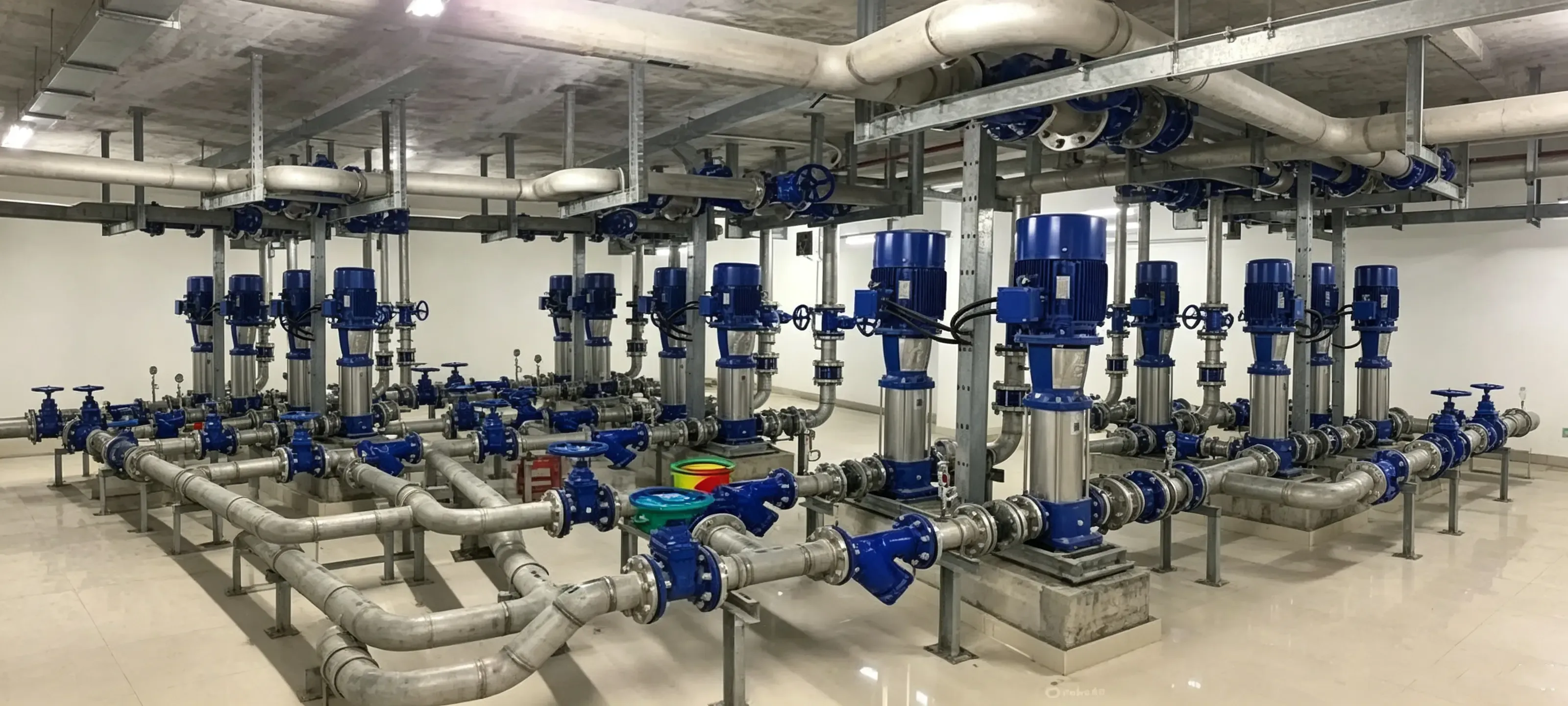
What Happens When Automatic Air Vent Valves Are Omitted or Undersized
Field data from HVAC commissioning reports reveals a consistent pattern: systems with insufficient automatic air vent valve coverage experience 3–5× more callbacks related to noise, uneven temperatures, and pump failures within the first two years of operation. The four consequences below represent the most costly outcomes of neglecting proper air management.
Persistent pipe noise & water hammer — Entrained air bubbles collapse violently as they pass through pump impellers and valve seats, generating pressure spikes of 2–5× the system operating pressure. This manifests as audible banging in ceiling spaces and tenant complaints about "knocking pipes." A single properly placed automatic air release valve at each riser crown eliminates this issue.
End-unit temperature inconsistency (air binding) — Air pockets lodged in coil circuits create flow blockages. A 10% air void fraction in a fan coil unit's water coil can reduce heat output by 18–25%. Occupants experience "cold spots in summer, cool spots in winter" despite the central plant operating at design capacity.
Pump cavitation & mechanical seal failure — When air enters the pump volute, the resulting cavitation bubbles implode on the impeller surface, generating localized stresses exceeding 1,000 MPa at the microscopic level. Over 2,000–5,000 operating hours, this erodes impeller vanes and destroys mechanical seals, leading to costly pump rebuilds.
Accelerated pipe corrosion — Dissolved oxygen in trapped air pockets drives electrochemical corrosion in carbon steel piping. The corrosion rate in air-saturated water at 40°C is approximately 0.12–0.18 mm/year for unprotected steel—nearly 3× faster than in deaerated water. Over a 15-year building lifecycle, this can thin pipe walls to the point of pinhole leaks.
Quality Control, Acceptance Criteria and Standards Reference
Verifying that the installation of automatic air vent valves meets design intent requires a standardized acceptance process. The following list conforms to Chinese national standards (GB series) and international standards commonly used in HVAC projects in the Asia-Pacific region (including Shanghai, Singapore, and Kuala Lumpur).
Material Certificate: Please verify the certification information of the valve body material (brass CW617N or SS304, subject to the relevant factory test report).
Third-Party Test Report: Please verify the results of the pressure cycle test (e.g., 50,000 cycles at 1.0 MPa pressure according to GB/T 13927 or ISO 5208 standards).
Site Installation Photos: Document the location of each valve using geotagged photos, clearly showing the isolation valve and easily accessible areas.
Seal integrity record: After the system is pressurized, verify that the leakage of each valve is zero during a 72-hour observation period.
Functional smoke test: For cleanroom applications, conduct localized smoke tests to ensure that smoke does not flow back from the exhaust hood into the work area.
Filter Inspection Record: Record the initial condition of the filters. The first cleaning is scheduled 6 months after the start of operation.
| Standard | Title / Scope | Relevance to Automatic Air Vent Valves |
|---|---|---|
| GB 50016 | Code for Fire Protection Design of Buildings | Material fire rating for valve bodies in fire-rated shafts |
| GB/T 13927 | Pressure testing for industrial valves | Shell strength and seat leakage test procedures |
| ISO 14644 | Cleanrooms and associated controlled environments | Particulate emission limits for valves near clean zones |
| ASHRAE 90.1 | Energy Standard for Buildings | Hydronic system efficiency requirements impacted by air removal |
| NFPA 13 | Standard for the Installation of Sprinkler Systems | Air vent requirements for wet-pipe sprinkler risers |
| Standard | Relevance |
|---|---|
| GB 50016 | Material fire rating in shafts |
| GB/T 13927 | Pressure test procedures |
| iso 14644 | Cleanroom particulate limits |
| ASHRAE 90.1 | Hydronic efficiency |
| NFPA 13 | Sprinkler riser air vents |
Deiiang™ Project Cases — Automatic Air Vent Valve in Action
The following case studies illustrate how Deiiang™ automatic air vent valve solutions have resolved persistent HVAC water system challenges across diverse project typologies. Note: Test report numbers below are illustrative format examples. Contact your Deiiang™ representative for actual certified documentation.
Case 1: High-Rise Office Tower — Shanghai Lujiazui
Project scale: 48-story Grade A office building, 2,800 fan coil units served by 4 central chillers (total 6,000 RT). Cleanliness requirement: Standard commercial IAQ. Challenge: Tenants on floors 32–38 reported persistent pipe hammer noise and uneven cooling; commissioning data showed 12 of 48 riser high points lacked automatic air vents. Deiiang™ solution: Retrofitted 48× Deiiang™ D-AV300-HP automatic air release valves at all riser crowns with integral isolation ball valves. Post-installation testing confirmed elimination of water hammer; tenant comfort complaints dropped by 94% within 3 months. Test reference: Third-party pressure cycling report No. SH-2025-AV-0042 (format example).
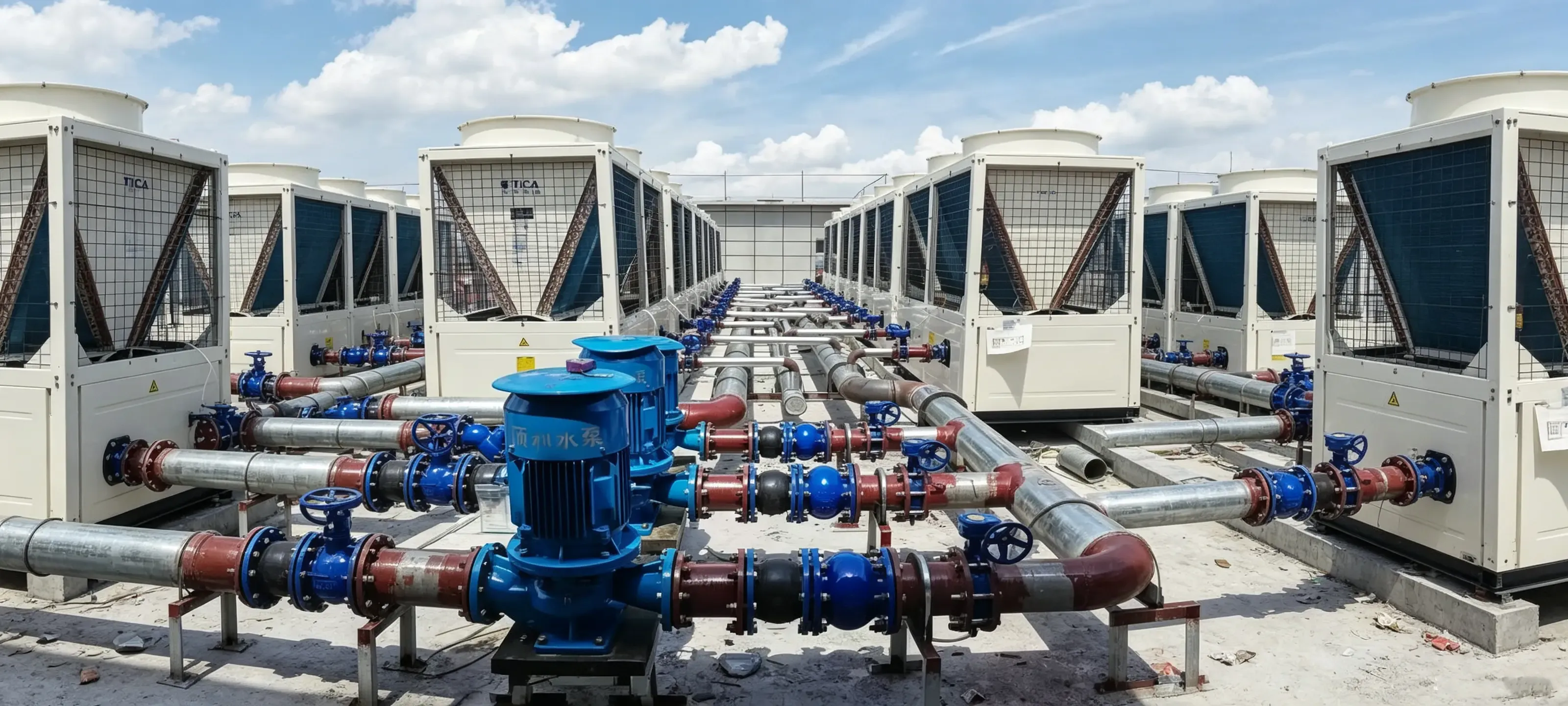
Case 2: Semiconductor Fab — Singapore Woodlands
Project scale:A 25,000-square-meter wafer fabrication facility, equipped with an ISO class 5 cleanroom, had a process cooling water (PCW) circulation system with a supply temperature of 14°C. Problem: Microbubble contamination of the PCW caused unstable flow rates in precision temperature control valves. The required stability was ±0.1°C, but the observed stability was ±0.4°C. Deiiang™ Solution: 36 Deiiang™ D-AV100-MB microbubble automatic venting valves with extended venting chambers were installed at all high points and equipment inlets of the PCW circulation system. After installation, temperature stability improved to ±0.08℃. Particulate matter emission testing in accordance with ISO 14644-1 confirmed compliance with Class 5 cleanroom standards. Test reference number: Cleanroom Particulate Matter Test Number SG-2025-PCW-0118 (example).
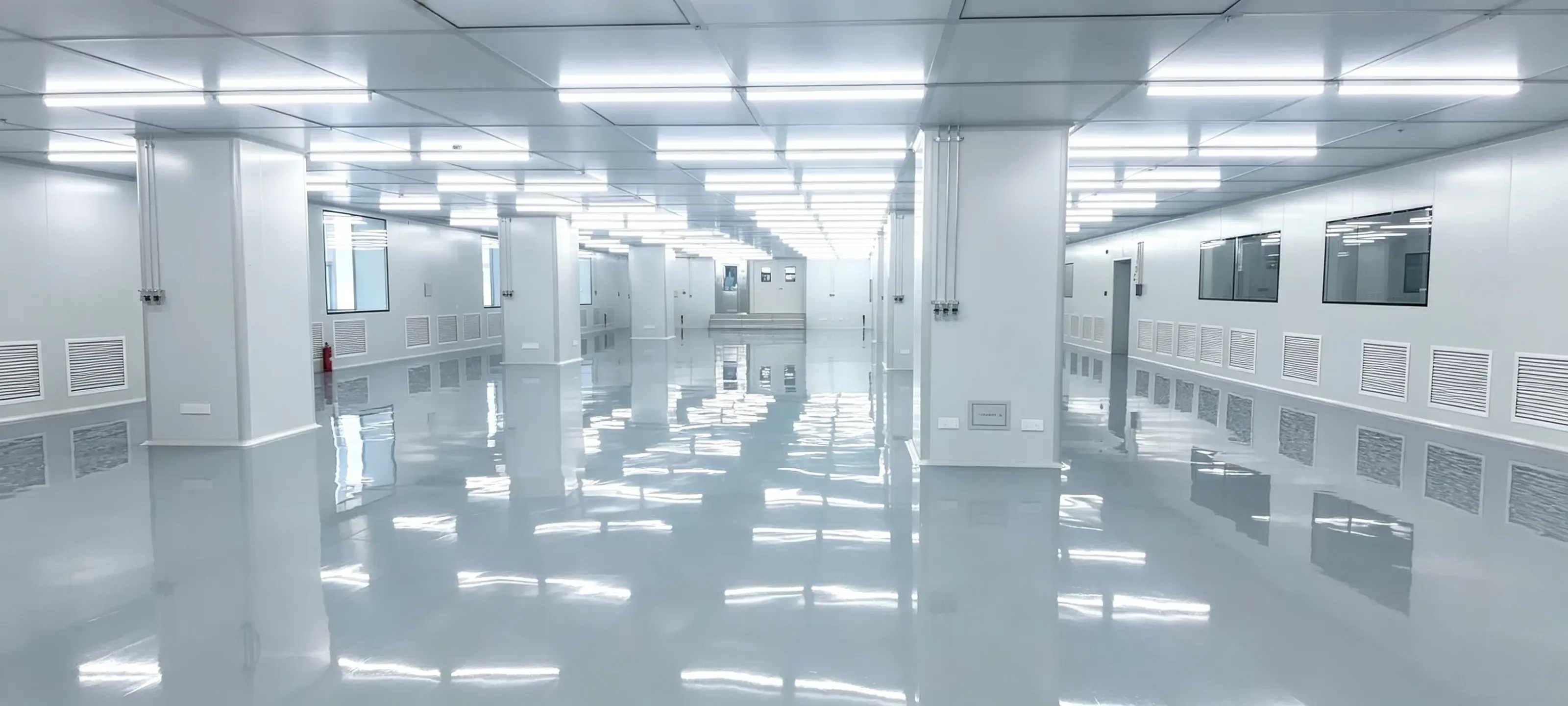
Case 3: Pharmaceutical R&D Center — Beijing Zhongguancun
Project scale:This is an 8,000-square-meter multi-tenant biotechnology facility with 12 separate HVAC zones. Problem: Frequent mechanical seal failures of the pumps resulted in the need to reconfigure three pumps within 18 months. The cause was persistent air intake on the suction side of the secondary chilled water pumps. Deiiang™ Solution: Comprehensive air management system retrofit: 24 Deiiang™ D-AV200 automatic air vent valves were installed at all air handling unit coil exhaust ports, expansion tank connections, and pump suction filter housings. Pump seal life was extended to over 24 months, and cavitation-related failures were eliminated. Customer Feedback: “Deiiang valves recouped costs in the first year by preventing pump maintenance.” Test Reference: Site Audit Report No. BJ-2025-HVAC-0073 (sample format).
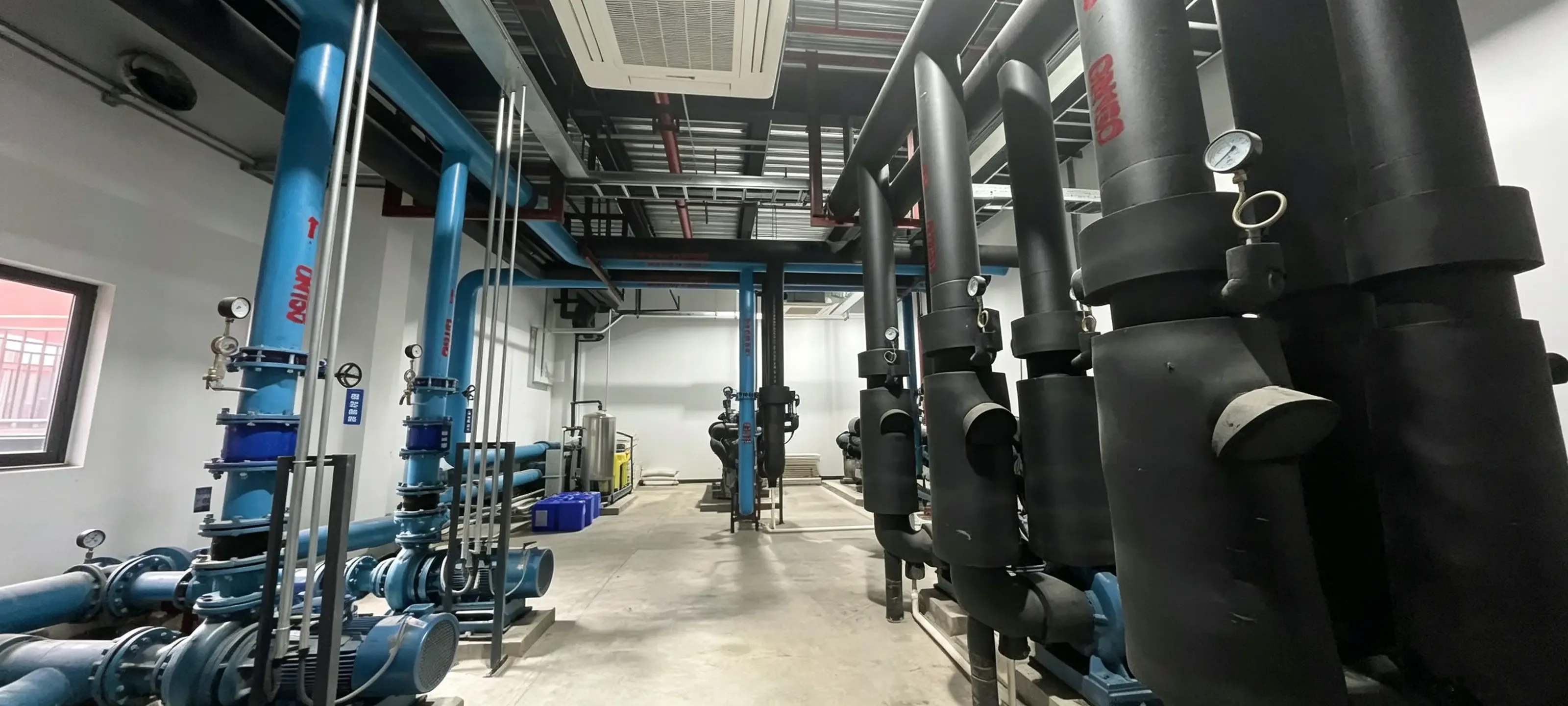
Deiiang™ installed at a pump suction strainer housing — Beijing pharma R&D center.
Maintenance and Replacement Cycles for Automatic Air Vent Valves
Automatic air vent valves are mechanical units with moving parts that degrade over time. EPDM seals, especially, are prone to compression set and chemical corrosion caused by water treatment chemicals. Systematic preventive maintenance keeps these valves delivering consistent venting performance for the full design life of the system.
| Maintenance Task | Frequency | Procedure | Trigger for Replacement |
|---|---|---|---|
| Visual inspection | Every 12 months | Check for visible leakage, corrosion, or mineral deposits around the exhaust cap | Any sign of continuous water weeping |
| Filter screen cleaning | Every 12–18 months | Close isolation valve, remove inlet filter, flush with clean water | Filter mesh deformation or perforation |
| Functional test | Every 3–5 years | Momentarily depress the exhaust cap pin to verify free movement; observe for audible air release and re-sealing | Sluggish float return or failure to re-seal |
| Complete valve replacement | 8–12 years (or as indicated) | replace entire automatic air bleeder valve assembly; upgrade to current Deiiang™ model if original is discontinued | Visible body corrosion, stripped threads, or repeated seal failures |
| Task | Frequency |
|---|---|
| Visual inspection | Every 12 months — check for leakage/corrosion |
| Filter screen cleaning | Every 12–18 months — close isolation valve, flush filter |
| Functional test | Every 3–5 years — depress cap pin, verify re-seal |
| Full valve replacement | 8–12 years — upgrade to current Deiiang™ model |
Cost Estimation and Comparison for Automatic Air Vent Valve Deployment
The table below provides indicative unit cost ranges for automatic air vent valve procurement and installation in typical commercial HVAC projects. These are illustrative estimates based on mid-2026 market data for projects in Shanghai and Singapore. Actual costs vary with project scale, specification grade, and local labor rates.
| Cost Category | Standard Brass DN15 Auto Air Vent Valve | High-Pressure SS304 DN20 | Micro-Bubble Degassing DN25 |
|---|---|---|---|
| Valve unit cost (ex-works) | $12–$25 USD | $35–$65 USD | $55–$95 USD |
| Isolation ball valve (matching) | $8–$15 USD | $12–$22 USD | $18–$30 USD |
| Installation labor (per point) | $18–$35 USD | $22–$40 USD | $25–$45 USD |
| Total installed cost per point | $38–$75 USD | $69–$127 USD | $98–$170 USD |
| Cost of NOT installing (1 pump rebuild) | $2,500–$8,000+ USD — far exceeding the cost of proper air vent coverage | ||
| Cost Item | Standard DN15 | HP SS304 DN20 | Micro-Bubble DN25 |
|---|---|---|---|
| Valve unit | $12–$25 | $35–$65 | $55–$95 |
| Isolation valve | $8–$15 | $12–$22 | $18–$30 |
| Install labor | $18–$35 | $22–$40 | $25–$45 |
| Total/point | $38–$75 | $69–$127 | $98–$170 |
| Cost of 1 pump rebuild: $2,500–$8,000+ | |||
Key cost drivers: Project scale (bulk purchasing discounts apply above 200 units), accessibility of installation locations (ceiling work adds 30–50% labor premium), material grade (SS304 vs. brass), and whether the system requires freeze-protected or intrinsically safe valve variants for specific environments.
Conclusion: Small Valve, Massive System Impact
The evidence is clear: an automatic air vent valve costing as little as $15–$25 per unit can prevent pump failures costing $5,000+, eliminate chronic tenant comfort complaints, and extend the service life of piping systems by a decade or more. The return on investment for proper air management in hydronic HVAC systems is among the highest of any mechanical system component.
Material selection requires balancing three priorities: air venting reliability (float-type mechanism with proven EPDM seals), installation practicality (compact body, integral filter, compatible with standard isolation valves), and long-term serviceability (accessible locations, documented maintenance schedules). Deiiang™ addresses all three with its D-AV series, engineered under the direction of product designer Jason.peng to meet the demands of projects ranging from Shanghai super-tall towers to Singapore semiconductor fabs.
Micro-Glossary / Key Terminology
Automatic Air Vent Valve — A self-regulating mechanical valve that uses a float mechanism to automatically release accumulated air from liquid piping systems while preventing water leakage. Also referred to as an automatic air release valve or auto air vent valve.
Cavitation — The formation and violent collapse of vapor bubbles in a liquid due to local pressure drops, causing shock waves that erode pump impellers and valve seats. Air ingestion is a primary cause of cavitation in HVAC water loops.
EPDM Seal — Ethylene Propylene Diene Monomer rubber, widely used in automatic air bleeder valve seals for its excellent resistance to hot water (up to 120°C), ozone, and chemical water treatment additives.
Air Binding — A condition where trapped air in a hydronic coil or pipe restricts water flow, causing reduced heat transfer and uneven temperatures at terminal units.
Float-Type Mechanism — The core sensing principle in most automatic air vent valves, where a buoyant element rises with water to close the valve and sinks in the presence of air to open the vent.
Frequently Asked Questions
Q: How do I select the right automatic air vent valve for my HVAC system?
A: Picking a suitable air vent depends on your actual system conditions. You’ll need to factor in working pressure (typically 0.6–1.6 MPa), operating temperature ranging from -10°C to 120°C, standard connection sizes of DN15 to DN25, and whether your project needs a built-in shut-off feature. Our Deiiang™ D-AV200 series works great for most conventional commercial HVAC systems. For high-rise buildings exceeding 150 meters, we recommend the D-AV300-HP model, as it is specifically designed for high-pressure systems in high-rise buildings.
Q: How do I make sure my automatic air vent is installed in right way?
A:You should pay attention to the following points:
1. The valve cap should stay slightly loose and avoid overtighten it.
2. The isolation ball valve is installed at the bottom and in the open position.
3. The filter screen is clean.
4. The valve is placed at the highest point in the system. There is no leakage after the initial air has circulated through the system.
It is recommended to observe for 72 hours after commissioning.
Q: What may causes continuous leakage from the automatic air vent valve?
A: Most of continuous leakage because the following four common field problems:
1. Dirt or debris buildup on the seals can prevent the valve from closing completely. This can be resolved by cleaning the filter and flushing the valve body.
2. Material aging or contact with chemicals can cause wear on the EPDM seals. Replacing the seals will solve the problem.
3.Scale buildup may the float mechanism over time . You can clear this residue with a mild acid-based descaling solution.
4. If the valve is installed with a vertical deviation exceeding 15°, just need to reinstall it to be perfectly vertical.
Q: Can one automatic air vent valve serve multiple air accumulation points?
A: No. Each local high point in the piping system requires its own dedicated automatic air release valve. Air cannot travel downward to reach a remote vent location—it will always collect at the highest local elevation. Attempting to use a single valve for multiple high points guarantees persistent air binding at unvented locations.
References
GB 50016 — Code for Fire Protection Design of Buildings
GB/T 13927 — Pressure Testing for Industrial Valves
ISO 14644-1 — Cleanrooms and Associated Controlled Environments — Part 1: Classification of Air Cleanliness
ASHRAE 90.1 — Energy Standard for Buildings Except Low-Rise Residential Buildings
NFPA 13 — Standard for the Installation of Sprinkler Systems
ASTM E814 — Standard Test Method for Fire Tests of Penetration Firestop Systems
Henry's Law Constants — NIST Chemistry WebBook: Oxygen Solubility in Water
Article prepared by Deiiang™ Technical Documentation Team. Product designer: Jason.peng. All product specifications and case study data are illustrative unless accompanied by certified third-party test reports. For the latest technical datasheets, project references, and on-site assessment requests, visit www.deiiang.com. © 2026 Deiiang. All rights reserved.