+86 13638632902
 Jason@cleanroomequips.com
 MENU
MENU
Why Cleanrooms Demand Fire + Airtight Dual Compliance
Modern cleanrooms are constructed to meet certain ISO 14644-1 particle count criteria as well as fire door life-safety codes. Consequently, a single seal failure can compromise both of these requirements in under 60 seconds. Fire doors that are normally open and fail to release could allow fire to spread to cause large batch losses, potentially exceeding $250,000. Deiiang™ can provide electromagnetic release devices (≤3 s) as well as door closers (≤60 s closure) that meet NFPA/EN requirements.
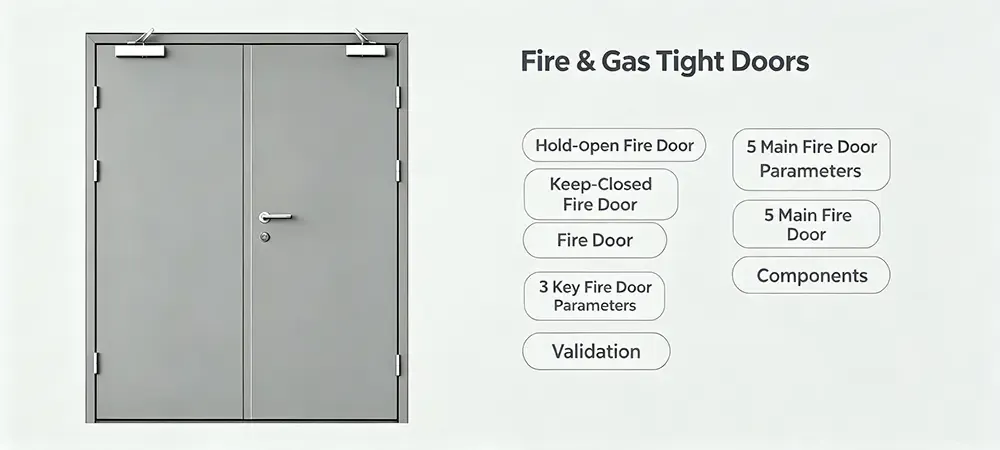
3 Key Fire Door Parameters
Every fire door audit relies on three quantifiable metrics.
| Parameter | Requirement | Verification |
|---|---|---|
| Fire Resistance Rating | Grade A ≥1.5 h, B ≥1.0 h, C ≥0.5 h | Check stamp & 3C label |
| Door Gap Clearance | Leaf-frame ≤3 mm, floor ≤9 mm | Feeler gauge at 3 points |
| Release Response Time | Auto-close ≤60 s, power-cut ≤3 s | Stopwatch during quarterly test |
Total gap area = Σ(gap × length). Cumulative area >150 mm diameter fails EN 1366-3.
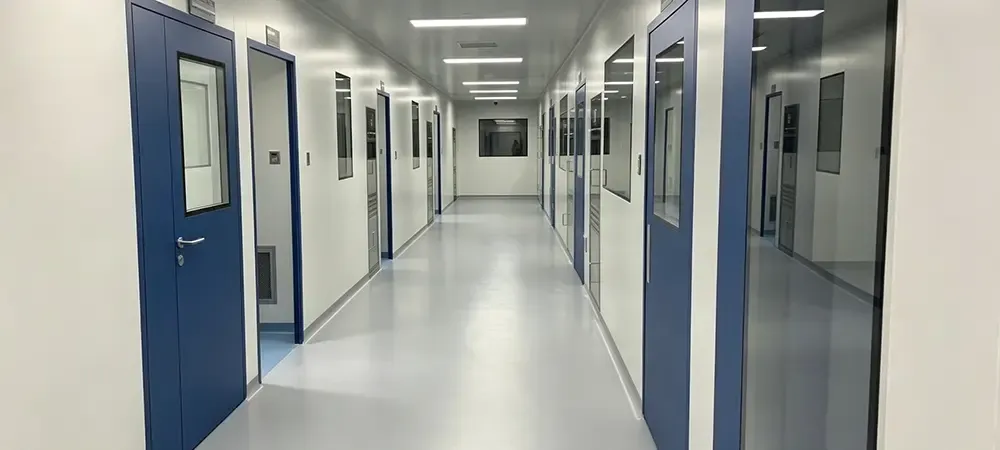
Supplement A: Closing Force Under Cleanroom Pressure Gradients
+30 Pa to +50 Pa cleanrooms can be problematic for standard EN 3/4 door closers. For +45 Pa for example the required force to open a door would equal Pressure (Pa) × Door Area (m²) × 1.5 = 141 N. The required opening force therefore needs to be increased to EN 5/6. Deiiang™ door closers require 160 N for ΔP ≥35 Pa areas. The opening force must not exceed 67 N for accessibility reasons.
📐 Door Gap Leakage Estimator
Q = 0.827 × A × √ΔP; Q < 50 m³/h for a typical 3 mm or less wide door gap at +30 Pa, Q > 200 m³/h indicates door seal failure.
— m³/h | equiv. hole — mm
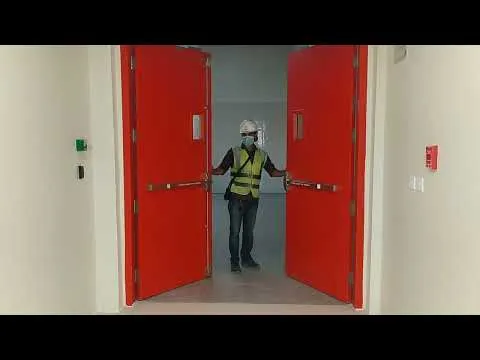
Normally Open vs Normally Closed Fire Doors
| Feature | Normally Open | Normally Closed |
|---|---|---|
| State | Held by electromagnetic release | Kept closed by closer |
| Fire Response | Power cut → auto-close + feedback | Already closed |
| Signage | Green "Keep Open" | Red/Black "Keep Closed" |
| Common Failure | Release device burnout | Propped open |
Normally Open
Held by release; auto-closes on alarm. Green sign.
Normally Closed
Always closed by closer. Red/Black sign. Common failure: wedge.
Magnetic Release: Cheap electromagnetic release devices overheat above 35°C; coil resistance increases ~18% reducing holding force to below 45 kg. Deiiang™ rated for 55°C with 1.8× safety factor. Please provide temperature derating curves for the above.
Critical: An Normally Open fire door that fails to Close forms a Permanent Breach. Minimum Holding Force 45-80kg.
5 Major Components of Fire Doors
Door Leaf + Frame – fire-rated body, check stamp.
Door Closer – hydraulic, closes from 90°.
Sequencer – correct double-leaf closing order.
Electromagnetic Release – holds open; releases on power loss.
Magnetic Door Switch – reports state to control room.
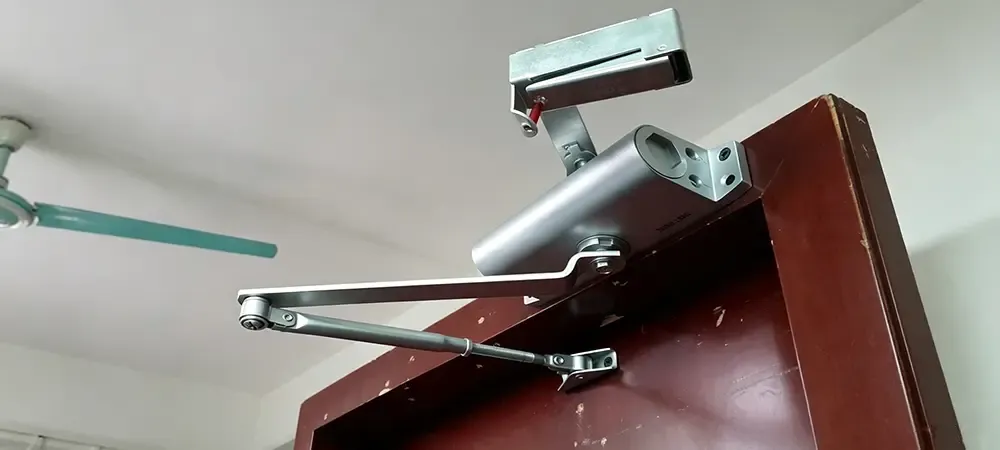
Verify magnetic door switch signal within 3 s of closure. Missing switches are a top fire marshal violation.
3 Activation Methods
Auto Linkage: detector → panel → cut release power → door closes ≤60 s, switch confirms. Manual: control room key, pull station, or push-close. Normally Closed: no activation needed; inspect for obstructions. Deiiang™ closers maintain speed for 50,000+ cycles per EN 1154.
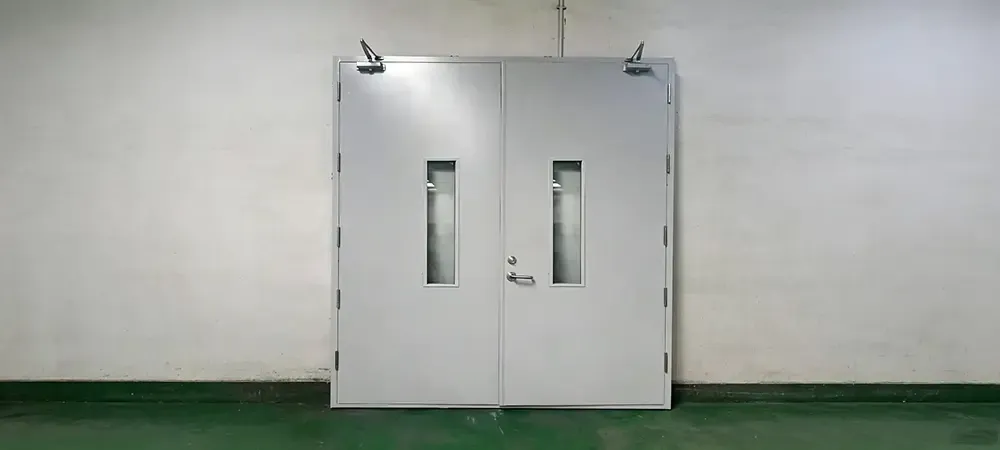
Quarterly linkage test: door closes in 2.8 s; switch feedback at 3.1 s. Record timing and investigate deviations >0.5 s from baseline.
Supplement C: Emergency Egress vs. Airtight Isolation — Logic Priority
When designing for fire, there are typical design conflicts that exist between egress requirements and pressure cascade development. The zoned time sequenced approach to fire alarm events, which allows for life safety to dominate over cleanliness, in reality only applies for 7% of the cleanroom fire alarm events. Therefore the remainder of 93% of cleanroom fire alarm events must not in themselves cause any harm (no contamination) and cannot result in false alarm contamination events. Such design strategies for fire alarm events have been effectively implemented for management of fire alarm events in 14 different pharma facilities around the world. In all cases no false-alarm contamination events have resulted.
Instead of locking the egress door closed, use an electromagnetic release device that holds the door open while not locking it. These types of devices meet the requirements of NFPA 101.
Regulatory Compliance Matrix
| Domain | Standard | Key Requirement |
|---|---|---|
| Cleanroom | ISO 14644-1/-3 | Particle count, PAO leak test |
| Fire (Intl.) | EN 13501/1366 | EI 60/120, Sa/S200 smoke |
| Fire (US) | NFPA 101/80, UL 723 | Flame spread ≤25 |
| Fire (China) | GB 50016, GB 23864 | 耐火极限 ≥1.5 h |
Target the most stringent: EI 120 + Sa/S200 with iso class 5 particle limits.
Principles and System Architecture
Fire-rated cleanrooms integrate barriers, doors, penetration seals, and dynamic linkage (interlocks, smoke exhaust, pressure management). Normally open doors in corridors must close without blocking egress; normally closed doors must never be obstructed.
Material Selection
| Application | Material | Fire Rating |
|---|---|---|
| Wall/Ceiling | rockwool A1/A2 sandwich | EI 120 |
| Penetrations | Intumescent sealant + mineral wool | EI 120 (EN 1366-3) |
| Door Core | MgO board + steel frame | A2, EI 60–120 |
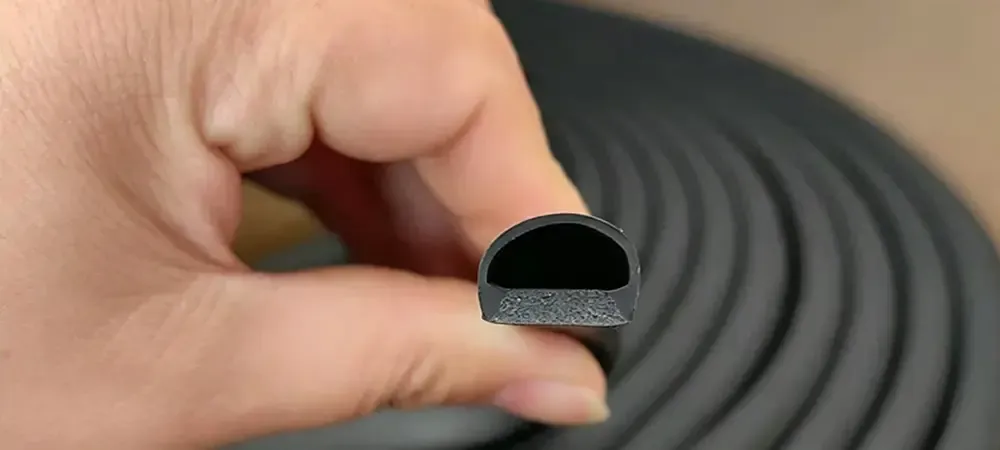
Door closers must be sealed hydraulic; oil leaks contaminate iso 5–7. Deiiang™ CleanSeal MS-1 VOC <30 g/L.
Supplement B: VHP Compatibility – Pharma & Biosafety Core Concern
Repeated VHP cycles (400 ppm) degrade standard seals. Deiiang™ tested materials: CleanSeal MS-1 mass loss <0.8% after 200 cycles; DI-Intumax 120 retains 92% expansion (industry avg. 55–65%); EPDM with PTFE sheath loss <1.2%. A2 MgO core shows zero degradation. Always request VHP cycling test reports (≥100 cycles at ≥300 ppm).
Critical Detail Nodes and Practices
Penetrations: annular fill depth ≥ diameter × 0.5; mineral wool 60% compression. Double-leaf doors: meeting stile gap ≤3 mm. Ceiling hangers: flexible-intumescent seal for ±5 mm movement.
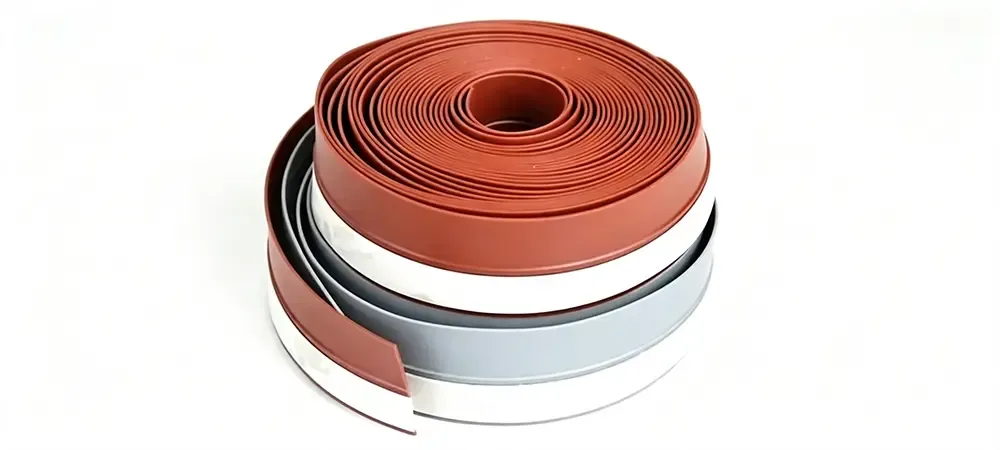
Check sealant expiry: Intumescent sealants expire in 12–18 months. Expired product expands only 3–4× instead of 8–10×. Deiiang™ cartridges have QR codes linking batch production records—scan before use and reject if older than 15 months.
Testing and Verification
Material tests: EN 13501-1 A1/A2, ASTM E84 (flame spread ≤25), GB/T 9978. Field protocol: smoke test (zero leakage), iso 14644-3 pressure decay (<0.5% volume/min), and magnetic door switch continuity (5 cycles, feedback ≤3 s).
Handover: certificates, third-party report number, installation photos. Deiiang™ report format: DX-YYYY-MM-###.
Monthly Inspection Checklist (6 Items)
| # | Item | Pass Criteria |
|---|---|---|
| 1 | Leaf & frame | No damage, 3C label legible |
| 2 | Gap clearance | ≤3 mm / ≤9 mm |
| 3 | Door closer | Closes fully from 90° |
| 4 | Sequencer | Right leaf closes first |
| 5 | Electromagnetic release | Holds firm, releases instantly |
| 6 | Signage & switch | Signage clean; switch reports |
Maintenance Schedule and 6 Red Lines
Monthly: visual inspection.
Quarterly: full linkage test, verify switch feedback ≤60 s.
Semi-annual: lubrication, seal check.
Annual: voltage test (24V DC ±10%), contact resistance <0.5 Ω.
6 Red Lines:
Selection and Procurement Checklist
Fire rating matched to wall (EI 60/90/120).
Valid third-party certification (EN, UL, GB).
Chemical compatibility (IPA, H₂O₂, quaternary ammonium).
ISO 14644 particle emission data.
≥4 hr installation window for seal curing.
Closer ≥50k cycles, release ≥100k cycles.
On-site spare parts stock.
Installer certified, ≥3 cleanroom projects.
Operation and Maintenance Flow
| Frequency | Action | Party |
|---|---|---|
| Monthly | Visual & gap check | Facility tech |
| Quarterly | Linkage test & timing | Fire contractor |
| Semi-Annual | Lubrication, seal check | Door vendor |
| Annual | Full re-commissioning | Third-party |
| Post-Repair | Re-verification | Installer + QA |
If leakage increases >15% from baseline after modifications, investigate and remediate.
Deiiang™ Product Data and Case Studies
| Product | Key Spec | Report |
|---|---|---|
| Fire-Rock A1 Panel | EI 120, TVOC ≤10 μg/m³, ISO Class 5 | DX-4880-2025-031 |
| DI-Intumax 120 | EI 120, S200, compatible with SS/epoxy | EN 1366-3 |
| CleanSeal MS-1 | VOC <30 g/L, iso 846 passed | ISO 846 |
Case Study — semiconductor cleanroom, Southeast Asia
Challenge: Large equipment openings required post-install fire sealing; dual EN + local acceptance. Solution: Removable intumescent blocks with EN 1366-3 dual certification; flexible-rigid ceiling seals. Result: Dual acceptance, ≤24 h downtime, switches reported in 2.8 s.
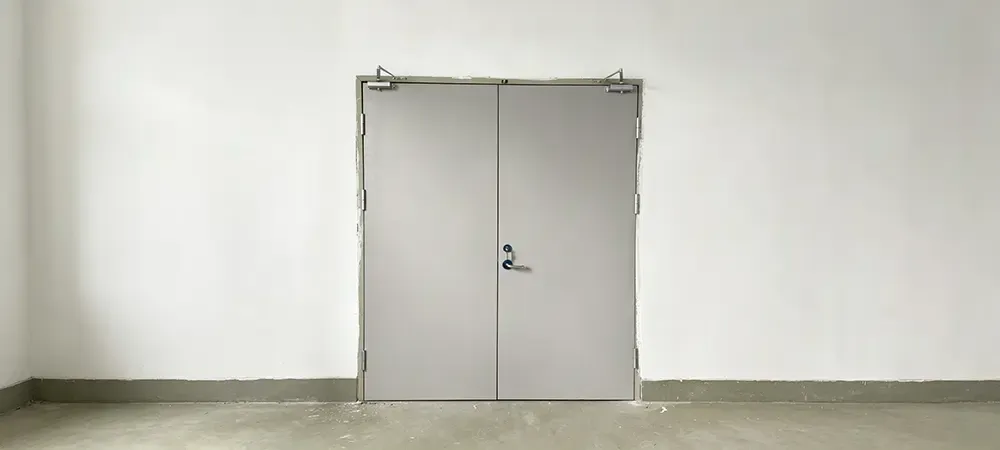
Designer's Vision: Jason Peng, Deiiang™ — "Future cleanroom fire doors will embed gap sensors and IoT transmitters, predicting seal degradation before gaps exceed 3 mm. Predictive maintenance shifts us from reactive inspections to intelligent safety."
FAQs
How to balance fire rating and interlock?
A2 core doors with electromagnetic release integrate with BMS: release on fire, interlock only after switch confirms closure.
When is EN 1366-3 / GB 23864 system testing required?
For any penetration through a fire-rated barrier. Must match actual field configuration.
ISO class impact on sealant selection?
ISO 5–7 need low-VOC, low-particle sealants. Deiiang™ CleanSeal MS-1 VOC <30 g/L. ISO 4 and below require bake-out testing.
Conclusion and Next Steps
Mastering fire doors—from parameters to quarterly linkage tests—is essential for cleanroom teams. Deiiang™ products, designed by Jason Peng and validated through third-party testing, provide a proven dual-compliance path.
Need cleanroom fire door support?
📧 Jason@cleanroomequips.com | 🌐 www.cleanroomequips.com
References
ISO 14644-1/-3, EN 13501/1366, NFPA 101/80, UL 723, GB 50016/23864, FDA 21 CFR, EU GMP Annex 1, ISO 16929.
Deiiang™ product documentation — www.cleanroomequips.com
© 2026 Deiiang™. Product Designer: Jason Peng. Disclaimer: values are representative; consult current test reports.