+86 13638632902
 Jason@cleanroomequips.com
 MENU
MENU
Using compatible fireproofing and sealing products will reduce the number of bioburden traps in a room, maintain iso 14644 pressure classification and increase the chance of effective cleanroom sterilization. The surface integrity of FM 4910 / UL 94 V-0 products will be maintained to greater than 95% after 500 VHP cycles. Also the sealed penetration will have been cut in a way that reduces the leak rate by greater than 40% @ 20–30 Pa which in turn reduces the required aeration time by 15–25%. We require whole-panel FM 4910 test reports and not simply the raw material certificates.
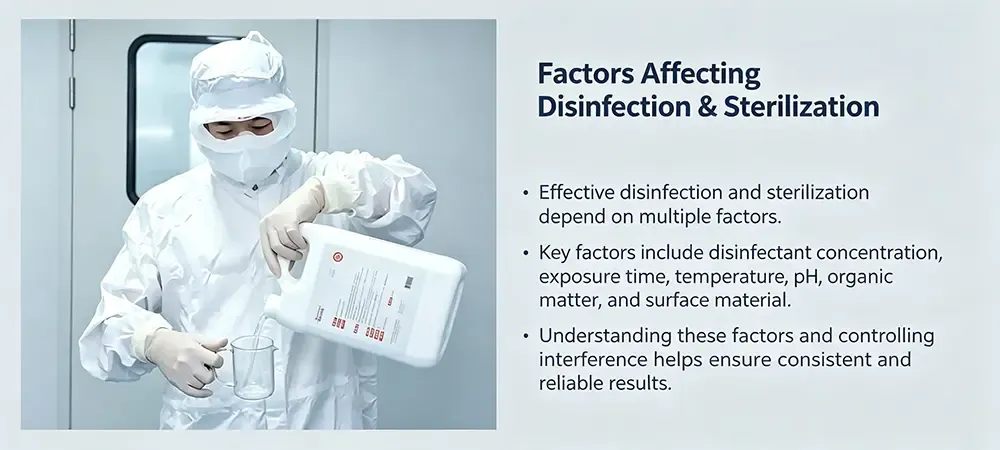
Processing Dose: Intensity Multiplied by Time
Dose (D) equals intensity (I) times contact time (t). For VHP, intensity is H₂O₂ concentration at the target surface — and a 2 mm door gap can drop in situ concentration enough to force 15–25% longer injection phases. Cleanroom sterilization protocols must include dynamic smoke visualization during pressurization ramp, not just static decay testing, because transient leaks at +30 to +50 Pa can cause 8–12 minute concentration gradients across a 40 m³ room.
| Sterilant | Intensity | Contact Time | Deiiang™ Recommendation |
|---|---|---|---|
| VHP (35% H₂O₂) | 250–400 ppm | 15–45 min | SealMax VHP Sealant — 1000-cycle validated |
| IPA 70% | 70% v/v | ≥2 min wet | CleanPanel FP — IPA-resistant coating |
| Peracetic Acid 0.2% | 2000 ppm | 10–30 min | Fluoroelastomer gaskets at all penetrations |
| Moist Heat 121°C | 121°C / 15 psi | 15–30 min | Verify panel core ≥130°C continuous rating |
250–400 ppm | 15–45 min
Deiiang™: SealMax VHP Sealant
70% v/v | ≥2 min wet
Deiiang™: CleanPanel FP coating
2000 ppm | 10–30 min
Deiiang™: Fluoroelastomer gaskets
121°C/15psi | 15–30 min
Deiiang™: Core ≥130°C rating
Microbial Species and Population Bioburden
Different cleanroom microorganisms exhibit vastly different resistance — Bacillus spores survive 70% ethanol that kills vegetative cells. High levels of bioburden (above 10⁶ CFU/cm²) can result in cleanroom disinfectant failing to penetrate stacked cells that form within pores of a surface, protecting interior surface areas. In addition to surface roughness, a seam between two panels of a surface will have 10 times the area of microbial hideout than the smoothest seam created (i.e. Ra ≤ 0.8 µm). CleanPanel FP therefore has Ra ≤ 0.8 µm for all surface areas and has continuous cove radii of R ≥ 10 mm in order to remove any 90° corners from surfaces to prevent organism accumulation. Whilst a single 1 mm joint in a 10 m² area of a wall could potentially harbor in excess of 10³ CFU more than a perfectly sealed surface of equivalent area, a surface which is perfectly sealed all the time will always be cleaner than one which is not.
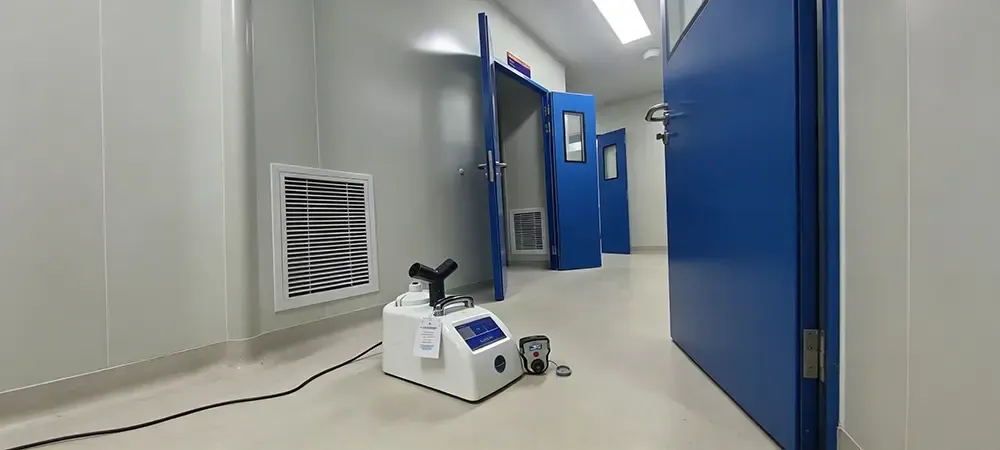
Temperature Effects on Sterilization Kinetics
Formaldehyde has a Q₁₀ value of approximately 2, or 10°C rise in temperature roughly halves kill time. For example, formaldehyde at a temperature of 20°C will require approximately 32 hours to kill anthrax spores at this temperature. However, at a temperature of 37°C, kill time is reduced to approximately 1.5 hours. Repeated thermal cycling of fumigation cabinets between 121°C steam and 22°C ambient temperatures will cause differential expansion of the panel core and the sealant. A joint testing 'tight' at commissioning may therefore eventually crack after approximately 200 cycles. Deiiang™ SealMax VHP sealant is specifically formulated for use between -20°C and +80°C, and has an elastic recovery of greater than or equal to 85%.
⚠️ Industry Insider — FM 4910: Whole-Panel vs. Raw Material
Many manufacturers tested only the raw core material, not the fully assembled panel. When laminated with coatings and adhesives, smoke toxicity can change significantly. Deiiang™ strongly advises: always request whole-panel FM 4910 test reports — including laminate stack-up and joint sealant — to avoid costly re-validation after fire safety audits.
Relative Humidity in Gaseous Disinfection
A recent project in the Suzhou Industrial Park demonstrated that improvement of door seals reduced RH deviation of VHP conditioning phases from ±12% to ±4% and corresponding cycle time was reduced by approximately 18%. Uninsulated penetration sleeve through cleanroom wall leads to condensation on the sleeve surface and creates microbial niches, which will render cleanroom disinfection of the whole cleanroom area ineffective.

pH, Chemical Reactivity, and Residue Management
The following cleanroom disinfectant are most active at different pH values. Since many disinfectants for use in cleanrooms are chlorine-based and can decompose to release corrosive Cl₂ gas below pH 4, the following are tested for ≥ 500 cycles across the pH 2–12 range.
Residual corrosion from VHP residue can occur even when the correct pH has been used: here, below PE coating surface films start to develop micro-cracks after 300–400 cycles of VHP exposure by peroxide radical attack. This does not affect PVDF-coated surfaces for longer, however, because of its higher surface energy of approximately 30 mN/m. Evaporation of the resulting H₂O₂ film is slowed down by the increased surface energy, thereby even increasing the contact time. A modified low surface energy topcoat (contact angle ≥ 95°) is integrated into the CleanPanel FP, in order to accelerate the formation of beading residues, thereby reducing the persistence of the residue film by approximately 40% compared to typical PE-coated clean room panels. Here, simply asking for surface contact angle and residue evaporation rate does far more than requesting for pass/fail results of an immersion test.
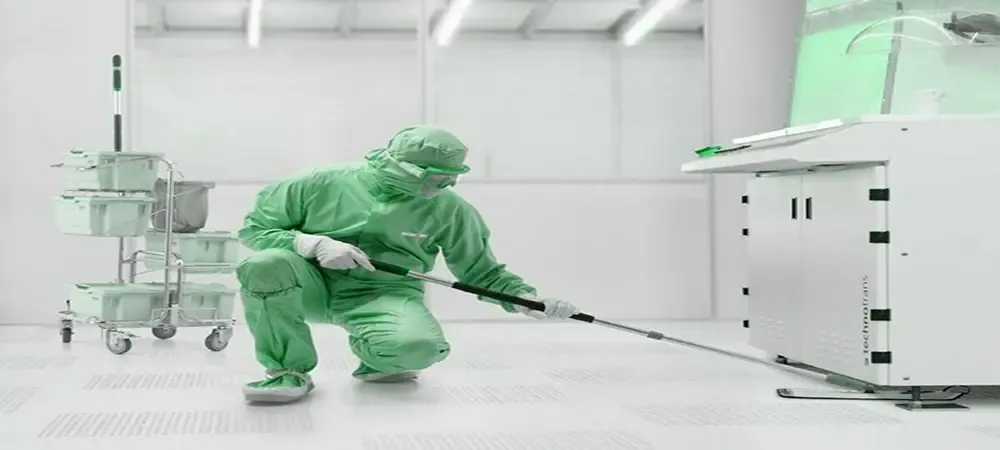
Chemical Antagonists and Organic Soil Load
A 1% bovine serum albumin film reduces free chlorine by 40–60% within 30 seconds. Porous sealants and unsealed joints act as "disinfectant sinks" — continuous, non-porous sealing with Deiiang™ SealMax minimizes this antagonist reservoir effect. Rigorous SOPs must separate cleaning from cleanroom disinfection.
"In cleanrooms, fireproofing and sealing are not just about safety — they are about cleanroom sterilization success, cycle time, and compliance predictability."
— Jason.peng, Deiiang™
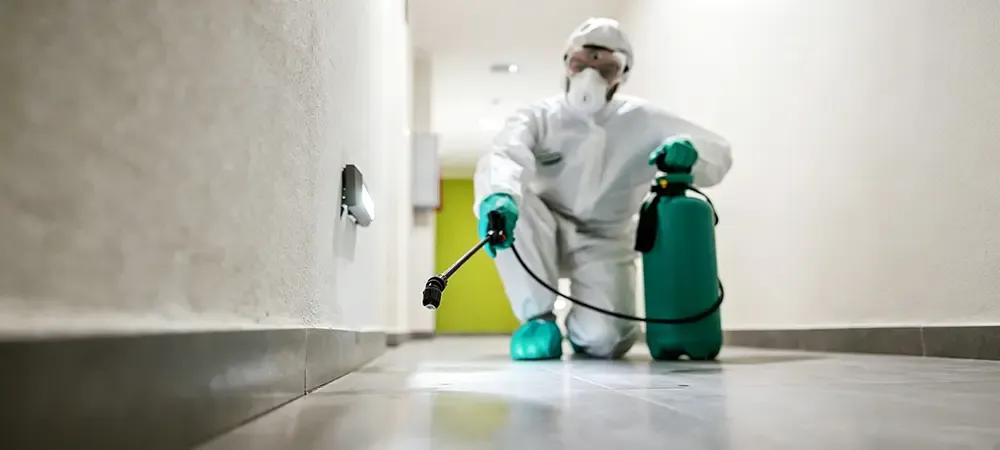
Penetration Power and Accessibility
VHP cannot reliably reach the interior of a 0.5 mm unsealed crack if geometry creates a dead-end pocket. Design for continuous seal beads, cove radii at all orthogonal transitions, and equipment pedestals elevated ≥ 150 mm.
🔌 Field Insight — The #1 Overlooked Leak Path
In over 80% of cleanroom sterilization failure investigations, the root cause was VHP escaping through unsealed electrical outlet boxes. Standard boxes create a direct conduit to the wall cavity. Deiiang™ recommends integrally molded outlet baseplates — factory-sealed, single-piece units that eliminated on-site variability. At a Zhangjiang Hi-Tech Park facility, switching to molded baseplates reduced VHP cycle failures from 12% to under 2% over 18 months.
Compliance Pathway: URS → DQ → IQ → OQ → PQ
A thorough cleanroom sterilization compliance program is comprised of three main factors: material fireproofing, cleanroom sealing integrity and effective sterilization methods. URS defines the Sterilization Method(s), 6-log reduction goal and associated FM 4910 fire rating. DQ verifies Whole-Panel FM 4910 reports and greater than or equal to 500-cycle VHP data. IQ performs iso 14644-3 pressure decay test at +30/+50 Pa as well as dynamic smoke visualization test. OQ defines and verifies VHP concentration at ≥12 points and achieves greater than or equal to 6-log BI kill. PQ defines and verifies successful completion of ≥3 consecutive successful cycles with reproducible results. Quarterly re-test of pressure decay test as well as inspection and documentation of Shore hardness of sealant every 200 cycles.
Materials & Systems: Fireproofing and Sealing Empower Sterilization
FM 4910 fire test certifies to Low Smoke/Toxicity/Off-Gassing criteria as fire smoke is hazardous as it can contaminate all surfaces in a contaminated environment. UL 94 V-0 ratings demonstrate vertical burn of self-extinguishing materials. ASTM E84 Class A ratings ensure that the material Flame Spread is ≤ 25. A sealing system that has been validated in accordance with ISO 14644-3 to maintain its elasticity throughout 500 to 1000 cycles of VHP/IPA cleaning and not shed particulate matter to iso class 5 or below thresholds.
| Material | Fire Rating | VHP 500-Cycle | Deiiang™ Recommendation |
|---|---|---|---|
| FM 4910 CleanPanel FP | FM 4910 / UL 94 V-0 / ASTM E84 A | ≥92% gloss retention | Preferred for GMP Annex 1 aseptic suites |
| Generic FRP | UL 94 V-1 | ~65% after 200 cycles | Not for VHP-intensive zones |
| 316L Stainless (uncoated) | Non-combustible | ≥98% | Verify weld seam sealing |
FM 4910 / UL 94 V-0
≥92% gloss retention
GMP Annex 1 preferred
UL 94 V-1
~65% after 200 cycles
Not for VHP zones
Case Studies
Case A: Biopharmaceutical CDMO, Suzhou Industrial Park — 14 unsealed penetrations across 120 m² caused ±8 Pa pressure swings and ≥22 min VHP ramp-up. Deiiang™ SealMax continuous sealing + molded outlet baseplates reduced leakage by ≥40% (2.8 → 1.6 m³/h·m @30 Pa), shortened injection by 20%, and passed Jiangsu GMP inspection with zero observations.
Case B: Semiconductor Wafer Fab, Zhangjiang Hi-Tech Park — Raw-material-only FM 4910 certificates flagged during audit. Deiiang™ CleanPanel FP (whole-panel certified) reduced baseline particles ~30% and passed fire safety review on first submission.
Case C: Medical Device Sterilization, Kunshan — Steam/VHP alternation caused sealant embrittlement within 9 months. Anti-condensation coating + SealMax sealant reduced maintenance frequency ~50%; VHP cycle success rate improved from 88% to 98%.
Design Essentials
Verification: dynamic smoke + pressure decay + tracer gel
Designer: Jason.peng — Deiiang™ Cleanroom Systems
Validation & Maintenance
Initial validation per ISO 14644-3 includes static decay + dynamic smoke, pressure differential recovery, and VHP ramp-up baseline. BI challenge testing at ≥12 locations — especially near outlets and door perimeters. Re-validate quarterly or every 200 cycles; inspect sealant Shore hardness (drift > ±5 units triggers root-cause investigation). For ≥3 VHP cycles/week, Deiiang™ recommends semi-annual sealant coupon pull-testing.
Frequently Asked Questions
Q: FM 4910 vs UL 94 vs ASTM E84 for cleanrooms?
FM 4910 testing assesses material for Smoke, Toxicity and Off-Gassing specifically to test for Cleanroom Materials. Ask for Whole Panel reports (panels tested in 'as received' configuration) rather than raw material test reports (which were tested in isolation).
Q: Which sealants are VHP-compatible and low-outgassing?
These silicone-based sealants have FM 4910 certification, and have been tested for VHP for greater than or equal to 500 cycles. Deiiang™ SealMax continues to have elasticity and maintain low particulate release for the service life of the sealant.
Q: Why do electrical outlets cause VHP failures?
Because typical boxes for standard electrical outlets are Open to Wall, they can create leaks in the cavity. Baseplates for outlets can be integrally molded with gaskets to make sure there is no on-site variability. This has been shown to cut cycle failures for pharmaceutical facilities from about 12% to under 2%.
📥 Download Resources & Consult
CAD/BIM detail drawings | Material compatibility white paper (500+ cycle data) | ISO 14644-3 validation checklist | Whole-panel FM 4910 verification guide. Contact Deiiang™ — Product Designer: Jason.peng
References
iso 14644-1:2015 & iso 14644-3:2019 — Cleanrooms and controlled environments. ISO.org
EU GMP Annex 1: Manufacture of Sterile Medicinal Products (2022). EudraLex Vol.4
FM 4910 — Cleanroom Materials Flammability Test Protocol. FM Approvals
UL 94, ASTM E84, EN 13501-1, GB 50016, NFPA 101, PDA TR-48.
© 2026 Deiiang™. Product data marked "illustrative" are placeholders; replace with certified third-party test results. Product Designer: Jason.peng.