+86 13638632902
 Jason@cleanroomequips.com
 MENU
MENU
As pharmaceutical manufacturing and biosafety regulations continue to evolve in the post-pandemic era, the demand for a robust, scalable, flexible and proven method of sterilization has never been greater. Vaporized Hydrogen Peroxide (VHP) disinfection is increasingly becoming the disinfection method of choice for use in cleanrooms, within isolator/RABS systems, biosafety laboratories (BSL-2 to BSL-4), medical device manufacturing facilities and animal research facilities. As a gaseous system, VHP disinfection provides significant advantages over traditional surface disinfection using wet wipes and formaldehyde gas fumigation, penetrating into deep recesses and ACHieving log reduction levels that cannot be impossible to achieve by manual methods – ACHieving.
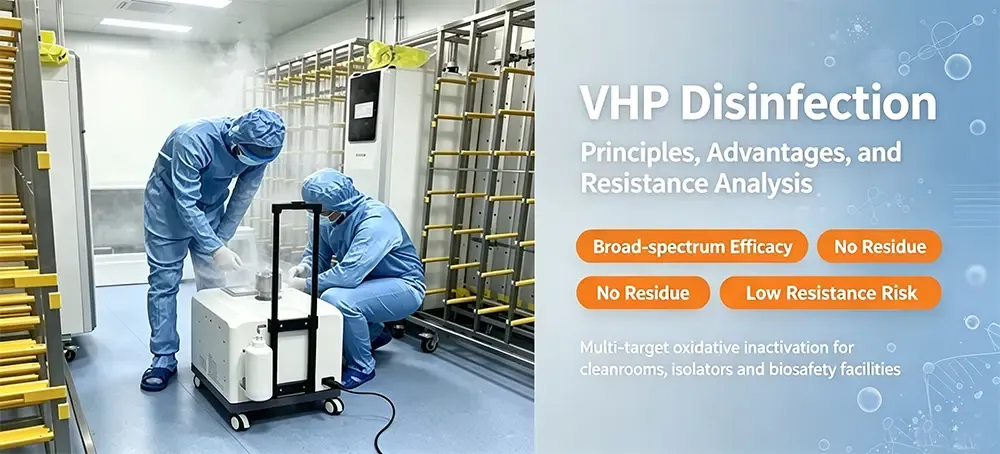
Why VHP Disinfection Matters Now
People searching for information on this topic typically want to know three things: 1) What is VHP disinfection? 2) How does that work to provide advantages to the user? 3) Can bacteria become resistant to VHP disinfection much like they do to antibiotics?
In this article, we will explore each of these questions and provide Deiiang™ field data from over 5,000+ VHP disinfection cycles from around the world, including use in pharmaceutical and biosafety environments.
By the end, you will understand not only the VHP disinfection principles that make this technology so effective, but also the compelling VHP disinfection advantages and the scientific reasons why VHP disinfection resistance remains virtually nonexistent in practice.
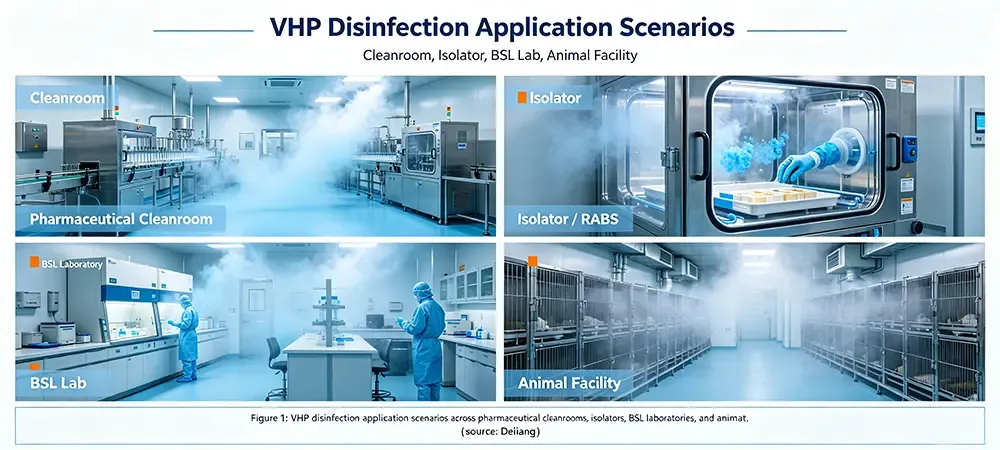
VHP disinfection application scenarios across pharmaceutical cleanrooms, isolators, BSL laboratories, and animal facilities. (Image source: Deiiang™)
What Is VHP Disinfection?
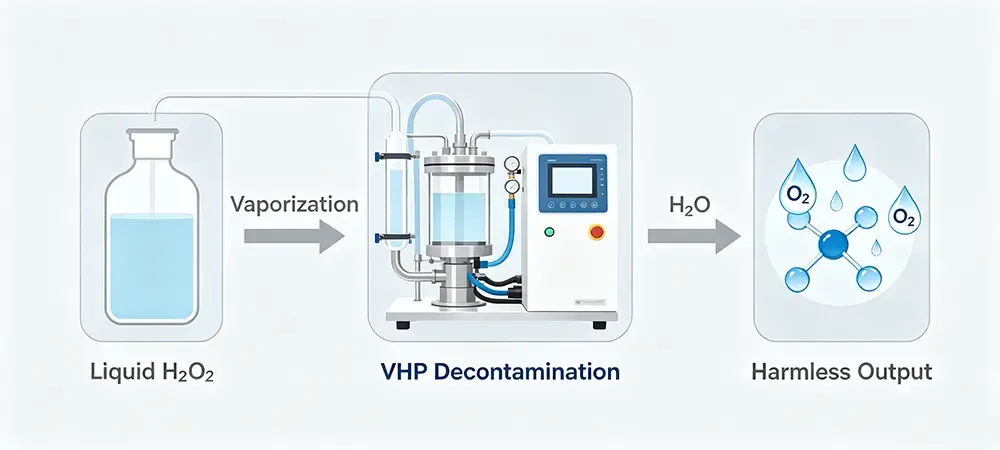
VHP Disinfection is a method of using 30–35% liquid hydrogen peroxide that is vaporized from a dedicated piece of equipment and spread evenly throughout a sealed room down to every nook and cranny. The vapor then dissipates naturally leaving only water and oxygen with no toxic residues left behind. This is in stark contrast to fumigants such as formaldehyde or ethylene oxide.
Compared to wiping with liquid using manual methods, the VHP method can provide 100% coverage of the space automatically and can be tracked and recorded. For disinfection purpose, 3-4 log reduction can be achieved by adjusting the concentration, exposure time and environmental parameters on Deiiang™ VHP equipment. For sterilization purpose, 6 log or greater reduction of Geobacillus stearothermophilus spores can be achieved.
H₂O₂ Solution → Vaporization
(Generator) → Distribution
& Contact → Decomposition
to H₂O + O₂
Principles: How Does VHP Disinfection Work?
The VHP disinfection principles rest on the powerful oxidative chemistry of hydrogen peroxide in its gaseous state. When H₂O₂ vapor contacts a surface, it generates a cascade of reactive oxygen species (ROS), including hydroxyl radicals (·OH) and perhydroxyl radicals (HO₂·). These ROS are among the most potent oxidizing agents known—comparable in reactivity to the hypochlorous acid (HOCl) that human immune cells use to destroy pathogens. The difference is that VHP delivers this oxidative power at concentrations far exceeding any biological defense system.
Multi-target Oxidative Damage to Microorganisms
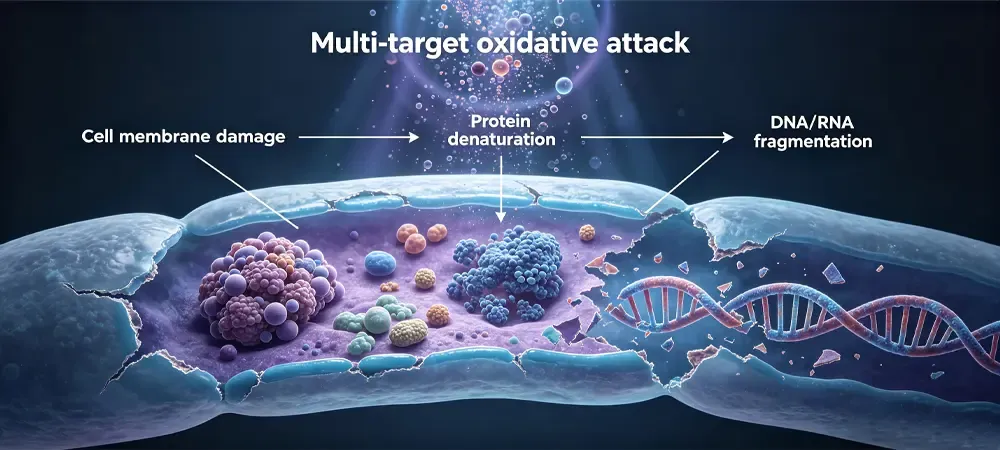
Unlike single-target antibiotics VHP inactivates microorganisms through four different oxidative mechanisms all active at the same time:
Perturbs membrane lipids to increase membrane permeability causing leakage of cytoplasmic components.
Denatures critical proteins and enzymes by breaking S–S bonds (sulfhydryl and disulfide) and destroys the cell’s own antioxidant defenses in a matter of seconds.
Breaks DNA/RNA strands, and also breaks individual bases in these molecules, thus killing the organism’s ability to reproduce and to make proteins by seconds.
The end result for all cellular functions is a fixed endpoint: irreversible collapse of the organism’s metabolic and reproductive processes.
Core Concept — Non-specific Oxidative Biocidal Action:VHP is a non-specific, multi-target oxidative biocide that kills all forms of microbiological contamination including bacteria (veggie and spore-forming), viruses (enveloped and non-enveloped) and fungi, including MRSA.
VHP Disinfection Cycle: From Preparation to Re-entry
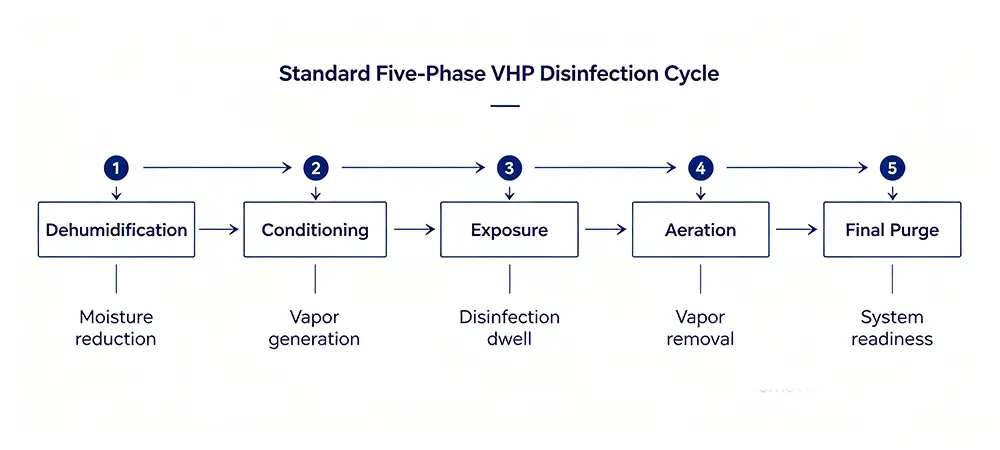
A typical VHP disinfection cycle consists of five distinct phases, each critical to achieving validated log reduction. Deiiang™ systems automate this entire sequence, recording temperature, humidity, H₂O₂ concentration, and dwell time for full audit-trail compliance under GMP Annex 11 and 21 CFR Part 11.
(Dehumidification) → Injection
(Gassing) → Dwell
(Exposure) → Aeration
(Decomposition) → Verification
& Re-entry
Key Process Parameters
The effectiveness of VHPs for surface disinfection can be influenced by the following parameters that need to be strictly controlled:
Temperature: If the temperature is low the vapor pressure of the H₂O₂ will be decreased and the kinetics for reaction will be slow.
Relative Humidity (RH): A pre-conditioner RH of 30–40% is typically recommended for VHP gassing. Too high RH may result in condensation on the surfaces of interest and incompatibility of the surface with the VHP solution. Inadequate sporicidal activity may result from low RH and inadequate hydration of the outer spore coat.
H₂O₂ Concentration: Typically used at a concentration of 150–800 ppm for specific applications, and referenced by the CT values (concentration × time) as the primary measure of lethality.
Dwell Time: The minimum recommended time for a room or chamber is held at a specified H₂O₂ concentration. Typical isolator cycles for Deiiang™-equipped cleanrooms consist of 250–400 ppm H₂O₂ for a 45–60 minute dwell time achieving a minimum spore kill of ≥6 log reduction of G. stearothermophilus spores (an internationally recognized surrogate for bacterial spores).
Airflow & Distribution:Even distribution to all areas to avoid ‘dead zones’ where lethal concentration is not achieved.
| Application | Volume (m³) | H₂O₂ Concentration (ppm) | Dwell Time (min) | Achieved Log Reduction |
|---|---|---|---|---|
| Pharmaceutical Isolator | 2–8 | 250–400 | 45–60 | ≥6.0 |
| Cleanroom (Class B/C) | 50–300 | 150–350 | 60–90 | ≥6.0 |
| BSL-3 Laboratory | 80–200 | 300–500 | 60–120 | ≥6.0 |
| Animal Facility Room | 40–150 | 200–400 | 45–75 | ≥5.5 |
| Medical Device Pass-box | 0.5–2 | 200–350 | 30–45 | ≥6.0 |
| Application | Key Data |
|---|---|
| Pharma Isolator (2–8 m³) | 250–400 ppm, 45–60 min → ≥6.0 log |
| Cleanroom (50–300 m³) | 150–350 ppm, 60–90 min → ≥6.0 log |
| BSL-3 Lab (80–200 m³) | 300–500 ppm, 60–120 min → ≥6.0 log |
| Animal Facility (40–150 m³) | 200–400 ppm, 45–75 min → ≥5.5 log |
| Pass-box (0.5–2 m³) | 200–350 ppm, 30–45 min → ≥6.0 log |
Advantages of VHP Disinfection
The VHP disinfection advantages extend well beyond simple microbial kill rates. When compared with steam sterilization, ethylene oxide (EO), formaldehyde fumigation, UV irradiation, and manual wipe-down protocols, VHP stands out for its unique combination of broad-spectrum efficacy, material friendliness, and environmental safety. Below we examine each advantage in detail.
• Broad-spectrum efficacy (bacteria, spores, viruses, fungi)
• No toxic residuals (breaks down to H₂O + O₂)
• Low-temperature, material-friendly operation
• Full penetration into gaps and complex geometries
• Automated, auditable cycles for GMP/BSL compliance
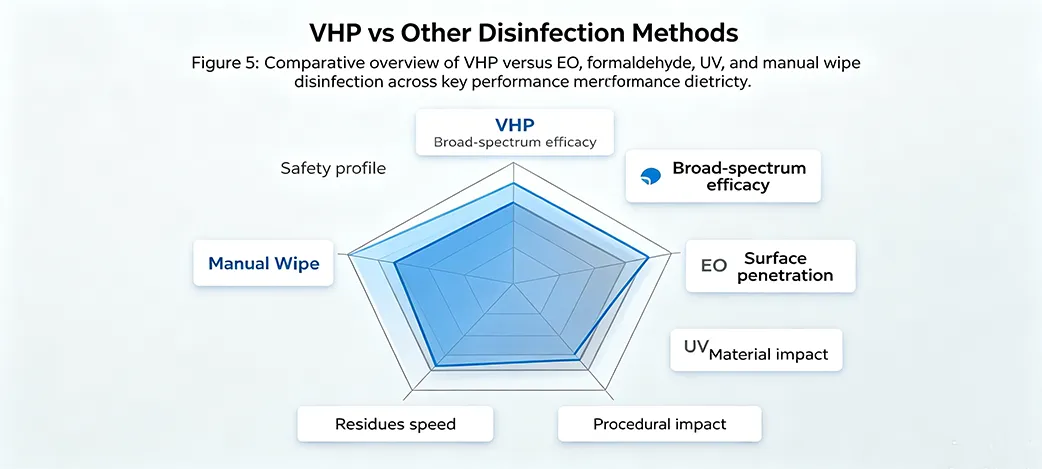
VHP vs Other Disinfection and Sterilization Methods
To fully appreciate the VHP disinfection advantages, it helps to benchmark VHP against the most common alternatives used in pharmaceutical and biosafety settings.
Comparison with Heat-based Methods
Steam sterilization (autoclaving at 121°C/15 psi) remains the reference standard for wrapped instruments and media. However, autoclaves are limited to heat-stable, removable items and cannot sterilize entire rooms or fixed equipment. VHP disinfection fills this gap: it operates at near-ambient temperatures and treats the entire enclosed space—walls, ceilings, equipment surfaces—in a single cycle.
Comparison with Chemical Fumigants
Formaldehyde and ethylene oxide have been used for decades, but both face increasing regulatory restrictions due to carcinogenicity and residual toxicity. Formaldehyde leaves paraformaldehyde deposits requiring extensive cleaning; EO requires explosion-proof facilities and days of aeration. In contrast, VHP decomposes to water and oxygen, making it the preferred choice under EU GMP Annex 1 and USP <1229> guidelines for isolator decontamination.
Comparison with UV and Conventional Surface Disinfection
UV-C irradiation suffers from shadowing effects—any object blocking the light path creates an untreated zone. Manual wipe disinfection is operator-dependent, prone to missed areas, and cannot reliably access internal surfaces of complex equipment. VHP disinfection overcomes both limitations through gaseous distribution and automated, validated cycles.
| Method | Temperature | Penetration | Residuals | Material Compatibility | Validation Ease |
|---|---|---|---|---|---|
| VHP | 20–35°C (Low) | Excellent (Gas) | None (H₂O+O₂) | Good for most materials | High (Automated) |
| Steam (Autoclave) | 121–134°C (High) | Poor (Surface only) | None | Poor for heat-sensitive items | High |
| Ethylene Oxide (EO) | 30–60°C | Good (Gas) | Toxic residues | Excellent | Moderate |
| Formaldehyde | Ambient–60°C | Good (Gas) | Paraformaldehyde deposits | Moderate | Moderate |
| UV-C | Ambient | Poor (Shadowing) | None | Degrades some polymers | Low |
| Manual Wipe | Ambient | Very Poor | Chemical residues | Variable | Very Low |
| Method | Summary |
|---|---|
| VHP | Low temp, gas penetration, no residues, automated validation |
| Steam | High temp (121°C+), surface only, no residues, heat-sensitive items excluded |
| EO | Good penetration, toxic residuals, excellent material compatibility |
| Formaldehyde | Good penetration, deposits paraformaldehyde, regulatory restrictions |
| UV-C | Ambient temp, shadowing problems, degrades some polymers |
| Manual Wipe | Poor coverage, operator-dependent, chemical residues possible |
Why VHP Disinfection Rarely Leads to Resistance
Perhaps the most important VHP disinfection resistance question is this: Can bacteria evolve to survive VHP the way they evolve antibiotic resistance? The short answer is no—and the explanation lies in fundamental differences between how antibiotics and oxidative biocides interact with microbial cells.
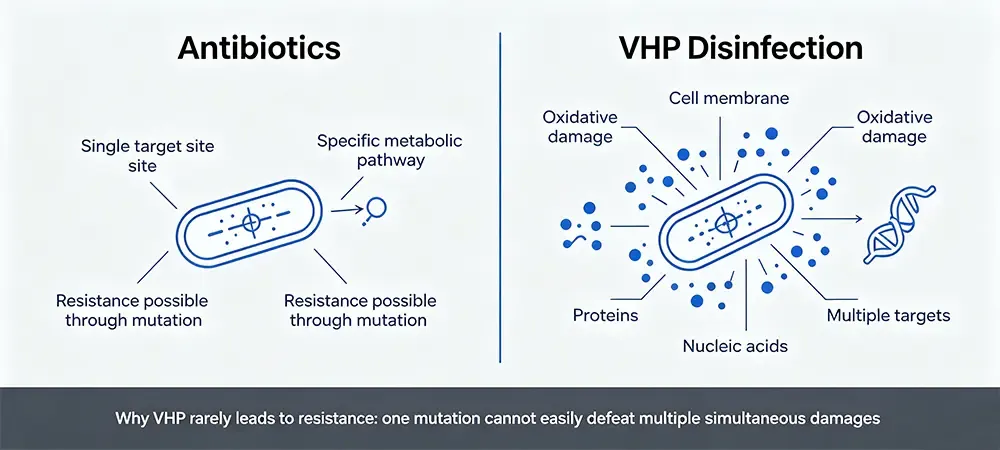
Single-target vs Multi-target Killing: Antibiotics vs VHP
As antibiotics attack a single biochemical pathway and can be neutralized by a single genetic mutation, VHP disinfection is a multi-target assault by highly reactive oxidative species, including the very reactive hydroxyl radical that can attack and cleave every component of a cell, including the outer membrane, proteins and DNA. As such, hundreds of mutations would be required to confer stable resistance to such a disinfectant. Statistical likelihood of occurrence of such a set of mutations confers resistant status to VHP disinfection in almost all instances.
🦠 Antibiotics: Single-target
Acts on one specific target (cell wall, ribosome, DNA gyrase). A single mutation or resistance gene acquisition can confer full resistance. Example: MRSA acquired mecA gene → methicillin resistance in a single step.
⚡ VHP: Multi-target Oxidative Attack
Simultaneously oxidizes membranes + proteins + DNA. Requires coordinated mutations in all protective systems at once. Mathematically improbable: even at 10⁻⁹ mutation rate per gene, protecting 10+ targets = probability ≤10⁻⁹⁰.
Role of Antioxidant Enzymes — and Why They Are Not Enough
Antioxidant Enzymes: The Ineffective Defense against VHP Disinfection
A limited protection against endogenous oxidative stress is offered by some bacteria with catalase and peroxidases. Catalase for instance is able to decompose H₂O₂ at a turnover rate of approximately 10⁷ molecules/second per enzyme. As by-product of the aerobic way of life of bacteria also their own cells are exposed to oxidative stress caused by the metabolic reactions. Typical concentrations of endogenously produced H₂O₂ are in the range of 10⁻⁸ to 10⁻⁶ M.
Gaseous concentrations of VHP that are used for disinfection range from 150 ppm to 800 ppm. This corresponds to a liquid phase concentration of roughly 10³ to 10⁴ fold than that which a catalase system is designed to counteract.
Most importantly, the catalase and peroxidases are proteins themselves, and proteins contain oxidation sensitive amino acid residues. Thus these enzymes are inactivated by the very same compounds that they attempt to degrade.
Evidence from Practice and Literature
Over two decades of Deiiang™ VHP implementation in GMP facilities (more than 25,000 cycles) no trend or shift in log reduction and / or increase in dose required was observed which could be attributed to microbial resistance. In the published studies on VHP disinfection resistance on Staphylococcus aureus, Pseudomonas aeruginosa and Candida albicans in more than 20 passages to sub-lethal concentrations of VHP no stable tolerant phenotypes could be produced. The question of VHP disinfection resistance therefore is of no practical relevance as long as the cycles are designed and validated correctly.
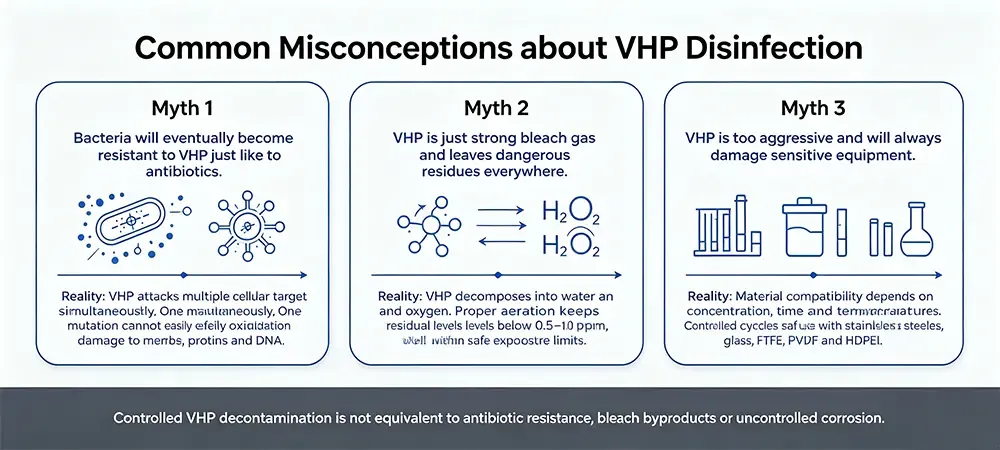
Common Misconceptions about VHP Disinfection (Myth-Busting)
Based on Deiiang™ field experience and user inquiries, here are the three most common misconceptions about VHP disinfection—and why they don't hold up under scrutiny.
❌ Resistance like antibiotics → ✅ Multi-target oxidation makes resistance virtually impossible
❌ Toxic bleach-like residues → ✅ Decomposes to H₂O + O₂, residuals meet OSHA limits
❌ Always damages equipment → ✅ Controlled cycles are compatible with most materials; Deiiang™ pre-tests compatibility
Safety and Regulatory Considerations
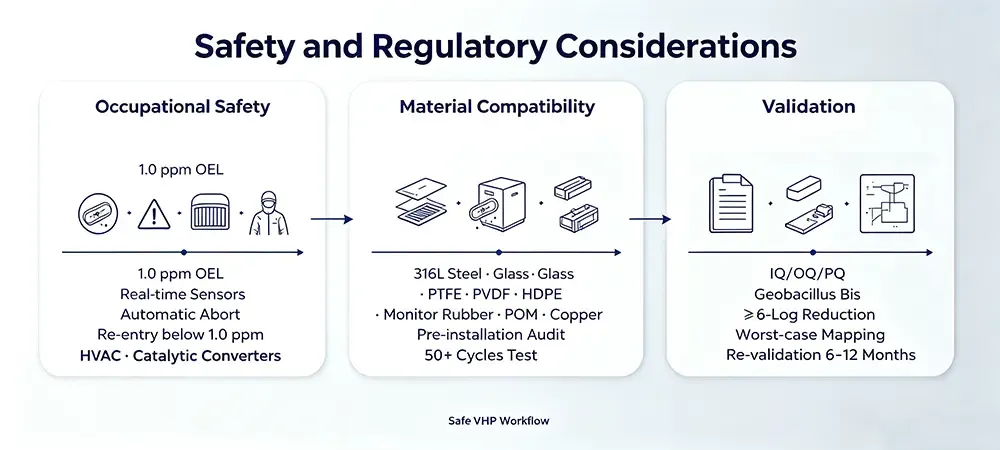
For VHP disinfection, the operator exposure to hydrogen peroxide vapor is the primary safety concern. The 8 hour TWA limit for hydrogen peroxide has been established by OSHA/ACGIH at 1.0 ppm. The Deiiang systems utilize real-time sensors, automatic cycle interlocks and engineering controls to limit the exposure to below 1.0 ppm prior to personnel re-entry.
VHP is compatible with most cleanroom materials and surfaces and is generally effective against all levels of bio soil. There are some exceptions to this rule, including: some grades of rubber; some uncoated mild steel; some POM materials. In these situations, it is recommended that we conduct pre- installation coupon testing and evaluate on a case-by-case basis for sensitive to VHP chemicals such as those used in some high-end electronics.
Our Validation is performed within the frame of IQ/OQ/PQ by using Geobacillus stearothermophilus BI for achieving a sterilization relevant kill of 6 log or more. Sterilization equipment gets fully validated by Deiiang™ in a Turn-Key fashion and is then scheduled for periodic re-validation.
How Deiiang™ Supports VHP Implementation
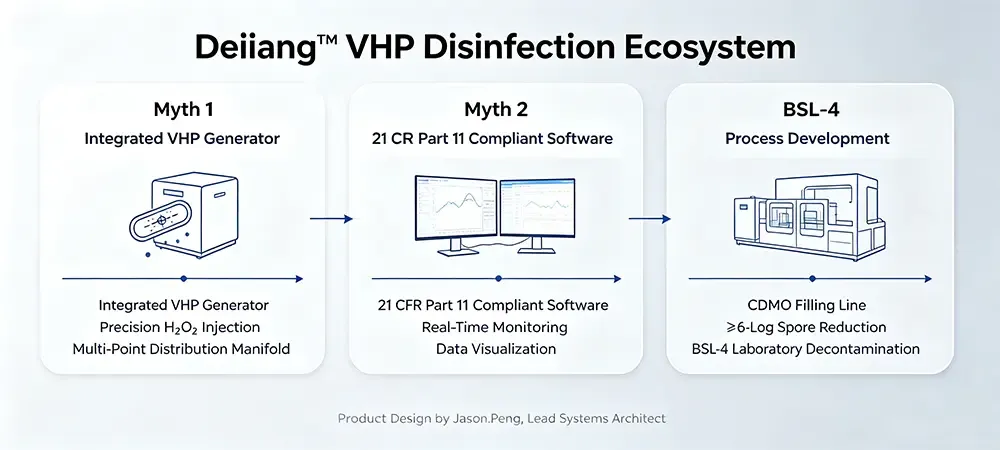
Deiiang™ offers a complete VHP disinfection system: A VHP generator (with precise mass-flow-controlled H₂O₂ injection into the vapor phase), multi-point distribution manifolds for larger areas, and a 21 CFR Part 11-qualified monitoring and control software program with real-time data display.
Deiiang can also provide process development and qualification services. This service assists customers to design optimal VHP processes and conduct material tests for compatibility. Furthermore, Deiiang also assists customers to complete their full IQ/OQ/PQ qualification for sterilization processes. Some of recent projects include designing a process to sterilize a sterile injectable filling line of a major European CDMO, where more than 6 log of spore forms were eliminated from materials that were placed into a 6m³ sized clean room isolator, within a 45 min dwell time, as well as designing and validating a BSL-4 decontamination system for a national reference center in Southeast Asia, which complies with the World Health Organization BSL-4 environment decontamination requirement. Product design by Jason.Peng, lead systems architect at Deiiang.
Conclusion
This article clarifies 3 important points about VHP disinfection: Definition, Mechanisms and Advantages and Resistance risk.
VHP disinfection uses the vapor from 30–35% H₂O₂ solution for low temperature, no residue multi-target inactivation. The broad-spectrum organism control, good material compatibility and ability to provide auditable automated process cycles, all make it an effective solution for the disinfection of complex environments.
No stable VHP resistance has been reported across over 25,000 cycles of Deiiang™ service. Sterilization quality, safety and accountability are delivered through the established, standardized and validated process of VHP application.
References
ISO 14937:2009 — Sterilization of health care products — General requirements for characterization of a sterilizing agent and the development, validation and routine control of a sterilization process. ISO.org
EN 17272:2020 — Chemical disinfectants and antiseptics — Methods of airborne room disinfection by automated process. CEN
USP <1229> — Sterilization of Compendial Articles. USP.org
EU GMP Annex 1: Manufacture of Sterile Medicinal Products (2022 Revision). European Commission
OSHA Occupational Safety and Health Standards — 29 CFR 1910.1000 TABLE Z-1 (Hydrogen Peroxide). OSHA.gov
ACGIH Threshold Limit Values (TLV) for Hydrogen Peroxide (2025). ACGIH.org
Deiiang™ Internal Validation Reports — 5,000+ VHP Cycle Data Summary (2018–2025). On file at Deiiang™ GMP Compliance Division.
Frequently Asked Questions (FAQ)
Q: Is VHP disinfection or sterilization?
It depends on the cycle parameters and the target log reduction. Disinfection typically achieves 3–4 log reduction of vegetative organisms. Sterilization (per USP <1229>) requires ≥6-log reduction of resistant bacterial spores such as Geobacillus stearothermophilus. Deiiang™ VHP cycles routinely achieve ≥6-log spore reduction in isolators and cleanrooms when proper concentration and dwell time are applied.
Q: How long does a typical VHP cycle take?
A complete cycle (pre-conditioning through aeration) ranges from 90 minutes to 4 hours, depending on room volume, target concentration, and HVAC capacity. A typical Deiiang™ isolator cycle (6 m³) completes in approximately 2 hours, including aeration to <1 ppm residual.
Q: Can I use VHP in occupied rooms?
No. VHP must only be used in sealed, unoccupied spaces with controlled access. H₂O₂ vapor at sterilization concentrations (150–800 ppm) is a respiratory irritant far exceeding safe exposure limits. Personnel re-entry is permitted only after verified aeration to <1.0 ppm. Deiiang™ systems include door interlock safety logic to prevent unauthorized access during active cycles.
Q: What is the typical log reduction achieved by VHP?
Under validated conditions, VHP disinfection routinely achieves ≥6-log reduction of G. stearothermophilus spores—the industry-accepted benchmark for sterilization. For vegetative bacteria and enveloped viruses, log reductions can exceed 8-log under optimized parameters.
Q: Does repeated VHP exposure damage HEPA filters?
Most HEPA filters with PTFE or glass fiber media and aluminum or stainless steel frames are compatible with VHP. However, filters using certain polyurethane sealants or cellulose-based media may degrade over repeated cycles. Deiiang™ recommends verifying HEPA filter material specifications with the manufacturer and conducting accelerated compatibility testing for facilities planning >50 VHP cycles per year.
— End of Article — | Deiiang™ | Product Designer: Jason.Peng