+86 13638632902
 Jason@cleanroomequips.com


 MENU
MENU
In order to find the cost of a cleanroom, it important to multiply the area needed by the cost for eACH square foot of a cleanroom and then add the costs of HVAC system, filtration equipment, construction, monitoring, installation, commissioning, and regular maintenance. Finally, the accurate estimation depends on the desired ISO standard, construction field, type of materials used, temperature and humidity control systems and pressure conditions for the cleanroom.
Understanding cleanroom costs
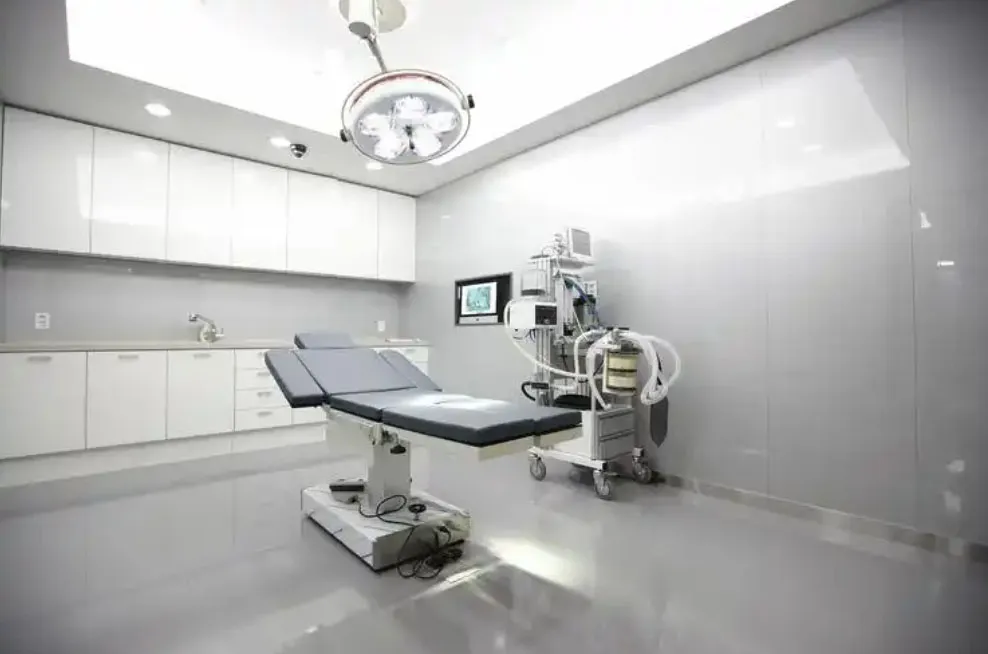
Designing and building a cleanroom is an intricate process involving various factors that contribute to the overall cost. Whether establishing a controlled environment for industrial, pharmaceutical, or research purposes, understanding these cost factors is crucial.
This article explores how to calculate the price of a cleanroom, providing insights into different influencing factors and offering a guide for budgeting effectively.
Key Considerations
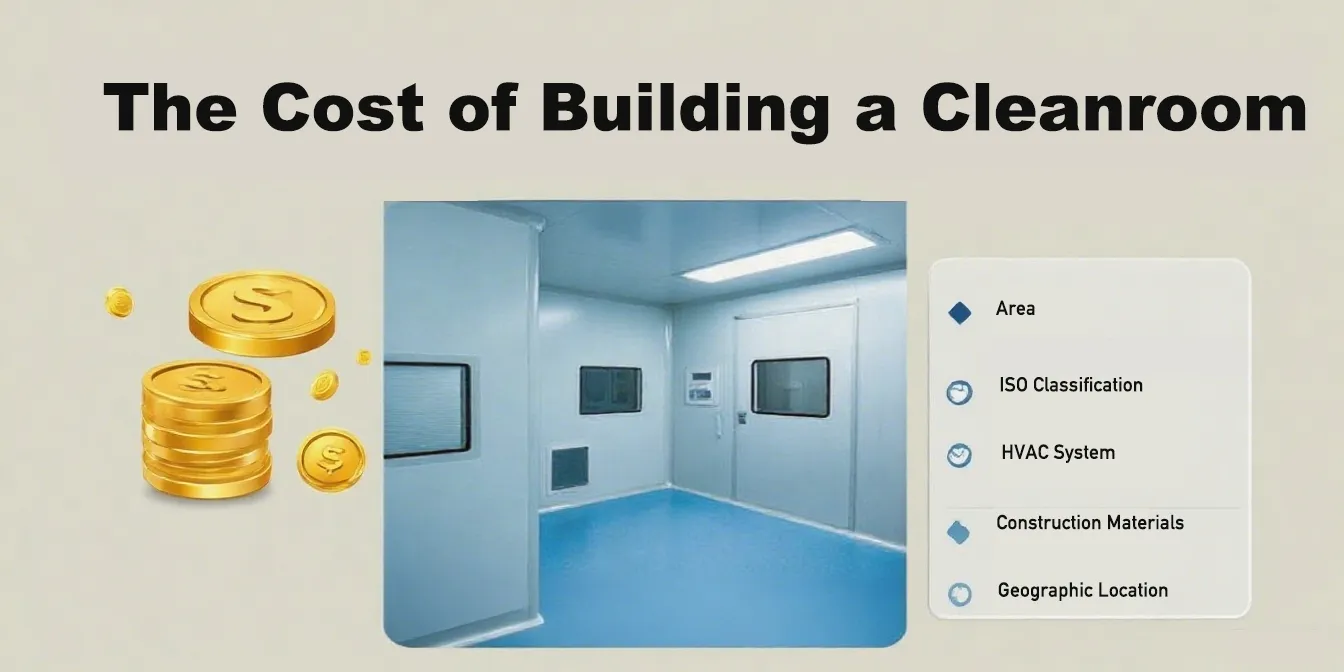
- cleanroom classification (ISO standards)
- Size and square footage
- Material selection
- HVAC system complexity
- Special features and requirements
Factors Influencing Cleanroom Pricing
Cleanroom Classification
The classification defined by standards like iso 14644 plays a pivotal role in cost estimation. Higher cleanliness levels (iso class 5) demand sophisticated filtration and airflow systems, raising costs.
Size of the Cleanroom
Larger cleanrooms necessitate increased materials and more complex HVAC systems. A 1,000 sq ft cleanroom requires more resources than a 500 sq ft area, leading to higher expenditures.
Materials Utilized
High-quality materials like hardwall panels and specialized flooring are more expensive than modular alternatives. Selecting the right material balance is crucial for functionality and budget.
HVAC System Complexity
Factors like filtration, air changes per hour (ACH), and temperature/humidity control significantly influence costs. Higher classifications require more robust HVAC systems.
Specific Features
Incorporating airlocks, pass-throughs, gowning rooms, specialized lighting, and monitoring capabilities can increase costs. Each additional component adds to the price.
Installation Location
Urban areas might incur higher labor costs, while remote locations could increase transportation expenses and logistical challenges.
Detailed Cost Breakdown
Wall and Ceiling Project Cost
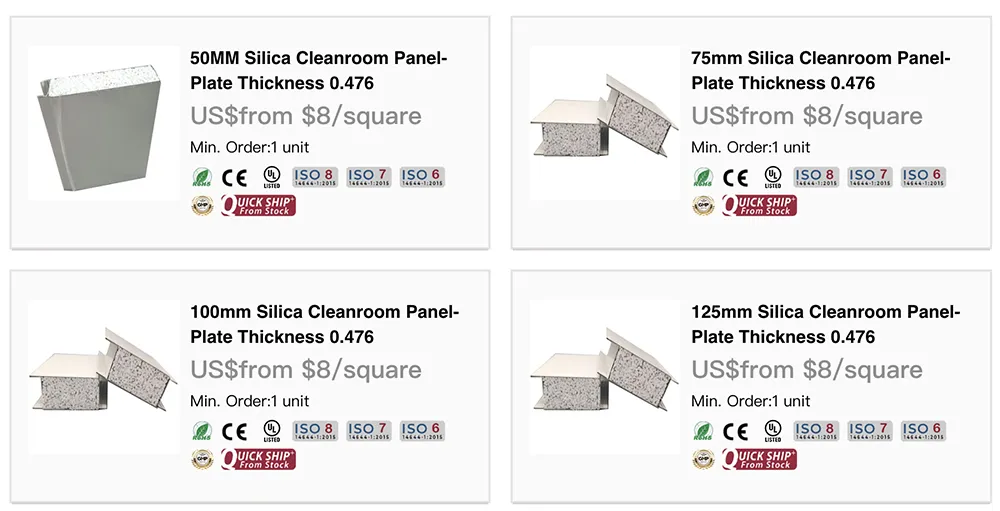
Walls and ceilings must be dust-proof, corrosion-resistant, and easy to clean. Materials must maintain clean environments and reduce pollutants per ISO 14644-1.
| Material | Properties | Price |
|---|---|---|
| Glass Magnesium Board | Good fire resistance | $20-$30/㎡ |
| Rock Wool Board | Sound insulation and thermal insulation | $15-$25/㎡ |
| Silica Rock Board | High temperature resistant | $30-$50/㎡ |
| Steel Door | Good sealing, fireproof | $100-$150/sash |
Floor Engineering Cost
Floors need dustproof, antibacterial, and anti-slip characteristics per GB 50073-2013 standards. Material choice affects cleaning difficulty and durability.
| Material | Properties | Price |
|---|---|---|
| PVC Floor Glue | Wear-resistant, easy to clean | $10-$15/㎡ |
| Epoxy Resin Self-leveling Floor | Seamless, dust-proof, chemical corrosion-resistant | $30-$50/㎡ |
Ventilation Duct Project Cost
Ventilation systems ensure air quality per GB 50019-2015 specifications, maintaining cleanliness while reducing noise.
| Component | Function | Price |
|---|---|---|
| Air Duct | Galvanized steel or stainless steel | $3-$6/meter |
| Ventilation Valve | Adjust airflow for uniform distribution | $20-$40/piece |
| Silencer | Reduce noise interference | $50-$100/piece |
| High-efficiency Air Outlet | Ensure clean air is evenly delivered | $40-$70/unit |
Purification Equipment Cost
Core equipment that maintains high cleanliness levels, affecting air quality, energy efficiency, and operational ease.
| Equipment | Purpose | Price |
|---|---|---|
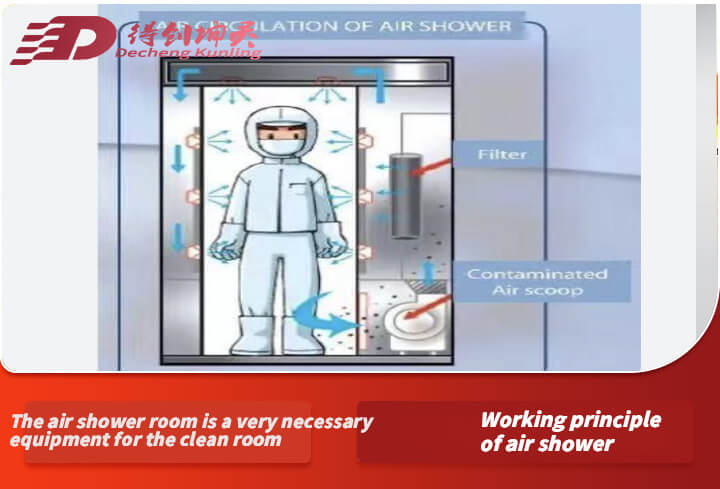
| air shower | Dust cleaning for personnel and objects | $1,200-$2,500/unit |
| Rolling Door | Ensure air tightness for access channels | $400-$600/fan |
| Air Conditioning Unit | Adjust temperature and humidity | $3,000-$6,000/unit |
| Locker | Provides changing space for staff | $200-$400/unit |
modular cleanroom cost Calculator
Enter your project parameters below to get an instant budget estimate of modular cleanroom cost per square foot and total investment. Figures are for reference only, final quote depends on detailed engineering.
Estimated Cost Per Sq.Ft. $ 0
Estimated Total Project Cost $ 0
Cost Estimation Approaches
Example Cleanroom Pricing
Basic Cleanroom
ISO Class 8
1,000 sq ft with standard features
$100,000 - $300,000
- Standard wall materials
- Basic HVAC system
- Essential features only
Advanced Cleanroom
ISO Class 5
1,000 sq ft with specialized systems
$1,000,000+
- High-grade materials
- Specialized HVAC systems
- Advanced monitoring
Conclusion
When calculating the price of a modular clean room, consider multiple factors including the selection of walls, ceilings, floors, ventilation ducts and purification equipment. The cost of each part will affect the overall budget. By choosing appropriate materials and equipment, you can optimize construction costs while ensuring compliance with international standards.
Plan Effectively • Budget Accurately • Build Successfully
faq
What is the process for estimating cleanroom construction costs?
You can estimate the initial budget through this equation: Estimated total construction price = Cleanroom square footage × Applicable price per square footage + Costs excluded from the price per square foot + Contingency. Check before you make the calculation and determine whether the cost per square foot considers such components as enclosure, and heating, ventilation, and air conditioning (HVAC) systems as well as installation to prevent duplication. Ensure that design, commissioning, and qualification costs along with testing keep their price separate from your estimate. Operating expenses and costs for energy consumption should be considered separately from operational expenses.
What factors determine the cleanroom price?
The major factors affecting cleanroom pricing are the class of cleanliness of the cleanroom, square footage, specifications of materials used, and temperature and humidity control tolerances. Site conditions also affect the price. Cleanrooms of the same square footage can significantly differ in costs due to requirements of different industries and processes.
Can stringent standards of ISO lead to a rise in cleanroom price?
The answer to this problem is generally affirmative. For instance, ISO Class 5 is more rigid when it comes to allowed airborne particle limit than ISO Class 8. To meet these criteria more filters need to be installed or the intensity of the air circulation increased to raise the costs of construction and operation of the cleanroom. However, ISO classifications do not provide any single air circulation rate. Thus, the installation should take into consideration the process specifics and loads. The article gives some guideline financial information of $100,000–$300,000 for a basic iso class 8 cleanroom, while a ISO Class 5 design can go upwards of $1,000,000. It is important to note that these values should only be taken as rough references rather than impregnable estimates. Many external factors, such as location, date of planning, amount of construction, requirements set by a particular process, and conditions of already available facilities play a role in cost calculation.
Why HVAC systems are so important in cleanroom design and construction?
One of the roles of a cleanroom HVAC system is to regulate temperature. In the modern cleanrooms, HVAC systems are supposed to take care of filtration, airflow patterns, humidity control, and room pressure maintenance. The need to supply the rooms with high volumes of air, to ensure the compliance with strict humidity/temperature requirements, and to provide ventilation or exhaust is likely to boost the complexity of equipment and controls used. The energy consumption and maintenance costs are also likely to rise.
Are modular cleanrooms cheaper than conventional cleanrooms?
Not necessarily. If the process requirements are standard and site conditions are sufficient, modular cleanrooms can lower the costs due to the use of prefabricated modules and shorter installation. Overall expense is also influenced by cleanliness classification, materials used, HVAC design, and the infrastructure required. Modular construction is a method of construction and does not mean that cheaper materials are used in the construction of the modules. Modular cleanrooms can also employ rigid-panel wall systems.
What costs are commonly missed in cleanroom quotes?
Design and engineering service costs, modification costs, utility connection costs, shipping costs, and anything else that is required to ensure the functionality of a cleanroom sometimes gets omitted in the cleanroom cost quotes. Additional and ongoing costs appear as well: filter replacements, costs connected with energy use in the cleanroom, cost of cleaning equipment.