+86 13638632902
 Jason@cleanroomequips.com


 MENU
MENU
Sliding, swing, hermetic, and roll-up cleanroom doors are the four basic types of Cleanroom doors. Hermetic pertains to the sealing method but is not a separate opening method. A door can be both sliding and hermetic at the same time.
This guide provides engineering, contracting, maintenance management, and procurement professionals with the necessary information regarding what are the different types of cleanroom doors. Door types are compared as well as selection, procurement, installation, and maintenance procedures. Where possible, Deiiang™ catalogue data and case studies report actual data.
Swing and sliding doors are the common door types in cleanrooms USA projects specify most often. The hermetic version is included for containment. Roll-up doors are typically found in areas of high-frequency transfer. A clean room revolving door is rare in cleanrooms due to sealing challenges.
Application considerations precede the choice among the types of cleanroom doors. One that works well in an airlock for pharmaceuticals may not work well in a transfer corridor for electronics. The sections below develop this comparison step by step.
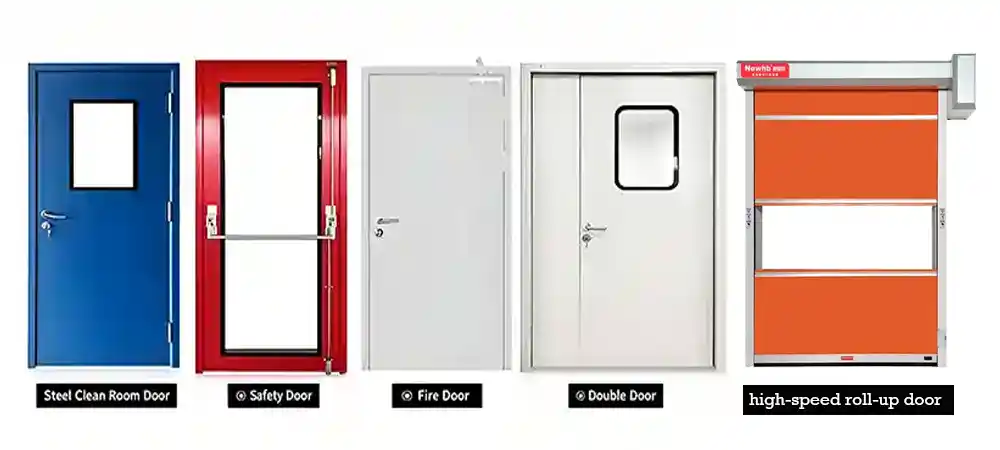
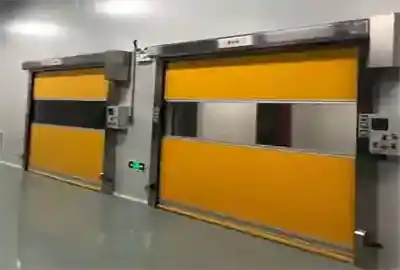
Types of Cleanroom Doors Compared
Cleanroom door types differ by opening method, sealing method, spatial requirements, and maintenance needs. All four comparisons help avoid the common mistake of assuming sliding is synonymous to hermetic.
Traffic volumes also differ by cleanroom door types. A swing door may accommodate 40 personnel movements during a shift while a roll-up door may accommodate 300 pallet movements during a shift. Selection is determined by duty, not preference.
Table 1: Overview of commonly used types of doors in cleanrooms
| Door type | Opening mechanism | Seal type | Space requirement | Traffic flexibility | Maintenance issues |
|---|---|---|---|---|---|
| Sliding | The panel moves horizontally along a track | Seals around the perimeter are used along with possible drop seals | Wall space is required next to the door opening | Used by humans as well as mACHines; limited distance for swinging door | Regular cleaning of the track; servicing the driving mechanism |
| Swing | The panel swings open through use of hinges | Seals at edges along with compression seals are used | A swing arc is needed in order for the swinging door to operate properly | Regular human use; emergency exits | Alignment of the hinge at the top and bottom; wear on the closer and seals |
| Hermetic | Uses the same opening system as the regular door | Does not permit any leakage past the door assembly | Varies depending on the type of door used for opening | Used to prevent materials inside the room from being lost | Compression set and re-testing of leakage |
| Roll-up | The curtain is moved vertically upwards | Brush or contact seals are installed to the guides and floor | Overhead system is to be used | Used for frequent transfer of materials from one place to another | Cleaning of the curtain; wear to the guides; access to the hoods |
| Door type | Opening mechanism | Space requirement |
|---|---|---|
| Sliding | The panel moves horizontally along a track | Wall space is required next to the door opening |
| Swing | The panel swings open through use of hinges | A swing arc is needed in order for the swinging door to operate properly |
| Hermetic | Uses the same opening system as the regular door | Varies depending on the type of door used for opening |
| Roll-up | The curtain is moved vertically upwards | Overhead system is to be used |
Deiiang makes all three of these types of clean room doors, engineered to meet the specified sealing requirement as described above. Refer to the reference section for more specific data regarding Deiiang's products.
Opening Mechanisms and Sealing Categories Explained
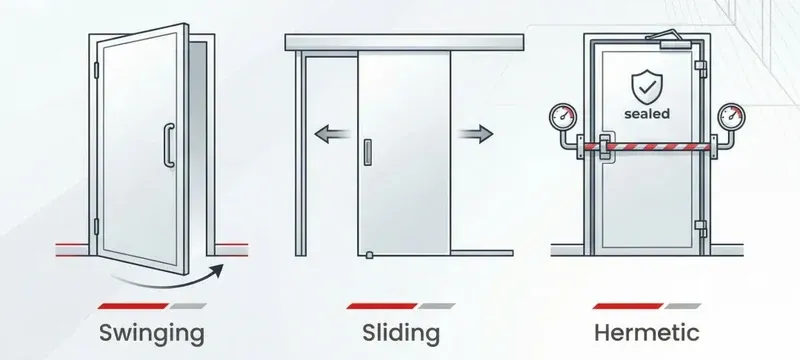
When comparing the types of cleanroom doors, it is essential to identify the type of opening that is used first. A sliding door means that the leaf of the door slides horizontally; a swing door means that the leaf goes around a pivot. Unlike the other types of doors, there is no swinging mechanism in the case of roller doors since curtains can move vertically up.
Although hermetic seals can be added to any of the cleanroom door types, they are separate decisions from the opening mechanism.
A sliding door that uses standard gaskets is different than using a hermetically sealed sliding door. A hermetic sliding door involves compression seals or drop seals with a specified leakage at a specific pressure. It is important to differentiate between regular sliding doors since they are not necessarily hermetic by definition.
Comparing Space, Traffic, Leakage, and Lifecycle Trade-Offs
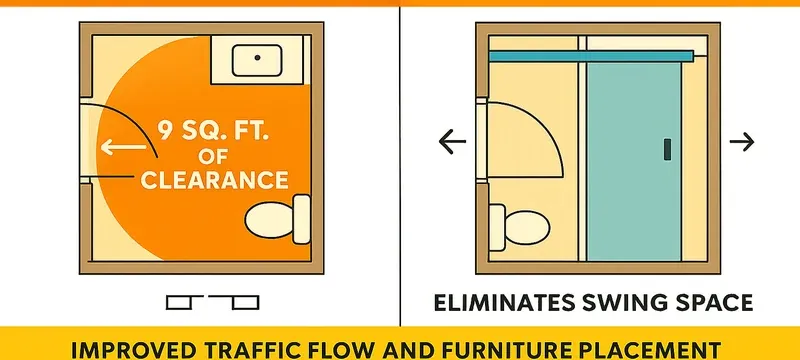
Space, traffic, leakage as well as lifecycle trade-offs differ across the cleanroom door types. For instance, saving corridor space using a door comes with the overhead housing. Fast opening doors cause significant air exchange rate while open.
Swing doors have a given radius equal to width of the leaf plus other spaces accordingly.
Sliding doors have wall space equal to leaf travel.
Roll up doors will need overhead housing. Deiiang high-speed roll up door standard size is 1800 mm × 2400 mm, with 0.8 mm thick PVC curtain.
The leakage when the door is closed will be different compared to leakage when the door is opened. Pressure difference and opening area will determine the leakage.
For example, a 1.2 meter × 2.1 meter leaf at a pressure of 15 Pa gives 37.8 N as force due to pressure alone. This is computed using the formula F = ΔP × A. The value increases due to gasket compression or closer force.
Cleanroom Sliding Doors
These types of clean room doors are used where a swing leaf would obstruct heavy transfer loads in a corridor. They are the most prevalent models that one can use in confined corridors.
They come in two different types i.e. automatic and manual versions. Again, Deiiang airtight automatic sliding doors can be found in 1200 × 2100 mm and 1500 × 2100 mm set sizes that use a micro-computer when operated.
Some important specifications include:
- Either single leaf or bi-parting.
- Track and drive system meant for cleanable surfaces.
- Sealing strips located at the bottom, left, right and top.
- Access control activation via infrared sensors, switches or foot-pedal types.
- Leaf core corresponds to wall panel and fire code.
Sliding Door Geometry, Tracks, and Equipment Clearances
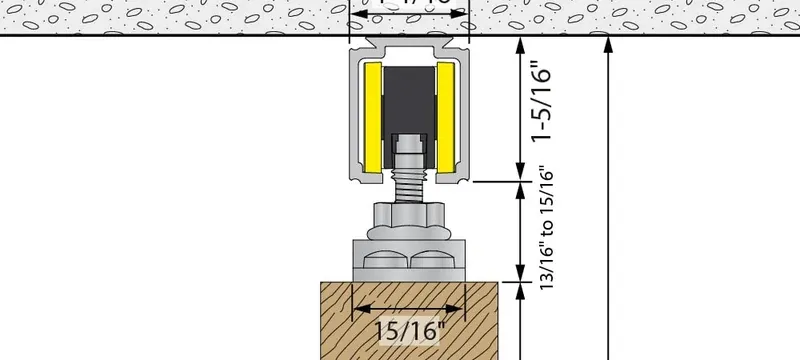
Single-leaf sliding doors open in one direction, while bi-parting doors divide the leaves into two parts and open in opposite directions. This way a half of the wall is occupied on each side.
The clear opening is measured from the edge of the closed leaf to the adjacent edge of the opposite jamb. The nominal leaf width is larger than the clear opening because of the leaf's overlapping. A 1500 mm clear opening means that a 1600 mm leaf will be required.
Track covers ensure minimal accumulation of particles. A threshold-free entryway means that the bottom track is removed, while a closure is applied. A drop-down seal can also ensure sealing function.
Automatic Cleanroom Doors and Safe Traffic Control
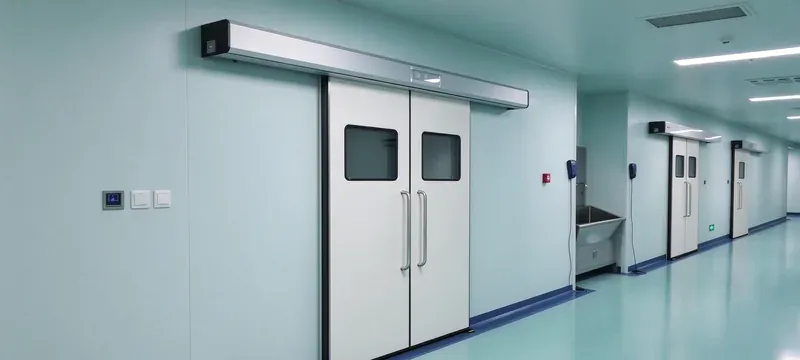
Automatic cleanroom doors, the highest-traffic cleanroom door types in daily use, combine an opening mechanism with an operation control system. Functions corresponding to safety and contamination control are separate functions and should be specified separately.
The detection of occupancy is accomplished with the help of presence sensors. Obstruction protection automatically stops or reverses the leaf upon contact with an object.
Dwell time can be adjusted for different opening periods. The closing speed is adjusted independently from the opening speed.
Before installation of automatic cleanroom door types, access control must be confirmed and the compatibility of the two systems should be established.
Deiiang's automatic sliding doors for medical applications include a hand crank to allow for manual operation in the event of power failure. The anti-pinch function of Deiiang's automatic sliding models meets safety regulations.
Cleanroom swing doors
Among the types of cleanroom doors, swing doors are the standard choice for personnel access wherever a swing area is available. Swing doors are well-known types of clean room doors which are used in pharmaceuticals, foods, electronics and laboratories.
Single-leaf and double-leaf styles are suitable for gaps of 900 mm up to 1500 mm and beyond. Deiiang steel clean door manual doors come in categories of 900 × 2100 mm, 1200 × 2100 mm, and 1500 × 2100 mm.
Applications of swing-door include:
- Entry and exit of persons from a clean area.
- Emergency exit in which door will swing out with panic hardware.
- Using parent-child configuration entry whereby a second smaller swing doorway is used in addition to a larger doorway.
- Route should be proper in which proper space is provided to allow for swing.
Swing Direction, Pressure Forces, and Egress
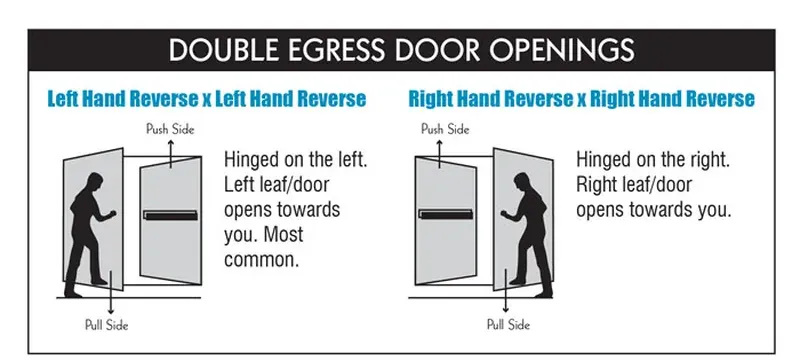
For swing cleanroom door types, the opening force has to be calculated based on air differential pressure and the door opening itself. If denser than the outside air, higher pressure will be required for the same volume of leaves. F = ΔP × A formula.
Egress rules apply to the common door types in cleanrooms USA facilities build, and the swing angle has to be compatible with general exit requirements. If there are more than 50 people, then their doors need to function with regulation 30 degrees angle for the exit [4].
Using the force produced by the door hinges or other devices while operating doors and electric doors subjected to a lower force of 22 N [4].
Leaf Materials, Frames, Seals, and Hardware
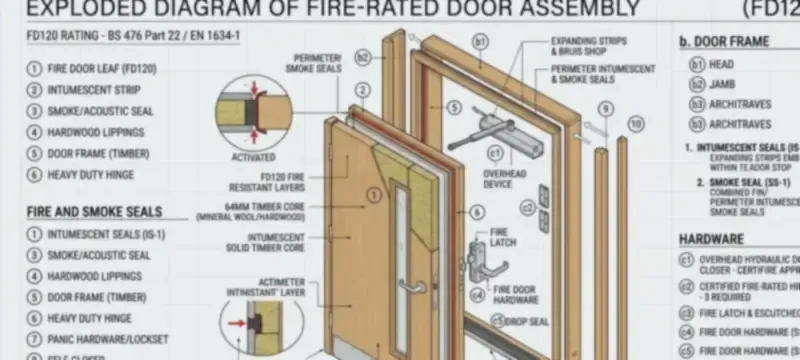
Leaf and frame materials determine chemical compatibility, cleanability, and corrosion resistance. Deiiang steel clean doors use high-strength galvanised steel with spray coating.
Smooth surfaces devoid of any shedding materials, as well as flush glazing, keep particles from accumulating.
Chemical compatibility will need to be assessed in accordance with the actual cleaning agents required for that purpose.
Gasket continuity and replacement will determine the efficiency of sealing process in the long run.
Concealing hardware makes it easy to carry out cleaning operations, while making repairs and maintenance more difficult.
Sealing between the frame and the wall is as important as sealing the leaf gaskets.
Hermetic Cleanroom Doors
Hermetic cleanroom doors rank highest among the types of cleanroom doors for leakage control at the edges and the bottom-most edge of the door. The term "airtight cleanroom doors" indicates performance requirements rather than product type. Thus, leakage must be proved, at the given pressure.
Hermetic doors are applicable in case different containment-critical transitions are involved. These doors can be either sliding or opening door types, but should not act as substitutes for the overall containment-system design.
The following items are required in order to check the hermetic performance verification criteria:
- Test pressure (pascals);
- Leak detection methodology;
- Calibration and measurement uncertainty;
- Manufacturer-related test results for the specific product;
- Acceptance criteria in line with specifications.
How Hermetic Sealing Mechanisms Work
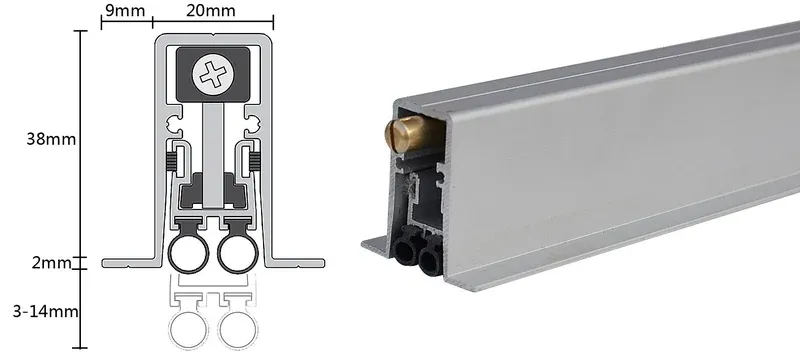
Two basic hermetic sealing methods include drop seals and compression seals. Compression seals involve pressing a protective gasket on to the frame boundary. Drop seal mechanism implies that the gasket on the bottom lowers to the floor.
In some hermetic sliding doors, the leaf slides a few millimeters downwards and towards the wall, thus putting pressure on the gaskets. The flexible bottom seal acts as compensation for floors which are uneven.
Sealing gaps on the corners and on the floor between seals are the principal paths of leakage. The use of a seal contact ensures mechanical proving functionality only, and does not validate the air-tightness.
Verifying Airtightness and Selecting Containment Applications
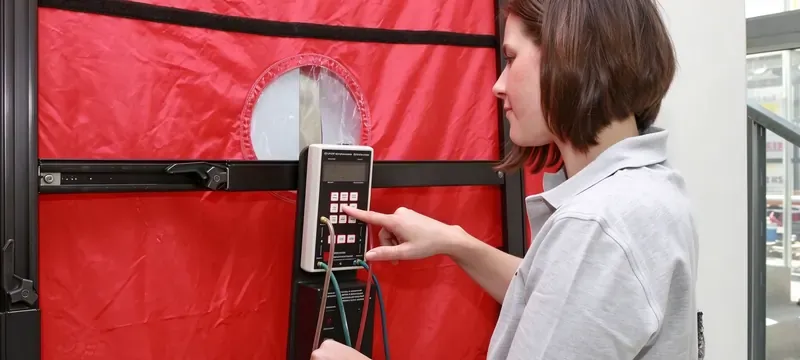
Air-tightness verification requires a set test configuration. According to iso 14644-3:2019, air pressure difference can be utilized in two approaches to air-tightness verification [1]. The pressure decay method at a pressure of 500 Pa with a decay rate of 1 Pa/min is one method [1].
State the method for measuring test pressure and determining leakage. Identify the equipment calibration used and measurement uncertainty.
Request the manufacturer's documentation for testing the specified unit. Verify the acceptance requirements with those established in the project. Never use hermetic doors in place of containment design.
The hermetically sealed door is only one part of the containment plan. It should not be substituted for the complete plan.
Cleanroom Roll-Up Doors
The roll-up option completes the types of cleanroom doors where material transfer must take place relatively frequently and quickly. Curtain, guides, and upper frame determine suitability of doors for a cleanroom.
Certified cleanroom door types differ from regular industrial doors. Deiiang high-speed roll-up doors are listed as certified for the pharmaceutical industry, food industry, electronic industry, warehouses and laboratories.
Criteria of suitability for roll-up types of clean room doors include:
- Frequent transfer of materials with the use of vehicles or pallets.
- Height of the unit to accommodate guides.
- Material of curtain that is resistant to detergents.
- Sealing of guides adequate to provide for the pressure differential.
- Acceptable particle generation from the guide wear for the required iso class.
Rapid Opening Cycles and Material-Transfer Traffic
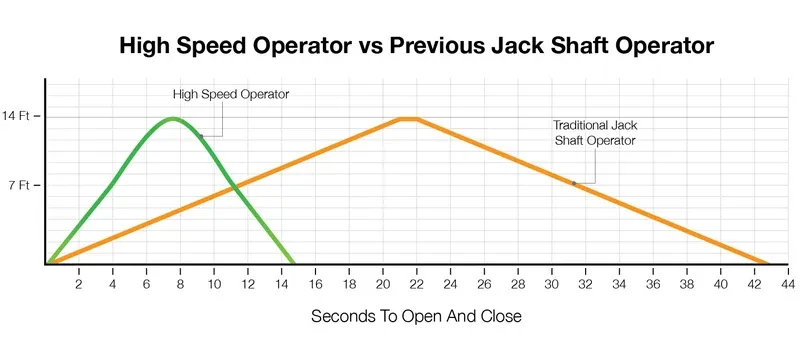
The speed of opening is only one factor when comparing cleanroom door types on total opening time. A door that opens at a speed of 1.2 m/s with a 5-second dwell will probably be open longer than a door that opens at a slower speed of 1.0 m/s.
Opening two airlocks at the same time eliminates the opportunity for rapid operation. When dual doors open simultaneously, the pressure drop occurs and air exchange takes place, regardless of the speed of the individual doors being opened.
Curtain Construction, Guide Sealing, and Cleaning Access
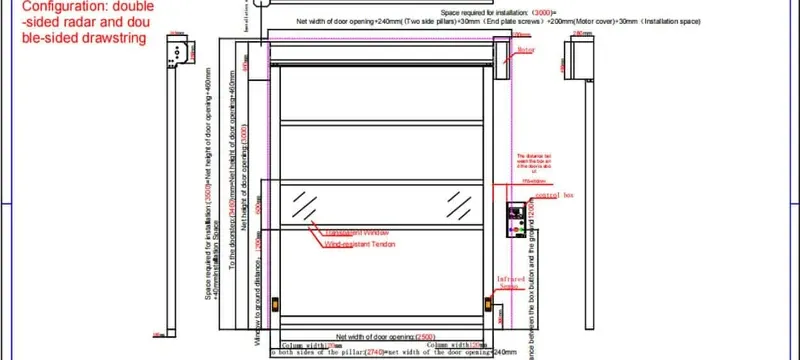
The curtain materials used, the sealing on the guides, and the access for cleaning will determine how well these integrations will operate over the long run.
Deiiang's high-speed roll-up doors use a modular curtain system that has high-density PVC vision panels, which provide for chemical resistance and visibility during use.
According to the catalogue information supplied by Deiiang for the high-speed roll-up doors, the curtain is made from 0.8 mm double-coated self-cleaning PVC material that passes the Class 8.2 fire rating and has UV protection. The track sealing system consists of double-row brush seals attached to PVC base strips.
Be sure to check the suitability of the curtain material with the intended disinfecting chemicals.
Check the wear of the guides and the shedding of contaminants at specified intervals.
Check the sealing on the bottom edge of the doors, including the interface with the floor.
Provide access to the hoods without removing the doors themselves.
Prepare a plan for replacing components, including time frame and maintenance requirements.
Door Integration with Cleanroom HVAC and Airlocks
Door operation for all cleanroom door types involves their relationship with air currents, pressure drops and operation of the airlocks. For the engineering verification of the doors integrated with the HVAC system:
- Door leakage should be adjusted with the supply and exhaust balance.
- Pressure drops should be on the order of 10 to 15 Pa between adjacent rooms of different class [4].
- An interlock should be provided to prevent the opening of both airlocks at the same time [4].
- Emergency override protocols ensure compliant egress.
- The time for recovery is determined by chosen validated operational data.
Pressure Cascades, Door Leakage, and HVAC Recovery
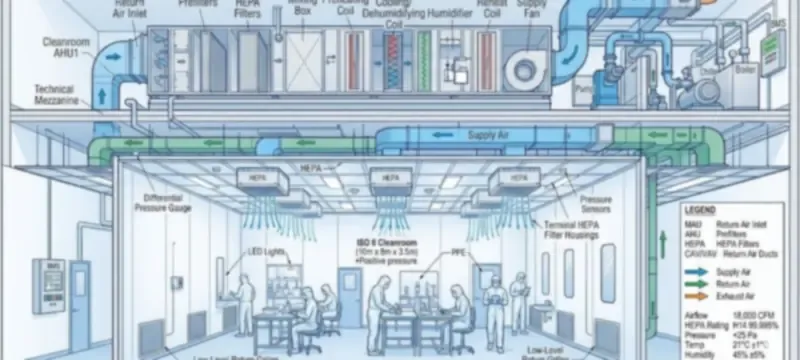
Air balance within rooms determines the stability of cascade. The four significant paths include the supply air, return air, extract air and door leakage among others.
In the example of using a Deiiang door in a class 7 cleanroom, the filter that will be installed is Deiiang filter model D-HEPA-99.99. This catalog example gives efficiency of 99.99 percent at 0.3 μm, therefore checking for the proper HVAC recovery within the time limit of sixty seconds.
Filter efficiency is an intrinsic feature of filtration systems but not doors. According to EN 1822-1:2019 and ISO 29463, the classification of EPA, HEPA and ULPA filters is based on filtration efficiencies [5][6].
Airlock Interlocks, Transfer Sequences, and Emergency Overrides
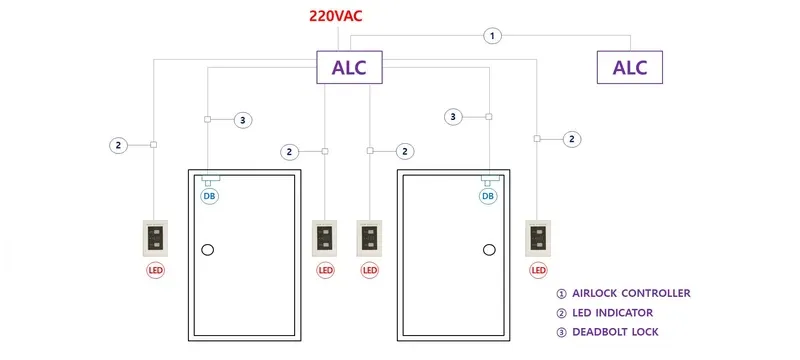
The airlock interlocks serve the purpose of ensuring the sequential operation of the doors. Interlock control prevents both the doors from being open at the same time [4].
Entry: An outer door is opened, then a person enters, the outer door closes followed by the purge which results in opening the inner door. A clean room revolving door follows the same sequential idea by rotating through two sealed sectors.
Exit: The inner door opens, a person goes out, closes the inner door, and the purge is then followed by opening the outer doors.
Emergency overrides must ensure that all doors of the escape route can exit. Fire alarm management must be checked with door control.
Cleanroom Door Selection and Procurement Specifications
The selection of doors for cleanrooms involves mapping the applications to the various types of clean room doors, sealing requirements, and evidence. The procurement specifications will require the necessary specifications with proper values, catalog evidence for the various specifications, and methods of verification.
Table 2: Door Selection Based on Application
| Application | Preferred starting option | Rationale for selection | Required evidence | Exclusions |
|---|---|---|---|---|
| Routine personnel access, adequate clearance | Swing | Simple mechanism; egress-friendly | Egress force; gasket continuity | Heavy loads with no double leaf |
| Constrained swing area, heavy loads | Sliding | No swing radius; available wall space next to opening | Track and drive access; opening cleared | Corridor with no wall space |
| Containment-critical observation | Hermetic | Verified leakage limit | Leakage test at specified pressure | Used as placeholder for containment system |
| Frequent material transfer | Roll-Up | Fast cyclical time; overhead housing | Curtain compatibility; sealing at guide | Low clearance openings |
| Application | Preferred starting option | Required evidence |
|---|---|---|
| Routine personnel access, adequate clearance | Swing | Egress force; gasket continuity |
| Constrained swing area, heavy loads | Sliding | Track and drive access; opening cleared |
| Containment-critical observation | Hermetic | Leakage test at specified pressure |
| Frequent material transfer | Roll-Up | Curtain compatibility; sealing at guide |
Table 3: Specification Values and Evidence
| Specification | Required values | Catalogue evidence | Method of verification |
|---|---|---|---|
| Opening dimensions | Defined by the project | Deiiang Painted Steel Clean Door Technical Datasheet | Tape measurement |
| Leaf material and dimensions | Defined by the project | Deiiang Steel Clean Door Manual Sandwich Panel Technical Datasheet | Caliper measurement |
| Sealing design | Perimeter + bottom | Deiiang Airtight Automatic Sliding Door Technical Datasheet | Visual and contact inspection |
| Evidence of leakage | At specified pressure | Deiiang Hermetic Sliding Door Test Report | Pressure decay or airflow test |
| Interlock compatibility | Required sequence | Deiiang Automatic Sliding Door Control Datasheet | Functional test |
| Specification | Required values | Method of verification |
|---|---|---|
| Opening dimensions | Defined by the project | Tape measurement |
| Leaf material and dimensions | Defined by the project | Caliper measurement |
| Sealing design | Perimeter + bottom | Visual and contact inspection |
| Evidence of leakage | At specified pressure | Pressure decay or airflow test |
| Interlock compatibility | Required sequence | Functional test |
Choosing Doors for Pharmaceutical, Electronics, and Transfer Areas
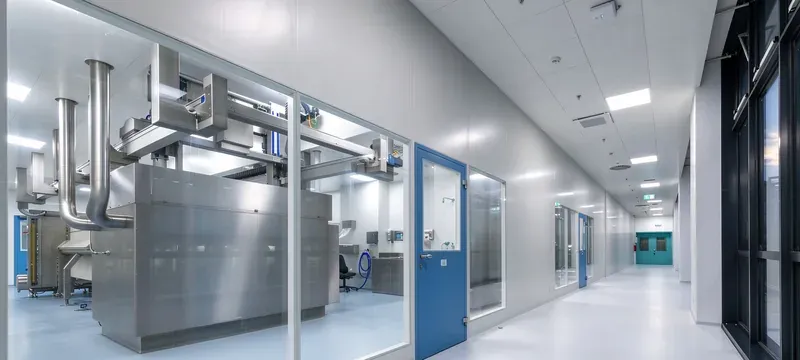
The selection among cleanroom door types for pharmaceutical facilities is based on contamination control and qualification needs. The selection of doors for the electronics industry focuses on particle generation and compatibility with chemicals. The selection of doors for transfer areas is based on cycle time and durability.
Use swing doors where user passage needs to take place with enough clearance above and below; this keeps the simplest of the types of cleanroom doors compliant. Use sliding doors where the distance needed is less in order to accommodate bulkier items being taken through. Use hermetic doors where certain maximum leakage amounts are specified.
Use roll-up doors once it has been established that material transfer needs preconditions that fit these criteria. Please check for local requirements regarding accessibility, fire standards, and egress.
Building a Verifiable Deiiang Door Specification

A verification-level specification includes catalogue numbers, model numbers, other sizes, and verification data. For example, the Deiiang standard offers sizes, thicknesses of door leaves, and door types. The specification for ordering would provide accurate details of mechanical action.
The following details should be provided in the verification specifications: opening sizes, bulk material measurements, and specifications for sealing products used.
Indicate evidence and interlocking forms along with other auxiliary information.
Installation, Commissioning, and Cleanroom Door Maintenance
The importance of installation training for every one of the types of cleanroom doors cannot be overstated. A product that passed the test for installation, where it was truly a factory test, will have leakage problems at the loading dock if the ever-present discrepancies of installation practices disturb proper performance.
Installation Tolerances and Commissioning Acceptance
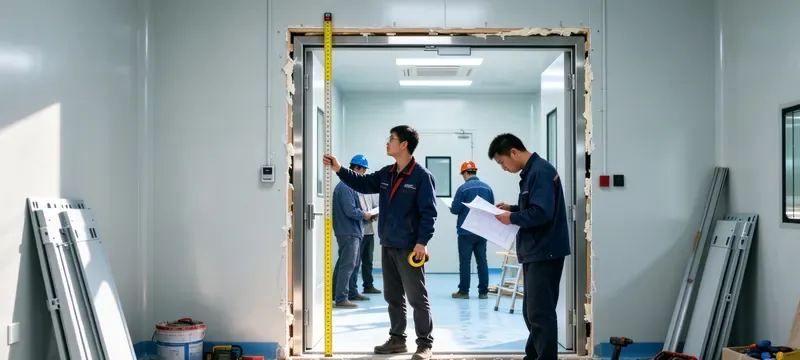
Frame alignment, floor conditions, and gasket contact are the installation parameters that decide whether the cleanroom door types achieve the specified sealing.
Test the sensors, interlocks, and emergency releases.
Assure specified leakage and room-pressure operations.
Document related ISO 14644-3 test results [1].
Preventive Maintenance and a Documented Real-Project Case Study
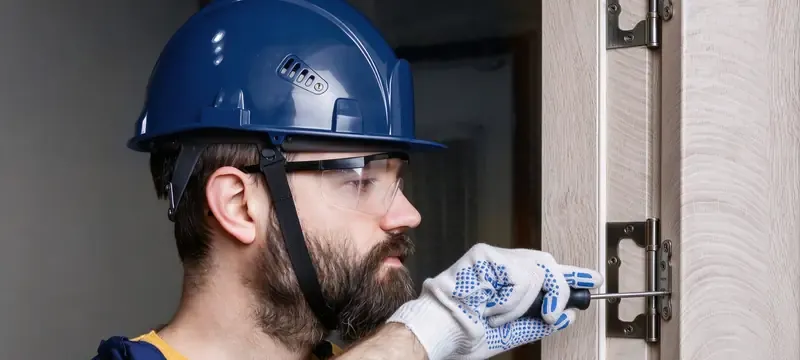
Preventive maintenance maintains the seals and ensures safety levels for all types of cleanroom doors. In order to do so, you need to check the seals, tracks, hinges, curtains, and operators as the basic points of inspection.
For example, in a recent 1,000 m² pharmaceutical facility project, Deiiang's installation team achieved a leakage rate below 4 m³/m²/h at 50 Pa pressure differential. This result is project-reported.
Maintenance schedules confirming leakage tests before preventive maintenance confirm that after gasket compressions have been made, leakage has reduced by 25% compared to previous tests. This outcome is project-reported and conditions-specific.
Some examples of maintenance intervals for the main types of cleanroom doors:
- Weekly inspection of seals, checking cleanliness.
- Monthly check of the compression rebound.
- Quarterly fastener torquing or adjusting the seals.
- Yearly complete leakage testing and verification of operator parameters.
Frequently Asked Questions
What Are the Main Types of Cleanroom Doors?
Asked what are the different types of cleanroom doors, the short answer is: sliding, swinging, hermetic, and roll-up. Sliding and swinging refer to the manner of door opening; hermetic means door sealing and roll-up shows that the doors are opened vertically.
When Should I Choose Sliding Cleanroom Doors Instead of Swing Doors?
Make sure to select sliding cleanroom doors if there is a limitation of swing clearance or if you need to move larger loads without any swinging involved; a clean room revolving door is a niche alternative that keeps both sides sealed.
If you are using sliding doors, you will have to have some space on the wall side of the door opening compared to the amount of space needed for a swing door due to its arc radius. This means consideration will have to be given to movement of equipment, sealing, and egress issues.
Are Hermetic Cleanroom Doors Completely Airtight?
Hermetic doors - the containment branch of what are the different types of cleanroom doors - minimize airflow leakage, although not to a literal zero. The actual performance must be proven through testing at a specified pressure condition using some kind of proven method and equipment calibration with written proof of performance. Always ask for test papers for certain sizes and models from the manufacturer.
Are Roll-Up Doors Suitable for Cleanroom Applications?
Roll-up doors are effective because they function well when there is a high frequency of material transfer at fast rates of cycles leading to less time spent having doors open. The desired performance in a cleanroom will depend on the appropriate construction of the roll-up curtain, sealing characteristics of the door along the guide, particle transport aspects, and proof of airflow leakage.
How Do I Select Cleanroom Doors for a Pharmaceutical Facility?
Matching your choice of doors with the contamination risk and pressure requirements is important in the selection of doors to be used within pharmaceutical production facilities. You should be sure that the cleaning properties are compatible with real cleaning agents and documented proof is available that shows you can clean to the required conditions within the relevant ISO class.
What Maintenance Do Cleanroom Doors Require?
Schedule periodic inspections of door seals, hardware of the door, sensors used for any automatic doors, and interlock devices. All procedures must be followed on the recommended methods for cleaning and maintaining the specific type of cleanroom door as well as the specific cleaning agents being used.
References
- [1] iso 14644-3:2019, Cleanrooms and associated controlled environments — Part 3: Test methods. International Organization for Standardization. Clauses 4.2.1, 4.2.2, 4.2.8.
- [2] iso 14644-1:2015, Cleanrooms and associated controlled environments — Part 1: Classification of air cleanliness by particle concentration. International Organization for Standardization.
- [3] iso 14644-2:2015, Cleanrooms and associated controlled environments — Part 2: Monitoring to provide evidence of cleanroom performance. International Organization for Standardization.
- [4] EU GMP Annex 1 (2023), Manufacture of Sterile Medicinal Products. European Commission. Pressure cascade and interlock guidance.
- [5] EN 1822-1:2019, High efficiency air filters (EPA, HEPA and ULPA) — Part 1: Classification, performance testing, marking. European Committee for Standardization.
- [6] ISO 29463-1:2024, High-efficiency filters and filter media for removing particles from air — Part 1: Classification, performance, testing and marking. International Organization for Standardization.
- [7] IEST-RP-CC001.7, HEPA and ULPA Filters. Institute of Environmental Sciences and Technology.
- [8] Deiiang Cleanroom Doors Product Brochure, Deiiang™. Models including Painted Steel Clean Door, Steel Clean Door Manual Sandwich Panel Type, Airtight Automatic Sliding Door, and High-Speed Roll-Up Door. Product designer: Jason.peng.
- [9] Deiiang project record, 1,000 m² pharmaceutical facility. Project-reported leakage and maintenance data. Available from Deiiang project documentation.
- [10] ASHRAE 52.2-2017, Method of Testing General Ventilation Air-Cleaning Devices for Removal Efficiency by Particle Size. ASHRAE. Filtration context only.