+86 13638632902
 Jason@cleanroomequips.com

 MENU
MENUThe Ultimate Guide to Semiconductor Cleanroom Design and Con
A semiconductor cleanroom is a controlled environment designed to reduce the con...

Author:Jason Peng
Cleanroom Engineering Technology Manager of Deiiang Company.
Product R&D Manager of GDC Inc. Cleanroom Equipment Manufacturing Company.
Executive Director of Guangdong Cleanroom Industry Association of China.
Engaged in R&D of related products for 15 years, with rich relevant technical experience
The semiconductor industry relies heavily on cleanroom environments to ensure product integrity and quality. From wafer fabrication to integrated circuit assembly, cleanrooms play a pivotal role in mitigating contamination and complying with stringent industry standards.
Wafer manufacturing and photolithography processes require the cleanest environments, typically classified as ISO 1-4. These classifications denote the acceptable level of particulate contamination, where ISO 1 is the cleanest.
For Surface Mount Technology (SMT) assembly, cleanrooms are often classified under ISO 7 or 8. These environments accommodate larger particulate sizes without compromising the functionality of integrated circuits.
| Factor | Requirement |
|---|---|
| Temperature | ~21°C (69.8°F) |
| Humidity | 40-50% RH |
| Pressure | Positive air pressure |
| Static Electricity | Anti-static measures |
Maintaining stable environmental conditions is crucial in Semiconductor cleanrooms to prevent defects such as wafer warpage and static discharge issues.
Ultra-Low Penetration Air (ULPA) filters capable of removing airborne particles as small as 0.12 microns with 99.9995% efficiency.
High-Efficiency Particulate Air (HEPA) filters providing effective filtration down to 0.3 microns with an efficiency of 99.97%
air showers: High-velocity air jets to remove surface contaminants
What ISO class is required for photolithography rooms?
Typically ISO 1-4, which ensures the highest level of cleanliness.
Why is humidity control critical in cleanrooms?
To prevent static discharge and moisture damage to sensitive components.
What kind of filters are used in ISO 1-4 classes?
ULPA filters, which capture particles as small as 0.12 microns with high efficiency.
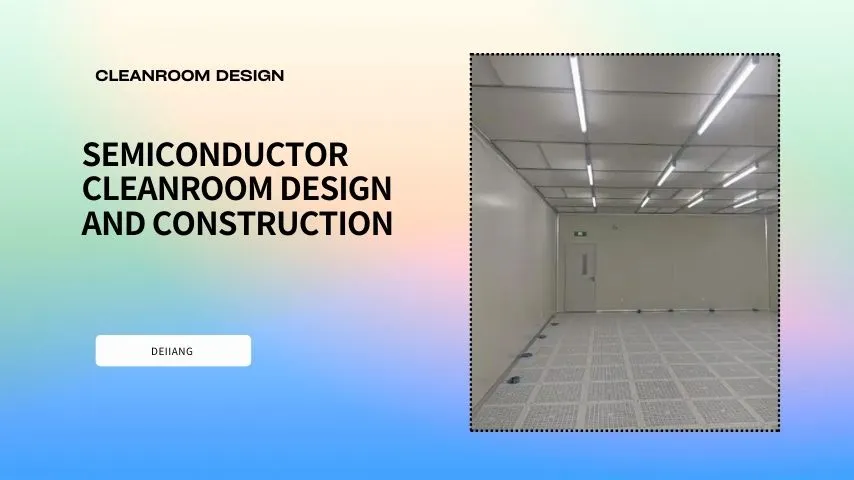
A semiconductor cleanroom is a controlled environment designed to reduce the con...
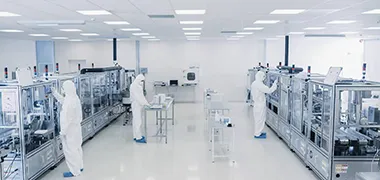
Introduction
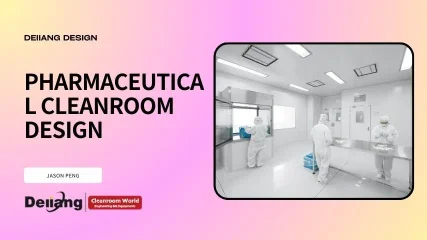
In the pharmaceutical industry, cleanrooms are pivotal in ensuring the production of safe and effective products. Designing a cleanroom that meets Good Manufact...
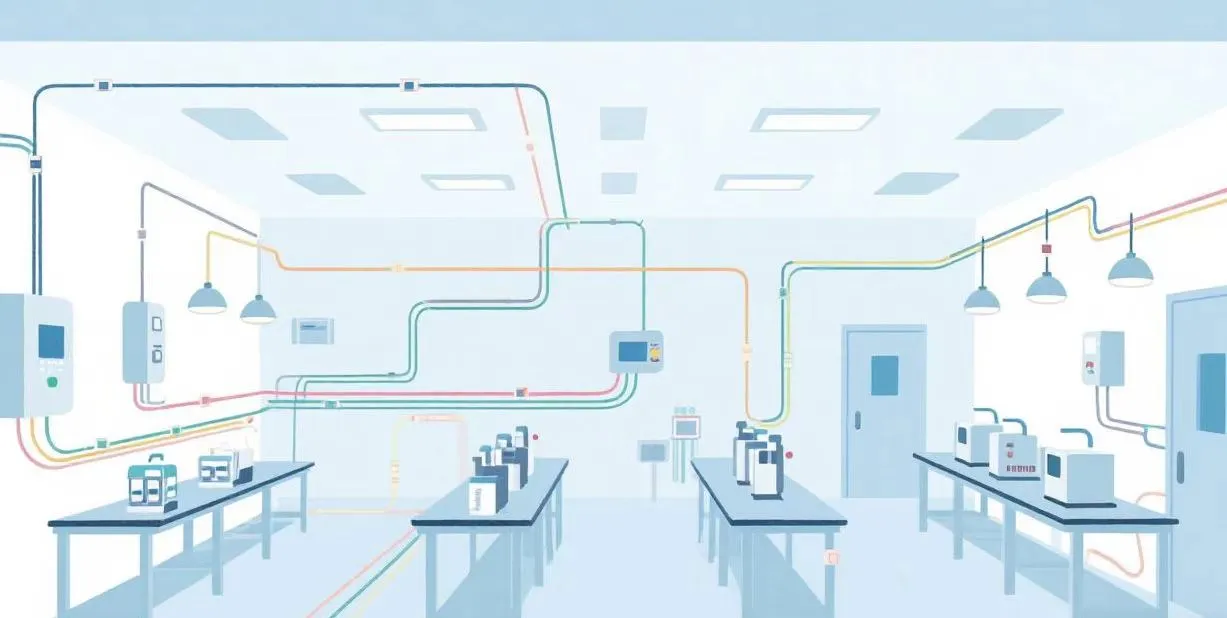
Designing a pharmaceutical cleanroom requires balancing strict regulatory compli
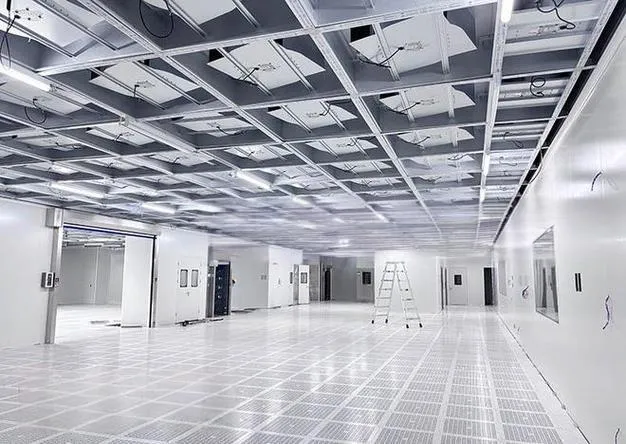
Semiconductor Cleanroom designKey Points for Optimal Manufacturing EnvironmentsT
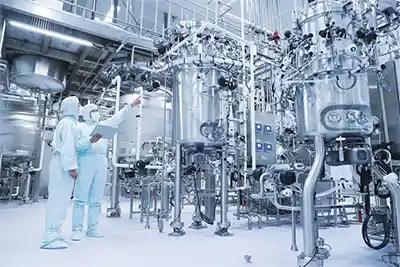
Why Cleanrooms Are Non-Negotiable in Biopharmaceutical ManufacturingCleanrooms p
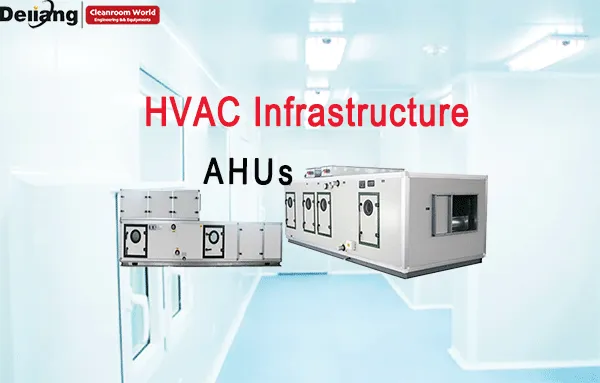
Successful cleanroom projects require meticulous integration of technical expert
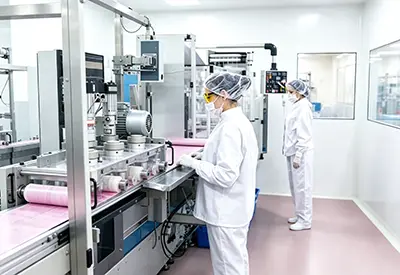
Published: July 31, 2026 | Product Designer: Jason.peng | Brand: Deiiang™Core: B