+86 13638632902
 Jason@cleanroomequips.com


 MENU
MENU
What Are the Aspects Where HEPA filters Fail To Deliver?
HEPA filters have been designed for filtering particles and not gases; hence, they are not reliable in removing carbon dioxide (CO₂), carbon monoxide (CO), volatile organic compounds (VOCs), or odor-causing gas molecules. HEPA filters perform particle filtration.
Gases and vapors need to be treated with a different approACH: chemical absorption, adsorption, dilution, or source management. This paper elaborates on what HEPA filters don't remove, when to use gas-phase media, and how facilities use various technologies.
Introduction
In a nutshell, HEPA filters are particle filters and cannot filter out air contaminants like carbon dioxide (CO₂), carbon monoxide (CO), VOCs, ammonia, and odor-causing molecules. Ventilation, activated carbon (AC), or chemical treatment of media will be essential in this regard.
Catalogue data on Deiiang filter products shows the efficiency data of the filter is based on removing particles that are 0.3 µm in size. This data only deals with particle removal processes.
An environment can have excellent particle control and still not meet acceptable VOC and odor levels. All of these problems need to be dealt with at separate stages of the system design.
What HEPA Filters Do Not Remove
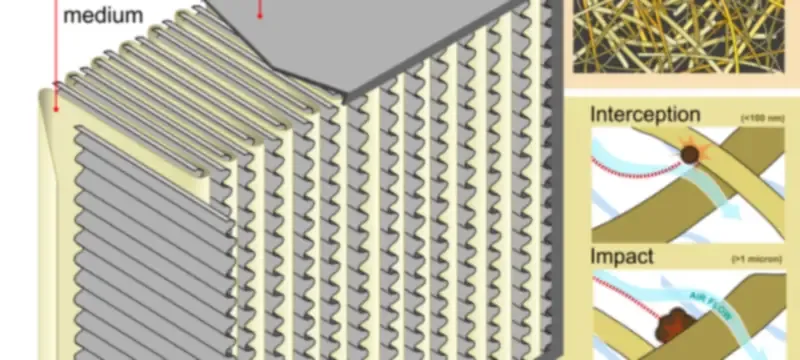
HEPA filters consist of a thick mat of fibrous materials. HEPA works by trapping particles by intercepting them and impacting them. These processes do not work for gases.
Gas removal requires chemical absorption, adsorption, or dilution; HEPA media is not designed for the purpose and is not rated for it. These are the core HEPA filter limitations that every facility engineer should understand before selecting filtration equipment.
Which airborne contaminants pass through HEPA media?
The contaminants which pass through HEPA filters fall into various categories.
- Carbon dioxide (CO₂)
- Carbon monoxide (CO)
- Volatile organic compounds (VOCs)
- Ammonia and amines
- Sulfur compounds and mercaptans
- Formaldehyde and aldehydes
- Ozone and nitrogen oxides
The operation of gas-phase media depends on the nature of the contaminant, its concentration, moisture content, residence time, the type of media, and system design. A particular activated carbon product cannot be relied upon to remove all the contaminants listed.
Why particle filtration differs from gas-phase filtration
In particle filtration, the size of particles and the geometry of the fiber are taken into consideration while in gas-phase filtration, the physical attraction among molecules and the area of filter surface are taken into consideration.
HEPA filters have to be certified for particle filtration according to EN 1822 and ISO 29463 [1][2] standards. However, these standards do not cover the efficiency of the filters in the gas removal process.
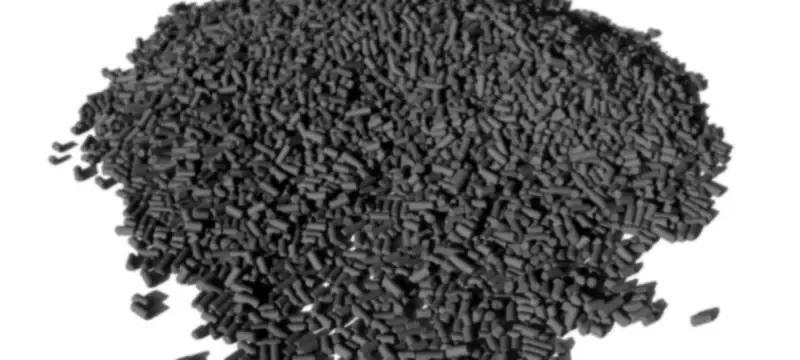
Gas removal involves an extra step. Activated carbon and impregnated media are commonly used in this case. It is important to select an appropriate medium for gas removal.
HEPA filters and VOCs, gases, and odors
In the procurement process, there is often some confusion with respect to the use of HEPA filters and VOCs. As HEPA filters are used to remove particulate matter, they cannot be used to remove VOC molecules.
The same is true for odors also. If the odor is associated with a particulate matter, the HEPA filter works effectively, but for odors in gaseous form, the HEPA filter is not efficient.
Table 1: Class of contaminants and HEPA filtration results
| Contaminants | HEPA Filtration? | Comments |
|---|---|---|
| Dust and PM2.5 | Yes | Within the rated particle size limit |
| Smoke particles | Yes | Particle phase |
| Bacteria and viruses | Yes, as long as they are associated with particles | The capturing process does not mean inactivation |
| VOCs | No | Gas phase filter is needed |
| Odor | No | Gas phase filter is required |
| Carbon dioxide | No | Must use other means such as ventilation |
| Carbon monoxide | No | Must take other measures |
| Ammonia | No | Special filter must be used |
| Contaminant | HEPA? | Note |
|---|---|---|
| Dust and PM2.5 | Yes | Within rated limit |
| Smoke particles | Yes | Particle phase |
| Bacteria and viruses | Particle-bound only | Capture not inactivation |
| VOCs | No | Gas-phase filter needed |
| Odor | No | Gas-phase filter required |
| Carbon dioxide | No | Ventilation required |
| Carbon monoxide | No | Other measures required |
| Ammonia | No | Special filter needed |
Table 1: Class of contaminants and HEPA filtration results.
Do HEPA filters remove VOCs, gases, or odors?
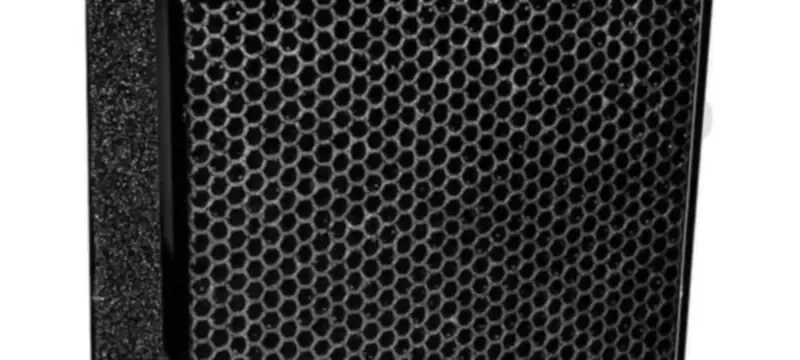
No, HEPA filtration is not effective for reliable filtering of VOCs. There will be incidental capture of some particle-based contaminants. This incidental capture is not designed to provide reliable VOC capture. Other filtration processes must be utilized for gases.
When activated carbon or other gas-phase media are needed
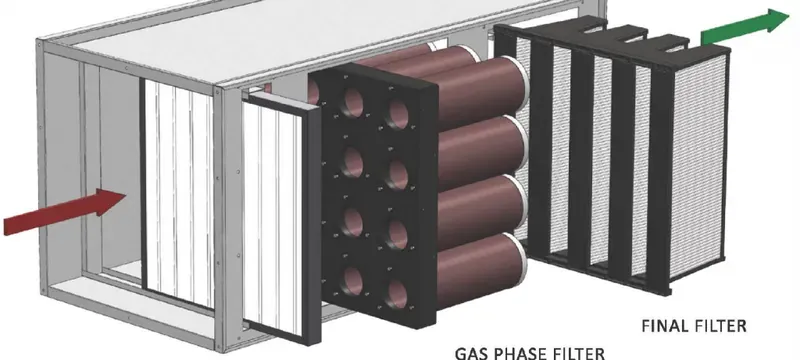
When gases are being filtered, gas-phase media must be used. A quick filtration workflow may help.
- Determine the contaminant of concern.
- Determine the inlet concentration and the desired target.
- Determine the humidity and competing contaminants.
- Determine the media type and contact time.
- Determine filter life and change-out criteria.
Keep in mind that activated carbon is not always effective, and the impregnated media reacts in an appropriate fashion to the specific gas.
Does HEPA remove carbon dioxide and other gases?
Since CO₂ (carbon dioxide) is a small molecule, it is not picked up by HEPA filters. The same is true for CO (carbon monoxide), methane, hydrogen and similar gases.
Usually, ventilation is employed to dilute CO₂ coming from people. Other gases that are generated by process or other hazardous ones might need local exhaust or a specific treatment process.
Why carbon dioxide passes through standard HEPA media
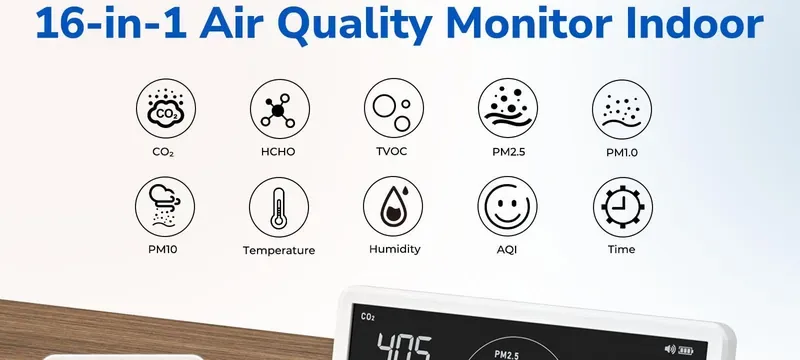
HEPA media are tested on particles captured. These filters are not designed for treating gases. The removal of CO₂ from air requires a gas adsorbent that could be captured, reacted chemically, or diluted before released into the environment.
The choice of the solution will depend on the source and level of CO₂ in the air. People usually use outdoor air ventilation.
How facilities manage gases HEPA filters cannot capture
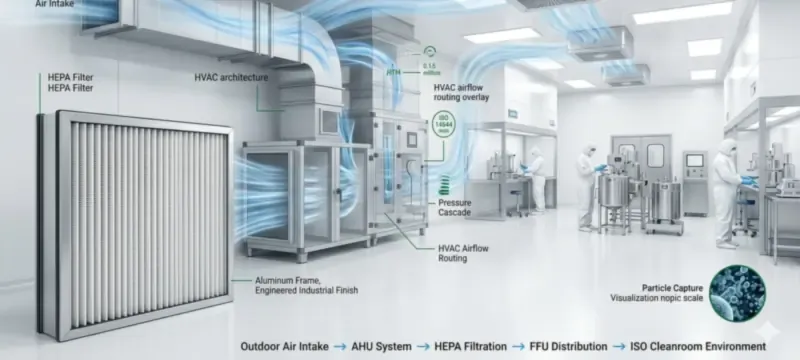
The facilities should use a number of solutions.
- Increase outdoor air ventilation.
- Install gas-phase media stages based on the type of gas.
- Use specific scrubbers in case of a high concentration of gases.
- Monitor any gases that are required by the risk assessment.
- Isolate high emission processes with local exhaust.
Make sure that the sensors for monitoring different gases are selected appropriately.
What HEPA filters capture—and what capture does not mean
HEPA filters capture particles. That includes dust, smoke particles, pollen, mold spores, and airborne microorganisms carried on particles or droplets. Capture does not equal inactivation.
Capture does not demonstrate that microorganisms are dead. The survival of an organism is dependent on both the organism and the environment within which it is found. Intrinsic to survival is the need to follow validated biosafety and filter change protocols.
Do HEPA filters kill bacteria and viruses?
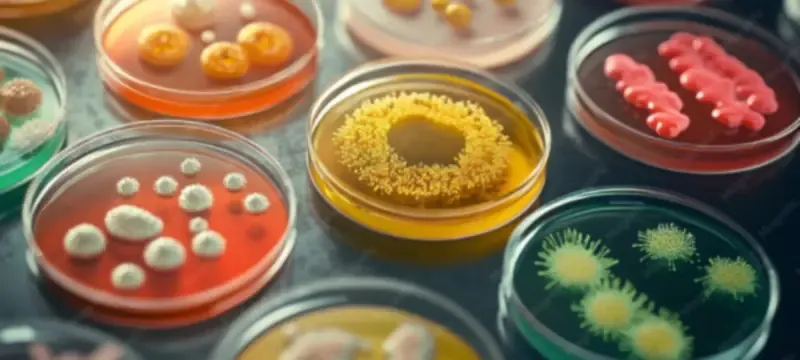
No. HEPA filters exert an influence on microorganisms through the capture of droplets or particles that carry microorganisms. There is no killing or inactivation by HEPA filters.
Some microorganisms may die off over time while in a filter; this is not a process of controlled inactivation. It should not be relied upon for biosafety.
What HEPA efficiency ratings do and do not indicate
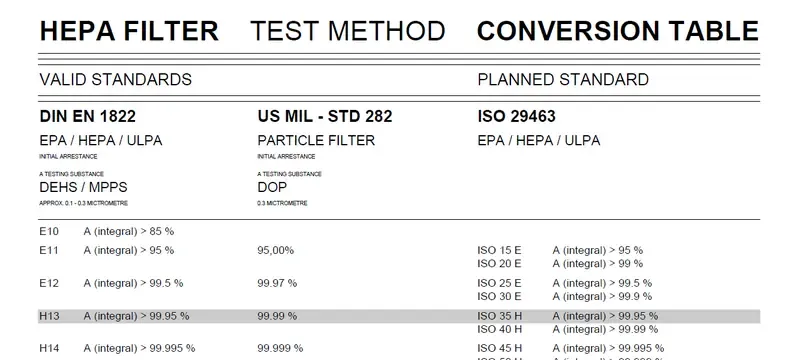
According to EN 1822 and ISO 29463 standards, the classification of filters is dependent upon the most penetrating particle size (MPPS) along with the measures used while performing tests [1][2]. The actual classification values and procedures for reporting must always be verified against the appropriate edition of the standard.
The Deiiang catalogue provides information on efficiency values at a specific size of particle. This is purely catalogue information and does not replace the requirement for the model to have passed the EN 1822 test.
The efficiency rating pertains to particle capture only, and not to gas removal, odor removal, or killing of microorganisms.
Choosing complementary filtration for cleanrooms
HEPA filters in cleanrooms are aimed at the removal of particles. Gases are coupled with gas-phase media, ventilation, and source control. The combination varies according to the contaminant list obtained and process risk.
The classification of particles in a cleanroom does not deal with the control of VOCs, odor or gases that are due to the process. There should be two separate documents that address each requirement.
When to combine HEPA filtration with activated carbon
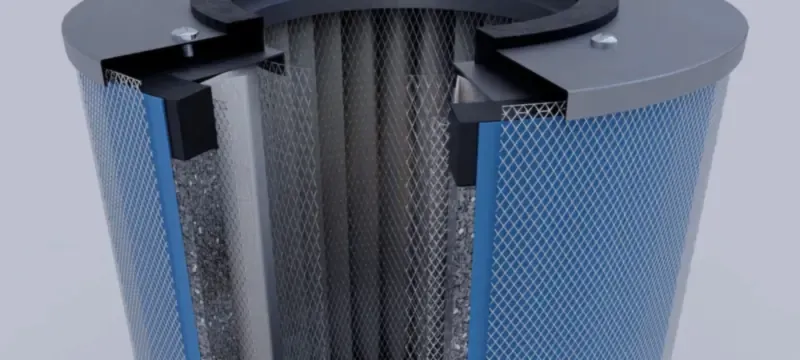
This combination takes effect when both particulate and gaseous matters should be controlled. The arrangement of the carbon filter will be based on configuration of the filter, the location where the gaseous matter is coming from, risks associated with the contamination and the strategy that will be used for maintenance.
Make sure not to allow the sorbent to shed and/or bypass into the downstream part of the system. Consult the manufacturer of the gas-media filter for guidelines on the design.
The H13/H14 Combined filter made by Deiiang will be suitable for the particle stage while the gas-phase stage will depend on the contaminants specified. This is where HEPA filter vs carbon filter selection becomes a system design decision, not a simple product swap.
How to select systems for cleanroom contaminants
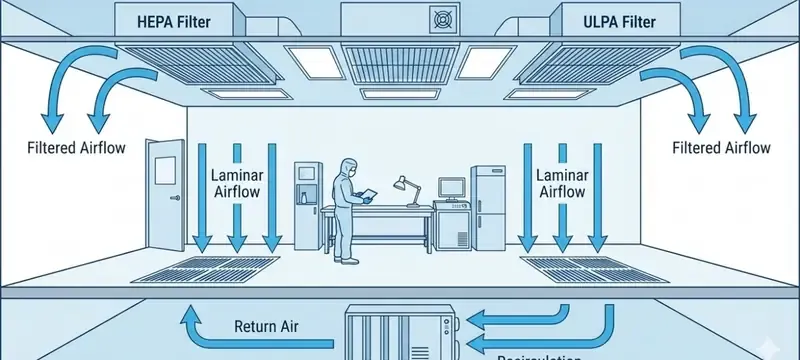
Selection of the filter for each contaminant follows a logical procedure.
- First, determine the contaminants that are present and also the required limits for each contaminant.
- Next, select the required filter for the particulate stage.
- Then, pick out a gas-phase filter based on the chemistry of the contaminant.
- Make sure the media is compatible and also make sure the criteria for changing the filter are mentioned.
- Check the static pressure of the fan available in the system.
- You also need to do the necessary testing for the acceptance criteria of the filter.
It doesn't matter what the iso class of the room is; we will not choose the filter type based only on that factor.
System design, installation, and maintenance limits
The performance of the filter is affected by many factors besides what is in the filter element itself. Bypass leakage, seal integrity, housing as well as fan-static pressure affect the performance in a huge way.
How bypass and poor installation undermine filtration
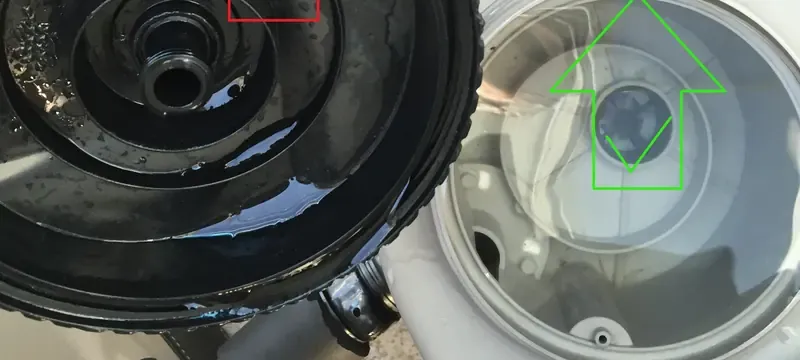
The phenomenon of bypass happens when air moves around the filter instead of being filtered. The following things might result in it:
- Uneven gasket compression.
- Filter frame is damaged.
- Surface of the housing is not flat.
- Clamping force is insufficient.
- Sealing surfaces do not cooperate.
The verification that comes from filtering element testing and the actual field leak-testing process differ from one another. Each verification step uses different methods of inspection and testing. The selection of the applicable method should comply with the project qualification protocol.
How maintenance affects airflow and filter performance
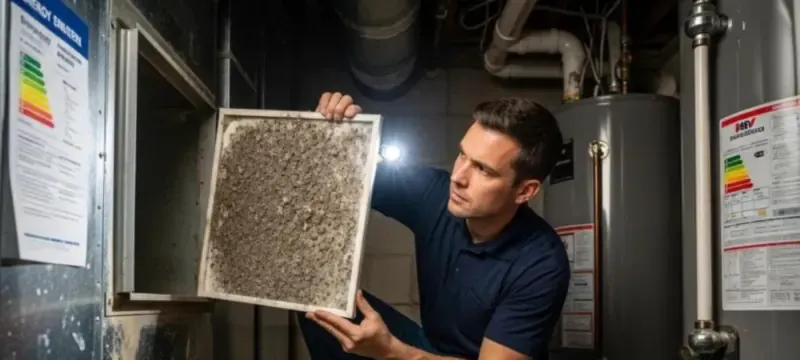
Increasing deposition of particles in the filter will increase the pressure drop across the filter. If the fan cannot overcome this increased pressure drop, then the airflow may decrease. The action limit allowable at the site is determined by the fan capacity and the design of the system.
If the manufacturer's current catalog or the catalog datasheet gives a final resistance number for the exact model under discussion, this number would be treated as a catalog number or tested value. However, a number published as a "recommended final resistance" for the filter by the manufacturer is not the same as the actual replacement resistance limit for the facility.
Don't replace the filter just because it's been a certain number of months since the last replacement, but rather based on some type of pressure, airflow or integrity testing.
Standards, testing, and performance verification
Standards dictate how filters are classified and how systems are verified. They do not prescribe gas removal performance of HEPA media.
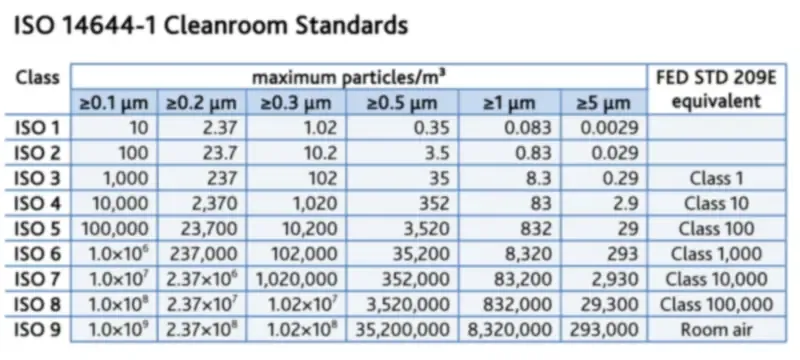
EN 1822 and ISO 29463 relate to EPA, HEPA and ULPA classification and testing [1][2]. iso 14644-1 and 14644-3 assign the cleanroom classification and method of using different testing procedures for validation [3][4].
Which standards apply to HEPA filters and cleanrooms?
The applicable standard will depend on various factors including project location and compliance requirements.
- EN 1822: European HEPA and ULPA classification.
- ISO 29463: International HEPA and ULPA classification.
- ISO 14644-1: cleanroom classification according to particle concentration.
- iso 14644-3: Method of testing cleanrooms.
- IEST-RP-CC001: US practice standards.
- MIL-STD-282: Historical US testing standard.
- ASHRAE 52.2: HVAC filter test procedure and MERV rating.
- EN 779: Old general ventilation filter classifications, now replaced by ISO 16890.
There are different separate requirements for filter classification and room classification which must be documented for original performance compliance.
How to verify installed-system performance
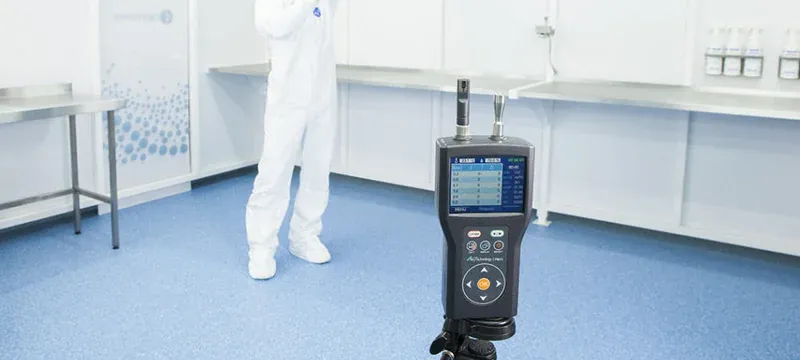
Verification of performance occurs according to the facility's qualification protocol which includes the following normal steps: airflow balancing, pressure measurement, installed leakage testing of filters, and room particle count.
iso 14644-1 refers to cleanroom classification for air cleanliness according to particle concentrations. ISO 14644-3 gives suitable testing procedures. Again, neither refers to gas removal verification standards that require in most cases the use of some form of gas-specific sampling or material monitoring process.
Deiiang application data and real-project case study
Deiiang manufactures cleanrooms and air filtration products. It offers both H13 and H14 particle filtration along with ULPA levels U15 to U17 and a separate media for gas filtration.
When designing for gas removal, communication with Deiiang is essential in order to arrive at the right combination of various filtration products needed.
What a real Deiiang cleanroom filtration project demonstrates
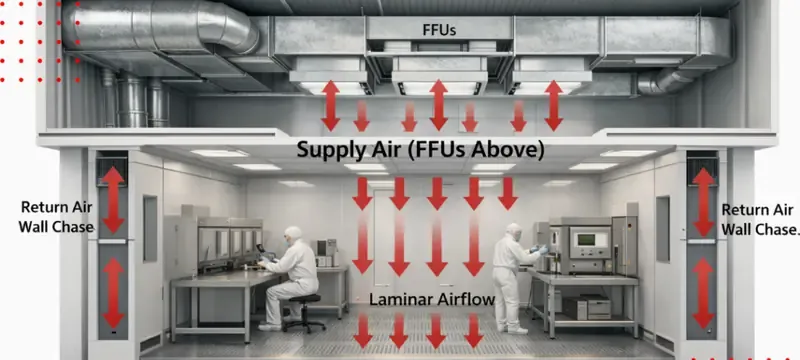
Deiiang has documented a project involving pharmaceutical packaging in an iso 6 cleanroom with high ambient particulate loading but low plenum height.
The company provided low-profile H14 combination filtration measuring 592 mm × 592 mm × 292 mm with a capacity of 2,500 m³/h having a media of 20.04 m² and an initial pressure drop of 220 Pa.
Silicone-free gaskets and F7 prefilters were included, with per-unit DOP scan testing. As a result, particle concentrations well below iso 6 were reported.
How to report project evidence without overstating performance
You need to include catalogs to be considered catalogs. You need to include project outcomes as project-reported. An important aspect includes clarifying what has been measured, especially with regards to verified measuring and design intent.
For example, do not state that gas removal has occurred with the use of a HEPA-only installation. You cannot state energy savings without evidence of baseline and measurement.
Good labeling protects both the site and the manufacturer.
Technical comment from Jason.peng, Deiiang designer: A common mistake made in choosing gas media is selecting carbon based solely on its smell. Smell does not equate to the concentration of contaminant or the life of your filter. Always make sure of what you are trying to capture based on compound, inlet concentration and humidity before choosing your media.
Frequently Asked Questions
What don't HEPA filters remove?
HEPA filters do not reliably capture gases, VOCs, CO₂, CO, ammonia — most gas-phase smells. HEPA filters capture particulates. For gas removal, you need gas-phase media, ventilation and/or source control options.
Do HEPA filters remove VOCs?
No. HEPA filters do not reliably remove VOCs. Some VOCs may stick to particulates by happenstance, but this is not a viable solution. Use carbon or similar gas-phase media.
Can a HEPA filter remove odors?
Only if the odor is contained on particulates. However, gas-phase molecules move through a HEPA filter. To eliminate odors in general, you need to employ gas-phase media.
Do HEPA filters remove carbon dioxide?
HEPA filters do not capture carbon dioxide emitted by humans. Carbon dioxide, which is produced by humans, is usually removed by bringing in outdoor air. If the carbon dioxide is being produced by an industrial process, then it may be necessary to provide local exhaust or some means of scrubbing.
Do HEPA filters kill bacteria and viruses?
No. HEPA filters do catch bacteria and viruses, but they do not kill or inactivate them. HEPA filtration decreases the number of microbes in the air, but it does not replace cleaning or disinfecting.
What should be used with a HEPA filter to address gases and odors?
To remove gases and odors, models using gas-phase media are used, such as charcoal or a chemical impregnated medium. Outdoor ventilation takes care of carbon dioxide and any dilution gases. The proper selection will depend on the contaminants to be removed and what limits are required.
References
- [1] EN 1822-1:2019 — High Efficiency air filters (EPA, HEPA and ULPA) — Part 1: Classification, Performance Testing and Marking. European Committee for Standardization.
- [2] ISO 29463-1 — High Efficiency Filters and Filter Media for the Removal of Particles from Air — Part 1: Classification, Performance Testing and Marking. International Organization for Standardization.
- [3] iso 14644-1:2015 — Cleanrooms and Associated Controlled Environments — Part 1: Classification of Air Cleanliness by Concentration of Particles. International Organization for Standardization.
- [4] iso 14644-3:2019 — Cleanrooms and Associated Controlled Environments — Part 3: Test Methods. International Organization for Standardization.
- [5] IEST-RP-CC001 — HEPA and ULPA Filters. Institute of Environmental Sciences and Technology.
- [6] US MIL-STD-282 — Method of Test for Filter Units, Protective Clothing, Gas-Mask Components and Related Products. Historical specification from the United States Department of Defense.
- [7] ASHRAE 52.2 Standard — Method of Testing for the Removal Efficiency of General Ventilation Air-Cleaning Devices by Particle Size. ASHRAE.
- [8] EN 779:2012 — Particulate Air Filters for General Ventilation — Determination of Filtration Performance. European Committee for Standardization.
- [9] Deiiang Combined High Efficiency Filter Catalog, DOP Integrated Filter Catalog, Super High Efficiency Baffle-Free Filter Catalog, and F5–F9 Pre-Filter Catalog. Data provided by Deiiang.