+86 13638632902
 Jason@cleanroomequips.com


 MENU
MENU
Introduction
air filters play a core role in HVAC systems as they perform the task of collecting airborne pollutants, microorganisms, bacteria, viruses, and odorous gases from the incoming air before it is sent to the air conditioning coils, fans, and the areas being air-conditioned. Simply put, air filters are the line of defense between polluted air and the areas that the HVAC system aims to protect.
When it comes to air filters in HVAC systems, the above-mentioned statement acts as the most accurate answer. The rest of the article explains how HVAC air filters work, as well as how air filters in HVAC systems ensure the protection of equipment and control the energy costs of moving the air.
The article elaborates upon the core functions of air filters in HVAC, the working principle of HVAC air filters, the main HVAC filter types, quantified HVAC filter benefits, cleanroom HVAC filters, and HVAC filter maintenance.
Deiiang™ is an air filter manufacturing company whose catalogues and data are being quoted in this article. Mr. Jason.peng is the product designer of some of the models being referenced in the text.
There are some standards related to regulation. ASHRAE 52.2 and ISO 16890 govern general ventilation filters, EN 1822 and ISO 29463 govern HEPA and ULPA classes, iso 14644-1 governs cleanroom classes, and IEST-RP-CC001 dictates HEPA installation standards [1][2][3][4][5][6].
Core Role of Air Filters in HVAC Systems
The core role of air filters in HVAC systems is to ensure the removal of pollutants at the moment when air is being conditioned. Every cubic metre of supply air is first filtered by the filter bank before it reACHes a coil, fan, or room. It is much cheaper to eliminate contaminants upstream than to clean them downstream.
The role of air filters in HVAC therefore sits upstream of every other control in the system, and no downstream cleaning step can fully compensate for a missing or undersized filter stage.
The significance of filter selection for particle size is explained as follows. The particle size of pollen is between 10 and 100 µm, whereas for mould spores, the range is between 2 and 20 µm.
Bacteria fall in the category of 0.3 to 10 µm whereas for smoke or viruses in aerosols, the size is 1 µm or less. An air handling unit of capacity 2000 m³/h and in continuous operation moves nearly 17.5 million cubic metres per year.
This diagram follows the airflow path through a staged filter bank, from the outdoor air intake through the pre-filter, medium and HEPA stages to the cooling coil. A differential-pressure tap is shown across every stage, so loading is read stage by stage rather than from a single gauge.
Practical functions of air filters in HVAC systems can be summarised as follows:
- Capture airborne particulates and biological contaminants before entering the indoor air.
- Prevent heat and cooling coils, ductwork, and fans from fouling.
- Minimise energy losses due to dirty elements in HVAC systems.
- Help to meet indoor air quality and cleanroom requirements.
Occupant Health & Indoor Air Quality Protection
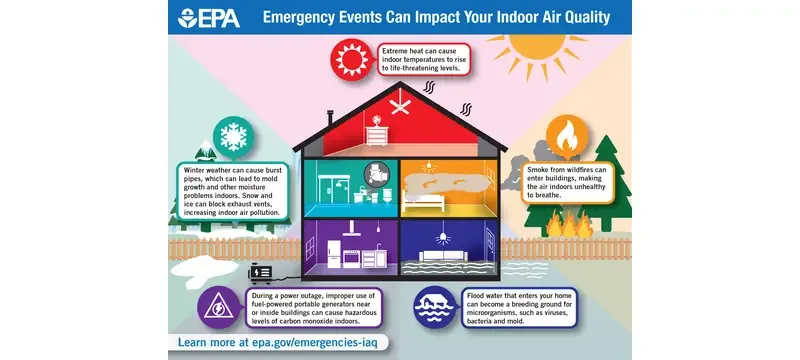
Fine particulate matter of size less than 2.5 µm penetrates into the lungs. The indoor PM2.5 levels may vary between 2 and 5 times higher than the outdoor levels in buildings without recirculation but with non-effective filtration. HVAC air filtration can reduce this difference whereas ventilation alone is not sufficient.
Typically, when upgrading from MERV 8 filters to MERV 13 filters in office applications, the PM2.5 concentration indoors can be lowered by half.
Airborne particulates are not able to filter volatile organic compounds (VOCs), odours from cooking, or corrosive gases, which can be filtered only through activated carbon or some other chemisorption medium.
The filters manufactured by Deiiang offer particulate filtration and gas-phase odour control owing to the special use of an activated carbon medium, which provides a pressure drop between 100-160 Pa according to the manufacturer's catalogue.
HVAC Equipment Protection & Operational Efficiency
When a coil of the HVAC system collects dust, it is acting as an insulator. A good example is 0.5 mm of deposits on the coils, which reduces their efficiency by about 10 percent.
HVAC air filters prevent this fouling of coils by enabling them to work under the principle of staged filtration.
Deiiang offers the F5 to F9 as pre-filters to coalesce the coarse load prior to the use of HEPA filters.
As estimated by Jason.peng, about 70 percent of premature coil failures experienced by Deiiang arise from missing or undersized pre-filtration.
How HVAC Air Filters Work
Air filters in HVAC systems function passively because of the creation of a pressure difference by the fan. The filter doesn't need any moving components or power connections.
Understanding how HVAC air filters work starts with that simple fan-driven pressure difference, because everything else in the filtration chain depends on it.
The operation is simple. The air goes into the pre-filter, where the big particles are collected. Then the air enters the medium efficiency stage where the size of the particle will be in the range of 1 to 10 microns. Then, the air enters the last stage of filtration, which is the high-efficiency stage, and eliminates the rest of the particles from the air.
This diagram sets out the four capture mechanisms that act together in a fibrous medium — sieving, impaction, interception and diffusion — and shows why coarse dust is stopped at the media surface while nanoparticles are collected by random Brownian motion.
Physical Filtration Mechanisms (Sieving, Impaction, Diffusion, Interception)
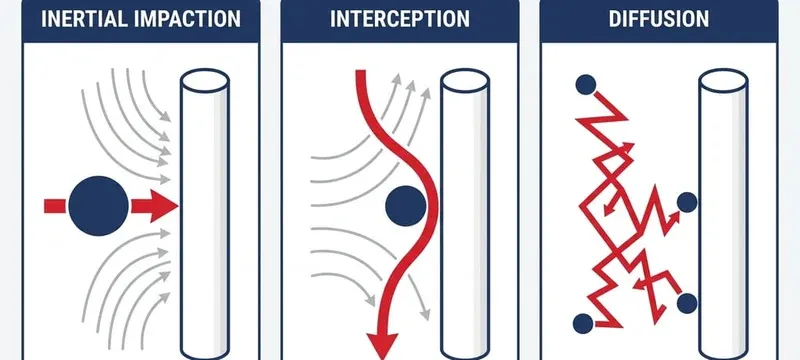
The four mechanisms that are used during this process are sieving, impaction, interception, and diffusion. The sieving method works for the particles that are above the size of 10 microns. The impaction process occurs at the size of 1 to 10 microns.
The interception happens for particles of 0.3 to 1 micron. The diffusion process works under the size of 0.1 micron.
The minimum efficiency is observed at 0.3 micron where both the impaction and diffusion are at their lowest level. Thus, this size became the reference point of HEPA filtration in accordance with EN 1822 standard [3].
As dust builds up on the filter element, the efficiency will change. Usually the fine-fibre filter shows increased efficiency from the filling of its pores with fine dust particles because of its depth loading characteristics.
In this regard, Jason.peng of Deiiang has stated: "Most people think that the efficiency decreases over time, but HEPA filters usually show increasing efficiency prior to a rise in pressure drop."
Pressure Drop & Airflow Dynamics in Filter Banks
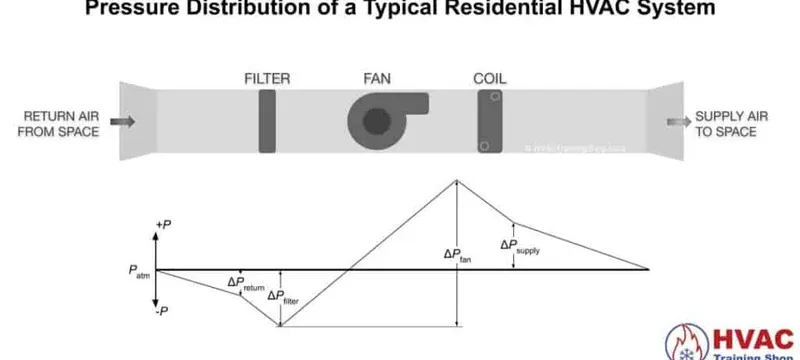
The term pressure drop is defined as the energy needed for filtration work. The power to the fan is approximated as the power on the shaft equals the volume flow multiplied by the pressure drop divided by the efficiency. For an airflow of 1 m³/s at a pressure drop of 250 Pa and an efficiency of 60%, that would result in an amount of approximately 0.42 kW.
If the pressure drop was raised to 400 Pa, the power used by the fan would climb to 0.67 kW, which is an increase of 60%.
The product catalogue of Deiiang confirms this. The H13 filter at 592×592×292 mm has a flow rate of 1900 m³/h with the initial resistance not higher than 200 Pa and a final value that can range from 400 to 600 Pa.
The H14 filter with the same dimensions has an initial value of 220 Pa. Thus the operation of HVAC air filters is connected with energy expenditure, which is important in addition to their ability to provide clean air.
An old standard EN 779 still appears in many specifications although it has been superseded by ISO 16890 for general ventilation filters [2][7]. EN 779 is very general and lacks sufficient detail in describing its ePM1, ePM2.5 and ePM10 classes that reflect the real operational performance in terms of fractional efficiency instead of using a single, synthetic dust value.
Key HVAC Filter Benefits for Commercial & Industrial Facilities
The HVAC filter benefits can be classified into two groups: compliance with standards and health benefits versus those concerns dealing with cost and reliability. Both can be measured and both can be found in operating budgets as part of the first maintenance cycle after the upgrade.
The facilities that see filtration as a consumable line item versus an engineering choice will pay twice for this. They will pay once in energy and again in early coil cleaning, fan repair, or failure of the audit of air quality. When HVAC air filtration is set up correctly, the payback is twofold.
Table 1: HVAC filter benefits with quantified impact and Deiiang catalogue outcomes
| Benefit Category | Quantified Impact | Deiiang Filter Outcome |
|---|---|---|
| Energy | Fan power usually increases with pressure drop; a pressure increase of 150 Pa at 1 m³/s is approximately 0.25 kW | H13 592×592×292 mm rated at ≤200 Pa creates no energy penalty |
| Maintenance cost | The number of coil cleanings for heavy dust loads may be reduced from every 24 months to every 6 months | F7 to F9 pre-filtration ahead of the HEPA filter prolongs the application of the final filter |
| Equipment longevity | Dust-free coils and fans usually reduce the amount of unplanned maintenance between 20 and 30% | Using staged bag filtration keeps coarse dust particles away from terminal filters |
| Compliance | Requires validated counts of airborne particles at the specified measuring points | Each tested H13/H14 filter has documented efficiency |
| IAQ | MERV 13 filtration can reduce indoor PM2.5 levels by one half compared to MERV 8 | F7 to F9 correspond to MERV 13 filters |
| Benefit Category | Quantified Impact | Deiiang Outcome |
|---|---|---|
| Energy | 150 Pa rise at 1 m³/s is about 0.25 kW | H13 592×592×292 mm rated at ≤200 Pa |
| Maintenance cost | Coil cleaning may go from 24 months to 6 months | F7 to F9 pre-filtration extends final filter life |
| Equipment longevity | Unplanned maintenance falls 20 to 30% | Staged bag filtration protects terminal filters |
| Compliance | Validated particle counts at set points | Tested H13/H14 filters with documented efficiency |
| IAQ | MERV 13 can halve indoor PM2.5 versus MERV 8 | F7 to F9 correspond to MERV 13 |
Deiiang Filter Outcome values are catalogue-rated performance specifications. Actual field results may vary based on operating conditions and installation quality.
This chart compares the yearly energy consumption of fan and chiller for the same HVAC unit operating without filtration, with MERV 8, and with MERV 13 filtration plus pre-filters, showing that better filtration leads to lower annual energy use.
IAQ & Regulatory Compliance Benefits
Advanced HVAC air filtration systems, apart from saving energy bills, also help in reduced employee absenteeism. According to research studies published by the Environmental Protection Agency, organizations using filter systems with a MERV rating of 13 are able to reduce absenteeism levels by about 10 to 15 percent.
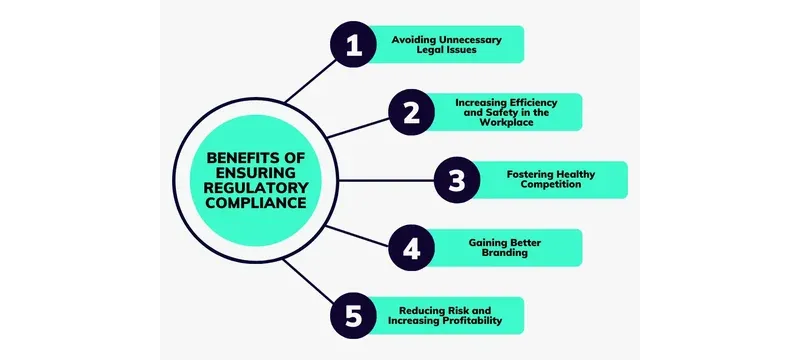
Compliance is not optional for most organizations. The healthcare, pharmaceuticals, food production and electronics operations have regulations requiring them to meet certain standards in terms of air quality, and products without reference to a batch of test standards cannot pass inspections designed for monitoring compliance. This means that HVAC air filtration is the first control utilized in the process.
According to the ISO 14644-1 procedure, classification of cleanrooms is based on concentration of particles within certain locations [5]. The type of filter utilized determines the quality of air entering the supply section while airflow path and tightness of the room define the type of airflow afterward. The two have to be validated in conjunction.
Cost Savings & Operational Performance Benefits
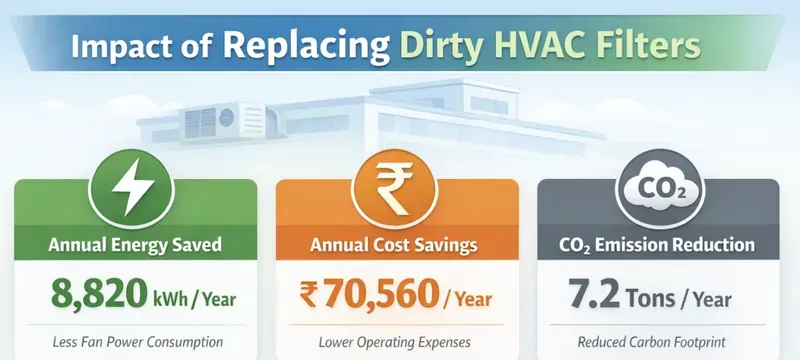
The cost of energy consumed is the largest recurring cost in a filter, as opposed to the filter itself. For instance, when filtration pressure drop is reduced by 100 Pa across a system rated for 5 m³/s at 60 percent fan efficiency, the decrease in power output is about 0.83 kW. This means savings of about five thousand kWh yearly.
Deiiang's catalogue stands out for its successful approach to positioning with respect to the competition based on quality, rather than purely on price.
Common HVAC Filter Types & Performance Ratings
The different HVAC filter types can further be divided into three main families: pre-filters, medium efficiency filters, and HEPA or final filters. Each of these families is selected according to their ability to capture specific types of particles and not on the basis of any brand loyalty, while at the same time, they are rated according to different scales depending on their area of application.
Pre-filters take care of all the larger debris and thus ensure that the downstream filters are protected from any further debris. Medium-efficiency filters take care of the majority of the small particles and are the most preferred items of equipment used in various processes in the HVAC industry. Final filters take care of anything below a micron, including HEPA filters used in cleanrooms to ensure that they maintain their specified class or condition based on health specifications.
Table 2: HVAC filter types, efficiency ranges, ISO 16890 equivalents, applications, and typical pressure drop
| Filter Type | Efficiency Range | ISO 16890 Equivalent | Typical Application | Nominal Pressure Drop |
|---|---|---|---|---|
| Panel or flat pre-filter | G3-G4, roughly 80-90% arrestance | ePM10 60–80% | Coarse dust, first stage protection | 30-60 Pa |
| Medium-efficiency bag filter | EN 779 F5-F9; MERV 8-13 equivalent | ePM2.5 50–90% | Commercial HVAC, pre-HEPA duty | 50-100 Pa initial |
| V-bank combined medium filter | F7-F8 | ePM2.5 70–85% | Compact plenum, high airflow | 80-140 Pa |
| Activated carbon medium filter | F7 with gas removal | ePM2.5 70% + gas removal | Odour, VOC, laboratory exhaust | 100-160 Pa |
| HEPA H13-H14 | 99.97-99.999% at 0.3 µm | N/A (governed by EN 1822/ISO 29463) | Cleanrooms, hospitals, pharma | 200-220 Pa initial |
| ULPA U15-U17 | 99.999% and above at 0.12 µm | N/A (governed by EN 1822/ISO 29463) | Semiconductor, ultra-clean labs | 150-170 Pa initial |
| Filter Type | Efficiency Range | Nominal Pressure Drop |
|---|---|---|
| Panel or flat pre-filter | G3-G4, 80-90% arrestance | 30-60 Pa |
| Medium-efficiency bag filter | EN 779 F5-F9; MERV 8-13 | 50-100 Pa initial |
| V-bank combined medium filter | F7-F8 | 80-140 Pa |
| Activated carbon medium filter | F7 with gas removal | 100-160 Pa |
| HEPA H13-H14 | 99.97-99.999% at 0.3 µm | 200-220 Pa initial |
| ULPA U15-U17 | 99.999%+ at 0.12 µm | 150-170 Pa initial |
This figure maps each filter family to its equivalent MERV, ISO 16890 ePM class, and EN 1822 class, showing where general ventilation ratings stop and where HEPA classification begins.
Pre-Filter, Medium-Efficiency & Final Filter Categories
The Deiiang medium-efficiency filter range includes glass media filters, synthetic media filters, plastic-framed W-bank combined filters, V-bank activated carbon filters, and pleated panel filters that have MERV ratings of between 8 and 13. A typical six-bag, 592 mm × 592 mm × 381 mm model has indicated performance of 2050 m³/h with 3.18 m² filter media area.
The initial resistance performance value of this model is below 50 Pa at F5 and below 100 Pa at F8, with a final performance resistance range of between 250 and 400 Pa. The type of glass fibre used in pollution control can withstand the highest temperature of 150 °C compared to synthetic fibre which can only tolerate 80 °C.
Both filtration mechanisms use mechanical filtering for air which works by relying on the physical capture principle, whereas electrostatic filter uses charged fibres to collect particles. Although electrostatic filters may have lower initial resistance, they become ineffective very quickly under dusty conditions.
It is said that Jason.peng would say "I will use mechanical bag filters for 90% of my HVAC projects. I will only use electrostatic filters for light commercial applications."
MERV, EN 779 & ISO 29463 Rating Standards
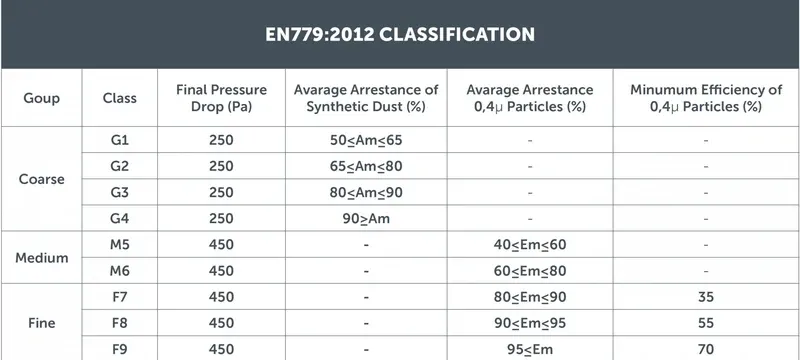
HVAC systems use different ratings and it is essential to know their interpretation. You can easily avoid selection errors by grouping them correctly.
Some of the general ventilation ratings are:
- ASHRAE 52.2 MERV (very common in North America) [1]
- ISO 16890 (the now current general ventilation rating) [2]
- EN 779 (no longer exists in a functional manner) [7]
High-efficiency ratings:
- EN 1822 gives EPA, HEPA, and ULPA filter ratings based on molecular size [3]
- ISO 29463 is the international equivalent to HEPA and ULPA ratings [4]
Service ratings provide an indication of the period that these filters can be used. Pre-filters typically last three to six months, while medium bag filters range from six to twelve months and HEPA filters may be used for two up to five years depending on load.
Cleanroom HVAC Filters: Specialized Design Requirements
A single leaking filter, poorly sealed frame, or uneven face velocity can cause a room to be outside of the acceptable specification even if the filter media itself has successfully passed the manufacturer's testing requirement. This is why cleanroom HVAC filters are specified and validated differently from general ventilation units.
ISO 14644-1 defines classes based upon the maximum permissible concentration of particles at ≥0.5 µm and ≥5 µm [5]. To achieve the requirement of ISO 6 or cleaner requires HEPA grade terminal filters, uniform airflow distribution, and proper sealing at every filter/frame interface.
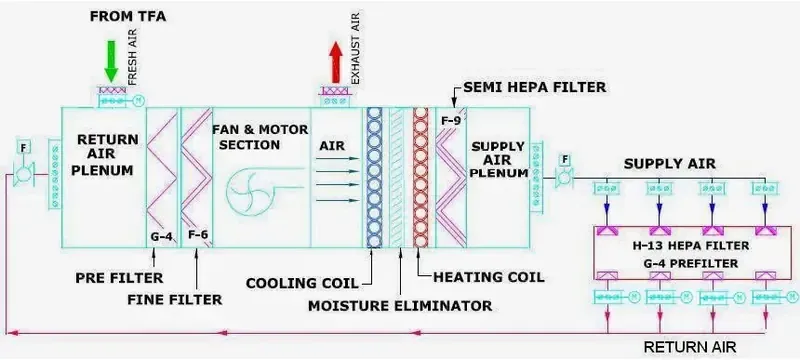
This illustration represents a full cleanroom filtration installation consisting of an outdoor air pre-filter, medium grade bag filter, AHU final filter, ducting and HEPA terminal units, with various differential pressure measuring points at each section.
cleanroom classification & Filter Performance Demands
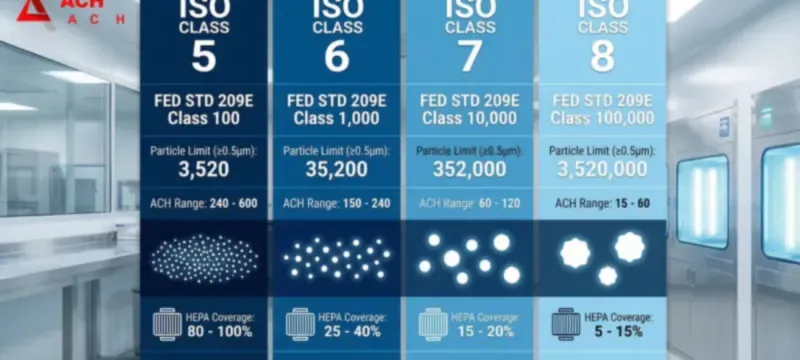
The cleanroom target class requirements correspond to the type of filter required. Class ISO 7 and iso 8 rooms are commonly served by H13 type filter media. ISO 6 or cleaner class or any aseptic pharmaceutical process will generally require H14 filtration media.
Semiconductor and ultra-clean laboratory applications are in the U15 to U17 range where particles above 0.12 µm must be eliminated.
Airflow uniformity is as important as efficiency, due to the fact that any terminal filter that creates uneven media pleating will result in streaking velocities that will disturb laminar flow and create re-entrainment of particles. In the case of media with thermoplastic spacers that do not have separators the pleat spacing will remain consistent resulting in uniform airflow velocity.
AHU & Terminal Filter Configuration for Cleanrooms
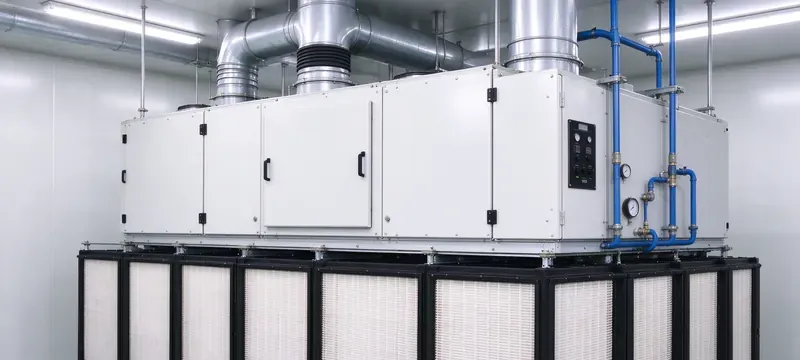
To illustrate this point with a practical case, a pharmaceutical packaging cleanroom operating at a class 1000 (ISO 6) had three challenges: high particle load on ambient air, plenum height restricted, and allowable pressure drop limits to maintain laminar flow.
The supplied filters are low-profile H14 combined high-efficiency filters measuring 592×592×292 mm with a rated airflow of 2500 m³/h, initial resistance not exceeding 220 Pa, and media area of 20.04 m². All filters also come equipped with silicone-free sealing gaskets and F7 pre-filters. Each unit was also tested for DOP concentration before shipment.
For the given project, the cleanroom transitioned from ISO 7 classification and maintained stable ISO 6 operations with consequent lower fan energy consumption due to the low initial pressure drop across filters. The results stated here have been reported by the client but not independently verified.
The second case was reported for an electronics manufacturing facility which needed an iso 7 cleanroom conversion. The client had limited static pressure capacity and very little installed fan space.
Deiiang supplied a new set of low-profile H13 V-bank filters which provided 20% less initial resistance compared to the former units and included F7 pre-filters as well.
For this case study, the project-reported results indicated lower annual fan energy consumption of 12% while remaining in stable ISO 7 classification throughout 12 months of operation.
HEPA Filters for Cleanrooms: Specifications & Validation
HEPA filters for cleanrooms have unique specifications based on efficiency at the most penetrating particle size. Under the standard, the minimum for it would be the 99.97% removal rate at the size of 0.3 µm, which defines the category H13 according to EN 1822. Higher categories have removal rates exceeding 99.999% and beyond [3][4].
This cross-section shows the pleated ultrafine glass fibre media, the thermoplastic spacer holding pleat geometry, the polyurethane sealant bond, the frame, and the two sealing options, gel seal and gasket seal, at the filter-to-housing interface.
HEPA Filter Construction & Efficiency Specifications
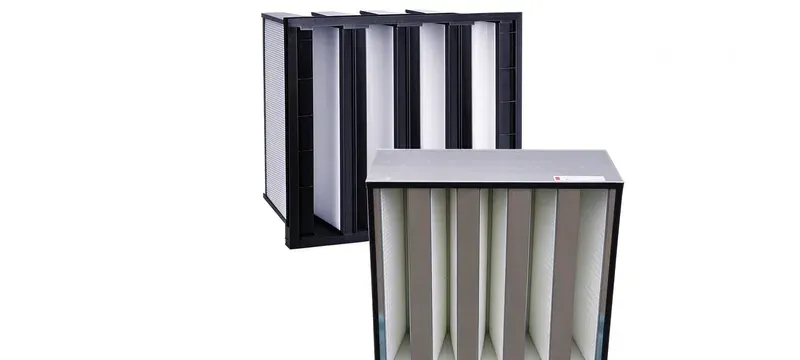
According to catalogue data from Deiiang, both the H13 and H14 ratings display various efficiency rates (99.97% to 99.99% and 99.995% to 99.999%, respectively), at a gauge of 0.3 µm.
H13 filters contain ultrafine glass fibres and a design that does not require spacers. They also contain a two-part polyurethane seal and an ABS plastic frame that has been spray-treated with a diamond-finish coating.
The maximum operational temperature is 70 °C, while the maximum relative humidity is 80%. Each filter has an approximate dust holding capacity of close to 1200 grams for models rated at 2500 m³/h. Each unit undergoes a complete test before leaving the facility.
Table 3: Deiiang H13/H14 combined high-efficiency and ULPA filter catalogue data
| Size (mm) | Rated Airflow (m³/h) | Media Area (m²) | Initial Resistance (Pa) | Final Resistance (Pa) |
|---|---|---|---|---|
| 287×287×292 | 550 | 4.63 | ≤200 (H13) / ≤220 (H14) | 400-600 |
| 592×592×292 | 1900 | 15.03 | ≤200 / ≤220 | 400-600 |
| 592×592×292 (four pleats) | 2500 | 20.04 | ≤200 / ≤220 | 400-600 |
| 592×490×292 | 2050 | 16.44 | ≤200 / ≤220 | 400-600 |
| 592×287×292 | 1150 | 9.26 | ≤200 / ≤220 | 400-600 |
| 320×320×50 (ULPA) | 150 | 2.1 | ≤150 | 300–400 |
| 610×610×50 (ULPA) | 500 | 7.8 | ≤160 | 300–400 |
| 915×610×50 (ULPA) | 650 | 11.7 | ≤170 | 300–400 |
| Size (mm) | Rated Airflow (m³/h) | Initial Resistance (Pa) |
|---|---|---|
| 287×287×292 | 550 | ≤200 (H13) / ≤220 (H14) |
| 592×592×292 | 1900 | ≤200 / ≤220 |
| 592×592×292 (four pleats) | 2500 | ≤200 / ≤220 |
| 592×490×292 | 2050 | ≤200 / ≤220 |
| 592×287×292 | 1150 | ≤200 / ≤220 |
| 320×320×50 (ULPA) | 150 | ≤150 |
| 610×610×50 (ULPA) | 500 | ≤160 |
| 915×610×50 (ULPA) | 650 | ≤170 |
The second type is called a DOP integrated filter, which has a unique rectangular housing design with an internal air inlet pipe that is either 250, 300, or 350 mm in diameter. Additionally, it has an air volume regulation device and a DOP testing outlet that is fitted with a rubber plug.
The rating for the DOP integrated filter series of models ranges from a 1000 m³/h capacity using a filter size of 610×610×120 mm to a capacity of 2200 m³/h when the filter is 1170×570×150 mm in size. For ultra-clean uses, the U15 to U17 baffle-free product uses a rating of 0.12 µm and is constructed from American HV ultra-fine glass fibre paper with the addition of anodized frames.
In-Situ Leak Testing & Performance Validation
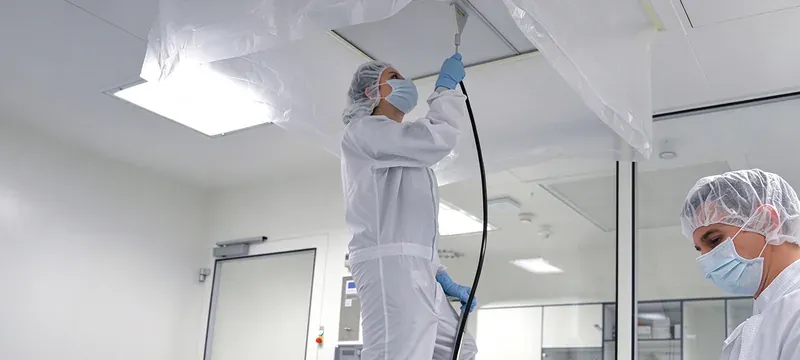
At the same time, factory testing is not enough. According to IEST-RP-CC001 regulations, the installed HEPA filters have to go through a process of in-situ leak testing that usually involves an aerosol challenge with photometric measurement of the media face, frame bond, and gasket [6]. The DOP test is specified in MIL-STD-282 [8].
Gel seal and gasket seal perform differently. Gel seal has self-healing, low-leak characteristics that are more preferable in the field of pharmaceuticals and semiconductor plants. Gasket seal is easier and less expensive but it is more sensitive to frame distortion and clamp torque. Validation periods have to be established according to iso 14644-3 testing practices [9].
HVAC Filter Maintenance Best Practices
There is a golden rule of filter maintenance, which is that HVAC filter maintenance makes the difference between specification and result. A filter compliant with the specifications installed late will provide poorer air quality than a simple filter installed on-time. Measurement of pressure drop provides the necessary supervision of filter changeout.
The main operations of the maintenance process are short:
Record pressure differential at each filter bank upon commissioning
Monitor readings monthly or weekly in areas of high dust concentrations
replace the filter once the pressure drop reaches the final resistance rating
Exchange gaskets and seals when changing filters
Document the change with date, part number, and measured pressure
This checklist flow covers commissioning baseline, monthly pressure logging, threshold-based replacement, seal inspection, and documentation, with decision points for early replacement when pressure rises faster than the trend line predicts.
Download the full printable HVAC Filter Maintenance Checklist (PDF).
Scheduled Inspection & Replacement Timelines
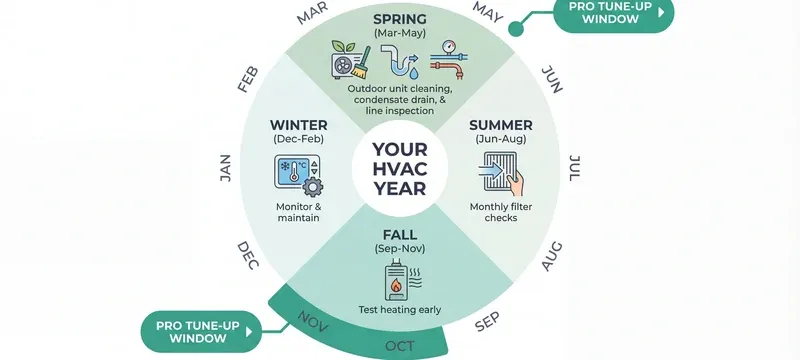
The typical schedule for inspection in commercial buildings is three to six months for pre-filters and six to twelve months for medium efficiency bags. Cleanroom terminal filters are usually inspected and replaced on a two-to-five-year basis, but if pressure drop exceeds limits, it can be done before the stipulated period.
Using the general service philosophy, when a filter experiences final resistance in half of its expected time frame, it does not indicate a defective filter, but rather one of the following upstream problems: a torn pre-filter, a bypass opportunity around the frame, or a change in fan speed.
It is important to use downstream and upstream static taps that are three to five duct diameters from the filter bank to ensure accurate differential pressure readings, as improper placement of taps is known to be the leading cause of false high-pressure service calls.
According to Jason.peng's advice: if the pressure rises 20% faster than the baseline, check the pre-filter first before replacing the final filter.
Storage, Handling & Disposal Safety Protocols
Filters must be kept in their original packaging, flat and in a dry environment in the range of 5 to 40 °C. Filters which are bent in frame or compressed in gasket will ultimately cause bypass leakage that cannot be compensated by the efficiency rating.
In disposing of the filters, it is important to adhere to the established site hazardous waste protocols and procedures, especially with regard to pharmaceutical or laboratory environments where proper bagging and handling of the HEPA filters is required before removal.
Optimizing HVAC Filtration for Long-Term Performance
Maximization is a process that is known as life-cycle analysis and not just selecting a piece of equipment to be purchased. An important question asks, what is the TCO? This issue includes everything from the cost of the filter alone to the fan electricity used in operating it and the maintenance required to keep the HVAC equipment functioning properly.
This means that comparing only initial pressure drop figures is a major selection mistake since average energy consumption is dependent on final resistance. In this case, final resistance means the value when the filter is done being used.
Jason.peng states, "A filter that has a higher initial resistance of 10 Pa but has a final resistance of 50 Pa lower is going to save people money month after month." Evaluating numbers that affect total operational cost matters more than how much a filter costs compared to another.
This flowchart leads users through filter choices from the type of facility, cleanliness class required, and filter type to the final filter selection, so that the pressure drop budget is confirmed at final resistance rather than at initial resistance.
Filter Selection Criteria for Specific Facility Applications
The Deiiang catalogue gives guidance on selecting filters for two general types of cases. For general commercial structures, a MERV of from 8 to 11 will be effective, or the equivalent of F5 to F7. Entities in the health care and pharmaceutical fields, including electronics industries, working at MERV 11 to 13 levels use the equivalent of F7 to F9.
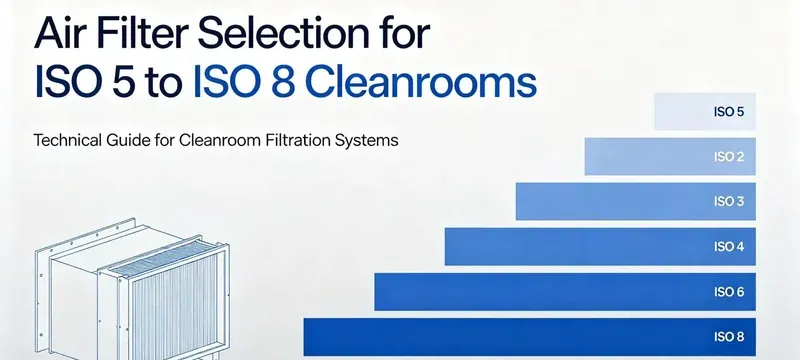
Cleanroom filter selection has to do with cleanliness class. ISO 8 and ISO 7 cleanroom operations typically use H13 terminals while ISO 6 or cleaner usually employs H14. In the semiconductor industry, applications working with 0.12 µm or smaller use U15 to U17 grade filters.
Air velocities recommended to accomplish the best filtering effects are 0.2 to 0.5 m/s for bag filters while HEPA filters should use air velocities of 0.05 to 0.15 m/s. When the values exceed their limits, it leads to premature loading, bypassing risk, and loss of effective efficiency.
System Upgrades & Retrofit Optimization Opportunities
It is possible to simply estimate retrofit payback before investing. For instance, for a system with a flow rate of 5 m³/s and an average pressure drop of 250 Pa, which is now upgraded to an average pressure drop of 180 Pa, the amount of shaft power saved at a fan efficiency of 0.60 will be around 0.58 kW.
Assuming 6000 hours of operation and a typical industrial tariff, approximately 3500 kWh of power is saved each year.
Should the cost of upgrade involve a filter price premium on an annual filter spend of several thousand currency units, in most cases the energy savings itself will pay for the investment within one or two years.
Jason.peng advises: "Always perform the payback calculation using final resistance, instead of initial. The initial resistance number will only give you information for the first day of operation."
ISO 14644-3 monitoring data will confirm whether the change has taken place [9].
The takeaway: HVAC filter benefits only materialise when the filter is selected by particle target, staged correctly, and replaced on measured pressure drop rather than on a calendar. Initial resistance wins the first day; final resistance wins the year.
Frequently Asked Questions
Please refer to specific sections earlier in this guide for more complete technical details.
How often should I replace air filters in HVAC systems?
You should change them based on measurable pressure drop as opposed to a set time frame. Generally, pre-filters can be expected to reach the final resistance level in three to six months, medium bag filters will require six to twelve months, while HEPA filters will last from two up to five years. Use the manufacturer's final resistance rating, such as Deiiang's 400-600 Pa window, as a measuring stick.
What MERV rating do I need for general office HVAC systems?
MERV 8 to MERV 11 is generally recommended for general office environments, avoiding the dangers of oversizing filters and reduction in performance. In the event of allergy sensitivity or urban pollution, MERV 13 can be considered as an upgrade. MERV is an ASHRAE 52.2 classification; ISO 16890 ePM categories are the current equivalent [1][2].
Can HEPA filters for cleanrooms be reused after cleaning?
No. HEPA filters for cleanrooms are not designed for cleaning and re-use. Vacuuming or blowing of filter media damages pleats and breaks the seal that validated the installation. HEPA filters shall be removed and replaced after they reach the end of maximum resistance or if there was a leak test failure during installation [6].
What causes high pressure drop in HVAC air filtration systems?
There are four commonly seen causes: filter media loaded past the maximum resistance, a torn pre-filter, a filter undersized for the scheduled airflow, or blockage of ductwork downstream from the filter. Comparison of the measured value to catalogue data will help isolate the cause, such as the ≤200 Pa initial rating for a 1900 m³/h H13 product.
Do cleanroom HVAC filters need different maintenance than standard?
Yes. Cleanroom HVAC filters require in-situ leak testing rather than visual inspection, sealed interface verification at each change, and written pressure logs. Terminal HEPA modules are usually aerosol photometer scanned following installation by the IEST-RP-CC001 method [6].
How do I calculate energy savings from upgrading HVAC filter types?
Employ the equation for shaft power, i.e. flow multiplied by pressure drop divided by fan efficiency. For a system with a flow rate of 5 m³/s and a pressure drop reducing from 250 Pa to 180 Pa at an efficiency of 0.6, there would be a continuous power saving of around 0.58 kW. Multiply that value by the hours of operation per year and your per-unit cost of electricity.
Interactive Energy Savings Calculator
Input parameters: airflow (m³/s); existing pressure drop (Pa); reduced pressure drop (Pa); fan efficiency (%); hours of use per year; cost of electricity ($/kWh).
Output parameters: annual kWh saving and its corresponding cost value, given by the formula kWh saving = (Q × ΔP_existing/η − Q × ΔP_reduced/η) × hours / 1000, where Q is flow rate (in m³/s), ΔP is the pressure drop (in Pa) and η is the fan's efficiency expressed as a decimal.
References
- [1] ASHRAE Standard 52.2-2017, Method of Testing General Ventilation Air-Cleaning Devices for Removal Efficiency by Particle Size.
- [2] ISO 16890-1:2016, Air filters for general ventilation — Part 1: Technical specifications, requirements and classification system based upon particulate matter efficiency (ePM).
- [3] EN 1822-1:2019, High efficiency air filters (EPA, HEPA and ULPA) — Part 1: Classification, performance testing, marking.
- [4] ISO 29463-1:2017, High-efficiency filters and filter media for removing particles in air — Part 1: Classification, performance testing and marking.
- [5] iso 14644-1:2015, Cleanrooms and associated controlled environments — Part 1: Classification of air cleanliness by particle concentration.
- [6] IEST-RP-CC001, HEPA and ULPA Filters, Institute of Environmental Sciences and Technology.
- [7] EN 779:2012, Particulate air filters for general ventilation — Determination of the filtration performance. Withdrawn 2016, superseded by ISO 16890.
- [8] MIL-STD-282, Filter units, protective clothing, gas-mask components and related products: performance-test methods.
- [9] iso 14644-3:2019, Cleanrooms and associated controlled environments — Part 3: Test methods.
- [10] ASHRAE Handbook — HVAC Systems and Equipment, Filtration chapter.