+86 13638632902
 Jason@cleanroomequips.com


 MENU
MENU
When buyers ask what is hepa made of, the honest starting point is that HEPA is a class of material. It has been registered by several standards like EN 1822 and ISO 29463 — in HEPA standards, the HEPA material is expected to have a particle capture efficiency at a certain particle size of either 0.12 µm or 0.25 µm. Whenever engineers inquire about what is HEPA made of, their intention is to understand the exact materials, compositions, and construction methods behind HEPA filters.
A detailed response in this regard matters for practical purposes. A HEPA filter with an H13 rating behaves differently when used in clean rooms, acidic environments such as semiconductor processing plants, and other dust-intensive HVAC systems. The composition of the HEPA filter material plays a key role in the performance of the filter in varying environmental settings including pressure drop, longevity, compatibility with chemicals, and so on.
This document answers the question "what is HEPA made of" and highlights the layer-by-layer HEPA filter construction processes.
Components of a HEPA Filter
HEPA filter construction is a layered process rather than using a single piece of paper for the construction of the filter. There are four primary components pertaining to the HEPA filter construction: filter media, separators, adhesives, and the frame. EACH of the above-mentioned components has a particular function.
The HEPA filter media captures particles using different techniques. The sealants create an airtight seal between the media pack and frame to avoid any bypass leakage. In this case, the frame adds mechanical strength in addition to resting against the filter housing and ducting system.
The cutaway view shows how the pleated media pack, separators, and frame fit together. The separators keep every pleat evenly spaced so airflow stays uniform across the whole HEPA filter media face.
This diagram of a cutaway HEPA filter documents the various components in cross-section. For anyone asking what is HEPA made of, this view tells the story at a glance. At the center is the pleated media pack, and on its side are the separators or adhesive beads. Finally, there is the perimeter of sealant surrounding the media pack.
Deiiang Field Insight: Top Three Causes of Premature HEPA Filter Failure
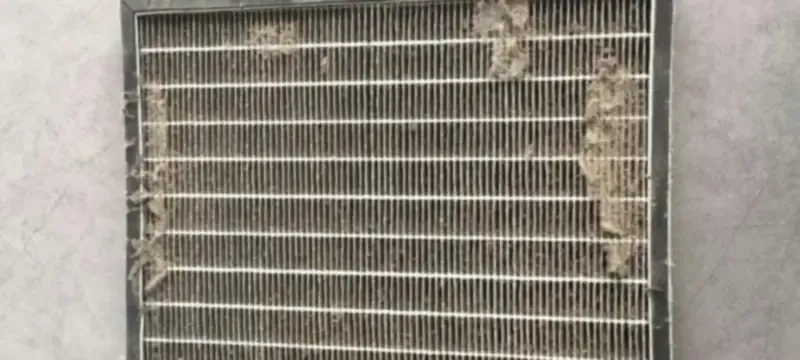
Over the years of working in pharmaceutical, semiconductor, and hospital environments, Deiiang engineers have learned that the majority of premature HEPA filter failure is due to improper installation methods as opposed to problems related to the HEPA filter media itself. Knowing the failure modes enables facilities personnel to take steps to avoid the same problem from happening again.
The three commonly seen causes are the following:
- Too much or too little clamping force during installation. If clamping force is too excessive the frame will misshape, which results in openings at the seal between the frame and pack. However, if the clamping force is low, an improper filter seal will exist which may cause too much bypass leakage during operation; therefore, both situations can produce a particle count failure even if the filter is verified as clean at the factory.
- Choosing the incorrect gasket or gel that is appropriate for the housing type being utilized. If a knife-edge housing is utilized with a flat gasket or a gel-seal housing is paired with a mechanical gasket, the configuration cannot create a proper seal. In fact, it is a common finding during on-site audits conducted by Deiiang.
- Damage to the media from either transportation or storage. Fiberglass filters can break if mishandled or during shipping. Damage that happened prior to the installation will usually go undetected as it would only show up with in-situ scanning.
Analysis of Different HEPA Filter Media Types
The HEPA filter media plays an important role in HEPA filter functioning. Traditionally, wet-laid microglass fibers and synthetic filter media such as expanded PTFE (ePTFE) and polypropylene composites have been used in HEPA filters. A comparison of the two types of HEPA filter media in relation to which HEPA filter media best suits cleanrooms and HVAC equipment was done in the table below.
Under 10,000x magnification, conventional micro-fiberglass media leaves an average pore spacing near 3 µm, while ePTFE media builds a much finer fiber network — the structural reason behind its lower penetration at the MPPS.
| Criteria | Fiberglass Filter | Synthetic and PTFE Filter |
|---|---|---|
| Typical fiber diameter | 0.3–0.9 μm | 0.1–3.3 μm |
| Pressure drop | Higher | Lower |
| Moisture resistance | Poor | Good |
| Chemical compatibility | Low | High |
| Cost | Low | High |
| Criteria | Fiberglass | Synthetic/PTFE |
|---|---|---|
| Fiber diameter | 0.3–0.9 μm | 0.1–3.3 μm |
| Pressure drop | Higher | Lower |
| Moisture resistance | Poor | Good |
| Chemical compatibility | Low | High |
| Cost | Low | High |
Traditional Fiberglass Filter Media

Before the advent of ePTFE, HEPA filter media was made from wet-laid microglass fibers. Papermaking equipment is used in this technique for the creation of a mat of randomly oriented glass fibers with properly graded diameters. These glass fibers are held together with organic binding materials to maintain structural stability.
Fiberglass has many advantages and remains the leading product in the industry due to its high filtration efficiency and moderate price. In the production process, the usage of fiberglass media with fiber diameters ranging between 0.3 and 0.9 microns is required in order to meet the requirements of H13 and H14 filtration efficiency without incurring excessive pressure drop [2].
However, fiberglass — the classic HEPA filter material — is limited in some aspects. It is a material that is sensitive to moisture. If the humidity is very high, the binder can be degraded and the media can swell. Another limitation is that borosilicate glass fibers can emit boron, which is a dopant that may lead to deterioration of the performance of semiconductors [5]. Fiber shedding from the media that have been ruined by chemical action has been a concern in precision manufacturing [5]. Hence, many alternatives to fiberglass media have been developed.
Modern Synthetic and PTFE Media
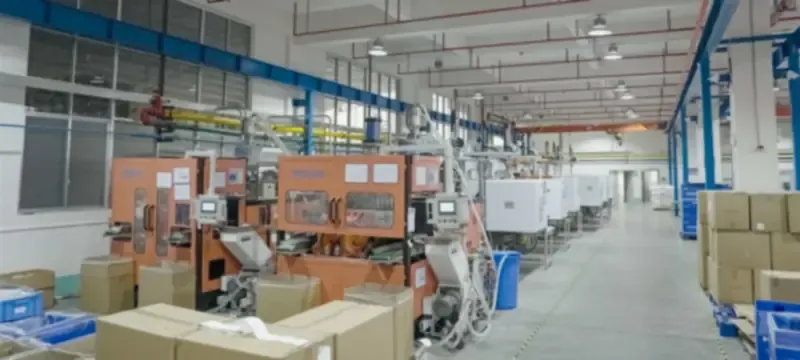
The introduction of synthetic HEPA filter media has become popular in applications where fiberglass has some disadvantages. The most notable option to date is expanded PTFE (ePTFE), which is a membrane material that is produced by stretching polytetrafluoroethylene into a fine mesh of filaments. Compared to fiberglass filters, PTFE media allows for lower pressure drops along with unbeatable chemical stability [7].
The benefit of PTFE as a modern HEPA filter material is profound. The tests conducted by comparing PTFE with glass fiber HEPA filters showed that the former has approximately one half of the initial pressure drop of the latter, which very well reflects savings of energy [4]. Additionally, PTFE is a hydrophobic material which protects it from moisture destruction, and its chemical stability makes it suitable even for aggressive environments. Since PTFE is a continuous medium instead of a fiber mat, it does not release fibers like glass media.
The drawback of PTFE is cost and dust-holding capacity. As a general rule, PTFE material is costlier per square meter compared to fiberglass. There are some PTFE membrane systems that have lower dust-holding ability compared to fiberglass, especially in thin, compact designs [4]. Currently, new developments in depth filtration PTFE systems will overcome this limitation and enable its use in cleanrooms of very high humidity, corrosive chemicals, and semiconductor-level contamination sensitivity.
Deiiang Pro-Tip: Energy Savings Estimated
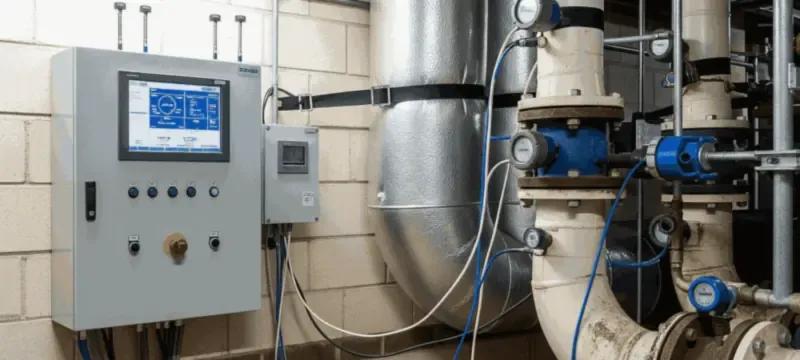
Since lower pressure drop is not merely a technical detail, but a significant cost saver. The amount of fan energy required to push air through the filter has a direct correlation to the pressure drop across the filter. By reducing the pressure drop, the fan energy consumption is reduced every second the system is in operation.
Assuming a facility needs air flow of 10,000 CFM through the HEPA filter bank, works for 8,760 hours in a year, and costs $0.12 per kWh for electricity and the combined efficiency of the motor and fan are measured to be 65%. If variable to PTFE instead of fiberglass allow a drop in average pressure drop by 50 Pa (ca. 0.2 inches of water column), it is possible to calculate the expected energy savings in the next year with the help of the fan power formula:
Fan power in kW = Airflow in CFM × Pressure drop in inches w.c. / (6,356 × Fan efficiency)
The value for 50 Pa gives approximately 0.2 inches w.c.
Power saved (kW) = (10,000 × 0.2) / (6,356 × 0.65) = 2,000 / 4,131 = 0.48 kW
Expected energy saving is 0.48 kW × 8,760 hours × electricity rate of $0.12/kWh equal to $505 per year.
This is a very conservative estimation which only takes into account a single HEPA bank as the average value in relation to various rotations of working with multiple HEPA banks, continuous 24 hours / 7 days operation and average electricity rates.
In a five-year period the energy savings can easily cover the initial costs of PTFE media.
Besides media, three important components have to be taken into account: frame, sealant and gasket or sealing interface which guarantee compliance with HEPA specifications. Together they complete the HEPA filter construction.
Frame materials provide structural support for the HEPA filter construction and interface with the housing. Among the options that are available are as follows:
- Galvanized steel: low cost, widespread in normal HVAC HEPA filter use.
- Aluminum: lightweight, not prone to corrosion, and mostly used in the manufacture of HEPA filters used in cleanrooms.
- Stainless steel (304/316L): highest degree of resistance to corrosive conditions and is mandated for applications in the pharmaceutical and semiconductor industries.
In considering the possible frame materials for the cleanroom HEPA filter, the parameters that one must consider include cleanroom rating system compatibility, cleaning compounds that are used, and structural needs.
Sealants. The sealant is said to bond together the media pack and the frame. The two-component polyurethane sealant known as polyurethane (PU), is considered the standard sealant in this industry as it possesses excellent adhesion and it also offers remarkable flexibility. However, if outgassing from silicone is a problem, silicone-free alternatives may be considered. PU two-component polyurethane A/B glue is used for Deiiang high-efficiency filter products.
Gaskets and Seal Interfaces. The seal between filter and housing is the means of preventing bypass leakage. There are several choices available consisting of:
- Gel seal: creates a continuous, self-sealing seal and is recommended for critical applications.
- Mechanical clamping: employs gaskets and compression in a method which is somewhat straightforward; however, it is less forgiving on surface imperfections.
- Knife-edge seal: relies on a very specific blade coming into contact with gel or gasket material.
Based on performance requirements, gel seal technology is usually specified for semiconductor and Pharmaceutical cleanroom applications.
Performance Standards and Material Selection
The efficiency delivered by any HEPA filter material is not constant. The efficiency is determined through rigorous testing methods and the standard of measurement is important. The following test standards EN 1822 and ISO 29463 employ particle counting at the MPPS which is typically 0.12 µm – 0.25 µm with the use of fiberglass medium. This method of testing is stricter than older mass-based or photometric techniques, especially for ULPA filter applications.
The table below shows how the type of HEPA filter material affects the buildup of pressure drop on the medium during periods of dust loading. The information presented is derived from the laboratory assessments done at Deiiang on the performance of H13 filters made of glass fiber and H13 filters made of PTFE under exactly the same conditions.
The curves show how pressure drop climbs as dust accumulates. A lower, flatter curve means longer service life and less fan energy for the same HEPA filter material.
Depicted in Figure 3 is the graph which is based on the observed data on the average total pressure drop observed for both PTFE and fiberglass H13 filters in a given year. While the pressure drop amount registered was 220 Pa for the fiberglass H13 filter, the total recorded pressure drop was 520 Pa.
The practical implication of this observation is significant since any filter which records lower average total pressure drop will consume less energy and prolong the period for filter replacement for as long as possible since whenever the filter operates in the pressure drop between 50 Pa or even a lesser amount, energy purchased is saved. The above was illustrated in the case of the clean room functioning for 8,760 hours each year.
Testing HEPA Filters for Integrity In-Situ
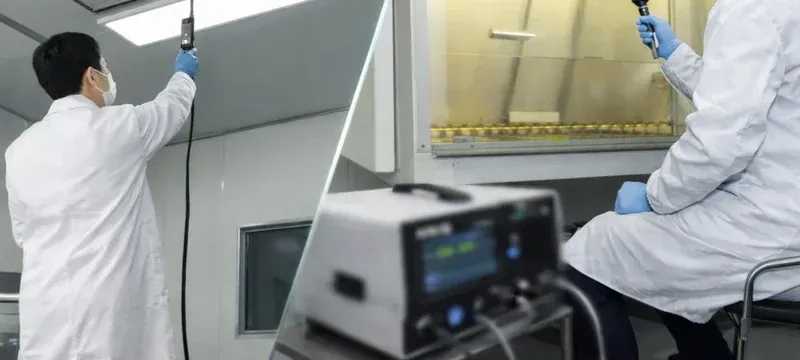
The testing carried out at the manufacturing site ensures that the HEPA filter construction passes all the tests required upon exit from the production plant, but even so it must be confirmed that the filter fits all specifications in terms of its correct installation, sealing, and operation without bypass at the HVAC system level. This means that the in-situ integrity testing is critical. A helium leak detector can be employed to monitor very sensitive processes that require allergy-free conditions due to the relatively low levels of cleanliness they need. More specifically, a helium leak detector allows a pharmaceutical manufacturer to achieve the high standards required by adherence to Good Manufacturing Practice (GMP).
The test for leakage is achieved by using a small amount of tracer gas (helium) which is placed in the area which is under examination. The intensity of the leakage will determine the amount of tracer gas escaping from the system. The helium gas is able to escape from the system because it is much smaller in atomic diameter than any of the air atoms.
The most commonly used methodology for analyzing leakage is the method of decay time which was developed by Eastman Kodak Co. The basic idea behind this process is to inject an exact amount of helium gas into the system and record how long it takes for that amount of helium to escape from the system without utilizing a vacuum. The method has been adopted in most pharmaceutical companies because of its accuracy.
The process is mainly divided into three segments: pre-test phase, leak test phase, and post-test phase. Each phase validates a different aspect of the HEPA filter construction. During the pre-test phase, all sources of contamination should be eliminated, and the location should be sanitized.
The primary advantage offered by this methodology is eliminating the need to shut down production to conduct a leakage test. If the factory does require shutdown for a He leak test, it can result in months of lost production.
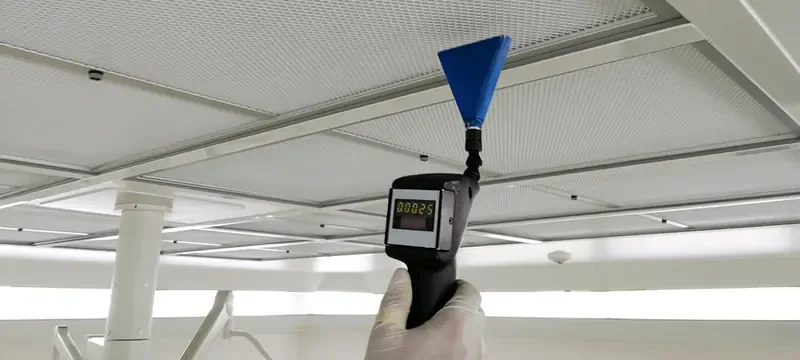
Verifying Integrity In-Situ: A Comparison of Three Testing Methods
| Testing Method | Principle | Pros | Cons | Best For |
|---|---|---|---|---|
| Aerosol Photometer | Upstream aerosol challenge, downstream photometric scan | Established method; portable equipment widely available; quantitative | Less sensitive than particle counting at low concentrations; requires aerosol generation | General cleanroom, HVAC HEPA |
| Particle Counter | Upstream challenge or ambient, downstream discrete particle counting | High sensitivity; can detect very small leaks | Slower scan speed; equipment cost higher | Pharmaceutical, semiconductor, critical applications |
| Integrated DOP Test Port | Built-in port on filter housing for upstream injection and downstream sampling | No filter removal needed; fast; repeatable; minimal production disruption | Requires filter designed with test port; not retrofittable to standard housings | Cleanrooms with limited access, hospitals, labs |
| Testing Method | Pros | Cons | Best For |
|---|---|---|---|
| Aerosol Photometer | Established, portable | Less sensitive at low concentrations | General cleanroom |
| Particle Counter | High sensitivity | Slower, higher cost | Pharma, semiconductor |
| Integrated DOP Test Port | Fast, no removal needed | Requires compatible filter | Hospitals, limited access |
Deiiang Case Study: The Use of High Efficiency Technology in Semiconductor Fabrication
The case of Deiiang illustrates a specific gap that was filled through a deliberate HEPA filter material choice — a live answer to what is HEPA made of when humidity is the enemy.
One of the facilities manufacturing semiconductors has been seen to operate from an ISO class 5 cleanroom environment, whereby the atmospheric relative humidity was always greater than 70%. The factory was using the normal fiberglass HEPA filter that was rated H14. Due to the regular installation of filters, it was highly noted that the filter tended to show pressure drop from the beginning of its volume, and therefore, it was needed to replace the filters before the scheduled period. It was also helpful to highlight that the cleanliness specification of the room was threatened.
The installed ceiling grid shows gel-seal HEPA modules in position. Each module can be scanned in place through its DOP test port without disturbing production below.
Some of the problems arising from the task:
- High humidity in the environment led to deterioration of the binder of the fiberglass media which resulted in swelling of the media.
- Formation of both mold and bacteria as a result of high moisture levels in the housing of the filter.
- Repeated replacement of the filter contributed to high cost of operation.
What was done by Deiiang:
The project was directed by Mr. Jason Peng, who was responsible for providing the company with the necessary solution that bordered on the use and application of high efficiency PTFE media filters instead. Some of the features added include:
- The DOP HEPA filters that are inclusive of undergrade media which used ultrafine glass fibers or PTFE according to the applicable location.
- Aluminum folding frames with two-component sealer that has been used as polyurethane.
- Incorporation of DOP tests into the equipment as one of the necessary additional features.
- Closed structure design has been used to eliminate leakages.
In the areas that are highly delicate, H14 filters are installed.
Results: One of the great benefits that the company was able to take into account was lower costs of operation and longer maintenance periods. As mentioned earlier, pressure drops would take place in the course of operation, which is very significant.
Tips for Choosing the Best Material for the Job
Selecting a HEPA filter material involves going through a checklist of points before making a decision. The following points are essential when selecting a material:
Decision Matrix
The table below outlines recommended HEPA filter media types and construction materials for different applications in the market today. This information provides a quick reference but it does not supplant a detailed engineering analysis.
| Application | Suggested Media | Suggested Frame | Suggested Sealant | Comments |
|---|---|---|---|---|
| Pharmaceutical fill line | PTFE or high-quality fiberglass | Stainless steel 316L | PU sealant, gel seal | Must comply with H2O2 decontamination. |
| Semiconductor factory | PTFE | Anodized aluminum or stainless steel | PU sealant, gel seal | Avoid boron and phosphorus outgassing. |
| Hospital surgical room | Fiberglass H13/H14 | Aluminum | PU sealant, gel or mechanical seal | DOP test port should be installed. |
| General cleanroom (iso 7-8) | Fiberglass H13 | Galvanized steel or aluminum | PU sealant, mechanical gasket | Optimized choice, based on cost. |
| HVAC HEPA (non-critical) | Fiberglass H13 | Galvanized steel | PU sealant, mechanical gasket | Should be replaced based on pressure drop. |
| High humidity cleanroom | PTFE | Aluminum or stainless steel | PU sealant, gel seal | Use of fiberglass makes premature degradation probable. |
| Application | Media | Frame | Seal |
|---|---|---|---|
| Pharma fill line | PTFE/fiberglass | Stainless 316L | Gel |
| Semiconductor fab | PTFE | Aluminum/stainless | Gel |
| Hospital OR | Fiberglass H13/H14 | Aluminum | Gel or mechanical |
| HC cleanroom | Fiberglass H13 | Galvanized/aluminum | Mechanical |
| HVAC HEPA | Fiberglass H13 | Galvanized | Mechanical |
| High humidity cleanroom | PTFE | Aluminum/stainless | Gel |
Common Procurement Mistakes to Avoid

Selecting the HEPA filter material is only a part of the task. A great many problems with HEPA filters can often be linked to purchasing decisions made without an engineering review. Below are some of the most common purchasing errors and how to eliminate them easily.
One major error is selecting a filter according to nominal size only. A 610 x 610 x 292 mm filter from manufacturer A may not fit the exact frame profile, gasket position, or knife-edge shape of manufacturer B. Always check the housing dimensions, not just the nominal face size.
Another error is not considering the compatibility of the sealant and gasket to the chemicals used — a detail that sits outside the media yet still belongs to HEPA filter construction. In facilities that use hydrogen peroxide gas decontamination, for example, the sealants and gaskets must be resistant to oxidation. Regular PU sealants can break down from repeated exposure to hydrogen peroxide and lead to leaks that can be hard to detect.
The third error is not verifying if the HVAC system can handle the higher pressure drop incurred by specifying the highest efficiency grade. An H14 rated filter has higher resistance than an H13 filter. Without sufficient static pressure in the fan, the air will not circulate properly resulting in failure to meet air change rates, despite the proper operation of the filter.
The fourth mistake is not differentiating between initial price and long-term price. A low-priced filter that has to be replaced every six months may actually end up costing you much more over a three-year period than a more expensive filter that lasts two years. The full cost of ownership should not only cover the cost of the filter itself but should include labor, downtime, energy, and disposal cost.
The cooperation with HEPA filter suppliers who offer engineering assistance minimizes risks. Deiiang assesses the dimensions of the case, chemical exposure, humidity, and airflow prior to suggesting the filter type.
Summary
The reply to the question what is HEPA made of depends on the specific usage of the HEPA filters. The fibreglass material is the main type of media used in the cleanroom HEPA filters and HVAC HEPA filters as it has proved to be efficient and reasonable.
Other details like frames, sealing and gasket materials are used to make the whole structure of the HEPA filter construction and ensure that the filter works in accordance with its specifications. The choice of HEPA filter material must be made strategically, not based on the commodity price. If the HEPA filter media and the structure do not fit the particular environment, the filter may work unreliably even if it meets the required efficiency grade.
Deiiang™ engineers collaborate with the experts of the company to match the media of the HEPA filters with the challenges of the application, from cleanrooms to ULPA filtration systems used in semiconductor plants. If you want to get a consultation on your filtration needs or access the catalogue of Deiiang products, contact Deiiang™ engineering consultants.
Sources
- [1] EN 1822-1:2019 — High efficiency air filters (EPA, HEPA & ULPA) — Part 1: Classification, testing and marking. https://webstore.ansi.org/standards/din/dinen18222019
- [2] ISO 29463-1:2024 — High efficiency filters and filter media used for the removal of airborne particles — Part 1: Classification, testing and marking. https://isrsm.gov.mk/en/project/show/iso:proj:84367
- [3] ISO 29463-4:2011 — High efficiency filters and filter media for removing particles in air — Part 4: Determination of the leakage of filter media using the scan method. https://isrsm.gov.mk/en/project/show/isrsm:proj:86207
- [4] The performance of the PTFE HEPA filter media with respect to the loading of particulate matter and its comparison to that of the glass fibre HEPA filter media. Aerosol and Air Quality Research, 2018. https://link.springer.com/article/10.4209/aaqr.2017.11.0481
- [5] The problem with fibrous media. Semiconductor Digest, 2001. https://sst.semiconductor-digest.com/issue/?id=25627
- [6] High Efficiency Particulate Air Filters. ScienceDirect Topics. https://www.sciencedirect.com/topics/engineering/high-efficiency-particulate-air-filter
- [7] HEPA Filter Media: Fiberglass versus Synthetic. Filtration News, 2019. https://www.filtrationnews.com/articles/HEPA-filter-media-fiberglass-vs-synthetic/
Frequently Asked Questions
What is a HEPA filter made of?
A HEPA filter typically consists of pleated filtration media made from fine glass fibers or synthetic polymer fibers. The complete assembly also includes separators or hot-melt spacing, sealants, gaskets, and a metal, plastic, or wood frame.
Are all HEPA filters made of fiberglass?
No. Microglass fiber is widely used because it provides high filtration efficiency with relatively low airflow resistance. Synthetic media, including polypropylene and other polymer fibers, are also used when moisture resistance, durability, or reduced fiber shedding is required.
What holds HEPA filter media in place?
The pleated media is supported by aluminum separators, adhesive beads, or hot-melt spacers. It is then bonded to the frame with polyurethane or another suitable sealant to minimize bypass leakage.
What materials are used for HEPA filter frames?
Common frame materials include galvanized steel, stainless steel, aluminum, plastic, and engineered wood. The appropriate choice depends on cleanliness requirements, corrosion exposure, operating temperature, and installation conditions.
Is HEPA a material or an efficiency classification?
HEPA is a filtration-performance classification, not a specific material. Qualification depends on tested particle-removal efficiency and leakage performance under applicable standards, such as EN 1822 or ISO 29463.
How do HEPA filter fibers capture particles?
HEPA media captures particles through diffusion, interception, and inertial impaction. These mechanisms work together across different particle sizes rather than relying on a simple sieve effect.
Which HEPA material is best for cleanrooms?
The best material depends on cleanroom classification, airflow, humidity, chemical exposure, temperature, and contamination-control requirements. Microglass media in aluminum or stainless-steel frames is common, while specialized applications may require PTFE or other synthetic media.
Can HEPA filters be washed and reused?
Most cleanroom and HVAC HEPA filters are not washable. Water or cleaning chemicals may damage the media, seals, or frame and alter filtration performance. Replacement should be based on pressure drop, integrity testing, and facility procedures.