+86 13638632902
 Jason@cleanroomequips.com


 MENU
MENU
Introduction
HEPA in a clean room refers to a high-efficiency particulate air filter used for filtration of airborne contaminants within clean room supply air systems, and HEPA classification is determined separately from cleanroom ISO classification. The HEPA filter describes the filter itself, while ISO classification describes the airborne particles contaminating the area.
Short answer: HEPA in a clean room is a high-efficiency particulate air filter that removes airborne particles from supply air. Its grade is set by EN 1822-1:2019 or ISO 29463-1:2024, and that grade is decided separately from the ISO class of the room itself.
This article provides five practical areas for decision-making for engineers, contractors, maintenance personnel, and purchasing personnel: the grade of HEPA filter, the amount of airflow and corresponding pressure drop, installation method, integrity testing, and criteria for replacement.
The material covered builds upon the definition of what is a HEPA filter and the capture physics, through to documentation and evidence review for projects.
What HEPA Means in a Clean Room
The term HEPA represents a category of filter performance, and indicates no specific physical shape of the filter or a universal efficiency number. Filter grades and efficiency values are not fixed, but are dependent on the test basis utilized and filter class. Only upon meeting the classification requirements described in EN 1822-1:2019 and ISO 29463-1:2024 [1][2] may the filter be referred to as HEPA.
Within cleanroom air filtration, a HEPA has a role in particle control during the last stage of filtration. HEPA filtration does not refer to room classification, nor does HEPA filtration eliminate contamination in the air; the protection offered depends on the contaminant, concentration level, and design of the entire system including airflow pattern, pressurization methods, and exhaust strategy.
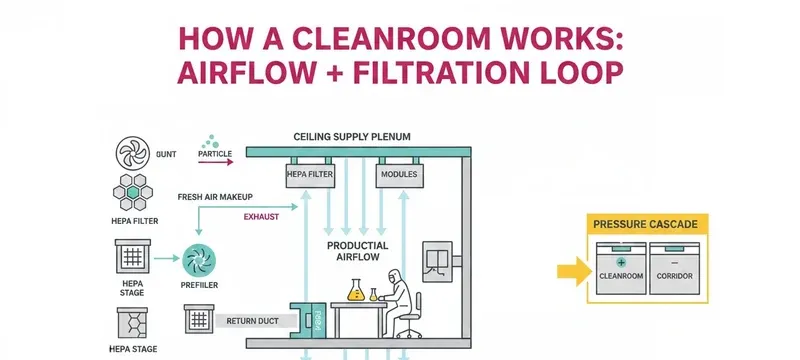
Figure 1 is a diagram of a typical supply-air path and shows where a HEPA stage may sit in a cleanroom air filtration train; it is not a prescriptive layout.
What Does HEPA Stand For?
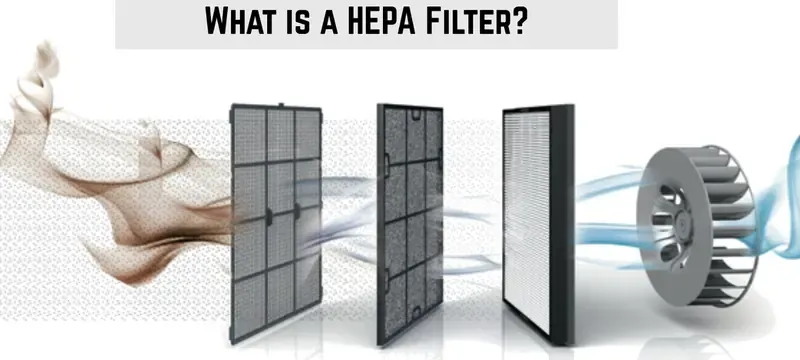
High-efficiency particulate air is the definition of the word HEPA. The widely recognized 99.97% at 0.3 micron represents a U.S. regulation that originated in the military and nuclear filter specification arena. However, this measurement does not define every HEPA grade for all classification schemes.
According to EN 1822-1:2019, an H13 filter must achieve minimum integral efficiency of 99.95% at the most penetrating particle size and local leak limit of 99.75%. An H14 filter must achieve minimum integral efficiency of 99.995% and local leak limit of 99.975%. ISO 29463-1:2024 allows for iso class 35 H and ISO class 45 H as equivalents.
The governing standard edition must always be mentioned, as well as the classification table used. If a filter is simply referred to as HEPA, its performance cannot be verified without knowing which standard was used.
What Role Does a HEPA Filter Play in Cleanroom Air Filtration?
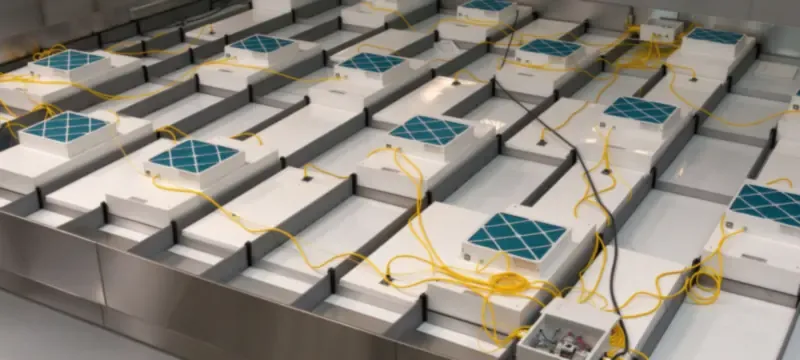
A HEPA filter has the main function of removing particles in the last stage of filtering supply air. Its main functions are:
- Remove submicron particles from supply air
- Contribute to the overall clean air of a cleanroom
- Minimize deposition of particles on critical surfaces
- Work with sealing and air flow to ensure the desired flow
The HEPA filter contributes to the design of the clean air but does not create pressure differences. The pressure is determined by the HVAC system, air flow balance, and building envelope. Therefore, filter pressure drop only affects duties of the fan.
Multi-stage filtration is common, but the number of stages ultimately depends on the design of the HVAC system, outdoor air load, capacity of the fan, and maintenance. A pre-filter and a medium filter may be used before the HEPA stage; thus, the arrangement is an engineering decision, but it is not necessary to implement three stages.
The following example shows information from Deiiang catalog: the 592 × 592 × 292 mm combined high-efficiency filter H14 rated 2500 m³/h with an initial resistance of 220 Pa and a media area of 20.04 m². The exact performance of HEPA filters depends on the method of testing, the quality of sealing, the conditions of installation, and the airflow.
How HEPA Filters Capture Airborne Particles
The HEPA media are mostly made of glass microfibers; however, the type of construction used depends significantly on the manufacturer and on the type of application. The diameter of fibers, pleat geometry, area of the media, and design of the seals determine the rate of pressure drop and particle capture by a particular filter.
Having a larger media area means that the HEPA filter used in cleanroom air filtration will work with lower face velocity and a lower pressure drop.
Figure 2 presents the three main mechanisms of particle capture; however, the various types of fiber spacing and particle paths depend on the type of HEPA media used and conditions of operation.
How Do HEPA Filters Capture Particles?
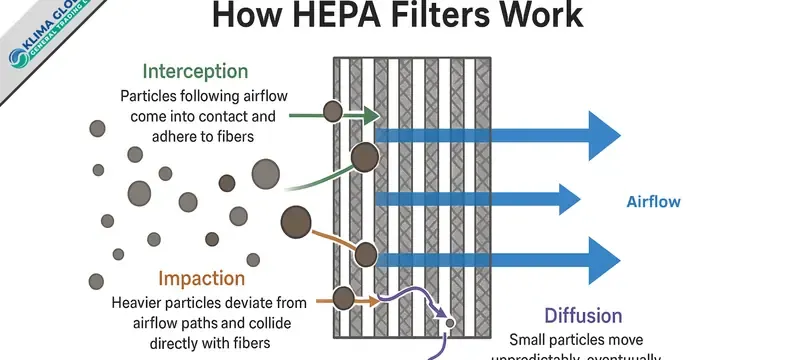
Most often used mechanisms of capture are:
- Interception: The particle moves following its streamline and hits the fiber.
- Impaction: The large particles cannot change the direction with the airflow and hit the fiber.
- Diffusion: The small particles move randomly because of Brownian motion and collide with the fiber.
Electrostatic attraction is not mentioned in this list as its influence depends on the media used for testing. Though diffusion, interception, and impaction are the primary mechanisms for air-particle capture in glass-fibre HEPA filter media.
Why Can a HEPA Filter Capture Particles Smaller Than Its Pores?
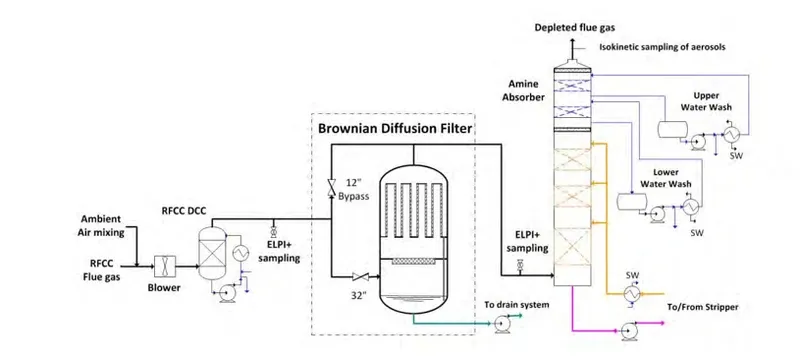
This is due to the fact that it cannot really be thought of as being a 'sieve.' The spaces between the fibres within a HEPA filter are considerably larger than the size of the particles that are being captured by the filter. The process of diffusion causes the tiny particles to be captured as they move randomly across the streamlines of air.
Meanwhile, interception and impaction are the mechanisms by which the larger particles become entrapped as they cannot follow the air flowing around the fibres.
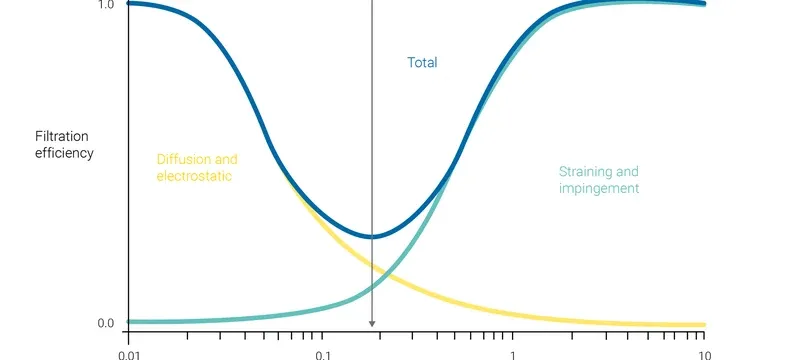
The most penetrating particle size (MPPS) is defined as the particle radius at which the filter has the lowest efficiency. This value is different for different filter media and different conditions of operation. The usual number that is quoted in the existence of the most penetrating particle size of any HEPA filter is somewhere between 0.1 microns and 0.3 microns.
HEPA Filter Efficiency and Cleanroom Performance
HEPA filter efficiency is different from the cleanliness of room operation. The filter is tested for its MPPS, while the room is judged on the particles that remain suspended in the air.
Table 1: Classifications of HEPA and ULPA filters and their testing standards
| Standard | Application | Testing Method | Classification Examples |
|---|---|---|---|
| EN 1822-1:2019 [1] | Different categories of filters | Tests done on filters to get their MPPS efficiencies | E10 - E12, H13 - H14, U15 - U17 |
| ISO 29463-1:2024 [2] | HEPA/ULPA classifications | Tests carried out to determine the efficiency of filters | ISO 15 E to ISO 75 U |
| Standard | Application | Classification Examples |
|---|---|---|
| EN 1822-1:2019 [1] | Different categories of filters | E10 - E12, H13 - H14, U15 - U17 |
| ISO 29463-1:2024 [2] | HEPA/ULPA classifications | ISO 15 E to ISO 75 U |
Table 2: Cleanroom and general-ventilation standards
| Standard | Application | What it defines | What it does not define |
|---|---|---|---|
| iso 14644-1:2015 [3] | Cleanroom classifications | Class airborne concentrations | No information about filter classifications |
| iso 14644-3:2019 [4] | cleanroom testing standards | Monitoring and verification via cleanroom tests | Defines nothing on cleanroom classifications |
| IEST-RP-CC001 [5] | HEPA/ULPA recommendations | Different types of filters | Does not give any cleanroom classifications |
| MIL-STD-282 [6] | Testing processes | DOP smoke testing | Provides nothing on modern HEPA filters |
| ASHRAE 52.2-2017 [7] | General air filtration | Classification systems for filtration | Provides nothing on HEPA classification |
| ISO 16890-1:2016 [8] | General air filtration | Addresses HEPA filters | No HEPA applications |
| EN 779:2012 [9] | General air filtration | No application for HEPA | Does not provide for HEPA applications |
| Standard | What it defines | What it does not define |
|---|---|---|
| iso 14644-1:2015 [3] | Class airborne concentrations | No information about filter classifications |
| iso 14644-3:2019 [4] | Monitoring and verification via cleanroom tests | Defines nothing on cleanroom classifications |
| IEST-RP-CC001 [5] | Different types of filters | Does not give any cleanroom classifications |
| MIL-STD-282 [6] | DOP smoke testing | Provides nothing on modern HEPA filters |
| ASHRAE 52.2-2017 [7] | Classification systems for filtration | Provides nothing on HEPA classification |
| ISO 16890-1:2016 [8] | Addresses HEPA filters | No HEPA applications |
| EN 779:2012 [9] | No application for HEPA | Does not provide for HEPA applications |
What Is the Efficiency of a HEPA Filter?
HEPA filter efficiency is relative to the standard, class and testing method. According to EN 1822-1:2019, Class H13 has to achieve 99.95% efficiency at its MPPS, while class H14 has to achieve a minimum of 99.995%. The equivalent ISO classes to above listed values are ISO 35 H and ISO 45 H, respectively.
Information from the Deiiang catalog indicates product specifications. The blend of the highly efficient filtration products consists of H13 and H14 types certified to EN 1822 standards. In addition, the DOP filter classification also includes H13 and H14. The super efficient filter classification of baffle-free includes U15, U16, and U17 types tested at 0.12-micron levels.
According to the catalog, the H14 combination filter measuring 592 by 592 by 292 mm with a delivery capacity of 2500 m³/h exhibits initial resistance level not exceeding 220 Pa and media area 20.04 m² - Deiiang catalog values. Real working efficiency is determined by test certification, sealing, and operational conditions.
Efficiency calculation shows the ensuing relation: downstream count = upstream count × (1-efficiency). A 99.95% efficiency of 100,000 upstream particles yields a 50 downstream count on the average. The same adjustment with 99.995% efficiency results in a downstream average of 5.
How Do EN 1822 and ISO 29463 Classify HEPA Filters?
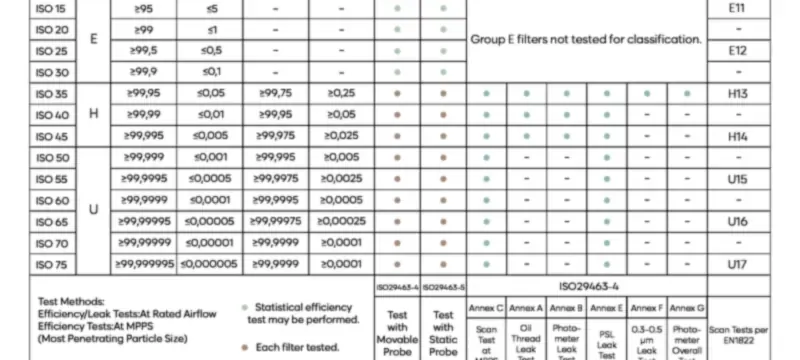
EN 1822-1:2019 and ISO 29463-1:2024 are similar but not interchangeable. EN 1822 ranks the filter by integral and local efficiency at MPPS using a scan test [1]. ISO 29463 offers a worldwide system of classification with classes corresponding to designations [2].
The classification ranges from ISO 15 E to ISO 75 U under ISO 29463. HEPA classes classify from ISO 35 H to ISO 45 H. ULPA classes are iso 50 U to ISO 75 U. The association between EN 1822 and ISO 29463 classes is indicated in the classification tables.
The buyers shall specify the standard edition governing the HEPA and demand a test certificate that specifies the classification table used, the test aerosol, and the overall and local measurement of efficiency.
Figure 3 shows filtering efficiency and the particle size, showing the feature of the minimum efficiency area.
HEPA Filtration in Cleanroom HVAC Systems
Most of the cleanroom HVAC filter arrangements involve staged filtration that varies in the number of stages depending on the design. Central air handling units (AHUs) involves pre-filters and medium filters together with HEPA filtration for cleanrooms in the terminal or fan filter units.
Central AHU filtration emphasizes the filtering point making it easy to change filters. On the other hand, Terminal HEPA arrangements where final filters are installed on the clean room means that there is a lower risk of duct contamination although ceiling access is needed. Besides, fan filter units consist of a HEPA filter and a fan set up in a single module that leads to costly maintenance of the units.
Figure 4 illustrates three setups of central AHUs in that image.
Where Are HEPA Filters Installed in Cleanroom HVAC Systems?
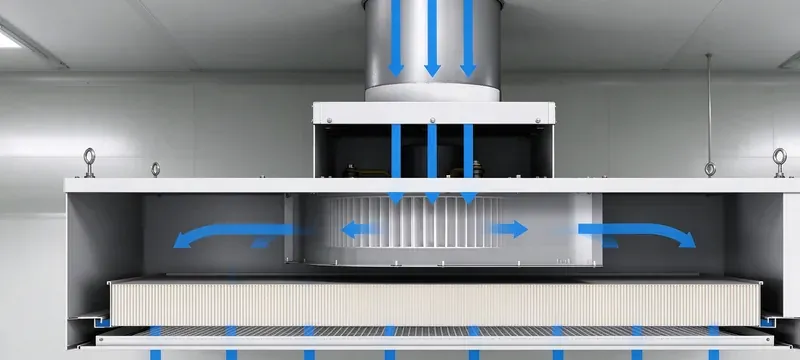
Deiiang catalogue provides three verified families of products that come with specific parameters.
The dimensions available from the catalogue are 287 mm × 287 mm × 292 mm (550 m³/h, 4.63 m²), 592 mm × 592 mm × 292 mm (1900 m³/h, 15.03 m²), 592 mm × 592 mm × 292 mm (four-fold; 2500 m³/h, 20.04 m²), 592 mm × 490 mm × 292 mm (2050 m³/h, 16.44 m²) and 592 mm × 287 mm × 292 mm (1150 m³/h, 9.26 m²). The permissible temperature is maximum 70 °C, maximum humidity is 80%.
Filter with integrated DOP filter, H13/H14, EN 1822: this filter is manufactured with restrictions in terms of construction height. The box design incorporates an air duct (diameter of 250 mm, 300 mm, or 350 mm), an air passageway adjustment device, and a DOP port for testing purposes on the output section.
The dimensions available from catalogue are 610 mm × 610 mm × 120 mm (1000 m³/h, 11.32 m²), 1220 mm × 610 mm × 120 mm (1800 m³/h, 19.79 m²), 610 mm × 610 mm × 150 mm (2500 m³/h, 22.14 m²), and 1170 mm × 570 mm × 150 mm (2200 m³/h, 24.74 m²).
Filter with extremely high efficiency, baffle-free (U15/U16/U17), EN 1822: used in semiconductor production industries and ultra-clean labs. Composed of US HV ultra-fine glass paper as filter media, it has thermoplastic spacer in between and anodised outer frame.
Some of the other filters are 610 mm × 610 mm × 50 mm (450 m³/h, 7.13 m²), 915 mm × 610 mm × 50 mm (650 m³/h, 10.58 m²), 484 mm × 484 mm × 50 mm (300 m³/h, 4.51 m²), and 320 mm × 320 mm × 50 mm (150 m³/h, 1.99 m²).
Do Airflow and Pressure Drop Affect Filter Selection?
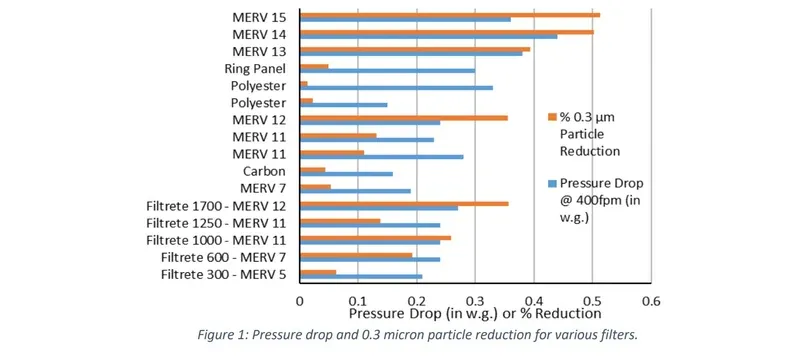
The answer is in affirmative. The power input for fans is calculated as flow rate × pressure drop ÷ efficient use of fan. A simplified example can be made of this. A fan with a pressure drop in the filtration system of 220 Pa (for example) would only require 0.55 (220 Pa divided by 400 Pa) of the standard power at the same air flow rate of 2500 m³/h.
It must be noted here that this is a simplified method of comparison. Fan power will vary depending on the nature of the fan curve, method of control or system effects. It must also be taken into account that the energy consumption performance must be measured with respect to the specific fan and control scheme.
The pressure drop value for the combined filter at 2500 m³/h as per catalogue is less than or equal to 220 Pa for the H14. The filter has been given a final pressure drop of anywhere between 400 and 600 Pa.
HEPA Filters and Cleanroom Classifications
According to ISO 14644-1:2015, HEPA in a clean room does not by itself fix the class; cleanroom air is classified according to the concentration of airborne particles in the air. It sets the upper limit for the number of airborne particles in the air, starting from ≥0.1 µm to ≥5 µm for all ISO classes.
This standard is not prescriptive regarding the types of filters that are required to be used. Procedures mentioned under ISO 14644-3:2019 explain the methods of testing to ascertain the cleanroom classification.
Table 3: Concentration Levels of Maximum Number of Particles of ≥0.5 µm in ISO Standards
| ISO Class | Maximum number of particles (≥0.5 µm) in m³ |
|---|---|
| ISO 3 | 35 |
| ISO 4 | 352 |
| ISO 5 | 3,520 |
| ISO 6 | 35,200 |
| ISO 7 | 352,000 |
| iso 8 | 3,520,000 |
| ISO Class | Maximum number of particles (≥0.5 µm) in m³ |
|---|---|
| ISO 3 | 35 |
| ISO 4 | 352 |
| ISO 5 | 3,520 |
| ISO 6 | 35,200 |
| ISO 7 | 352,000 |
| ISO 8 | 3,520,000 |
The filtration approach has been omitted from this table. ISO 14644-1 does not standardize the type of filter being used by the respective class. As a result, there is no standardized relationship existing between filter grade and room class: it is indicative of the engineering practices being adopted and not governed by standards.
Figure 5 shows the relation between classification of cleanroom and filtration stages with ISO particle limits along with design and verification aspects.
How Does HEPA Filtration Relate to ISO cleanroom classes?
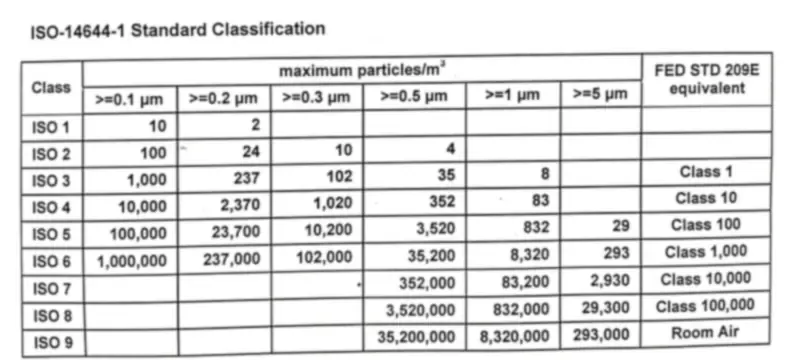
In accordance with ISO 14644-1, cleaning level limits in cleanrooms are defined according to the amount of particles present in a designated volume as opposed to the filter’s grade. Rooms can utilize different combinations of filters in order to achieve the same ISO class/category as a result of their particular emissions, occupancy, airflow pattern, recovery performance and control of leakage.
For example, ISO 7 to ISO 6 requires a reduction of 10 times of the allowable particle concentration for the same particle class and size. ISO 7 allows a maximum of 352,000 particles of 0.5 microns/m³ while ISO 6 allows a maximum of 35,200. System design must also consider such factors as occupancy, emissions and airflow pattern utilization.
If there is a requirement for ISO classification limits, it is recommended to refer to ISO 14644-1:2015 for relevant information on system design details and ISO 14644-3:2019 for overview of verification methods.
Does Every Cleanroom Require HEPA Filtration?
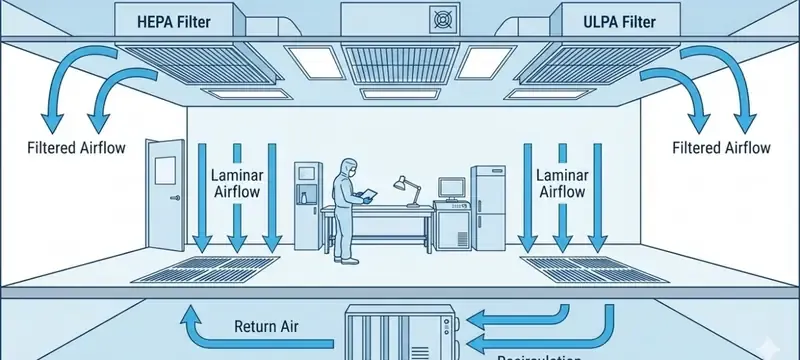
This is false. The selection of cleanroom air filtration depends upon cleanliness requirements, supply-air conditions, system design and process. ISO 14644-1 sets cleanliness limits; it does not define the filter type or class. A cleanroom that is controlled solely for the temperature, humidity or odor could use medium filters without using a HEPA stage.
When there is a particle limit the system design must confirm that the limit specified in the standard is met. HEPA filtration for cleanrooms can be one method that can be employed as a measure for meeting this limit however, the choice of class and filter design will depend on the detailed engineering study.
Selecting a Cleanroom HEPA Filter
For anyone asking what is a HEPA filter for their project, the choice should always start from a definition of requirements for the process. Different systems such as pharmaceutical filling systems, semiconductor lithography systems or areas where food is packaged will have different levels of temperatures, chemicals and particles. The cleanroom HEPA filter that is employed should be based on the application of the cleanroom.
Figure 6 shows the clean room HEPA filter selection decision tree, which flows from target ISO classification to air flow, dimensions, efficiency grade and pressure drop.
What Should Buyers Check Before Choosing a Cleanroom HEPA Filter?
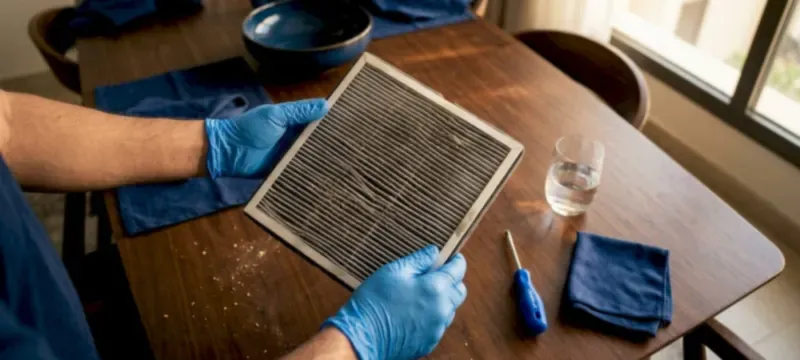
Must-have specifications of the project typically include:
Air flow rate at operating point
Filter face velocity and terminal dimensional attributes
Efficiency rating and standard of measurement of preference
Pressure drop limit specified and performed
Terminal leakage testing regulations and acceptance limit
Compatibility of gasket and seals related to housing
Optional specifications of preferences may include:
- Type of frame material and finish
- No separator use versus use of pleated separator
- Pre-filter compatibility and its change interval
Are MERV-Rated Filters Equivalent to HEPA Filters?
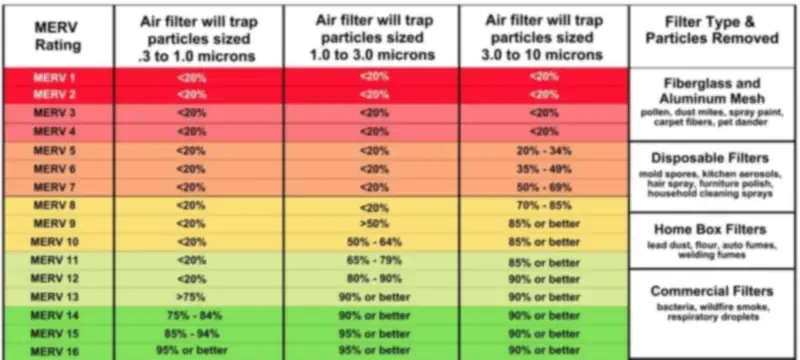
No, MERV is regulated by ASHRAE 52.2 2017 for common ventilation filter applications [7]. It measures based on the standard method for air flow (an average according to particle size 0.3 to 10 microns). MERV 16 is the highest MERV classification; it only captures 95% at sizes less than 0.3 to 1 micron. Hence, MERV cannot be directly compared to HEPA classification.
HEPA grades under the standards EN 1822 or ISO 29463 are evaluated at MPPS with specific efficiency standards for integral and local efficiency. The test methods employed in relation to particle sizes and basis for classification are different.
EN 779:2012 has been retired along with ISO 16890 describing ePM1, ePM2.5 and ePM10 efficiencies. Classification of HEPA filters and ULPA is still regulated by standards EN 1822-1:2019 and ISO 29463-1:2024.
Medium efficiency products of Deiiang available in MERV classifications of 8, 11 and 13 (used for pre-filtration). They are definitely not HEPA alternatives.
Installation, Integrity Testing, and Maintenance
A cleanroom HEPA filter which is manufactured properly can fail if the installation is done incorrectly. The compression of the gasket, alignment of frames, sealing against the terminal collar would determine if the performance after installation equals the performance determined in the factory test.
Testing HEPA filter efficiency in the factory and leak testing in situ are two activities that take place at different times.
Figure 7 shows the workflow depicting installation of filter, leak testing, and monitoring of efficiency through documentation based on information collected before replacement.
How Are HEPA Filters Installed and Tested?
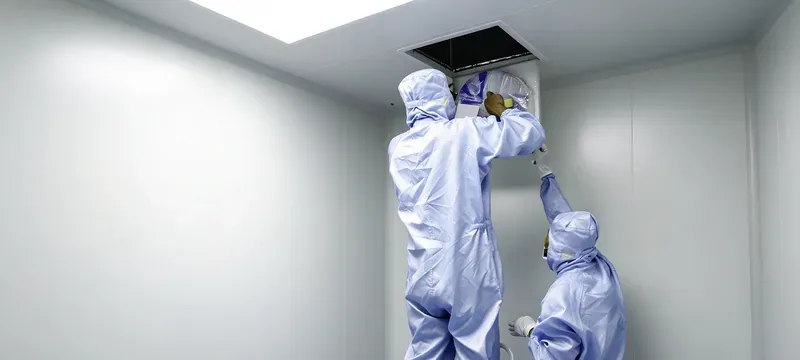
HEPA filter installation is done in accordance with IEST-RP-CC001 which provides guidance on installation and sealing of the device. The factory testing ensures that a filter has been manufactured correctly. Leak testing of a filter after installation checks the filter, its seal, and the housing in their entirety as a system.
The leak test procedure for the installations and acceptance criteria should be part of the project requirements. The historical aerosol used for testing is DOP. However, PAO is used in the modern installations. MIL-STD-282 provides an appropriate DOP smoke penetration test procedure but other test procedures can be used.
Deiiang filters are tested before they are shipped to their clients. The documentation received with the delivery should specify the test procedure along with the classification table for each installation.
When Should a Cleanroom HEPA Filter Be Replaced?
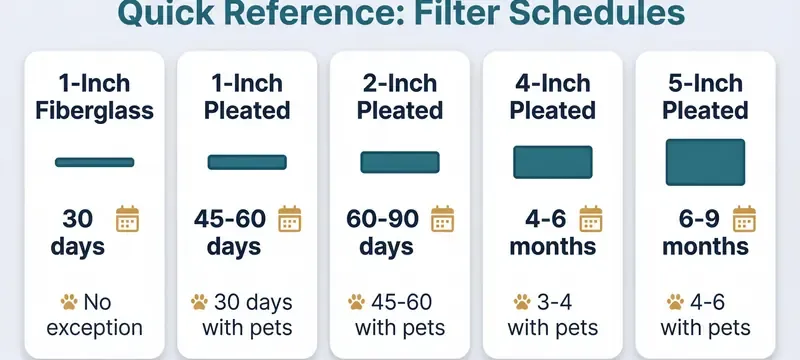
Replacement should depend on the manufacturer’s specified final resistance limits and the operating limits of the facility sourcing the replacement filter. Criteria for the replacement of HEPA filtration include:
- A measured pressure drop reaching the cut-off level specified by the manufacturer
- In the event that an air leak detection test is not successful, and any repairs to the units are infeasible
- When the media has become damaged, wet or contaminated
- When the airflow drops below design specifications, despite the fan being set at maximum speed
Cleanroom filter maintenance of the ventilating systems will also involve changing any pre-filters periodically, thus reducing the amount of loading received by the HEPA filter. The Deiiang F7 pre-filters are sold in a catalogue under the medium efficiency category of pre-filters with a classification of F5 to F9. The timeframes between changing the filters will differ according to the needs of each particular installation.
Deiiang Applications and Project Performance
An example of a common installation use of the Deiiang solution would involve an installation in a pharmaceutical packing clean room. Given that this example is not a real installation, there are no recorded and verifiable measurements.
What Cleanroom Challenges Can HEPA Filtration Address?
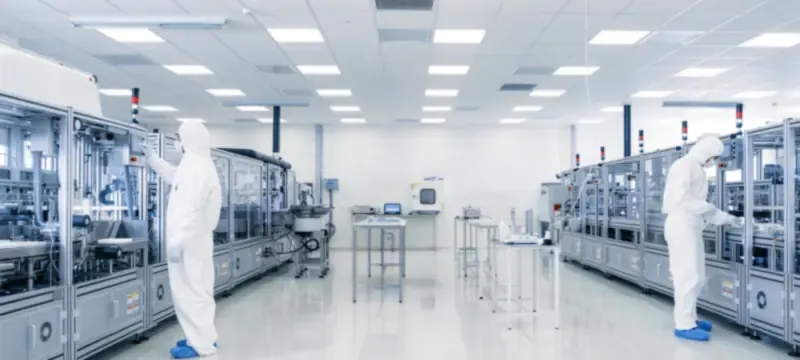
The example above involves:
- Target ISO 6 and ISO 7 steady state conditions
- Higher than normal ambient load of particles from packaging activity
- Limited room height
- Pressure drop limitations to maintain laminar flow
What Should a HEPA Filter Project Case Study Document?
A validated HEPA filter installation is required to include the proper commissioning date, state of the room (construction, at rest or in use), down to particle size distribution, total airflow, pressure drop, and testing process, along with any specifics regarding other limiting parameters of the room.
This example will use catalogue rated H14 HEPA filters for use in a pharmaceutical clean room at a size of 592 mm × 592 mm × 292 mm, with a flow rate capability of 2500 m³/h (less than 220 Pa / 20.04 square meters of filtering area). Non-silicone foam seals and filters refer to F7 pre-filters as well as achieve the filtration system. DOP testing should be carried out according to the specifications given in the catalog.
All of the information in this section comes from the Deiiang catalog so site measurements and installations were not taken into consideration while determining the energy savings or particle count achieved.
Figure 8 below sets forth the type of system currently in place and is for illustrative purposes only and not an actual photograph of the installation.
Takeaway: the grade of a cleanroom HEPA filter, the airflow and pressure drop it is asked to carry, and the quality of its installation together decide whether the design intent is actually met. Catalogue values are a starting point, not proof of installed performance.
Frequently Asked Questions
What does HEPA mean in a clean room?
HEPA means high-efficiency particulate air. In a clean room, it means the filter is classified according to EN 1822-1:2019 or ISO 29463-1:2024 and removes airborne contaminants from the most penetrating particle maximum.
How does a HEPA filter work?
A HEPA filter works by capturing the particles in a thick blanket of fibers through diffusion, interception, and impaction. The fibers are larger than the particles captured, meaning it is not a sieve.
What is the efficiency of a HEPA filter?
The efficiency rating will depend on the classification standard and grade, as required by EN 1822-1:2019 and its H13 and H14 requirements of 99.995% efficiency and above. According to data from Deiiang’s catalog, its combined and DOP integrated filter ranges are available in grades H13 and H14, while its super high-efficiency filter ranges can be made in grades U15 through U17. Always check the governing standard and the test certificate before using these filters.
Where are HEPA filters used in clean rooms?
In clean rooms, a cleanroom HEPA filter is typically placed in a variety of locations, including the terminal ceiling housing, fan filter unit and downstream of the central air handling unit. The type of installation to be performed depends on system parameters, available space and maintenance access requirements.
Do all clean rooms use HEPA filters?
Not necessarily. The selection of filtration system has to be decided based on the cleanliness level to be maintained, process, system design and amount of air mass to be moved. ISO 14644-1 provides for limits for cleanliness level and does not mandate filter type. Thus clean rooms monitored just for temperature or humidity can use medium filters as opposed to HEPA filters.
How often should cleanroom HEPA filters be replaced?
Replacement of HEPA filters is based on manufacturer’s final resistance limits, operational limits of the facility, etc. Evidence of action could include reaching final resistance, failing a leak scan, media damage or air flow below operating limits. Calendar replacement is not suitable in this case.
References
- [1] EN 1822-1:2019 - High efficiency air filters (EPA, HEPA and ULPA) - Classification, performance testing, marking
- [2] ISO 29463-1:2024 - High efficiency filters and filter media for removal of particulates from the air - Classification, performance, testing and marking
- [3] ISO 14644-1:2015 - Clean rooms and associated controlled environments - Classification of air cleanliness by particle concentration
- [4] ISO 14644-3:2019 - Clean rooms and associated controlled environments - Test methods
- [5] IEST-RP-CC001 - HEPA and ULPA filters - Institute of Environmental Sciences and Technology
- [6] MIL-STD-282 - Filter units, protective clothing, gas mask components and related products - performance test methods
- [7] ASHRAE 52.2-2017 - Method of testing general ventilation air cleaning devices for removal efficiency by particle size (MERV)
- [8] ISO 16890-1:2016 - Air filters for general ventilation - Technical specifications, requirements and classification system based on particulate matter efficiency
- [9] EN 779:2012 - Particulate air filters for general ventilation - Determination of the filtration performance (withdrawn).