+86 13638632902
 Jason@cleanroomequips.com


 MENU
MENU
iso 5 cleanrooms demand ongoing maintenance beyond standard cleaning. A stable state of cleanliness involves the combined performance of HVAC systems, HEPA filtration, airflow patterns, pressure, cleanroom envelope, cleaning procedures, and behavior of the users of the cleanroom.
Cleaning and disinfection protocols should be incorporated and aligned as part of a formal cleanroom validation protocol. The aim should be beyond the absence of visible contamination. It should be proven that the room is capable of maintaining the environmental condition parameters established by the protocol.
This guide will help the user to understand how to construct an effective iso 5 cleaning and disinfection program, perform HEPA filter leak tests, perform airflow testing, and address the initial preparations for ISO 5 certification and the performance of requalification.
In this guide, we will refer to Deiiang™ cleanroom solutions and practical field data from projects managed by Jason.peng, Product Designer of Deiiang.
Application: Aseptic processing and pharmaceutical manufacturing
Cleanroom class: ISO 5
Key controls: Concentration of airborne particulates, airflow volume and direction, pressure, temperature, humidity, and microbial contamination
Key tests: HEPA filtration integrity testing, airflow testing, microbial recovery testing
Main objective: Manage contamination under established operational state
What Is an ISO 5 Pharmaceutical Cleanroom?
ISO 5 is a cleanroom classification that stipulates the maximum allowable airborne particulates of specific sizes under defined conditions.
ISO 5 is not an indicator of sterility. Cleanroom classification cannot be a substitute for microbial control, process discipline, or personnel training.
The appropriate state of the cleanroom must be established by the pharmaceutical manufacturer as a function of the nature of the process, the risk of the product, and the conditions of the governing regulations.
ISO 5, class 100, and gmp grades
ISO 5 belongs to the ISO classification system, specifically cleanroom air cleanliness grades. "Class 100" is taken from the US fed-std-209 cleanroom classification system. gmp grade a and Grade B are part of systems and processes of the environment management system of pharmaceutical manufacturing. According to these systems, there are various test conditions, situations, and assessment criteria. You cannot mechanically convert these different grades into one another. Each of these systems has its own criteria for acceptance and context for operations.
The Sources of Contamination Managed
Various layers are the sources of contamination in an ISO 5 cleanroom, and each of these layers has to be managed.
- Airborne sources: external air, the HVAC system, HEPA filters, ductwork, return air systems, and building seal leaks.
- People sources: skin particles, fibers from clothes, movement, poor clothing and entry/exit behavior.
- Material sources: containers and packaging of materials, tools, and exposures from transport.
- Surface sources: wall and floor deposits, dust on instruments, residual cleaning tools, and residues from disinfection.
A successful contamination management system needs to address all four sources. A cleanroom should be designed for a whole-systems management approach.
The Three Operating States of an ISO 5 Cleanroom
The performance of a cleanroom is influenced by the operational conditions. Validation practices recognize three distinct states.
- As-Built: Equipment is installed; no personnel or production activities are present.
- At-Rest: Equipment is installed and systems are operational, but no personnel or process activities are present.
- In-Operation: Normal process activities and presence of personnel, equipment, and systems.
An ISO 5 cleanroom may qualify to the 'at-rest' state and still not meet the particle count requirements during 'in-operation' activities. Hence, dynamic tests are critical.
Key insight: ISO 5 certification at rest does not equate to in-operation certification. Always test against the most challenging process parameters.
Auditor Compliance Callout
EU GMP Annex 1 (2022/2023 Revision) – Contamination Control Strategy (CCS)
In the revised Annex 1, the Contamination Control Strategy is considered the cornerstone for the design and operation of any pharmaceutical facility. For ISO 5 (Grade A) zones, the expectation has shifted from occasional and static measurements of viable and non-viable particles to continuous monitoring for 0.5µm and 5.0µm during operational (dynamic) conditions.
This will affect cleaning and disinfection processes. The CCS calls for adjustments in cleaning intervals, rotation of disinfectants, and training of personnel based on the analysis (trends, excursions, and recoveries) of the results of the environmental monitoring. Also, Annex 1 introduces PUPSIT (Pre-Use Post-Use Integrity Testing) for sterilizing filters, which, when implemented, should be carefully coordinated with the cleanroom disinfection schedule to avoid contaminating the cleanroom.
Three requirements that will direct your cleaning & disinfection processes:
- PUPSIT – PUPSIT must be performed without compromising the cleanroom's disinfection.
- Continuous monitoring – real-time data on 0.5 µm and 5.0 µm particles must be collected during production in Grade A/ISO 5 areas.
- Data-driven CCS – cleaning and disinfection must be performed in accordance to the monitoring trends and investigations of deviations.
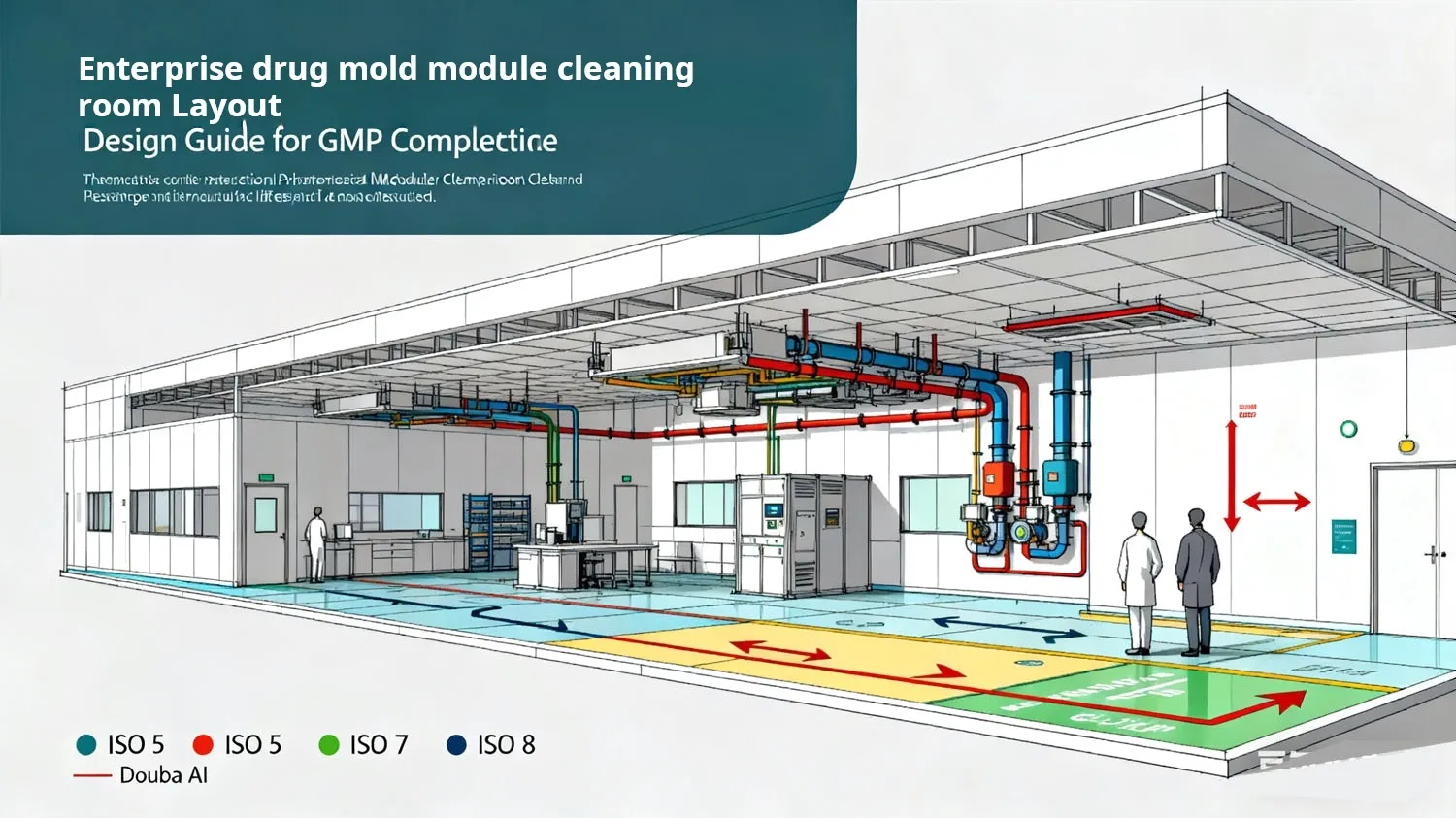
Figure 1: ISO 5 cleanroom contamination control model — external environment → air handling → HEPA filtration → fan filter unit (ffu) supply → critical zone → return/exhaust.
The Limitations of Cleaning When It Comes to ISO 5 Compliance
Cleaning serves to eliminate visible dirt and residues. Reducing microbial contamination is achieved by disinfection. Ultimately, the consistent and reliable operation of the entire system is confirmed by validation.
These three components can be viewed as a hierarchy. Each of the three components is reliant on the preceding component. If cleaning acts as a weak foundation, a stronger disinfection will not compensate for this.
Disinfection, Cleaning, and Validation
These can be viewed as three separate activities that are reliant on one another.
- Cleaning: Is responsible for the removal of dirt, contamination, and residue.
- Disinfection: Is responsible for the mitigation of microorganisms that can be found on surfaces.
- Validation: Is responsible for determining the effectiveness of the method, the stability of the system, the repeatability of the process and the acceptance of the results, as well as traceability.
Each of these steps must be incorporated into a standard operating procedure (SOP). Each of these SOPs must be validated based on the actual working conditions.
Why Should We Validate a Cleaning and Disinfection Procedure?
Achieving a visual perception of cleanliness does not indicate microbial safety has been achieved. Incorrect disinfection methods can lead to an absence of disinfection. This is particularly the case when contact time is insufficient.
Cleaning tools can (ironically) become a source of contamination. Materials are often incompatible with cleaning agents. Determining the appropriate cleaning agent is often accomplished through a risk assessment based on the monitored frequency.
As an example, cleaning surfaces with identical or similar contamination can often be accomplished using Isopropyl Alcohol (IPA) or hydrogen peroxide, although different contact times and an assessment of the materials involved will be necessary. Validation ensures that the proper agent and surface combination is selected.
It is important to keep in mind that while protocols must be validated at the time of creation, they must also be kept up to date.
Common ISO 5 Cleanroom Failure Modes
Failure Mode 1: Leakage due to an incomplete seal of a HEPA filter frame.
Result: Entry of unfiltered air into the clean zone, increased particulate concentration, failed filter scans, and resultant tests.
Validation method: HEPA integrity testing using aerosol challenges and downstream scanning.
Failure mode 2: Non-Uniformity of FFU Airflow
Effect: Disruption of unidirectional airflow and loss of critical zone protection, leading to local vortices and backflow.
Validation method: Airflow velocity measurement, airflow quantity measurement and airflow visualization.
Failure mode 3: Leakage at Wall Panel Joints and Penetrations
Effect: Ingress of outside air, local dust and debris, difficult to clean, and unstable pressure differential.
Validation method: Direct observation, smoke testing, room airtightness testing, and observation of pressure stabilization.
How to Create an iso 5 clean room Validation Protocol
A validation protocol must respond to four elements: what is to be assessed? what is the methodology? what results would be deemed passable? what actions would be implemented in the event of failure?
These elements structure the validation of cleanrooms and provide a methodology by which the cleanroom is to be systematically analyzed and recorded.
The Main Aims and Objectives of the Validation Protocol
- State aims and objectives of the validation.
- Identify who is responsible within engineering, QA, production, and third-party testing.
- Provide a description of the system: the room design, the Air Handling Unit (AHU), the number of FFUs, the number of HEPA filters, the proposed airflow pattern, the pressure gradient and the proposed design limits for temperature and humidity.
- Provide a comprehensive checklist of all testing apparatus and instruments indicating their acceptable limits.
- State the methods of testing including the locations, steps to be followed, predicted duration and the data to be recorded and the acceptance and rejection criteria.
- Define the procedure for unplanned deviations and define the steps for corrective and preventative actions (CAPA).
- The final validation protocol must be approved by the lead engineers, the validation team, QA, and the project manager.
IQ, OQ, and PQ for iso 5 clean rooms
Installation Qualification (IQ)
The purpose of an IQ is to verify that the rooms and services are installed as designed.
- Building and Envelope: Panel-type wall/ceilings joints, floor to wall joints, door and window seals, pass-through boxes, and penetration seals.
- Air Systems: AHU, FFU, HEPA filters, ducts, dampers, control sensors, control cabinets, and alarms.
Deiiang™ cleanroom panel systems feature modular construction with precision joint-seal, which decreases the variability of construction and supports IQ documentation.
Operational Qualification (OQ)
This demonstrates that the systems work as intended under given parameters.
- Start/stop control with fan VFD.
- Response of airflow to volume and static pressure.
- Control of temperature and humidity.
- Verification of pressure differential and filter alarm.
- Testing of interlock, power loss recovery, and fault alarms.
- Response of automated control systems.
Performance Qualification (PQ)
This shows that the cleanroom, during normal or actual operational processes, continues to comply with environmental requirements.
- Testing of airborne particles and compliance with iso 14644-1.
- Testing of microflora (settle plates, contact plates, active air sampling).
- Testing integrity of airflow and unidirectional flow.
- Testing of control and stability of pressure differential.
- Control and stability of temperature and humidity.
- Testing recovery from disturbance.
- Testing of personnel and equipment on the cleanroom environment.
- Testing recovery of the cleanroom environment post cleaning and disinfection.
Validation Workflow:
1 Design Review
2 Installation Qualification (IQ)
3 Operational Qualification (OQ)
4 Performance Qualification (PQ)
5 Final Validation Report
6 Routine Monitoring & Re-Qualification
ISO 5 Pharmaceutical Cleanroom Cleaning Protocol
A comprehensive cleaning SOP should include the specific area to clean, personnel to perform the cleaning, cleaning instruments, cleaning agents, disinfectants, concentration, contact time, sequence and cleaning frequency, specific flow of the instruments used to clean, disposal of the cleaning instruments, documentation of the cleaning process and how to handle deviations from the SOP.
All of the above items must be clearly defined. Verbal instructions lead to variability and failures in validation.
Pre‑Cleaning Preparation
Prior to cleaning, staff members must check that:
- Gowning has been done properly.
- All tools are clean and sanitized.
- All labels and cleaning solution containers are readable.
- All disinfecting solutions are not expired.
- There are no other interfering activities within the room.
- Equipment is ready for cleaning.
- All electronic equipment is safe from exposure to cleaning solutions.
Recommended Cleaning Sequence
- Clean from the top to bottom surfaces.
- Clean from inside to outside.
- Clean from the least contaminated to the most contaminated areas.
- Clean from the furthest point from the exit.
- Clean surfaces before the floor.
- All areas to be cleaned should be cleaned before any disinfecting is done.
- Cleaning should be done in one direction.
This process should be done to reduce cleaning solution cross-contamination.
Ceiling and High Surfaces
- Perimeter and frame of the fan filter unit and HEPA filter housings.
- Light fixture frames and ceiling panel joints.
- Pipes and cables going through the ceiling.
- High wall areas above reachable height.
Walls, Doors, Windows, and Pass‑Through Devices
- Door handles and push plates.
- Door frames and observation windows.
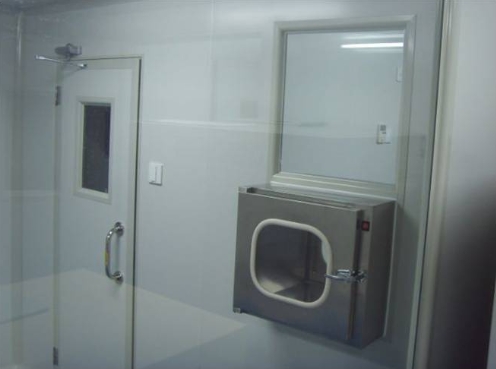
- Pass-through box interiors.
- Interior corners of wall panel joints and radius coves.
- Sealant edges and gaskets.
Floor Cleaning
- To avoid cross-contamination use zone‑based cleaning.
- Use cleanroom mop tools for the floor.
- Avoid over‑wetting mop heads.
- Avoid contaminated mops being used in critical zones.
- Ensure that no cleaning solution pools are left standing.
- Use tools of differing grades of cleanliness.
Equipment and Workstation Cleaning
- The outsides and enclosures of the equipment.
- Control panels and touch screens.
- Handles and grab bars.
- Surfaces and benches of a workstation.
- Small tools and implements.
- Surfaces of equipment that come into contact with product.
- The undersides and back panels of the equipment.
Disinfection Program for ISO 5 Pharma Cleanrooms
Disinfection is about targeting unwanted residual microorganisms left behind after a surface is cleaned. For any strategy for the sanitation of a sterile room, a strong disinfection program is needed.
Disinfectant Selection Criteria
- The obstacles to achieving the disinfection goals, if any.
- The chemical compatibility with stainless steel, the coating and sealant systems, etc.
- The safety and volatility of the chemical to the operator.
- Whether the chemical is prepared and stable enough to have a longer shelflife.
- The time necessary for the disinfectant to be effective.
- The reliability and availability of the disinfectant.
IPA versus hydrogen peroxide formulations, quaternary ammonium compounds, and products based on peracetic acid, are some of the disinfectants, and they all have certain positive and negative aspects.
Disinfectant Rotation Strategy
- Rotate based on the risk, not based on how often to rotate. The different disinfectants all have different spectra of activity.
- Determine the order to use the disinfectants.
- Incompatible disinfectants should not be mixed.
- When dealing with poor responding microorganisms, use a targeted validated approach.
- Every rotation cycle should be documented in the cleaning log.
Disinfectant Efficacy Validation
- Load testing
- Microbial challenges
- Contact Time
- Contact Concentration
- The compatibility of materials
- Residual testing
- ERG testing
Cleaning Tool Management
- Each tool must be clearly and uniquely identified.
- Different colors and/or labels can be used for different Tool Disinfection Zones.
- Different methods can be used for Tool Disinfection and Tool Storage.
- Explain how the single-use items are disposed.
- For disposable tools, assess the risk of environmental contamination.
Disinfectant Comparison; Sporicidal Activity, Contact Time and Residue Wipe Down
These are the parameters that need to be practised with regard to Disinfecting in ISO 5 cleanrooms. Validation is required for every unique set of circumstances.
| Disinfectant/Class | Sporicidal Activity | Recommended Contact Time | Material Compatibility | WFI Wipe‑down Required? |
|---|---|---|---|---|
| 70% Isopropyl Alcohol (IPA) | Weak (bacteria/virus effective; spores limited) | 1-3 min | Good (plastics, metals, coated surfaces) | Volatile; wipe if residue critical |
| Peracetic Acid / H2O2 blend | Strong (bactericidal, fungicidal, sporicidal) | 10-15 min | Moderate (erosive to aluminum & carbon steel) | Yes — mandatory (high residue) |
| Quaternary Ammonium Compounds | Moderate (bacteria/virus; limited sporicidal) | 5-10 min | Good (most surfaces) | Recommended (residue may affect product) |
70% Isopropyl Alcohol (IPA)
Sporicidal: Weak
Contact: 1-3 min
Compatibility: Good (plastics, metals)
WFI wipe: Volatile; wipe if residue critical
Peracetic Acid / H2O2 blend
Sporicidal: Strong
Contact: 10-15 min
Compatibility: Moderate (erosive to Al/Cs)
WFI wipe: Mandatory
Quaternary Ammonium Compounds
Sporicidal: Moderate
Contact: 5-10 min
Compatibility: Good
WFI wipe: Recommended
*WFI = Water for Injection, and Contact time and wipe down procedure should be confirmed with your disinfectant supplier and validation study.
HEPA Filter Leak Testing: ISO 5 Cleanrooms
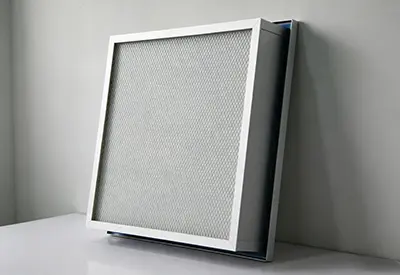
HEPA filters are terminal filters. Testing focuses on both filter media and the installation, ensuring that the frame, gasket, clamping mechanism, and the installation and the surrounding housing do not leak.
What leaks about a filter?
- Improper installation.
- Uneven gasket compression.
- Deform filter fram
- Transportation injuries
- Damage to the media.
- Defects in welded housings and panels.
- Damage form changing filters.
- Long-term vibration loosening
Post-Test Checks
- The filter's identification number and the orientation of the filter.
- Filter installed.
- The discharge had stable operation and stable running time.
- Concentration of aerosols present.
- Calibration of the test equipment.
- Differential pressure in the room.
- Temperature and humidity of the room.
- Records of filter changes.
Filter Leak Test Procedure
- Define test boundaries: Room number, filter count, each filter ID, test area, and critical operational points.
- Define test conditions: AHU and FFU running, stable airflow and pressure, concentration of the medium is the minimum necessary for a test; test personnel and equipment do not disturb airflow.
- Perform scanning on the filter media surface, the filter frame, the sealed area, and the housing interfaces.
- Log results including the maximum reading, leak location, filter ID, test duration, identifying personnel, and actions taken.
- Remediate and retest. If a failure occurs, check whether it is due to media leakage or seal leakage, carry out a localized repair or a complete replacement, note the deviation, and complete the repair. Perform the retest and modify the final report accordingly.
Aerosol (PAO 4)Upstream concentration: 10 – 20 µg/L
Scanning speedProbe traverse speed: ≤ 5 cm/s
Probe distanceFrom filter surface: ≈ 2.5 cm (1 inch)
Acceptance criterion≤ 0.01% of the upstream concentration (per ISO 14644‑3)
Interpreting Test Results
Marking a result with "Pass" or "Fail" is not enough. Maintain all result data. Complete a test report with all the details including methodology and acceptance criteria.
The acceptance restriction is based on the relevant standard, URS, filter specification, and validation protocols. Generally, for applications relating to ISO 5, the acceptance criterion for scanning is ≤0.01% of the upstream concentration.
Figure 2: HEPA filter scanning test — photometer and aerosol generator setup for integrity testing.
Airflow Visualization Method for ISO 5 Cleanrooms
What is Airflow Visualization?
Airflow visualization helps address a number of airflow issues. Is airflow moving in the desired direction? Is the critical operating zone protected? Does the movement of personnel cause backflow contamination? Does the unidirectional flow get blocked by the equipment?
What Test Cases should be Considered?
- An empty room
- An occupied room
- Normal workflow
- Normal flow of materials
- Door open scenarios
- Critical Process Operations
- Multiple scenarios that represent "worst case" conditions
- Test Cases that represent "Fault" conditions or "Abnormal" conditions
Where to Test
- Critical work stations and filling zones
- Open product zones
- The perimeter of equipment
- Zones containing personnel actions
- Where materials enter and leave
- Near doors and pass-through boxes
- Near the edge of FFUs
- Near return air boxes
What is the Test?
Before the test begins
- Determine the purpose of the test
- Design and draw the room layout
- Identify and mark critical points
- Position/Setup the Cameras
- Test the lighting and background
- Make sure the test medium will not contaminate the product
During the Test
- Turn on HVAC and FFUs
- Wait for the systems to stabilize
- Release the visual medium from specified test locations
- Observe and document the direction of airflow and the location of vortices and backflows
- Simulate personnel movement and repeat the test for other problem areas
Evaluate
- Flow direction is the airflow toward the zone where product is critical?
- Is backflow contamination occurring in upstream zones?
- Is unidirectional flow being blocked by personnel?
- Does equipment placement and volume of air supplied by FFUs need to be adjusted?
What Requirements for Your Video and Report?
Videos should clearly show date, and timestamp, room number, the specific state during the test, the scenario and location of the test, the operator, and test number.
Reports should include the test plan, the room layout, video stills, the author's observations, the abnormal behavior along with a risk rating, proposed corrections, and a summary of the findings.
ISO 5 Cleanroom Certification Steps
1 Define User Requirements (URS)
2 Review cleanroom design
3 Complete Construction & Installation
4 Commission HVAC & FFU Systems
5 Perform Qualification Testing
6 Approve Cleaning & Disinfection Procedures
7 Close Deviations & Approve Final Report
8 Define Requalification
Step 1 - Define User Requirements
- Type of product with process flow
- Required cleanliness (grade cleanliness)
- Area of room and ceiling height
- Number of people and equipment (required)
- Range of temperature and humidity
- Requirements of Pressure Differential
- State of operation
- How the environment will be monitored
Step 2 - Review Cleanroom Design
- Zoning of the room
- Paths of people and materials
- How air will come to and leave the room
- Isolation of contamination
- Paths of cleaning and maintenance
- Pressure gradient cascade
- Accessibility of equipment
Step 3 - Complete Construction & Installation
- Panels and joints
- Windows and doors
- Installations of the floor
- Installation of HVAC
- Installation of FFU and HEPA filters
- Installations of control and alarm systems
Step 4 - Commission HVAC & FFU Systems
- Volume and velocity of air
- Static pressure
- Pressure differential
- Control of temperature and humidity
- Control the response of alarms and interlocks
Step 5 - Perform Cleanroom Qualification Testing
- Airborne particle counting
- Testing the integrity of the HEPA filter
- Air change rate
- The regain of air
- The control of the temperature and humidity
- Airflow Patterns
- Microbial Monitoring
Step 6 - Approve Cleaning and Disinfection Procedures
- What is the cleaning method?
- What disinfectants will be used and what will be the contact time?
- Has the person been trained?
- Have the logs been established?
- Have protective tools been used?
- The cleaning and disinfecting will be recorded
Step 7 – Close Deviations and Approve Final Report
- All deviations are investigated.
- Critical deviations are addressed with CAPA.
- All tests are retested after a failure.
- QA approves the final report.
- Data are archived and retained.
Step 8 – Initiate Requalification Program
- Significant changes to equipment.
- Modifications or upgrades to AHUs.
- Replacement of FFUs.
- Replacement of HEPA Filters.
- Extended cleanroom shutdown.
- Changes in environmental trends.
- Changes in the production process.
- Significant changes in the building or infrastructure.
How Deiiang Maintains ISO 5 Pharmaceutical Cleanrooms
Deiiang™ provides a complete cleanroom system to manage the entire real chain of contamination control. Our systems are designed with validation in mind, thus decreasing business risk and accelerating the project's certification.
Cleanroom Envelope and Panel System
User issues:
- Panel joints collect dust.
- Poor sealing results in a lack of pressure stabilization.
- Difficulties in disinfection and cleaning.
- Points of contamination exist.
Deiiang™ Solution: Precision-engineered panel systems with smooth surfaces, seamless joints, and modular installation. The Panels are designed for easy cleaning.
Deiiang™ Modular Panel System with Sealed Joints and Radius Coving
AHU and Air Handling Solution
- Modular AHU with VFD fans.
- Multi-level filtration for air particles and microbes.
- Accurate control of temperature and humidity.
- Management of condensation with access.
- Control and alarm integration.
- Can be adapted to new and retrofit works.
FFU and Terminal HEPA Filtration
- FFU layout ensures uniformity of air velocity.
- HEPA filters are housed in sealed filter frames with testing ports.
- Low Operating Noise and High Energy Efficiency.
- Can be used for airflow and integrity testing.
Validation‑ready design: Each unit of Deiiang™ is built to facilitate IQ, OQ, and PQ documentation, saving time and finances regarding cleanroom certification.
Deiiang Case Study: Upgrading Pharmaceutical Cleanroom to ISO 5
Project Summary
Country: Southeast Asia
Sector: Pharmaceutical Manufacturing
Type: Retrofit and Enhancement
Cleanroom Standard: ISO 5 (Grade A)
Surface Area: 320 m²
Lead Time: 14 weeks (phased)
Deiiang™ Involvement: Cleanroom construction, AHU modification, FFU replacement, and offering validation services
Current Site Conditions
- An aging panel system with compromised seals and apparent gaps
- AHUs with permanent speed fans with less-than-ideal temperature control
- HEPA filters with an unknown history and compromised integrity.
- Inconsistent airflow with vortices and dead space near the filling line.
- The housing of the filters had very poor accessibility.
- An upgrade of the system could not be performed without halting production.
Project Constraints
Constraint 1: Space Limitations
Restricted ceiling height and small equipment rooms meant most AHUs could not be designed without doing substantial modifications and renovations.
Constraint 2: Poor airflow distribution
Some areas received insufficient air, while other areas had back flow.
Constraint 3: No major production shutdown
Limitations on the production schedules meant that the work had to be performed in phases.
Constraint 4: Comprehensive revalidation required
New subsystems required full revalidation including all tests of the system and regulatory documentation and approvals.
Deiiang's Approach
- Air handling: A compact modular AHU with fans that are equipped with variable frequency drives, filtration stages of varying complexity, and an integrated controls system.
- Terminal filtration: A redesigned FFU with sealed HEPA filter housings and integrated test ports.
- Envelope: A high-quality panel system with radius coves, sealed joints, and gaskets for sealed penetrations.
- Validation: Pre-commissioning, HEPA integrity tests and airflow visualization, and particle counters, as well as environmental monitoring.
Before - Existing panel system showing aging seals
After - Installation of Modular AHUs with VFD Control
Panel joint with sealed radius cove
FFU ceiling integrated with HEPA filters and test ports
HEPA Integrity Testing and Validation Results
HEPA Integrity: Passed with a leakage rate of ≤0.008% in accordance with ISO 14644 Part 7: Airflow Visualization
Airflow Visualization: Passed — Unidirectional airflow was confirmed
Particle count per ISO 5: Passed - ≤ 3,520 particles/m³ of ≥0.5µm
Pressure: 22 ± 2 Pa differential between rooms
Temperature: 21.0 ± 0.5 °C
Recovery Time: ≤ 12 min after disturbance
Project Outcomes
- Stable cleanroom under in-operation conditions
- Improved protection for unidirectional airflow in the filling zone
- Reduced risk of HEPA filters leaking with sealed housings
- Reduced cleaning and disinfection time due to radius coves and seamless panels
- A full validation package delivered within the scope of the project
- Minimal impact to production due to planned and phased installation
Common Misconceptions About ISO 5 Cleanrooms
❌ Myth 1
Frequent surface cleaning is enough.
Cleaning does surface contamination only and does FIX HEPA LEAKS, airflow backflows, and rebooting particle and LIVE microbial monitoring.
✅ Fact 1
Cleaning is only ONE of the many layers of the strategy
Validation, disinfection, and continuous monitoring are as critical as cleaning. A CCS approach is necessary.
❌ Myth 2
A higher-rated filter always creates a better cleanroom
Higher rated filters filter at a higher resistance. If the fan's static pressure is inadequate, then the airflow's volume is also inadequate and a disruption in the intended airflow occurs.
✅ Fact 2
Filter selection must match the system.
To maintain both efficiency and airflow, hepa filter grade must be balanced against AHU fan capacity and FFU static pressure.
❌ Myth 3
Cleaning more reduces contamination more.
Cleaning too often raises foot traffic and introduces contamination with the cleaner or tools.
✅ Fact 3
Cleaning should be based on data.
Schedule cleaning based on environmental monitoring, not based on your gut or a predetermined calendar.
❌ Myth 4
Airflow visualization is a presentation.
The video is evidence. The video is used to help visualize airflow and identify zones that are critical and have backflow or vortices.
✅ Fact 4
Visualization is used diagnose.
Corrective action is only determined after analyzing the results with room design, space planning, and the flow of personnel.
❌ Myth 5
Once certified, the cleanroom is certified forever.
The personnel or the process may change, the equipment may change, and the filters may age.
✅ Fact 5
Monitoring and retesting are needed.
Where and when to test cleanrooms is determined by regulatory strategy and based on what is considered a potential danger.
ISO 5 Cleanroom Validation at a Glance
Validation Phase Progress
Design Review
IQ
OQ
PQ
Routine Monitoring
Risk Score Assessment
HEPA leakage risk
Airflow disturbance risk
Surface contamination risk
Personnel contamination risk
Maintenance accessibility
Illustrative risk score based on project assessment; not a regulatory acceptance value.
System Comparison
| Feature | Fixed‑speed system | VFD‑controlled system | Standard panel | Deiiang™ sealed panel |
|---|---|---|---|---|
| Airflow modulation | On/off only | Stepless 15‑100% | — | — |
| Energy efficiency | Baseline | +20‑30% savings | — | — |
| Maintenance ease | Moderate | High (remote access) | Moderate | High |
| Cleaning difficulty | — | — | High (joints) | Low (smooth radius) |
| Validation support | Basic | Full OQ/PQ data | Basic | Full documentation |
| Retrofit adaptability | Poor | Good | Moderate | Excellent |
Fixed‑speed system
On/off only • Baseline energy • Moderate maintenance • Basic validation
VFD‑controlled system
Stepless 15‑100% • +20‑30% savings • Remote access • Full OQ/PQ
Standard panel
High cleaning difficulty (joints) • Moderate maintenance • Basic validation
Deiiang™ sealed panel
Low cleaning difficulty (smooth radius) • High maintenance • Full documentation • Excellent retrofit
FFU Sizing Calculator
Estimate the number of Fan Filter Units required to achieve your target air change rate in an ISO 5 cleanroom. Adjust the parameters below.
References
- ISO 14644‑1:2015 — Classification of air cleanliness by particle concentration
- ISO 14644‑3:2019 — Test methods for cleanrooms and associated controlled environments
- ICH Q7 — Good Manufacturing Practice Guide for Active Pharmaceutical Ingredients
- FDA Guidance for Industry — Sterile Drug Products Produced by Aseptic Processing
- PDA Technical Report No. 13 — Fundamentals of an Environmental Monitoring Program
- EU GMP Annex 1 (2022/2023) — Manufacture of Sterile Medicinal Products
Deiiang™ • Cleanroom solutions designed for validation • Product designer: Jason.peng