+86 13638632902
 Jason@cleanroomequips.com


 MENU
MENU
Is your modular cleanroom truly meeting its design specifications? How can you scientifically verify its cleanliness levels? In today's highly regulated manufacturing environments, proper validation through comprehensive cleanroom particle count testing is not just a recommendation—it's a necessity for quality assurance and regulatory compliance.
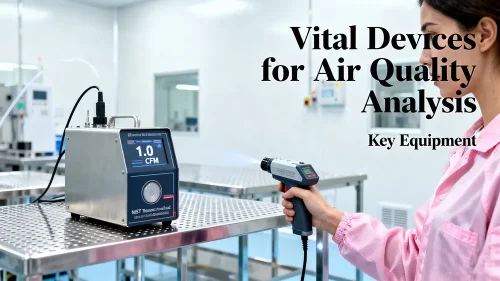
modular cleanrooms have revolutionized controlled environments across pharmaceuticals, biotechnology, electronics, and medical device manufacturing. Their flexibility and rapid deployment capabilities make them ideal for dynamic production needs. However, this very flexibility demands rigorous validation to ensure consistent performance. This is where professional cleanroom particle count testing becomes critical.
In this comprehensive guide, we'll explore everything you need to know about modular cleanroom particle count testing—from fundamental concepts to advanced implementation strategies. You'll learn about international standards, testing methodologies, result interpretation, and how Deiiang™ can help ensure your facility meets the highest standards of cleanliness and compliance.
Understanding Modular Cleanrooms and Their Characteristics
Modular cleanrooms are prefabricated controlled environments constructed from standardized panels and components. Unlike traditional built-in-place cleanrooms, they offer exceptional flexibility, scalability, and cost-effectiveness. A typical Deiiang™ modular cleanroom can be deployed 40-60% faster than conventional construction while maintaining stringent cleanliness standards.
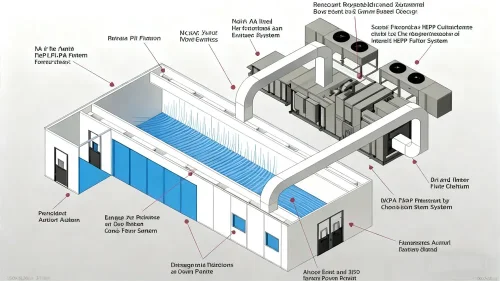
The key advantages of modular cleanrooms include rapid deployment (typically 4-8 weeks for standard configurations), significant cost savings (15-30% lower than traditional construction), and unparalleled flexibility for reconfiguration or expansion. However, these benefits must be balanced with rigorous validation protocols, making comprehensive cleanroom particle count testing essential for verifying performance.
Particle Count Testing: The Core Metric for Cleanroom Performance
Particle count testing is the quantitative measurement of airborne particulate contamination within a controlled environment. This process involves using sophisticated laser particle counters to detect and size particles ranging from 0.1 to 5.0 micrometers in diameter. For reference, a human hair is approximately 70-100 micrometers, while bacteria typically range from 0.3 to 10 micrometers.
Key Objectives of Particle Count Testing
- Verification of cleanroom classification (ISO Class 1-9)
- Identification of contamination sources and patterns
- Compliance with regulatory requirements (iso 14644, GMP)
- Validation of HVAC and filtration system performance
- Quality assurance for manufacturing processes
Properly executed cleanroom particle count testing provides the scientific evidence needed to demonstrate that your facility maintains the required cleanliness levels during all operational states. This is particularly important for modular systems where structural integrity must be verified after installation or reconfiguration.
International Standards for Modular Cleanroom Particle Count Testing
The global benchmark for cleanroom classification and testing is defined by the ISO 14644 series of standards. These documents provide comprehensive guidelines for testing methodologies, classification, and monitoring of cleanrooms. For modular facilities, adherence to these standards is non-negotiable for regulatory acceptance.
ISO 14644 Series Standards
ISO 14644-1 establishes the classification of air cleanliness by particle concentration, while iso 14644-3 specifies test methods for verification. These standards dictate critical parameters including sampling locations, minimum sample volumes, and test conditions. For example, ISO 14644-1 requires a minimum of 2-10 sampling locations depending on cleanroom area, with eACH location sampled at least 3 times.
| ISO Class | ≥0.1 μm (particles/m³) | ≥0.2 μm (particles/m³) | ≥0.3 μm (particles/m³) | ≥0.5 μm (particles/m³) | ≥1 μm (particles/m³) | ≥5 μm (particles/m³) |
|---|---|---|---|---|---|---|
| ISO 1 | 10 | 2 | - | - | - | - |
| ISO 2 | 100 | 24 | 10 | 4 | - | - |
| ISO 3 | 1,000 | 237 | 102 | 35 | 8 | - |
| ISO 4 | 10,000 | 2,370 | 1,020 | 352 | 83 | - |
| iso 5 | 100,000 | 23,700 | 10,200 | 3,520 | 832 | 29 |
| ISO 6 | 1,000,000 | 237,000 | 102,000 | 35,200 | 8,320 | 293 |
| ISO 7 | - | - | - | 352,000 | 83,200 | 2,930 |
| iso 8 | - | - | - | 3,520,000 | 832,000 | 29,300 |
| ISO 9 | - | - | - | 35,200,000 | 8,320,000 | 293,000 |
GMP Requirements
For pharmaceutical and medical device applications, Good Manufacturing Practice (GMP) guidelines impose additional requirements beyond basic ISO standards. GMP typically mandates more frequent monitoring, stricter alert and action limits, and comprehensive documentation. For instance, EU GMP Annex 1 requires continuous monitoring for Grade A zones with alarms for out-of-specification conditions.
When planning your cleanroom particle count testing program, it's essential to consider both ISO standards and any industry-specific regulatory requirements that may apply to your operations. Deiiang™ experts can help navigate these complex compliance landscapes.
Detailed Process and Methodology for Modular Cleanroom Particle Count Testing
A systematic approach to particle count testing ensures accurate, reproducible results that stand up to regulatory scrutiny. The process involves careful planning, precise execution, and thorough documentation at each stage.
Pre-Test Preparation
Proper preparation is fundamental to successful testing. This phase includes defining test scope, selecting appropriate operational states (as-built, at-rest, operational), calibrating equipment, and developing a sampling plan. For modular cleanrooms, particular attention should be paid to panel joints, seal integrity, and airflow patterns that may differ from traditional construction.
Sampling Location Calculation
According to ISO 14644-1, the minimum number of sampling locations (NL) is derived from the cleanroom area (A in m²):
NL = √A (rounded up to the next whole number)
Example: For a 64 m² cleanroom, NL = √64 = 8 sampling locations
Each location should be sampled at least 3 times, with minimum sample volume calculated based on ISO class and particle size.
Key Equipment
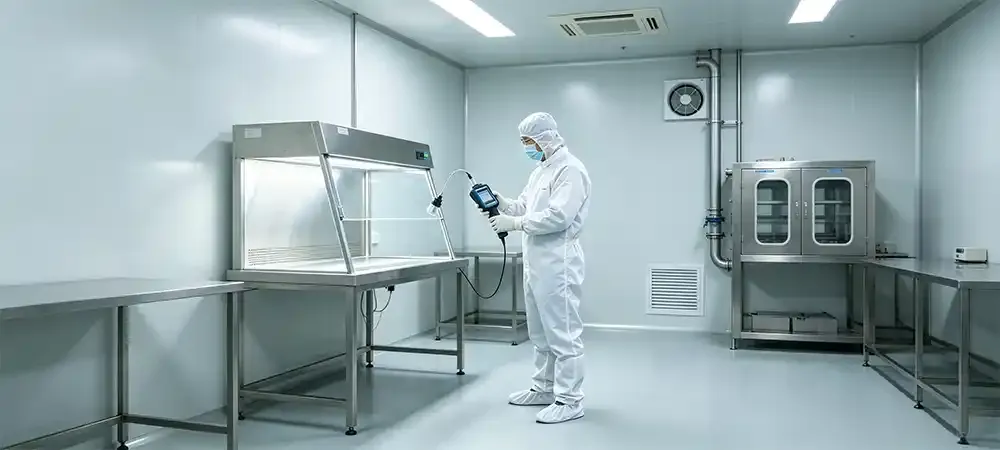
Modern particle counting relies on sophisticated laser-based instruments capable of detecting and sizing particles across multiple channels simultaneously. Deiiang™ utilizes state-of-the-art handheld and remote particle counters with flow rates of 0.1, 0.5, or 1.0 CFM (cubic feet per minute), calibrated to NIST-traceable standards.
Step-by-Step Testing Procedure
- Determine Test State: Select as-built (empty), at-rest (equipment installed but not operating), or operational (normal production conditions)
- Establish Sampling Locations: Distribute points evenly across the cleanroom, with additional locations near potential contamination sources
- Configure Particle Counter: Set appropriate particle size channels, sampling time, and flow rate based on cleanroom classification
- Record Environmental Conditions: Document temperature, humidity, and pressure differentials throughout testing
- Execute Sampling: Collect data at each location, ensuring proper technique to avoid contamination
- Analyze Data: Compare results against classification limits and investigate any anomalies
- Generate Report: Compile comprehensive documentation including methods, results, and conclusions
Special Considerations for Modular Cleanrooms
Modular construction presents unique challenges for particle count testing. The increased number of joints and seams requires careful inspection and potentially higher sampling density in these areas. Additionally, the reconfigurable nature of modular systems means that any structural changes necessitate complete retesting to validate performance.
Deiiang™ engineers have developed specialized protocols for modular cleanroom particle count testing that address these unique considerations while maintaining full compliance with international standards.
Results Interpretation, Reporting, and Troubleshooting
Proper interpretation of particle count data is crucial for meaningful conclusions about cleanroom performance. Results should be compared against the applicable ISO classification limits, with particular attention to trends and patterns that might indicate systemic issues.
Case Study: Pharmaceutical iso 7 cleanroom
A Deiiang™ client recently encountered repeated failures in their ISO 7 modular cleanroom during routine monitoring. Our investigation revealed:
- Particle counts consistently 35% above limits for ≥0.5μm particles
- Pattern showed highest concentrations near room corners
- Pressure differentials within specification
Root cause analysis identified compromised seals at panel joints due to improper installation. After remediation by Deiiang™ technicians, particle counts dropped to 40% below maximum limits, demonstrating the critical importance of proper installation and validation.
Troubleshooting Non-Compliance
When particle counts exceed limits, systematic investigation is required. Common issues include HEPA filter leaks (15% of cases), inadequate sealing at penetrations (25%), improper airflow patterns (20%), personnel-related contamination (30%), and other factors (10%). Each potential cause requires specific investigative techniques and corrective actions.
Test Report Essentials
A comprehensive test report should include: cleanroom identification and classification, testing standards followed, equipment details with calibration certificates, environmental conditions, sampling location diagram, raw data tables, analysis results, conclusions, and recommendations. Deiiang™ provides detailed reports that satisfy regulatory requirements across multiple industries.
Thorough documentation of your cleanroom particle count testing not only demonstrates compliance but also establishes a baseline for ongoing performance monitoring and continuous improvement initiatives.
Continuous Monitoring and Periodic Recertification
Cleanroom performance is not static—it evolves with equipment changes, maintenance activities, and operational modifications. For modular facilities, this dynamic nature makes continuous monitoring particularly valuable. Real-time particle counters can provide immediate feedback on environmental conditions, allowing for prompt intervention when parameters drift toward action limits.
According to iso 14644-2, comprehensive requalification should occur at maximum intervals of 12 months, with more frequent testing for higher classification cleanrooms or critical applications. For an iso class 5 pharmaceutical filling room, quarterly testing may be appropriate, while an iso class 8 packaging area might require only annual recertification.
Implementing a robust monitoring program with regular cleanroom particle count testing ensures ongoing compliance, facilitates early problem detection, and provides data-driven insights for optimization. Deiiang™ offers customized monitoring solutions tailored to your specific operational requirements and risk profile.
Selecting a Professional Particle Count Testing Service Provider
While some organizations attempt in-house testing, the complexity of modern standards and equipment makes professional services the preferred choice for most companies. The accuracy of your cleanroom particle count testing directly impacts product quality, regulatory compliance, and ultimately, business viability.
Key Selection Criteria
- Accreditations: Look for ISO/IEC 17025 certification and industry-specific credentials
- Technical Expertise: Verify experience with modular cleanrooms and your specific industry
- Equipment Quality: Ensure use of properly calibrated, modern instrumentation
- Regulatory Knowledge: Confirm understanding of current ISO, FDA, EU, and other relevant standards
- Reporting Capabilities: Assess clarity, completeness, and regulatory acceptance of documentation
Deiiang™ brings decades of specialized experience in modular cleanroom validation, with certified technicians, NIST-traceable equipment, and comprehensive understanding of global regulatory requirements. Our approach to cleanroom particle count testing combines scientific rigor with practical insights to deliver solutions that not only meet compliance standards but also optimize operational performance.
Frequently Asked Questions (FAQ)
A: ISO 14644-2 recommends maximum intervals of 12 months for recertification, with more frequent monitoring (often quarterly) for higher classification cleanrooms or critical applications. Additional testing should be performed after any structural modifications or significant maintenance activities.
A: First, conduct root cause analysis focusing on common issues: filter integrity, sealing quality, airflow patterns, personnel practices, and equipment contamination. Implement corrective actions, then retest to verify resolution. Deiiang™ offers comprehensive troubleshooting services to quickly identify and resolve compliance issues.
A: While technically possible, DIY testing carries significant risks including improper technique, uncalibrated equipment, and inadequate documentation. These shortcomings can lead to inaccurate results and regulatory non-compliance. Professional services provide assurance through certified methodologies, traceable equipment, and defensible documentation.
A: Static testing typically requires non-operational periods, while Dynamic testing can often be conducted during normal operations with proper planning. Deiiang™ works closely with clients to develop testing schedules that minimize disruption while ensuring comprehensive assessment.
A: Testing duration depends on cleanroom size, classification, and operational state. A typical 50m² ISO 7 cleanroom requires approximately 4-6 hours for comprehensive particle count testing, with additional time for report generation. Larger or higher classification facilities may require multiple days.
Conclusion and Call to Action
Modular cleanrooms offer unprecedented flexibility and efficiency for controlled environment applications, but these advantages must be supported by rigorous validation protocols. Comprehensive cleanroom particle count testing provides the scientific foundation for demonstrating compliance, ensuring product quality, and optimizing operational performance.
By understanding international standards, implementing systematic testing methodologies, and partnering with experienced professionals, organizations can fully leverage the benefits of modular cleanroom technology while maintaining the highest standards of contamination control.
Ready to Validate Your Modular Cleanroom?
Contact Deiiang™ today for professional particle count testing services that ensure compliance and optimize performance.
Schedule Your Consultation NowOr download our complimentary Modular cleanroom testing Checklist