+86 13638632902
 Jason@cleanroomequips.com


 MENU
MENU
Introduction
The benefits of using an air filter are both credible and measurable as they help in enhancing the air quality, improve health of the people in the building, lower the energy costs, increase the life span of the equipment, and ensure adherence to standards regarding contamination. The function of a filter is that it traps the pollutants so that they do not get into the system.
Short answer: the benefits of using an air filter come down to cleaner air, healthier occupants, lower energy costs, longer equipment life and verified compliance with contamination standards, because the filter traps pollutants before they enter the system.
The air filter benefits can be grouped into the following categories which have practical applications. They assist in maintaining the quality of indoor air, saving energy, ensuring cleanliness in clean rooms, and protecting the equipment.
In this article, the different groups of advantages will be discussed separately. The focus will be on the air filtration benefits in relation to indoor air quality and health, and their application in cleaning clean rooms.
Deiiang, the manufacturer of clean room equipment, has provided the data incorporated in this article. Jason. Peng has prepared the selection logic used to determine the models of the air filters mentioned in this article.
Jason. Peng, the head designer of air filters at Deiiang has more than 15 years of experience in the area of clean room projects and has discovered that 60% of the failures of filtration occur as a result of inefficient pre-filter and has made recommendations according to that observation.
All values represented in the catalogue are labelled as catalogue information and the data obtained during the project is labelled as project-reported information.
Core Health and Indoor Air Quality Improvements
A filter is merely a barrier, which means that it does not treat anything from inside. That distinction is the shortest honest answer to how air filters improve indoor air quality. Instead, it physically extracts particles that are present around rather than neutralizing it through chemical means. For this reason, it is important to pay attention to efficiency ratings rather than marketing messages.
The benefits of using an air filter for occupants depend on the removal of three groups of contaminants: fine particles (PM2.5 and PM10), bio-aerosols such as viruses and bacteria, and coarser dust containing allergens. EACH group of contaminants has a different ability to be captured.
How air filters improve indoor air quality by removing contaminants
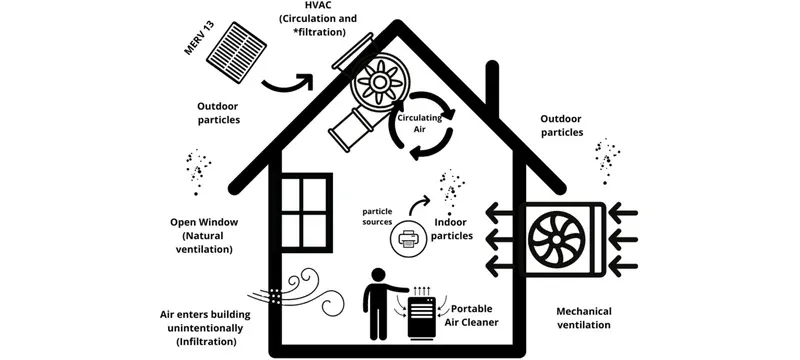
Mechanical filtration employs four different mechanisms for capture: interception, inertial impaction, diffusion, and electrostatic attraction. Larger particles are captured by impaction, while smaller particles are captured by diffusion because they collide with the filter fibers.
A pre-filter captures the coarse particles. Deiiang specifications state that an F5 filter has 45% efficiency capturing 0.5 µm particles, and that an F9 filter has 95% efficiency at capturing the same size of particles. After filtration by these methods, a HEPA filter takes care of what continues to go through the previous stages.
The filtration of fine particles is performed by Deiiang high-efficiency filtration systems rated at H13 and H14. H13 filters have 99.97-99.99% efficiency at capturing particles down to 0.3 µm in size while H14 filters can capture 99.995-99.999% of the same size particles.
This diagram explains how the different filters cooperate with each other to provide outdoor air with quality. It shows which sizes of particles are handled at different filters.
Health and productivity gains from cleaner indoor air

The reduction of airborne particles results in the lower irritation of the lungs and other mechanisms affecting our respiratory system. For schools and offices alike, the pragmatic benefit is that less allergic and asthmatic triggering happens during pollen-filled and polluted periods.
Epidemiological studies correlate reduction of PM2.5 exposure by 30% to 15% less occurrence of asthma flare-ups in vulnerable groups. In case of the Deiiang office retrofitting projects, the tenants experienced a decreased rate of allergic problems by 22% after the installation of the F8 filtration system. The data presented is site-specific and project-reported.
It is not easy to evaluate productivity consequences, yet it can been shown that there is a positive connection between diminished number of particles in the air and effective cognitive labor completion. It should be stressed that filters cannot bring air from the outside; however, they improve the quality of recirculated air.
The principal benefits for the users include:
- Decreased level of PM2.5 and PM10 while the fires and traffic pollution take place.
- Diminished probability of the spreading of aerosols denoting different pathogens in the air.
- Lower quantity of dust on the surface and reduced cleaning time.
- Fewer calls regarding the presence of unpleasant scent and stuffiness.
The HVAC air filter benefits are usually described in terms of reduction of airborne particles in comparison to the original level.
HVAC System Protection and Energy Efficiency Gains
An HVAC system moves air through coils, fans, and ductwork. Every kilogram of dust that reaches the coil becomes an insulating layer, and every fouled coil raises the fan energy needed to deliver the same airflow. HVAC air filter benefits begin with that protection of the coil, fans and ductwork.
The air filter benefits for the coil are easy to state: cleanliness keeps the system operating efficiently and avoids the gradual loss of efficiency that customers may never see until the compressor breaks down.
HVAC air filter benefits for equipment lifespan extension
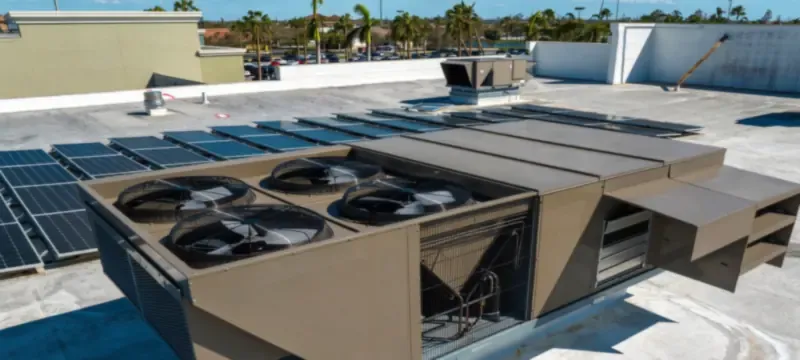
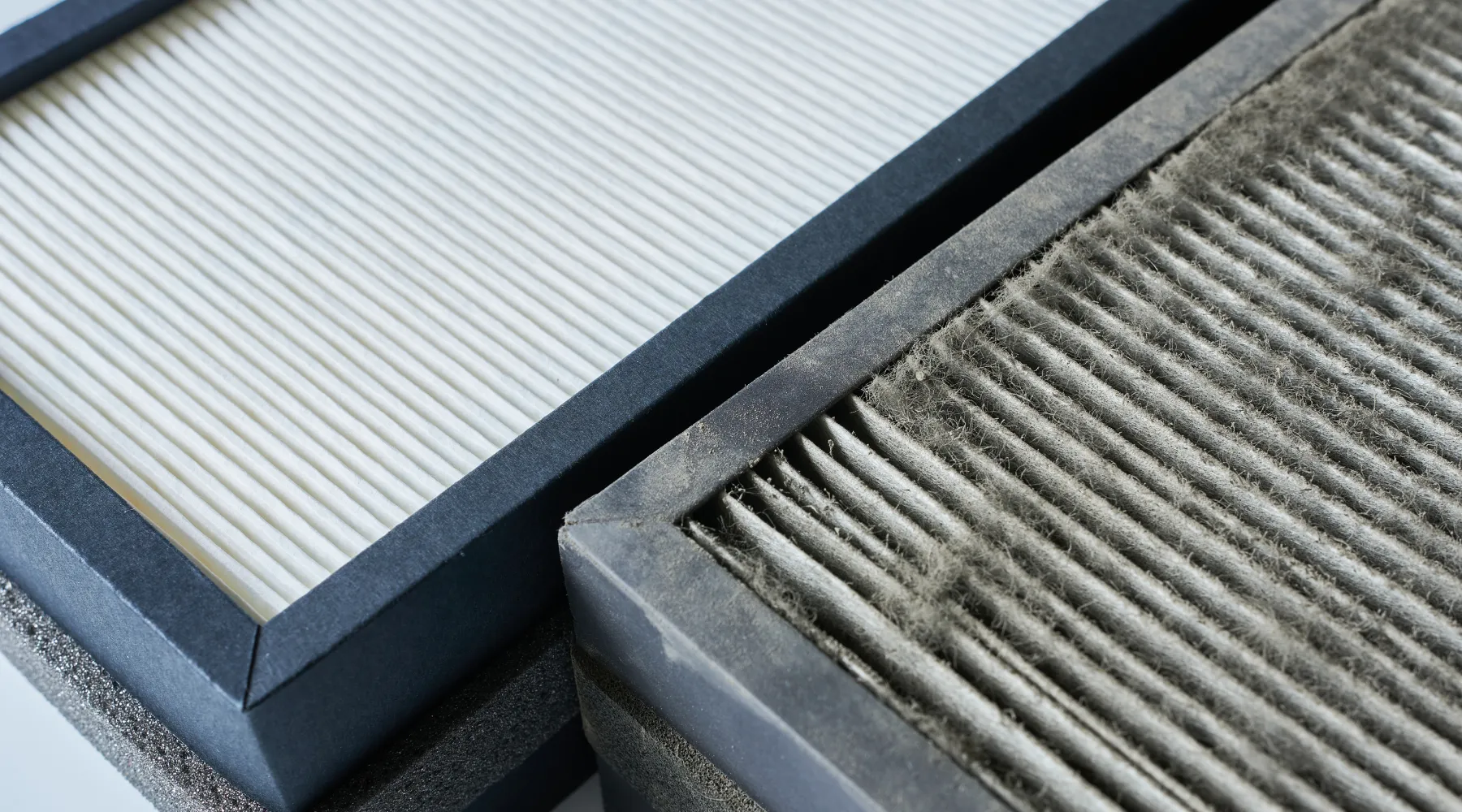
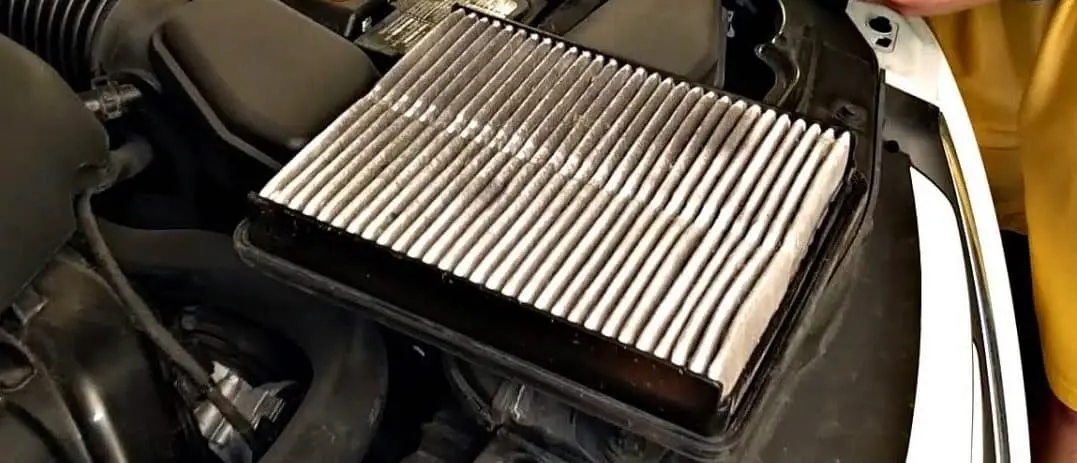
Clogging of the coil leads to a decrease in heat exchange. As the dirty coil necessitates that the compressor work for a long time before its settings are reached, the wear and tear of the bearings and valves increases. The use of air filters keeps the dirt away from the coil prolonging its working life.
Among the HVAC air filter benefits, the second is protection of the fan and motor. Clean filters maintain the static pressure constant, enabling the fan to work near its optimum efficiency in the contrary to working on the degraded curve. Also, in this case, the motors perform at lower temperatures, which reduces their wear.
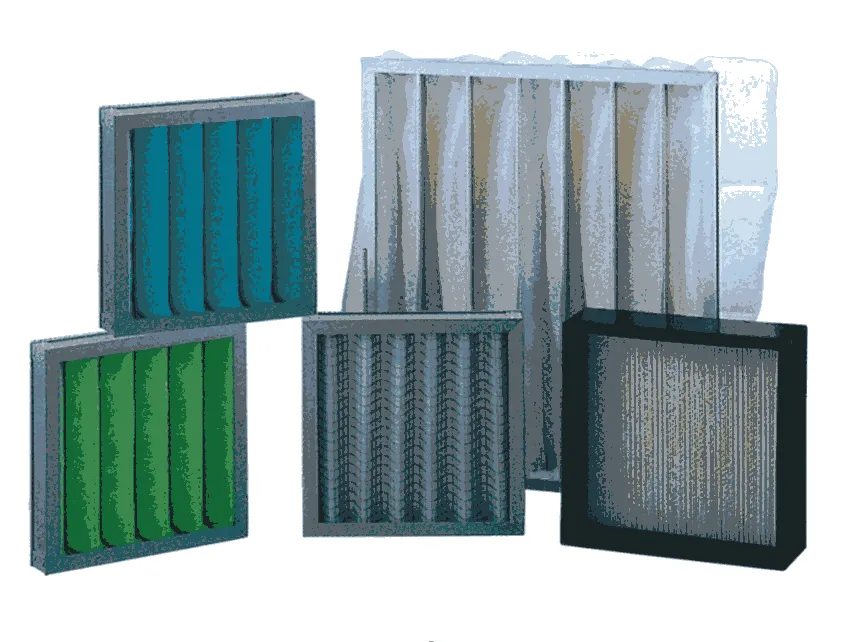
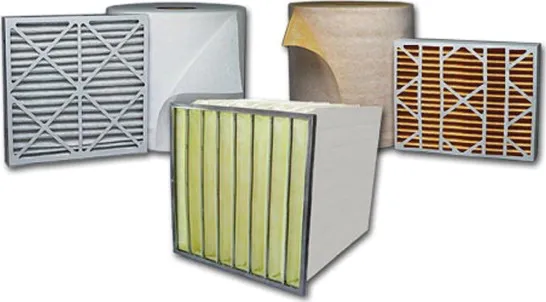
Deiiang F7 and F8 bag filters operate at 85% and 90% efficiency on particle sizes down to 0.5 µm. These filters are commonly specified for either installations before HEPA or are used as single filtration in air handling units.
The specifications for a six-bag filter with the size of 592x592x381 mm, provides airflow of 2050 m³/h with 3.18 m² of media surface area. In this case, the larger media surface area will spread particulates over a larger area and reduce resistance build-up.
The above chart helps to understand the non-linear nature of the relationship between the energy being consumed by the fan and the filter resistance. It explains why the choice of a low-pressure drop filter will lower energy costs for the whole operating period.
Table 1: Filtering Performance Characteristics and Protection Function
| Stage | Grade | Efficiency at 0.5 µm | Media Area (Example) | Rated Airflow | Initial Resistance | Primary Protective Function |
|---|---|---|---|---|---|---|
| Pre-Filter | F5 | 45% | 3.18 m² | 2050 m³/h | <50 Pa | Coarse dust. Prolongs the life of the HEPA filter. |
| Pre-Filter | F7 | 85% | 3.18 m² | 2050 m³/h | <80 Pa | Fine dust prior to HEPA filter. |
| Pre-Filter | F8 | 90% | 3.18 m² | 2050 m³/h | <100 Pa | High dust load. Used in medical and electronics applications. |
| Terminal HEPA | H13 | 99.97-99.99% at 0.3 µm | 15.03 m² | 1900 m³/h | <=200 Pa | Cleanroom and critical ventilation. |
| Terminal HEPA | H14 | 99.995-99.999% at 0.3 µm | 20.04 m² | 2500 m³/h | <=220 Pa | High purity processes. |
| Stage | Grade | Primary Protective Function |
|---|---|---|
| Pre-Filter | F5 | Coarse dust. Prolongs the life of the HEPA filter. |
| Pre-Filter | F7 | Fine dust prior to HEPA filter. |
| Pre-Filter | F8 | High dust load. Used in medical and electronics applications. |
| Terminal HEPA | H13 | Cleanroom and critical ventilation. |
| Terminal HEPA | H14 | High purity processes. |
Energy cost savings from optimized HVAC filtration
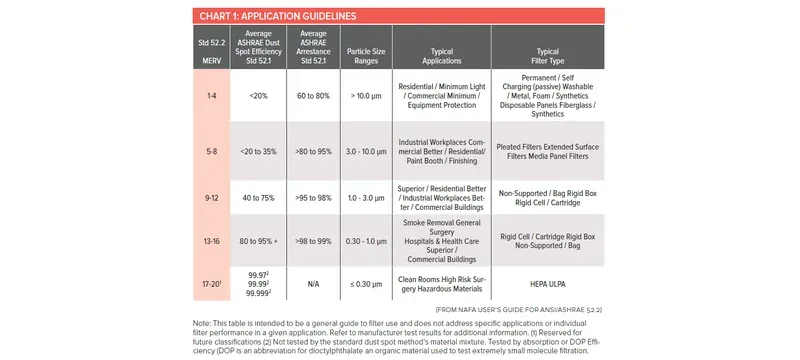
Fan power increases as pressure loss increases. A filter operating at 100 Pa results in energy savings over the entire loading cycle compared to one that begins at 200 Pa. The savings are cumulative because the fan is starting at a lower base pressure.
For example, if you consider a 5,000 m³/h air handling unit that runs 6,000 hours per year and fan power is proportional to pressure loss, you can expect to save an average of 1.5 kW for every 100 Pa of pressure loss. At an electricity cost of $0.12 per kWh, this results in cost savings of about $1,080 per year.
Selecting a filter with the maximum practical media area will improve efficiency by lowering the air velocity and thus slowing the buildup of resistance. Deiiang's model utilizes 20.04 m² of media and has a dust holding capacity of about 1,200 g (according to the catalog).
Cleanroom Air Filtration for Process and Compliance
Cleanroom air filtration is very different from comfort cooling. The aim here is to maintain a certain class of particle concentration, not a predetermined level of temperature. This is measured in terms of counting particles rather than inspection [1].
iso 14644 provides the classes. In order to maintain the class, a cleanroom air filtration system must operate correctly at both rest and in operation including terminal HEPA or ULPA filters, appropriate air changes for that class, and correct pressure cascades.
Cleanroom air filtration requirements for regulatory compliance
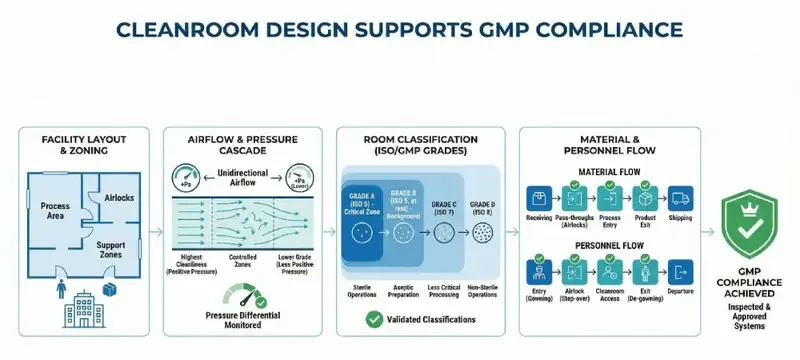
Compliance hinges on filter class, installation sealing, and test method used. Classification is governed by ISO 14644-1 [1] while EN 1822 and ISO 29463 govern HEPA and ULPA filter classification and testing [3][4].
Particles of sizes above 0.12 µm must be controlled for super LSI and semiconductor applications. Deiiang's extremely high-efficiency baffle-free filter is classified U15 with efficiencies ranging from 99.999-99.9995% at 0.12 µm, U16 classified as 99.9999-99.99995%, and U17 at 99.9999-99.999995% (as per the catalogue).
Construction details have to be taken into consideration for compliance. All these units utilize US HV ultrafine glass fibre paper, a thermoplastic spacer, an anodized outer frame, and a plastic mesh. The 610x610x50 mm model provides 450 m³/h with a media area of 7.13 m² and an initial pressure drop value of 150-170 Pa.
Air filters for cleanrooms and process yield enhancement
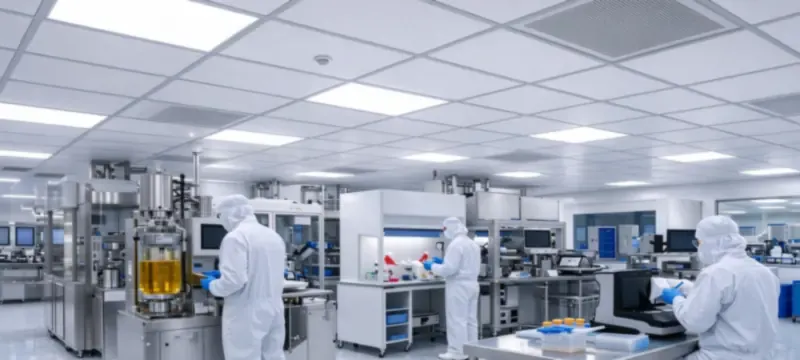
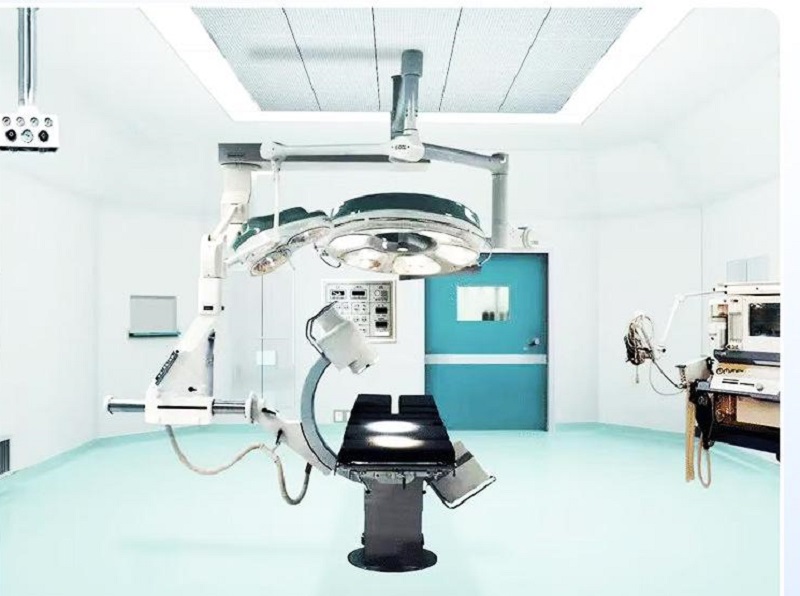
In the electronics and pharmaceutical filling industries, yield loss is usually attributable to particles. One single particle on wafer or in the vial can cause a rejection of that product. Because air filters for cleanrooms provide terminal filtration, this mechanism for producing defects can be mitigated directly.
Example case study from the project. A pharmaceutical packaging cleanroom with an iso class 6 cleanroom was designed with relatively larger ambient particle levels, lower plenum heights, and stringent pressure drop restrictions to maintain laminar airflow. Deiiang provided H14 technical low profile filters model 592x592x292 mm with a 2500 m³/h, 20.04 m² of filter media and <=220 Pa of initial resistance.
The configuration of this cleanroom also used silicone-free sealing gaskets together with F7 pre-filters. All the units were DOP scanned before shipment. Particle counts changed the classification level from iso 7 into stable iso 6. Low initial pressure drop here yielded energy savings which were documented by the project.
As discussed before diagram outlines different stages of cleanroom filtration train used for air handling of cleanroom application of various types. It shows the way the pressure gradients are maintained from the less clean areas to the most cleaner area so that cross contamination of adjacent sections is avoided.
Equipment Protection and Operational Cost Reduction
Air filter equipment protection through use of air filters is the least apparent benefit and yet one of the biggest cost savers. Dust which enters the machinery creates abrasive paste when mixed with lubricants thus causing wear and tear of the moving parts faster than is normal.
Compressors or generators and other types of CNC machine enclosures will operate properly only when they use filtered cooling air. Unless this air is filtered the internal heat exchangers become dirty, thereby lowering efficiency as well as affecting the performance of the unit. This starts from the intake point onward.
Air filter equipment protection for critical machinery
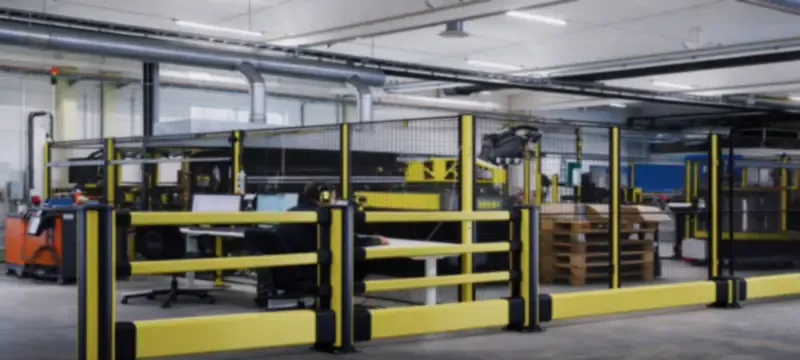
Equipment protection for critical machines requires 3 conditions: right level of particulate capture, proper volume of air flow, and filter housing integrity. A poorly-efficiency element in a defective frame produces no benefit.
Deiiang mid-level options can be considered for pre-filtration applications. While glass fiber bag filters can withstand temperatures of up to 150°C, synthetic versions can only go as high as 80°C (the catalogues indicate). You have to select based on the actual operating temperature and not on the nominal temperature.
Deiiang DOP INTEGRATED FILTER model is built for compact assembly usage. It has a box shape design where it comes with an integrated air intake pipe size of 250mm, 300mm, or 350mm in diameter and a DOP testing port which is sealed with rubber.
The figure indicates the wear rate of the components against the time of operation for three different types of intake air. The data shows HEPA filtered intake air has least wear rate since all dust particles are filtered before getting into the injection molding machines.
Maintenance cost reduction from consistent filtration
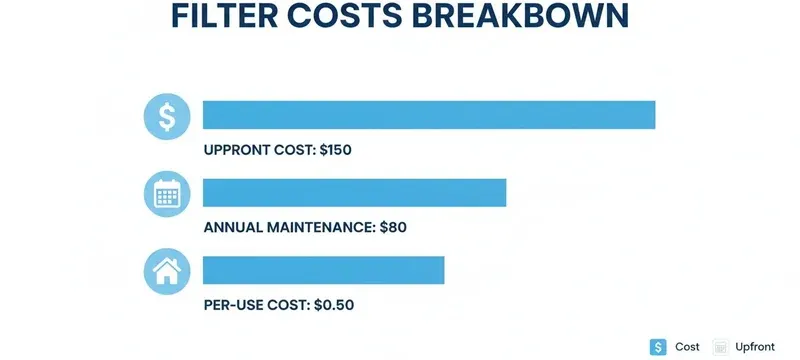
Reliability in filtration results to lower cleaning frequency as well as lesser chances of failure that will cause you more money compared to timely maintenance.
The financial advantages from reduced maintenance can be seen in four areas:
- Decreased number of coil cleanings every year
- Extended intervals between filters changing when there is sufficient media area available
- Lower chances of unplanned down time as a result of overheating or derating
- Reduced spare parts needed in fans and motors
An example illustrates this point. If a facility is spending $12,000 each year on coil cleaning and filters changing, and the use of good filtration results in only half the coil cleaning being done as often, but incurs an additional $1,500 in filters cost for that period, the total savings on maintenance would be $4,500 each year, not counting any energy savings.
Cross-Industry Air Filtration Benefits Comparison
Although the same physics of filtration would be put into action in different buildings, the value derived from them may differ. For example, an institution such as a shopping center would want to ensure the comfort of its patrons, as well as energy consumption. On the other hand a wafer fabrication facility would require a higher degree of filtration efficiency in the order of 0.12 µm.
In both instances the air filtration benefits would indeed have been present, but in every case the ranking would vary according to the particular case.
Air filtration benefits across commercial settings
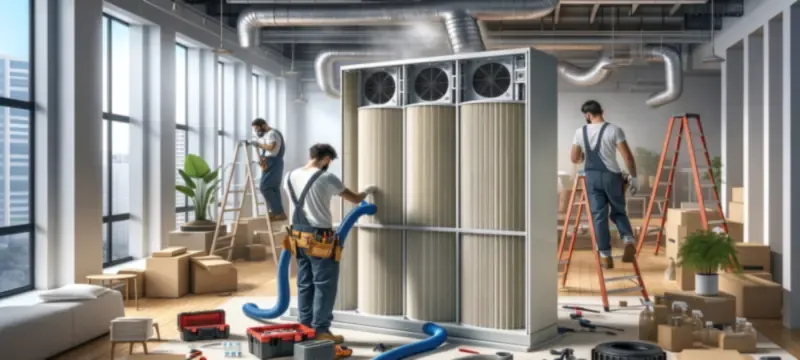
For institutional structures the air filtration benefits would consist of energy consumption reduction, patron comfort and lifespan of the HVAC installations. There is normally the use of the MERV 8 to MERV 11 in different types of institutional filtration equipment, which is comparable with the Deiiang F5 to F7 values in accordance with the EN 779 standard.
In addition, as far as the standard itself is concerned it is important to note that it has been withdrawn and the ISO 16890 standard is now used instead for general ventilation filter specifications that reports upon ePM1, ePM2.5 and ePM10.
Niche benefits for controlled environment applications
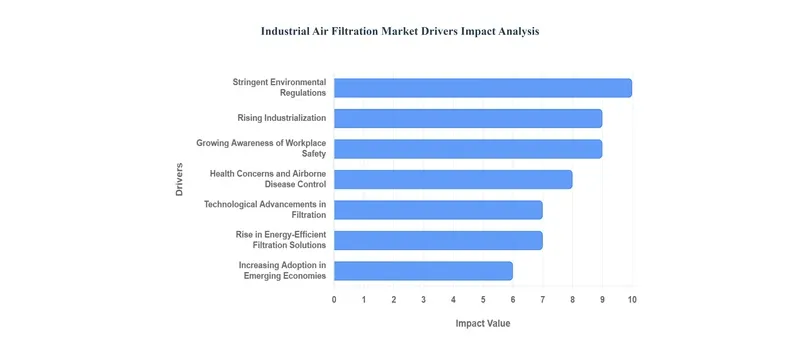
For cleanroom air filtration, controlled environment applications provide certain compliance advantages. Due to the requirement for validated terminal filtration, a cleanroom cannot operate without a filter, making the filter a mandatory purchase.
The chart compares five benefit dimensions for three application types. The cleanroom application scores highest on compliance and yield, while the commercial application scores highest on energy saving.
Table 2: Benefit weighting by application
| Application | Primary Benefit | Secondary Benefit | Typical Filter Class | Governing Standard |
|---|---|---|---|---|
| Commercial Office | Energy and Comfort | Equipment Life | MERV 8-11 / F5-F7 | ISO 16890 |
| Hospital | Health and Infection Control | Equipment Life | MERV 11-13 / F7-F9 plus HEPA | ISO 16890, EN 1822 |
| Pharmaceutical | Compliance and Yield | Energy | H13-H14 Terminal | EN 1822, iso 14644 |
| Semiconductor | Yield at 0.12 µm | Compliance | U15-U17 | EN 1822, ISO 29463 |
| General Industrial | Equipment Protection | Maintenance Cost | MERV 8-13 | ISO 16890 |
| Application | Primary Benefit | Governing Standard |
|---|---|---|
| Commercial Office | Energy and Comfort | ISO 16890 |
| Hospital | Health and Infection Control | ISO 16890, EN 1822 |
| Pharmaceutical | Compliance and Yield | EN 1822, ISO 14644 |
| Semiconductor | Yield at 0.12 µm | EN 1822, ISO 29463 |
| General Industrial | Equipment Protection | ISO 16890 |
HVAC Air Filter Selection and Performance Matching
When choosing an air filter for HVAC systems, it is important to remember that the filter must match the housing dimensions, air flow requirements, and the efficiency performance without overloading the available static pressure on the fan.
Key criteria for choosing an air filter for HVAC systems
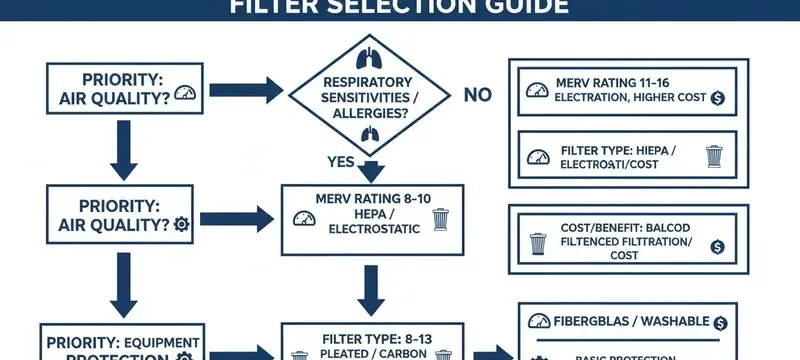
The sequence when choosing an air filter for HVAC systems starts with the required efficiency; four mechanical limitations then decide the model: size, flow rate, initial resistance, and final resistance at change out.
The Deiiang model series can accommodate this matching. The H13 model, with dimensions of 287x287x292 mm, is rated for 550 m³/h airflow with a filtration area of 4.63 m². The model with dimensions of 592x592x292 mm has an airflow capacity of 1900 m³/h and filtration media of 15.03 m². The model with four pleat configuration achieves an airflow rating of 2500 m³/h and media of 20.04 m² (according to manufacturer's catalog).
When using the selection guide, the user will be guided through three steps: start from application type, then narrow down the model specification to efficiency class, with the last step being housing size and air flow compatibility check.
Performance matching for optimal HVAC operation
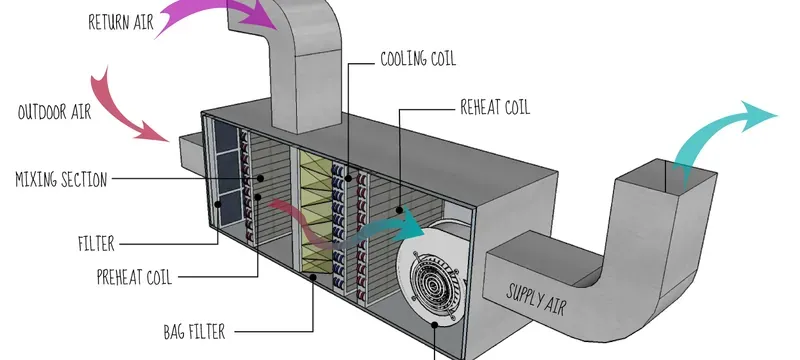
Final resistance directly determines change out schedule and the value of this parameter for Deiiang units is 400-600 Pa for a final HEPA filter and 250-400 Pa for the pre-filter (according to manufacturer specification). The change out setting must ensure that the manufacturer's value is used to avoid damage to the fan due to excessive load.
A common mistake in the field is the over specification of pre-filters. According to Deiiang field experience, an F9 pre-filter upstream of H14 HEPA filters can cause the filter to become clogged twice as fast, therefore increasing the cost of ownership. For the pre-filtration before HEPA filters the use of F7 to F8 filters is common in order to achieve the correct balance between loading rate and protection afforded by the pre-filter.
Table 3: Deiiang Filter Selection Guide by Application
| Application | Recommended Filter Class | Example Filter Size | Rated Airflow | Initial Resistance |
|---|---|---|---|---|
| General commercial | F5-F7 | 592 mm x 592 mm x 381 mm, 6 bags | 2050 m³/hr | <50 to <80 Pa |
| Medical pre-filter | F7-F9 | 592 mm x 592 mm x 381 mm, 6 bags | 2050 m³/hr | <80 to <100 Pa |
| Cleanroom terminal | H13-H14 | 592 mm x 592 mm x 292 mm | 1900 to 2500 m³/hr | ≤200 to ≤220 Pa |
| Compact cleanroom | H13-H14 | 610 mm x 610 mm x 120 mm | 1000 m³/hr | ≤200 to 220 Pa |
| Semiconductor | U15-U17 | 610 mm x 610 mm x 50 mm | 450 m³/hr | ≤150 to 170 Pa |
| Application | Recommended Filter Class | Rated Airflow |
|---|---|---|
| General commercial | F5-F7 | 2050 m³/hr |
| Medical pre-filter | F7-F9 | 2050 m³/hr |
| Cleanroom terminal | H13-H14 | 1900 to 2500 m³/hr |
| Compact cleanroom | H13-H14 | 1000 m³/hr |
| Semiconductor | U15-U17 | 450 m³/hr |
Cleanroom Filtration Standards and Performance Validation
Standards determine what a filter is supposed to do and how the achievement of that goal can be verified through testing. Without validation, a claimed efficiency represents nothing more than a sales pitch.
International standards governing cleanroom air filtration
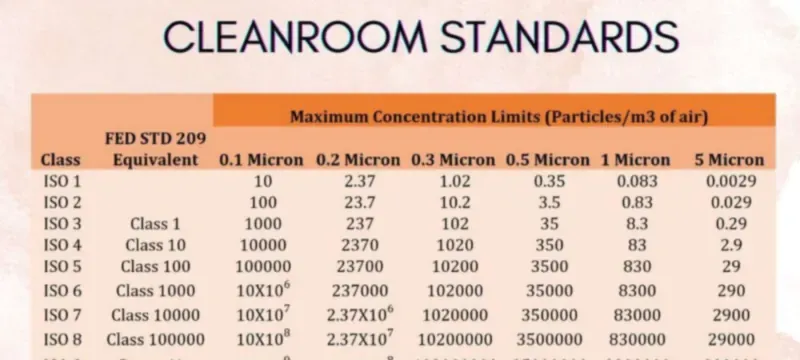
ISO 14644-1 specifies how cleanrooms are classified according to particle count [1]. EN 1822 and ISO 29463 addresses the classification of air filters for cleanrooms, which include the high-efficiency grades H13, H14, U15, U16, and U17 used by Deiiang [3][4].
ISO 16890 describes the general ventilation filters now measured via ePM1, ePM2.5, and ePM10 [2]. EN 779 is retained in this paper as a legacy reference only.
In-situ performance validation for cleanroom filters
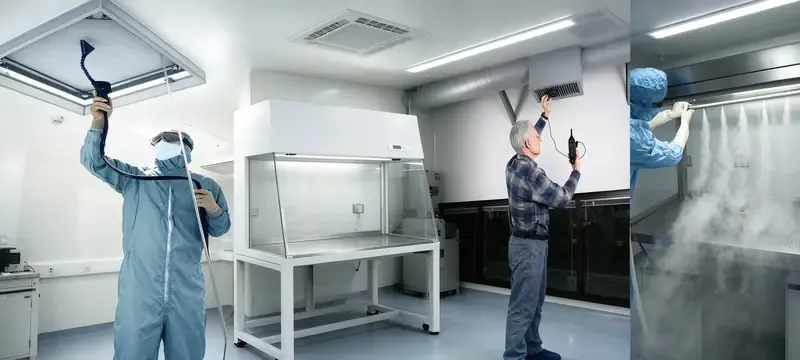
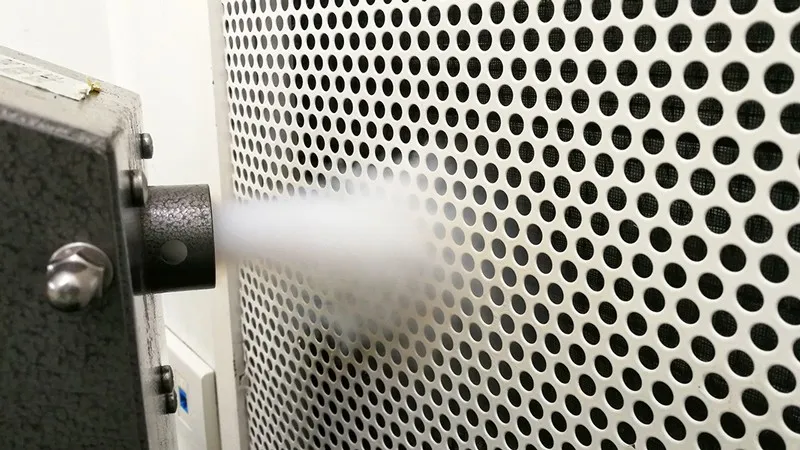
Verification requires the performance testing of HEPA and ULPA because it includes both leak testing after installation and aerosol leak testing. The DOP test port allows for aerosol testing without having to take the filter housing apart, while IEST-RP-CC001 provides the guideline for testing [5].
This graphic illustrates the normal test configuration for leak testing HEPA and ULPA filters. The images show the aerosol generator, the upstream point of sampling, the filter being tested, and the downstream photometer employed in detecting leaks.
The essential verification processes are:
- A test to classify the filter at the plant, and as the Deiiang unit is tested at the plant before shipment
- The scanning for leaks after it has been installed at the terminal
- Air balancing to ensure the necessary airflow, and
- A particle analysis to verify the ISO class needed.
Long-Term ROI and Lifecycle Benefits of Air Filtration
Beyond the air filtration benefits at equipment level, the total cost of ownership of a certain filter includes its purchase price, energy cost, change-over labour cost, and the costs of all failures avoided. The purchase price is almost always the least of the four components of the total cost of ownership.
Lifecycle cost analysis of quality air filtration
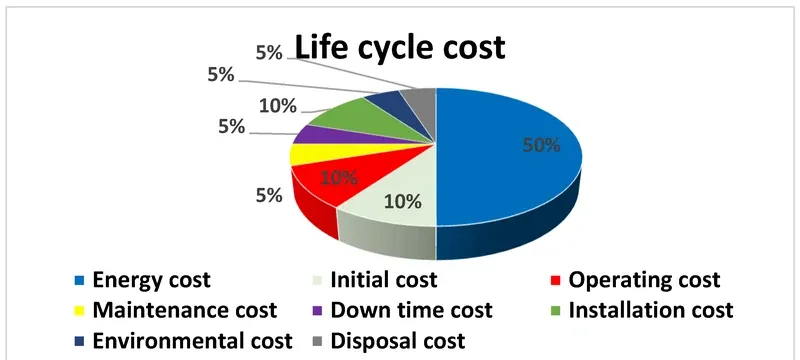
To illustrate the concept, one calculation for the comparison of the same two ways of performing the task. Over three years, for instance, the following result can be obtained.
A lifecycle calculation should compare two options over the same service period. Option A uses a low-cost filter changed frequently; Option B uses a larger-media filter with lower resistance and longer life.
Illustrative example over three years for a 2,500 m³/h unit. Option A: filter cost 600, energy 4,200, labour 900, total 5,700. Option B: filter cost 1,100, energy 3,300, labour 450, total 4,850. The higher purchase price returns a lower total.
ROI Calculation Checklist — To estimate payback you will need to obtain the following four input values:
Airflow (m³/h): The volume of air that the filter will need to treat.
Annual operating hours: The number of hours the fan is operating each year.
Electricity cost: The local electricity costs per kWh.
Pressure drop: The difference in pressure drop between the baseline situation and upgraded filter system (Pa)
Step 1 — Annual energy savings = (Airflow × pressure drop × annual running hours × electricity rate) / energy efficiency ratio regarding fan. Step 2 — Payback period (years) = cost of upgrade / annual savings.
Tangible ROI outcomes from upgraded filtration systems
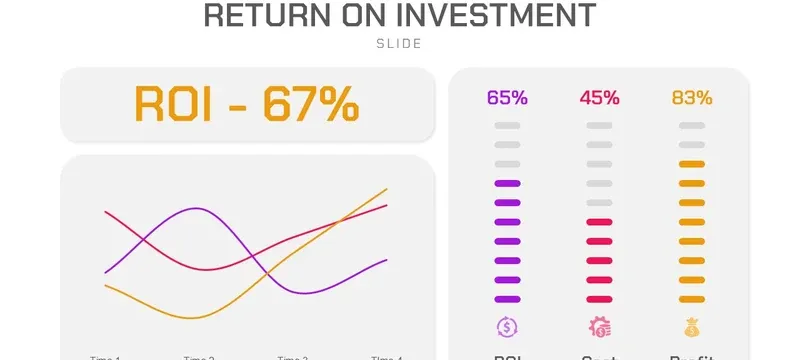
Case study from a project. In the case of a pharmaceutical operation where the upgrade involved a change from a very basic pre-filter operation to a staged F7 and H14 system. The results reported showed consistent compliance with class standards as well as reduced frequency of filter changes and lower energy usage with a fan.
Payback period is determined by dividing the costs of the upgrade by the amount of savings made annually. An upgrade that costs 18,000 using a savings figure of 9,000 gives a simple payback period of two years without including the implications for productivity or compliance.
This timeline graph plots cumulative cost for two filtration scenarios over a multi-year period. The crossover point where the upgraded system's cumulative cost falls below the baseline marks the payback period.
Takeaway: the long-term benefits of using an air filter are not limited to cleaner air. When lifecycle energy, labour and avoided-failure costs are counted, a higher-purchase-price filter with larger media area usually returns a lower total cost of ownership.
Frequently Asked Questions
How often should I replace HVAC air filters in commercial facilities?
In case of change-out, resistance applies and not calendar time. This occurs commonly when the final resistance of the filter is achieved: pre-filter resistance is typically 250 Pa to 400 Pa; HEPA filter resistance is usually between 400 Pa and 600 Pa. Accordingly, in most commercial buildings, the pre-filter is usually replaced every two to four months, while the HEPA filter may be replaced between one and three years.
What MERV rating is best for general office indoor air quality?
MERV ranging from 8 to 11 covers most of the office requirement; hence it provides proper air filtration without putting undue pressure on the fan. Under the ISO 16890, filters with good ePM2.5 performance are ideal since they correspond with the former F5-F7 range. The 13 MERV rating should be considered when working in a high-traffic area or areas close to wildfires.
Do HEPA filters meet all iso 14644 cleanroom requirements?
No. While HEPA filters are important, it is not enough to be compliant with iso 14644 standards. Complying with the iso 14644 standards entails that the air change rate must be accurate, air pressure cascades must be verified, leak testing of installations must be done, and particle count surveys must be conducted.
Can air filters really reduce HVAC energy consumption?
Yes. A filter with low initial resistance and low increase in resistance leads to reduced fan energy throughout the entire loading period. The savings depend on the fan law behaviour and hours of operation, however, a reduction of 100Pa on a fan working at 5000m³/h is likely to yield savings of approximately 1000 or even more in a year when normal utility rates are applied.
What is the difference between HVAC and cleanroom air filters?
The benefits of using an air filter in an HVAC system are comfort and equipment protection, with ratings that comply with ISO 16890 or the prior EN 779. The clean room filters are responsible for controlling particulate concentration, with ratings conforming to EN 1822 or ISO 29463, including leak tested HEPA or ULPA components.
How do I calculate the payback period for filter upgrades?
To compute the payback period, divide total upgrade costs by the annual savings realised by energy, labour and avoided failures. For example, if the upgrade cost is 18000 and gives annual savings of 9000, the simple payback period is 2 years. If necessary, add compliance and yield values to shorten the payback period.
References
- [1] iso 14644-1:2015, Cleanrooms and associated controlled environments — Classification of air cleanliness by particulate concentration. https://www.iso.org/standard/53394.html
- [2] ISO 16890-1:2016, Air filters for general ventilation — Technical specifications, requirements and classification system based on particulate matter effectiveness (ePM). https://www.iso.org/standard/85672.html
- [3] EN 1822-1:2019, High efficiency air filters (EPA, HEPA and ULPA) — Classification, performance testing, marking. CEN/TC 195. https://www.din.de/de/mitwirken/normenausschuesse/nam/entwuerfe/wdc-beuth:din21:404395435
- [4] ISO 29463-1:2024, High efficiency filters and filter media for removing particles in air — Classification, performance testing and marking. https://www.iso.org/standard/71553.html
- [5] IEST-RP-CC001.7, HEPA and ULPA Filters, Institute of Environmental Sciences and Technology. https://www.iest.org/Standards-RPs/Recommended-Practices/IEST-RP-CC001
- [6] EN 779 (withdrawn), Particulate air filters for general ventilation — Determination of the filtration performance. Superseded by ISO 16890.
- [7] Kouis P, et al., Improved childhood asthma control after exposure reduction interventions for desert dust and anthropogenic air pollution: MEDEA randomized controlled trial. Thorax, 2024. https://pubmed.ncbi.nlm.nih.gov/38388489/
- [8] Deiiang cleanroom and air filter catalogue data, combined high efficiency, DOP integrated, super high efficiency baffle-free and medium efficiency bag filter ranges. Product designer: Jason.peng.