+86 13638632902
 Jason@cleanroomequips.com


 MENU
MENU
To make sure of the safety of the product so it secures its whole original quality, clean transfer of the goods into the clean zones of iso 5 standards must be followed. The passage box is the device that performs covered clean methods, while the process with the air shower of the material is based on filtering air to remove particles from the surface. However, these methods do not disinfect or sterilize the products. To choose between these two methods, one has to take into account the type of product, package of goods, level of contamination, and receiving conditions apart from the ISO classification alone.
Quick Answer
This article discusses the challenges of performing material transfers in a ISO class 5 cleanroom. It also explains how pass boxes and air showers work, how to choose one over the other based on the type of material and the particular workflow, and how to validate and maintain transfer systems. It references Deiiang™ project experience and includes engineering data for practical designs.
What Makes ISO 5 Material Transfer Difficult?
ISO 5 is a clean air environment described in ISO 14644-1. It is used in sterile drug production and aseptic filling, in biopharmaceutical critical zones, and in semiconductor and precision assembly fabrication.
iso 5 cleanrooms have very tight particle contamination limits: no more than 3,520 particles/liter for particles >= 0.5 microns, and no more than 29 particles/liter for particles >= 5 microns. Because of this, material transfer activities in a cleanroom can be very risky.
Static cleanliness is not sufficient.
ISO 5 cleanrooms are to be in a stable state when no one is inside and the doors are closed. However, during any material transfer activity, this stable state can be disrupted in several ways:
- Materials brought into the cleanroom can have surface contamination.
- Opening doors can create an exchange of air between zones.
- Movement of items can disrupt the local airflow in the cleanroom.
- Packaging can cause the release of fiber or particulate contamination.
- Operator activity can disturb the uniform laminar airflow in the cleanroom.
- A pressure difference can cause backflow of contaminated air.
Three core control objectives:
Isolate air exchange
There must not be any direct airflow between cleanliness zones.
Minimize particle release
Particles shed from materials, packaging and personnel must be minimized.
Control pressure and airflow
During the transfer, the pressure differences and airflow must remain stable.
Key concept: It is very important to understand that a transfer event does not consist only of the movement of an item. A transfer event can create changes to the airflow, pressure, and particle burden in the cleanroom, along with changes in the behavior of the operators.
ISO 5 Cleanroom Requirements You Must Understand
Air cleanliness levels are defined in ISO 14644-1. GMP focuses on operational and contamination control. There are several standards that must be satisfied to control contamination during transfer.
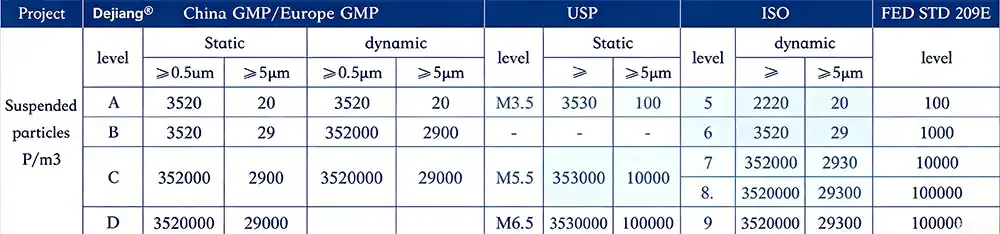
ISO 14644-1 GMP Grade A
- ISO 14644-1: Air cleanliness defined as classes based on the number concentration of particles.
- EU GMP Annex 1: Boundaries of aseptic processing and CCS, behavior of personnel, and monitoring of the environment.
- GMP regulations from the FDA, PIC/S, and WHO: Contain other or differing regulations for implementation.
- The final design must be in accordance with the local regulatory framework and the User Requirement Specification (URS).
Airlock Types and Pressure Cascades
The airlock pressure strategy must be defined when transferring materials between ISO 5 and ISO 7 buffer zones.
- Cascade Airlock: Pressure is stepwise lower, clean to less clean (ISO 5: +45 Pa, ISO 7: +25 Pa, unclassified: +15 Pa). Used for protection of product.
- Sink Airlock: Pressure is lower in the airlock than in the corridor or room (ISO 5: +45 Pa, airlock: +10 Pa, corridor: +30 Pa). Used for containment of hazardous materials.
- Bubble Airlock: Pressure is higher in the airlock than the corridor or room (ISO 5: +45 Pa, airlock: +60 Pa, corridor: +30 Pa). Used for the control of cross contamination between clean zones.
Typically, a cascade airlock is preferred for ISO 5 to ISO 7 transfer, with a pressure differential of > 15 Pa between adjacent zones (ISO 5 at +50 Pa, ISO 7 at +30 Pa, and unclassified at +15 Pa).
Key Documents and Standards
- ISO 14644-1: Classification of air cleanliness
- ISO 14644-2: Monitoring of cleanrooms
- iso 14644-3: Procedures for testing
- EU GMP Annex 1: Production of sterile pharmaceutical products
- User Requirement Specification (URS)
- Risk assessment and CCS (Contamination Control Strategy)
- Facility validation plan (FAT, SAT, IQ, OQ, PQ)
Regional considerations
- Europe: EU GMP Annex 1, CCS, Grade A/B/C/D, aseptic processing.
- US: FDA guidelines for aseptic processing, ISO 14644.
- Southeast Asia: Local GMP implementation, high temperatures and humidity levels impacting condensation and AHU load.
- China: Chinese GMP, quality requirements for medical device production, local fire/electrical/building codes.
Main Contamination Risks During Material Transfer
Knowing the risk sources is the first step to picking the correct transfer option. Within iso class 5 environments, pass through boxes for iso class 5 must address four key risk factors.
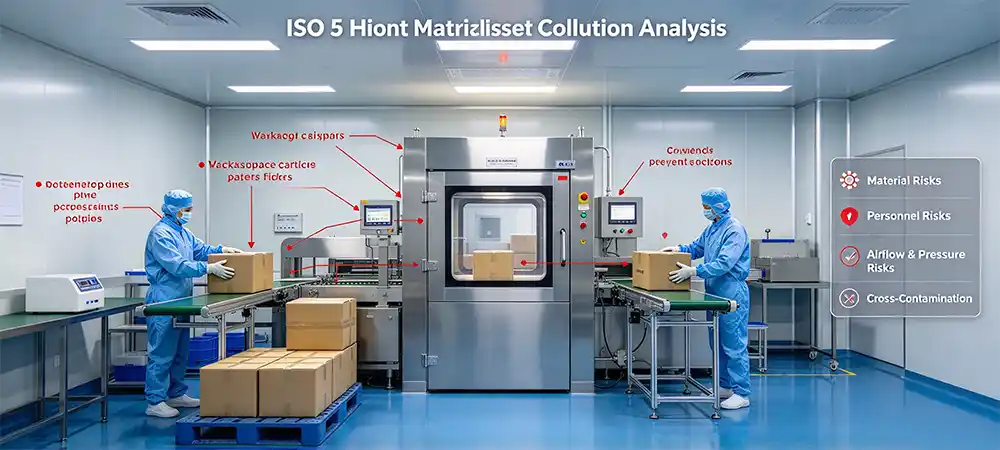
Material-related risks
- Surface particles from outer packaging
- Fibers from cardboard, wood pallets, corrugated materials
- Static attraction of particles on plastic films
- Dust/debris from transport
- Microbial growth on material surfaces
Personnel operation risks
- Failure to clean materials before transfer
- Operators on both sides of the pass box opening both doors at the same time
- Improper position of items in the pass box
- Closing the door after each operation
- Operators' body or clothing in restricted areas of pass box
- Order of operations lacking standard procedure
Risks from airflow and pressure
- Changing pressure and direction
- Air exchange each time doors are opened
- Airflow bypassing the transfer chamber
- Supply air from HEPA is optimally positioned
- Air is not returned from transfer chamber
- Blocked air flow
Risks from equipment and seals
- Aging seals on doors
- Pass Box interlock failure
- Dust accumulation in gaps around door frames
- Insufficient radius in corners
- Unfinished stainless steel surfaces
Risk Level by Transfer Method
Direct door opening: High Risk
Pass Box With Interlock: Medium-Low Risk
Dynamic Pass Box + HEPA: Low Risk
Large Items Through Uncontrolled Area: High Risk
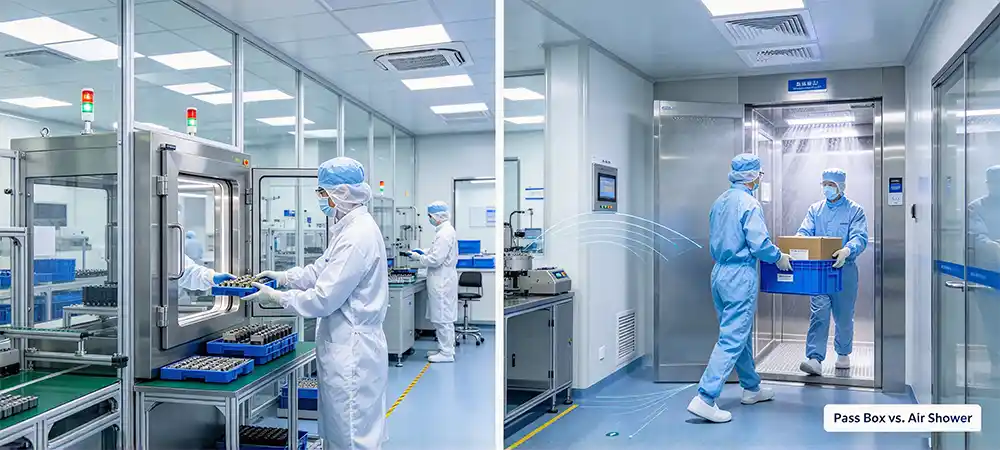
Pass Box vs. Air Shower: How Each System Works
pass boxes primarily control separation and prevent direct air exchange, while air showers provide a means of surface cleaning.
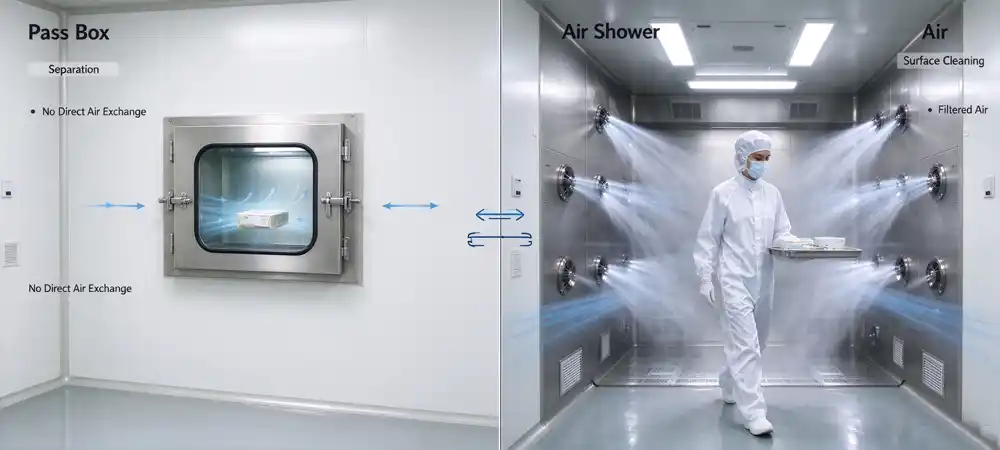
Pass Box Working Principle
Materials move from a lower-grade area into the pass box. Once a door is opened, items are placed into the box, and the door is closed. The opposite door can be opened to allow the materials to be taken out. Dynamic pass boxes contain HEPA-filtered pass-through airflow to clean out the chamber during a transfer.
Pass Box Applicable Scenarios
- Small components and parts
- Laboratory samples and consumables
- Packaging components
- Tools and tooling
- High-frequency, small-batch transfers
- Wall-mounted installation
- Limited access zones (to restrict personnel entry)
Air Shower Working Principle
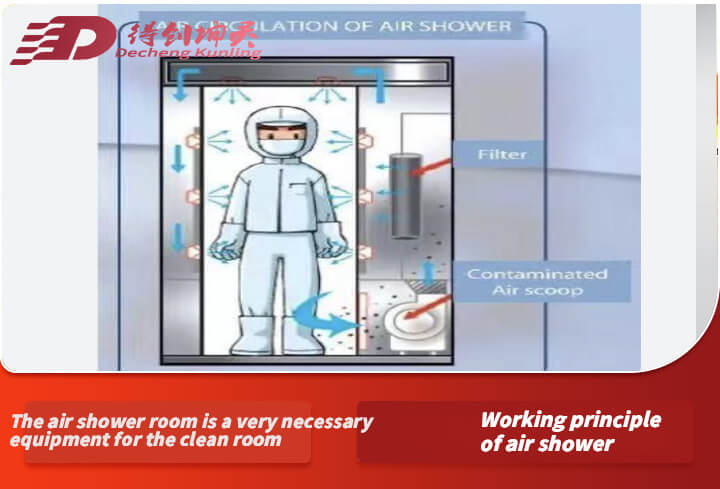
Aerosols are removed from the surfaces of personnel or materials by high-velocity sheets of clean air. That air is then exhausted and filtered. Air showers have greater spatial and temporal requirements than pass boxes.
Air Shower Applicable Scenarios
- Large materials and equipment
- Racks, pallets, and containers
- Personnel and materials entering together
- Materials with high surface particle loads
- Processes requiring active dust removal
- Materials not suitable for frequent wiping
Key distinction: Active surface cleaning is provided by air showers, whereas pass boxes handle isolation. The correct option depends on the source of the contamination, the size of the material, the frequency of the transfer, and how the process flow is controlled.
Decision Matrix: Which Solution Fits Your Workflow?
When choosing between a pass box for ISO 5 and an air shower, weigh the material type, the frequency of the transfers, spatial constraints, and differences in the desired cleanliness grades.
Static Pass Box vs Dynamic Pass Box vs Material Air Shower
| Evaluation Dimension | Static Pass Box | Dynamic Pass Box | Material Air Shower |
|---|---|---|---|
| Design Intent | Provides physical separation and cross boundary transfer | Laminar flow, protection, and air self-purification | High-speed air stream removes particles |
| Applicable Cleanliness | iso 8 → ISO 7 (same or low-risk transfer) | ISO 7 → ISO 5 (sterile core zone) | Non-classified/lower grades → ISO 7/8 |
| Air Velocity | No airflow | 0.45 m/s ±20% (laminar) | 20–25 m/s (high-speed jets) |
| Typical Self-Clearing/Purge Time | Not designed for self-purification | 2–5 minutes (to reach ISO 5) | 15–45 seconds (blow-off cycle) |
| VHP Compatibility | Not compatible (no gas circulation) | Compatible (VHP ready models) | Limited (not typically VHP compatible) |
| Noise Level (dB(A)) | ~0 (no fan) | 45–55 | 65–75 |
| Footprint | Small (wall-mounted) | Medium | Large (requires buffer zone) |
| CAPEX (Relative) | Low | Medium-High | High |
| OPEX (Energy & Maintenance) | Very low | Moderate | High (fans, filters) |
| Suitable Materials | Sealed containers, tools, small parts | Unsealed components, sensitive materials | Racks, pallets, large equipment |
| GMP Annex 1 Compliance | Not recommended for grade transition | Yes (with VHP option) | Yes (for non-sterile surfaces) |
By Material Type
- Small sealed packages → pass box
- Small unsealed components → dynamic pass box
- Large pallets or racks → material air lock or air shower
- Dust generating packaging → air shower + external cleaning
- Temperature/humidity sensitive materials → Pass Box with external monitoring
- Materials sensitive to high velocity airflow → Pass Box
By Transfer Frequency
- High-frequency, small-batch = pass box (quick cycle)
- Low-frequency, large-batch = material airlock
- Peak traffic = pass boxes in parallel
- Mixed personnel and material = redesign logistics and personnel flow
By Space Limitations
- Limited wall surface area = a wall-mounted pass box
- Available buffer zone = air shower or material airlock
- Low ceiling height = a low-profile pass box
- A continuous production line = automated transfer
By Cleanliness Grade Difference
- ISO 8 → ISO 7
- ISO 7 → ISO 5
- ISO 5 → ISO 5 (same grade)
- Non-classified → ISO 5
The pressure differential, cleaning methods, and validation differ based on grade transition. The same design cannot be universally applied.
General Fit for Small, Frequent Transfers
Pass box High
Air shower Medium
This is suggestive application guidance. The final decision should be based on URS and a risk assessment.
Interactive Selection Decision Tree
To get a preliminary recommendation based on standard design practices, answer the two questions.
1. Material size and type
2. Cleanliness grade transition
Click the button above to see the recommendation.
This is a preliminary risk-based design guide. The URS, risk assessment, and local regulations must be considered.
Critical Design Parameters for an ISO 5 Pass Box
The main design considerations for an ISO 5 pass box are materials, airflow, interlock, and monitoring. These are main constraints for performance and compliance.
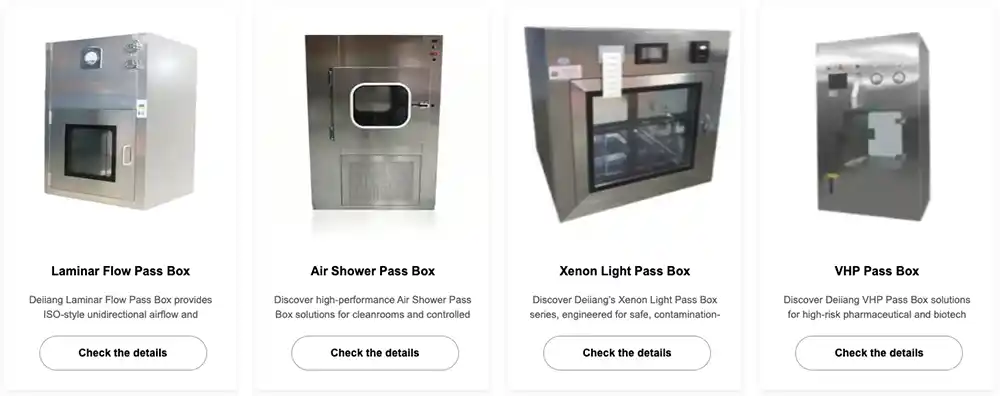
Static vs. Dynamic Pass Box
Static Pass Box:
- It is completely isolated.
- There is no air recirculation or purification.
- Construction is simple and low maintenance.
- This is used for materials that are pre-cleaned or sealed.
Dynamic Pass Box:
- There is a fan with a HEPA filter.
- Continuous or periodic air purifying is done.
- It has a pressure differential.
- This can be used for transfers of higher grade and higher risk.
- It requires validating airflow, filter integrity, and recovery time.
⚠️ Insider Warning — Static Pass Box Misuse
It is strictly forbidden to use a static pass box for transfers from ISO 7 to ISO 5. According to EU GMP Annex 1, for inter-grade transfer, a static pass box must have self-purification or decontamination capability. A static pass box, which does not have active airflow, will be a direct cause for an audit finding due to a non-conformance during a regulatory inspection. For sterile core transfers, always request dynamic or VHP-capable pass boxes.
VHP Integration for Sterile Applications
In pharmaceutical manufacturing that is aseptic, VHP pass boxes are becoming a requirement because of GMP Annex 1. The biodecontamination cycle has three phases:
- Conditioning / Gassing: It is where H₂O₂ vapor is injected into a sealed chamber, typically done with a concentration of 300-500 ppm, controlled between a temperature of 25-35°C, and set to a humidity of 30-40% RH.
- Dwell / Hold: It is where the chamber that is sealed maintains the concentration of VHP for a defined exposure in order to achieve a ≥6-log reduction of biological indicators (BI) such as Geobacillus stearothermophilus, which is done for a period of 30-90 minutes.
- Aeration / Degassing: It is where VHP is catalytically decomposed or VHP is exhausted to safe levels, which is below 1 ppm, prior to the pass box door opening.
Sufficient verification requires a complete developmental cycle with the Biotech Inspectors (BI) placed at worst-case scenarios (corners, shelves, door seals). The average duration of a VHP pass box is between 90-180 minutes. Deiiang™ provides VHP-ready dynamic pass boxes equipped with catalytic converters and H₂O₂ with feedback control.
Understanding Interlock Systems and Emergency Lock Logic (Fail-Safe vs. Fail-Secure)
The functionality of locks at the time of a power failure, or during emergency situations is often overlooked. The main philosophies of Fail-Safe and Fail-Secure interlocks are contradictory.
- Fail-Safe (unlocked): Locks are released to allow quick personnel evacuation. Used for personnel airlocks.
- Fail-Secure (locked): Locks remain in a closed state to maintain a pressure differential (and prevent contamination). Used for material pass boxes in ISO 5 zones. It is critical that the cleanroom pressure is maintained. In these specific scenarios, however, an emergency key lock bypass is a must on the clean side to allow a manual release.
Deiiang™ utilizes Fail-Secure interlocks with a dedicated bypass key on the dirty side. For high-frequency automated lines, we recommend the use of pneumatic pin interlocks in place of electromagnetic locks as they can cause residual magnetism lag (see warning below).
⚠️ Insider Warning — Lag Time from Electromagnetic Locks
Inexpensive electromagnetic locks will exhibit slight residual magnetism for up to 1.0 second after being powered down. In rapid, high-speed automated systems, if workers pull on the door within this timeframe, the lock pins will be sheared and the doors will become misaligned. Deiiang™ uses high-speed pneumatic pin interlocks and demagnetized solenoid latching, specifically designed to prevent lag and damage to the system. This innovation has contributed to a reduction in maintenance requests by 80% for our high-frequency ISO 5 pass boxes.
Internal Construction
- We use either 304 or 316L grade stainless steel.
- Surfaces are smooth and have a low average roughness,<0.8 μm
- Shelf supports are designed to safely bear the entire process weight.
- No accumulation dead zones
- Internal corners are rounded to minimize dust accumulation
- Compatible with disinfectants such as VHP and H2O2.
HEPA Filtration and Airflow
- According to the project needs, H13 or H14 hepa filtration may be installed.
- DOP or PAO test (scan) will be performed to verify filter integrity.
- Airflow and particle counter ports must not be in close proximity to each other to prevent a short circuit return air.
- Airflow pattern will be validated with on-site pressure and monitoring. Testing may include smoke tracing or particle tracing.
Pressure and Environmental Monitoring — Including Continuous EM Sampling Ports
Key design considerations for ISO 5 / Grade A critical zones are Integrated Environmental Monitoring (EM) Continuous Monitoring Solutions.
- Isokinetic sampling probe ports — Pre-installed wall penetrations (e.g., 1/4" quick-connect fittings) that allow a particle counter to sample air inside the pass box without opening the doors. The ports must be sealed with blanking caps when not in use to maintain pressure integrity.
- Viable air sampling port – A port for active air sampling units (for example, a MAS-100). These units contain a stainless steel collar and a shut-off valve to minimize the risk of air leakage during the sampling.
- There should be no ledges or surfaces that could be used to support contaminants.
The Deiiang™ standard ISO 5 pass box contains two pre-sealed EM ports, one for non-viable and one for viable particle monitoring, located at the geometric center of the chamber, as specified 150 mm above shelf level, and in compliance with ISO 14644-1 Annex B sampling requirements.
Deiiang™ design note: As Deiiang has confirmed in their product data, airflow, recovery times, filter efficiency, and interlock response of the chosen transfer system are confirmed for this application. Each is associated with a validation and testing report, including the methods used, the conditions, and the report number.
How to Integrate Air Showers into Material Transfer Routes
Knowing the differences between air showers and material air locks is vital for planning and executing an efficient cleanroom material transfer route.
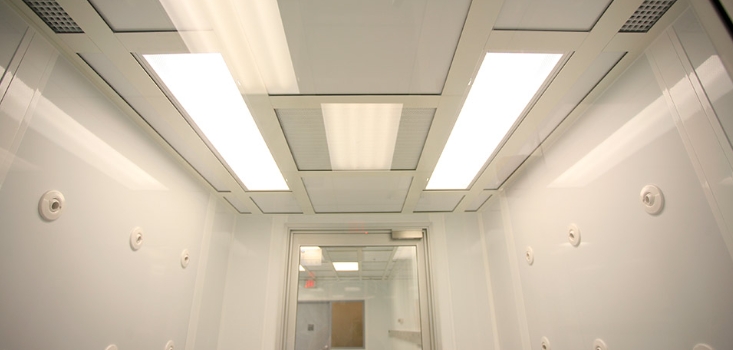
9J1l-4oa9ss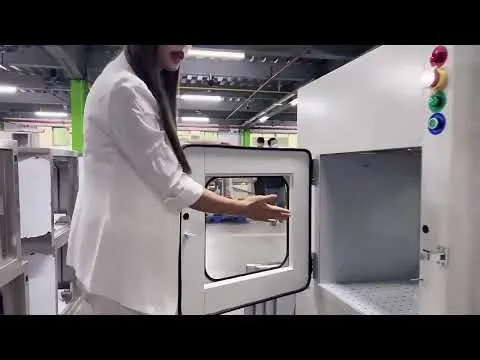
Air Shower vs. Material Airlock
- Air Shower — cleaning via high-speed air jets
- Material Airlock — isolation and pressure differential separation
- Some systems integrate both
- An air shower is not a full solution to the problem
⚠️ Insider Warning — Air Shower Dead Zones & Particle Re-entrainment
Many suppliers install only two-sided nozzles in material air showers. Dust trapped on the undersides of large pallets or cartons cannot be removed. Deiiang™ suggests the use of rotary bottom-jet or bottom return-air suction designs to tackle dead zones. Without this, particles removed from the top surface may re-entrain and settle on the material during the blow-off cycle.
Considerations when Designing Air Showers
- Air shower cycle times
- Configuration and count of nozzles
- Velocity of ≥20 m/s
- Spacing of components and materials
- Available workspace and ergonomics of the operator
- Minimizing re-entrainment of return air
- Ease of access to filters for maintenance and repair
- Noise level slower than 75 dB(A)
- Mechanism for opening the Emergency Exit Door
- Methods for rapid cleaning
Hazards Related to Large Materials
- Some large materials can obstruct nozzles and diminish the cleaning efficacy of the air shower
- Less complete purification of the underside of pallets
- Packaging materials may emit particulates after being subjected to an air blast
- Inadequate control of the air shower may promote unintended movement of equipment
- Mismatched sizes of doors may cause impact to the door and damage the door seal
- Design of the floor must consider the load capacity and the take-up space
When Air Showers Become Inappropriate
- For more delicate materials that can be damaged by high-velocity air flows (e.g., lighter weight components)
- For materials that have been pre-packed and/or pre-conditioned to a sterile/purified state
- When there is inadequate height or floor space
- If the transfer of goods has to occur at a very high rate (i.e., air showering potential transfer actions disrupt work processes)
- When air showering goods disrupts work processes
- When there are stringent requirements for control of the temperature and humidity of goods in the transfer process
Engineering the Complete Material Transfer Process
A transfer of goods process within a clean room involves more than a single large item of equipment. Each step must be clearly laid out in detail and the process validated and adhered to.
Proposed Transfer Workflow
- Material arrives at intermediate external receiving area
- Damaged packaging is reported
- Outer surfaces are cleaned or packaging is removed
- Materials are sorted by type and priority
- Materials are loaded into the pass box or air shower
- Cleaning cycle and purge and interlock are initiated
- Materials are fetched by cleanroom staff
- Batch times and transfers are recorded
- Materials are brought to the assigned staging areas
- Priority is given to reporting anomalies
Pro Tip – Deiiang™ Standard Wiping SOP:
There is a strict requirement for loaded Pass Box materials’ outer surfaces to be completely wiped first using either IPA or Isopropyl Alcohol as a “Single Pass – S” technique (back and forth). The cleanest section is wiped last. Each section is a maximum of ~30 x 30 cm and the wipe is discarded to avoid particulate redeposition. This technique has been proven to be effective and is the preferred SOP of choice for material transfers and is mandated by Deiiang. Randomly wiping surfaces yields a particle count of >95% and is therefore not recommended.
Dividing Personnel and Material Pathways
- Do staff flows cross over material flows?
- Have waste materials been assigned an exit path of their own?
- Do routes for raw materials, end products, and waste overlap?
- Is there a potential for less clean flows to contaminate the clean flows?
- Is a unidirectional flow system needed?
Assessing Capacity and Throughput
Determine the correct sized system for transfers by estimating:
- The average number of transfers in one hour
- The average number in each transfer
- The maximum demand for transfers during an event (changes in shifts, starts of a batch)
- The time for a complete cycle of cleaning or purging
- The transfer chamber's available volume
- The need for additional units to operate in parallel to meet the demand during peak times
- The need for a system of automatic conveyance
Design formula: Required transfer capacity = peak transfer events per hour × average process time per event. This is an engineering estimation tool, not a regulatory requirement.
Validation and Testing Before Production Use
The purpose of validation is to confirm that a pass box for ISO 5 or an air shower meets system requirements. This section addresses FAT, SAT, and IQ/OQ/PQ.
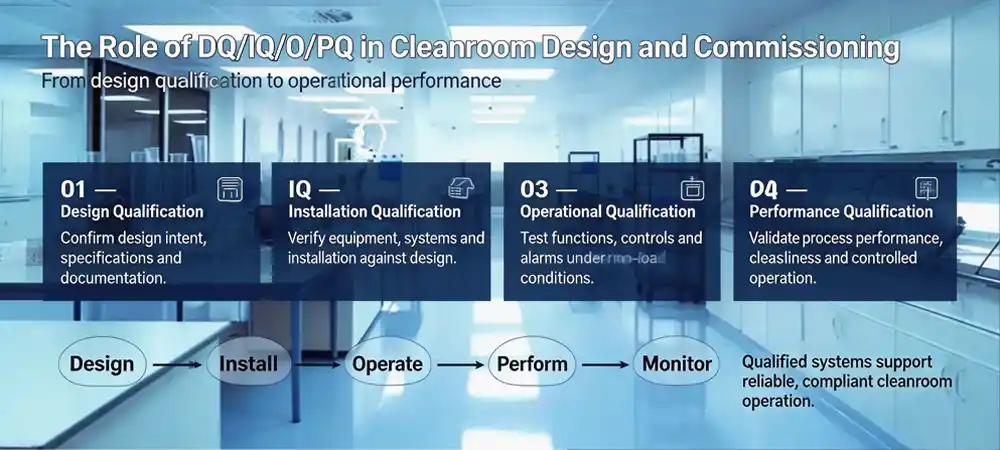
Factory Acceptance Test (FAT)
- Appearance and dimension evaluation
- Raw material and weld assessment
- Door seal evaluation
- Interlock logic examination
- Control system evaluation
- Test alarms
- Perform evaluation of electrical safety
- Review documentation of HEPA filters
Site Acceptance Test (SAT)
- Measurement of installed dimensions
- Attachment to wall or building
- Measurement of power and communication lines
- Testing of door functionality
- Measurement of noise generated
- Measurement of pressure differentials
- Integration testing of control systems
Recovery Time (Self-Cleaning) Test — ISO 14644-3
Recovery time (self-cleaning time) is the time required for a cleanroom or transfer chamber to meet its specified cleanliness class following a cleaning event. In ISO 14644-3, the 100:1 recovery test is used to determine the time taken for a measurement of particle concentration to drop to only 1% of the concentration that was initially measured.
A simple calculation example shows that when vertical laminar flow in a dynamic pass box is set at 0.45 m/s, the estimated time for air recovery is calculated as follows:
t = (V / Q) × ln(C₀ / C₁)
Definitions:
- V = chamber volume (m³)
- Q = volumetric airflow rate (m³/h)
- C₀ = particle concentration just after a disturbance has occurred
- C₁ = particle concentration (maximum permitted, ISO 5)
It is reasonable to expect that a dynamic pass box, fitted with a HEPA filtration system, with vertical laminar airflow set at 0.45 m/s, will achieve a recovery time from ISO 8 to ISO 5 (i.e., a 100:1 decay) in 3 minutes or less. The dynamic recovery time in practice should be measured during an on-site assessment with a particle counter, with the results recorded in the OQ (Operational Qualification) protocol.
IQ/OQ/PQ
IQ (Installation Qualification):
- Model and serial number of installed item
- Installation site location and orientation
- Materials of construction
- Connections to utilities (piping, electrical wiring)
- Sensors and instrumentation
- Supporting documentation and calibration reports
OQ (Operational Qualification):
- Interlocks, their actions, and time delays
- Alarms, their triggering and reset actions
- Measurement of airflow rate and its distribution
- Stability of pressure differential
- Control of temperature and humidity
- Integrity of HEPA filter (via DOP/PAO test)
- Recovery time (100:1 decay test as per ISO 14644-3)
- Sequence and timing of operational cycles
PQ (Performance Qualification):
- Performance evaluation in actual production
- Measurement of particle levels before and after transfer
- Measurement of recovery time from disturbance
- Assessment of monitoring system performance
- Assessment of operator performance and adherence to procedures
- Performance of system after continuous use for stipulated time
Deiiang Case Study: ISO 5 Material Transfer Project
This section presents the project in which Deiiang™ developed a material transfer solution for the ISO 5 Critical Zone. The case example provides data and designer assessments for the different phases including the design, manufacture, validation, and delivery.
Project Overview
Industry: Sterile Fill-Line Biologics
Region: Singapore (SE Asia)
cleanroom grade: ISO 5 critical zone (Grade A)
Use: Material transfer into sterile filling and assembly area
Material Types: Components, tools, containers, packaging (all pre-sterilized)
Equipment: VHP-capable dynamic pass box with HEPA filtration
Current Status: Installed, commissioned and validated
Project Background
- Existing material passage had cross-flow issues between ISO 7 and ISO 5
- Increased number of frequent openings for material entry
- Pressure varying in Grade A zone
- Required compliance to EU GMP Annex 1 (2022 revision)
- Prior static pass box inadequate for capacity
- Needed improvement in traceability and data capture
Project Challenges
- Space: Limited wall opening in a retrofitted clear room; equipment could not obstruct personnel traffic; insufficient overhead maintenance space.
- Process: Non-uniform material sizes (ranging from small vials to large equipment); high transfer frequency (≥12 transfers per shift); some materials required VHP decontamination, others could not tolerate high-temp VHP cycles.
- Compliance: URS required full validation support; door status and alarm records needed logging with time-stamped audit trails.
- Environment: High temperature/humidity (Singapore tropical climate) caused condensation risk on pass box exterior; grid voltage fluctuations.
Designer's Insight — Jason.peng
"With the client wanting to place a large air shower for the entry of bulk components, our CFD Simulations showed that high-velocity (25 m/s) sterile packaging velocity bags would burst. Consequently, we designed a VHP dynamic airlock pass box with a 3-minute self-purge time. The recovery time improved from 6 minutes with the air shower to 2.8 minutes without any packaging damage. This solution gave our client 15% savings in annual packaging waste costs."
— Jason.peng, Lead Engineer
Deiiang Solution
Design Phase:
- Sizing per the URS and the material dimensions (inner dimensions: 1200 × 800 × 800 mm)
- Analyzed transfer frequencies and batch sizes (max: 4 transfers/hour, 8 items per transfer)
- Designed double door interlocks with PLC control (Siemens S7-1200)
- Dynamic pass box with H13 HEPA recirculation and VHP injection port
- Installation interfaces with top access panel for filter changes
Manufacturing Phase:
- Construction (thickness: 1.5 mm) in 316L stainless steel
- Welding (autogenous orbital) to ASME BPE standards
- Internal radius ≥6 mm for cleanability
- Easy-clean surfaces (Ra ≤0.6 μm, electropolished)
- Observation window (tempered glass, flush-mounted), LED (IP65) with 7” HMI, and EPDM (VHP-compatible) door seals
Control Phase:
- PLC-based interlock logic with door status logging
- Timeout alarms (door open >60 seconds triggers alarm)
- Pressure differential monitoring (±2 Pa accuracy)
- VHP cycle control (conditioning, dwell, aeration phases)
- BMS integration via Modbus RTU
Validation Phase:
- FAT completed at Deiiang facility (Nanjing)
- SAT conducted on-site for 5 days in Singapore
- HEPA Integrity Testing
- Airflow Velocity Testing
- Recovery Time Testing
- Validation of a Gas Phase Hydrogen Peroxide (VHP) Cycle Reduction to 6 Logs of Geobacillus Stearothermophilus (vHP) BI
- IQ/OQ Docs in English with local language
- Customer signed all SAT protocols and witnessed
Quantified Project Results achieved
- Reduction of 33% in the number of material transfer steps from 12 to 8
- Reduction of 38% in average transfer time from 4.5 mins to 2.8 mins
- 6 months of zero simultaneous openings with door interlock events
- Differential pressure maintained at 18 Pa (ISO 5 side) during transfer
- VHP cycle time optimized from 150 mins to 105 mins
- Elimination of packaging damage from 2.1% to 0%
- Validation of all Customer protocols with zero deviations
- Local service response time of less than 24 hours for critical issues
The solution enabled the client to standardize the procedures for transferring materials, reduce unnecessary opening of doors, prevent packaging waste, and develop a fully traceable transfer system, which successfully passed a surprise EU GMP audit with zero non-conformities.
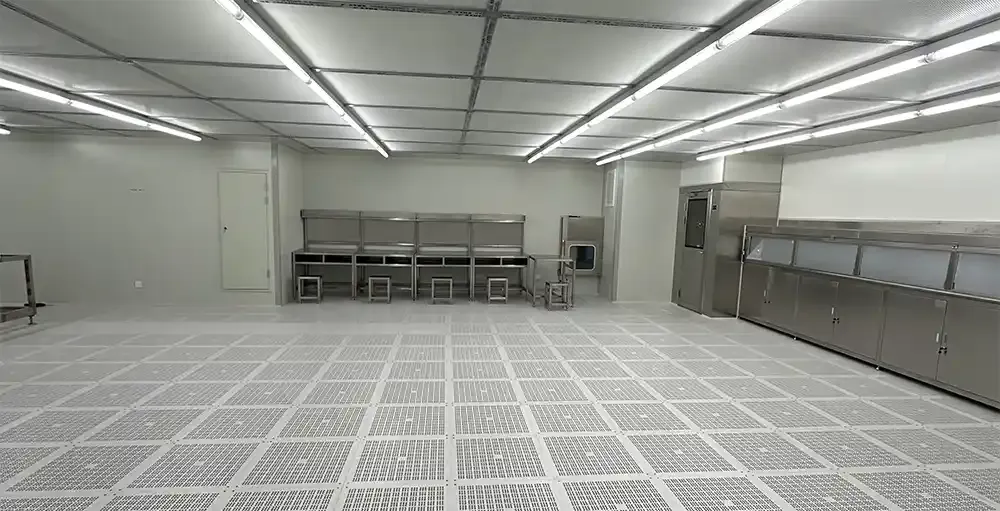
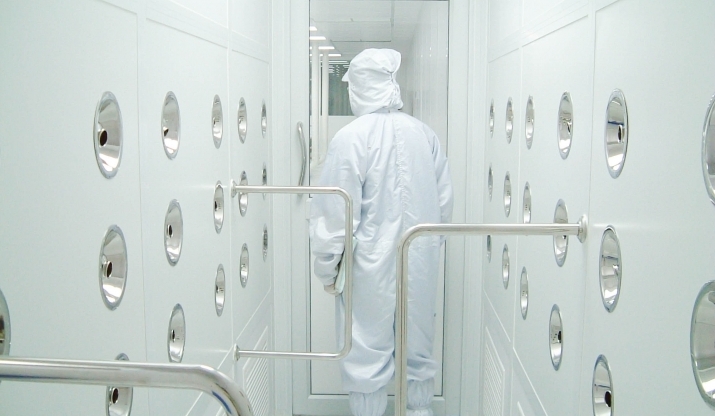
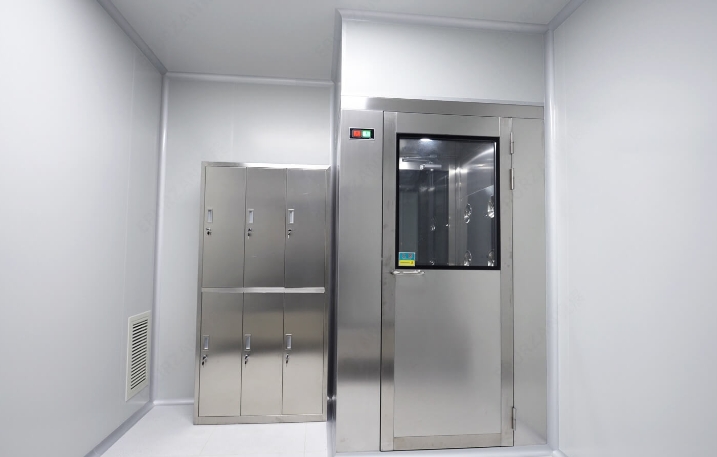
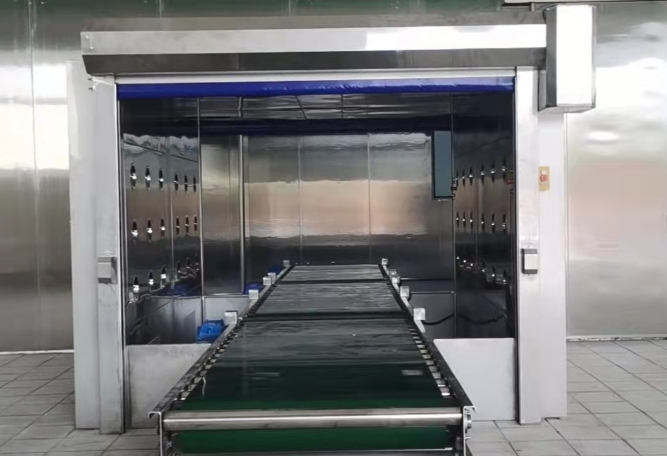
Deiiang ISO 5 cleanroom airshoer installation at a Biologics Singapore site (reference)
Deiiang Product Data and Evidence Framework
For a pass box for ISO 5 applications, validated designs and test conditions with evidence of verification should be presented. Below is a representative framework based on Deiiang validated designs.
CFD Simulations for Airflow Optimization
Deiiang™ uses Computational Fluid Dynamics (CFD) simulations to assess and optimize the airflow in the design of each pass box before manufacturing. The simulations examine velocity, turbulence levels, and particle movements at different loading scenarios (e.g., empty chambers, chambers with partially loaded shelves, or chambers with large items).
- Main Goal: Remove turbulent eddies (i.e. stagnant regions) where particles may get trapped (immediately below the pallets, and on lower shelves).
- Achieved Goal: The design, optimized using CFD, achieves laminar airflow of 0.45 m/s ± 15% with less than 5% of the cross-sectional area stagnant, and less than 5% of the chamber cross-section exhibiting stagnant flow.
- Each custom project undertaken by Deiiang comes with a CFD report as part of the validation package. This report contains flow velocity and particle path simulations.
Standard Product Specifications
CFD Airflow
0.45 m/s ±20% (validated)
Filter
H13/H14 HEPA, PAO tested
Interlock
Electronic / PLC with logs
Material
304 / 316L Stainless Steel
Validation
FAT / SAT / IQ / OQ available
Examples of Performance Test Curves
- Pressure stability during door operation
- Particle recovery trend (ISO 14644-3 recovery).
- Airflow across the cross-section of the chamber.
- Stable temperature and humidity (during transport).
Data integrity note: Deiiang product test data is recorded and presented with test condition, date, report number, and applicable model. No subjective scores are presented as test data. Product Designer: Jason.peng
Maintenance and Lifecycle Compliance
To keep the cleanroom material transfer equipment compliant throughout its lifecycle, Deiiang undertakes routine maintenance. Lifecycle compliance requires a systematic maintenance framework.
⚠️ Insider Warning — Corrosion of Disinfectants & Seal Deterioration
Ordinary silicone rubber seals can be impacted by high concentrations of quaternary ammonium compounds, specifically benzalkonium chloride or peracetic acid, leading to hardening, cracking, and loss of airtightness. Deiiang™ therefore suggests using EPDM (Ethylene Propylene Diene Monomer) or FKM (Fluoroelastomer) seals for pass boxes that undergo daily chemical disinfecting. In comparison to FKM, EPDM has superior resistance to VHP and peracetic acid, while FKM has superior resistance to high temperature and aggressive chemical environments.
Daily Maintenance Log
- Wipe down internal surfaces and door seals with disinfectant.
- Check that both doors of the interlock operate correctly.
- Check that all alarms function correctly (both visual and audible).
- Check all lights and indicators and verify.
- Check the pressure differential display and compare it with the setpoint.
- Listen for any abnormal noise coming from the fan or motor.
- Log all maintenance procedures that you completed.
Monthly, Quarterly, or Annual Maintenance Log
- Test HEPA filters for integrity using the PAO method.
- Measure airflow volume.
- Verify the calibration of the pressure differential measurement.
- Verify the calibration of temperature and humidity measurement.
- Inspect and replace seals if they are cracked or hardened.
- Check the control system and perform a data backup.
- Perform an electrical safety and insulation resistance verification.
- Check the VHP generator if calibrated and if it is equipped.
Spare Parts and Service Support
DEIIANG™ provides the following services:
- Remote technical support (24/7).
- Spare parts (HEPA filters, seals, sensors, control boards).
- Commissioning and troubleshooting (on-site).
- Operator training (on-site or remote).
- Validation Documents (Templates for IQ, OQ, and PQ).
- Preventive maintenance (contract) of equipment.
Frequently Asked Questions
Can a pass box be considered compliant for an ISO 5 cleanroom?
Yes, but it depends on many things like layout of the clean room, the risk of transferring it, room transfer procedure, configuration of equipment, and validation documentation to prove it. Using a pass box by itself is not enough to prove compliance with ISO 5. The entire transfer procedure must be validated. For an ISO 7 to ISO 5, a dynamic or VHP-capable pass box must be used in the context of GMP Annex 1.
What is the difference between a static and a dynamic pass box?
A static pass box is defined by physical isolation coupled with no active air purification. Unlike its static counterpart, a dynamic pass box has a fan with a HEPA filter for the purpose of air purification and circulation for the duration of the transfer. The recovery time for a dynamic pass box is 2-5 minutes to achieve ISO 5.
Is an air shower really better than a pass box?
Not always. Pass boxes minimize the degree of direct air exchange through isolation. Air showers have a surface decontamination process that is active and dynamic. The choice is highly dependent on the source of contamination, size of the material, and the process flow. An air shower is optimal for larger, more robust items. Conversely, a pass box is more suited for a frequent transfer of sealed or clean materials that are smaller.
How do you minimize the risk of contamination during material transfer?
Some of the main techniques include outer packaging disinfection, double-door interlock, appropriate pressure differentials (≥15 Pa), HEPA filtration, VHP decontamination as needed, Standard Operating Procedures (SOPs), continual validation, routine decontamination, and transfer logging with an audit trail system.
What tests are needed for a cleanroom pass box?
Tests to be performed include testing the door interlock system, testing for HEPA integrity (DOP/PAO), an air flow velocity test, a pressure differential test, a particle count test (before and after the transfer), a recovery time test (according to ISO 14644-3), an alarm function test, and a full test of the IQ/OQ/PQ documentation.
What is VHP integration and when is it needed?
VHP integration is the use of vaporized hydrogen peroxide for the biological decontamination of surfaces and the inner areas of a pass box. VHP integration is needed for all pharmaceutical manufacturing that complies with Good Manufacturing Practices (GMP) Annex 1, when transferring materials to Grade A / ISO 5 areas that are not terminally sterilizable. VHP integration involves a pass box that is validated for the Conditioning-Dwell-Aeration Cycle with the use of biological indicators.
What is the Fail-Safe vs. Fail-Secure logic of locks for pass boxes?
Pass boxes that are constructed as personnel air locks employ Fail-Safe logic (i.e. open when there is no power) for safety reasons. Fail-Secure logic (i.e. remain locked when there is no power) is suggested for material pass boxes, with a key override for emergency opening on the dirty side of the pass box.
Can Deiiang customize a pass box for my project?
Yes. Deiiang™ can manufacture pass boxes of any size and any combination of the following: 304/316L materials, sliding or hinged doors, PLC or touchscreen controls, pressure or temperature or humidity monitoring, VHP integration, environmental monitoring (EM) sampling ports, Building Management System (BMS) integration, and validation documentation for installation. Email Jason.peng to speak with our design team.
Micro-Glossary
ISO 5
A cleanroom classification based on the concentration of particles in the air that meets ISO 14644-1.
Pass Box
A sealed chamber that allows for the transfer of materials to areas with a higher cleanroom classification, with the minimal possible exchange of air.
Dynamic Pass Box
A pass box that actively maintains the cleanliness of the air inside via HEPA filtered airflow.
Air Shower
An enclosure that employs filtered air in a high velocity (20-25 m/s) to a remove debris from the surface of personnel and materials.
Interlock System
Mechanically or electronically ensures both pass box doors cannot be opened at the same time.
HEPA Filter Integrity Test
A DOP/PAO scan test to check for unacceptable leakage (≤0.01% penetration) through the HEPA filter and its frame.
Recovery Time (100:1)
In accordance with ISO 14644-3, it is the time measured for the concentration of particles to fall to 1% of the initial concentration after disturbance.
VHP (Vaporized Hydrogen Peroxide)
It is a transferring method through pass boxes of aseptic systems as a biological decontamination technique that achieves a 6-log reduction of micro-organisms.
CFD (Computational Fluid Dynamics)
A method for the analysis of airflow, flow field, and particles trajectories, used for the optimization of clean room equipment.
EM (Environmental Monitoring)
This consists of taking and testing samples for viable and non-viable particles in cleanrooms and of the continuously monitoring ports in the cleanroom equipment.
References
- ISO 14644-1:2015 Cleanrooms and associated controlled environments — Part 1: Classification of air cleanliness
- ISO 14644-2:2015 Cleanrooms and associated controlled environments — Part 2: Monitoring
- iso 14644-3:2019 Cleanrooms and associated controlled environments — Part 3: Test methods
- EU GMP Annex 1: Manufacture of Sterile Medicinal Products (2022 revision)
- FDA Guidance for Industry: Sterile Drug Products Produced by Aseptic Processing
- PIC/S GMP Guide
- ASHRAE Handbook — HVAC Applications, Clean Spaces
© 2026 Deiiang™ — cleanroom engineering Solutions. Product Designer: Jason.peng