+86 13638632902
 Jason@cleanroomequips.com


 MENU
MENU
Hardwall and modular clean rooms are often presented as competing options. In practice, they describe different things. Hardwall refers to an enclosure or wall type built from rigid panels and structural framing. Modular refers to a construction approACH in which room elements are prefabricated and assembled on site. A modular clean room may use hardwall panels, and a hardwall clean room may be built using modular methods. The two categories can overlap.
This article compares hardwall and modular approaches in terms of rigidity, cleanability, customization, installation, lifecycle cost, cleanliness, materials, supplier evaluation, and procurement.
Hardwall vs Modular: Clarifying the Categories
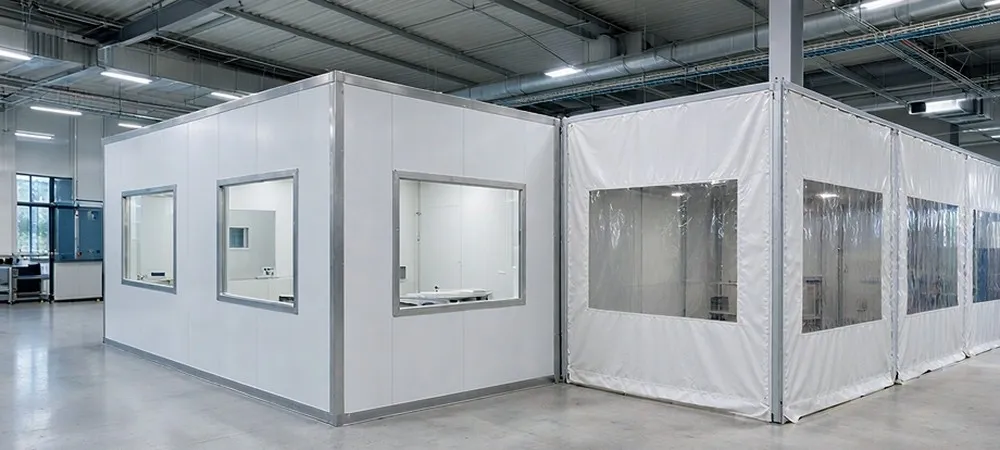
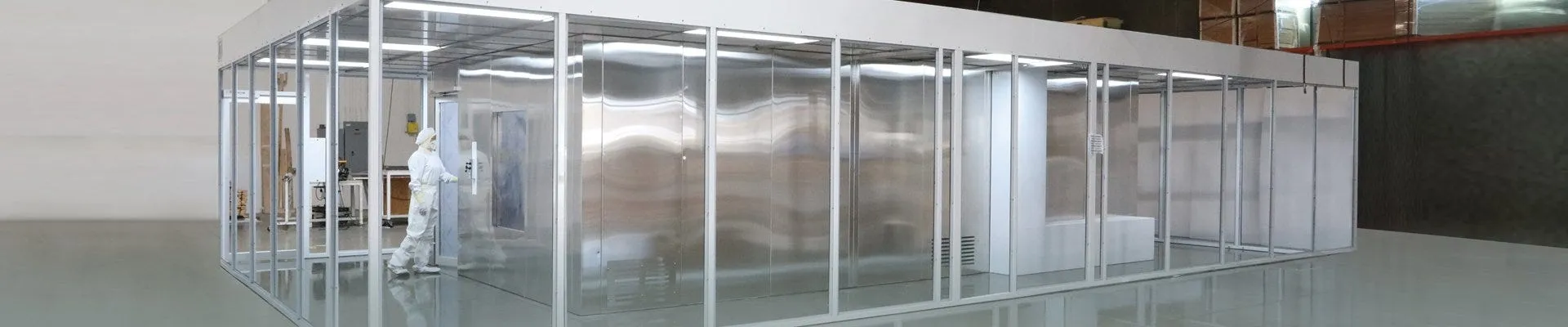
Confusion often arises because the terms are used as if they were mutually exclusive. They are not. Hardwall describes the wall construction. Modular describes how the room is designed, manufactured, and assembled.
Hardwall as an enclosure type
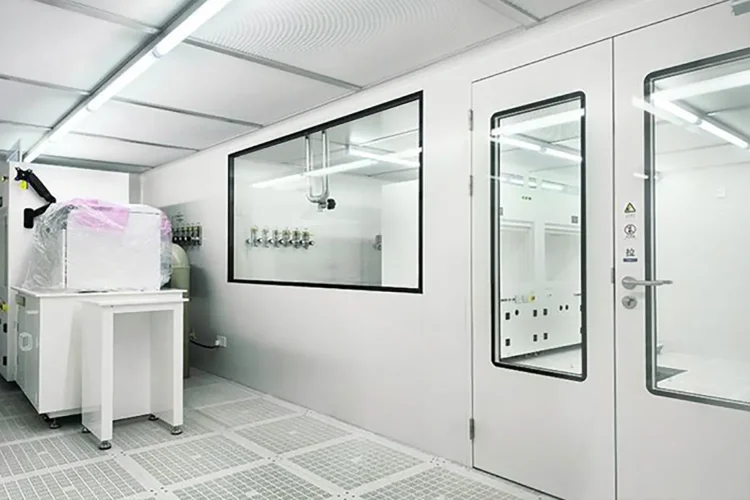
Hardwall construction typically uses rigid panels, structural framing, and permanently installed interfaces. It provides a defined enclosure with fixed geometry once installed.
Modular as a construction approach
Modular construction uses prefabricated elements that are assembled on site. Modular rooms can use different wall types, including hardwall panels. Modularity affects how the room is built and how it may be reconfigured.
Where the two approaches overlap
A modular clean room may be built with hardwall panels. A hardwall clean room may be assembled using modular methods. The choice of enclosure type and the choice of construction approach should be evaluated separately.
Rigidity and Structural Characteristics
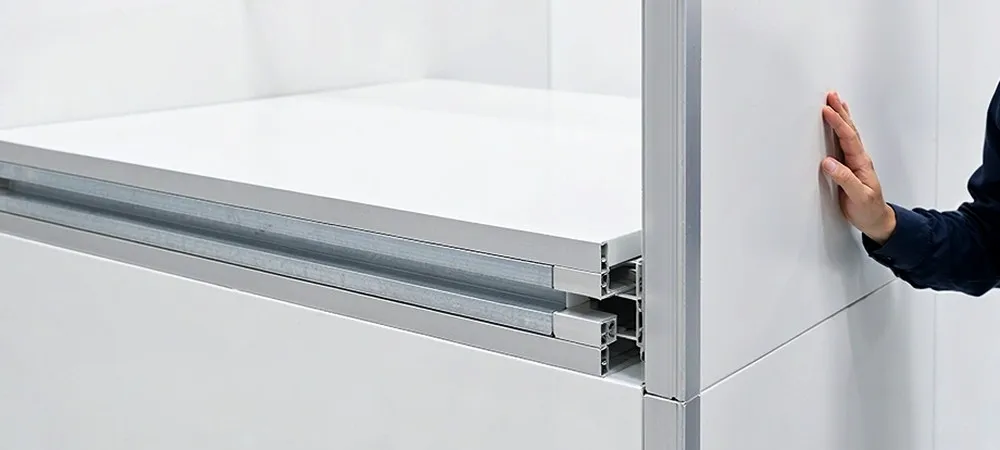
Hardwall construction is generally associated with a more rigid enclosure than soft-wall alternatives. Rigidity can support stable geometry and defined interfaces with equipment and services.
Structural requirements depend on the design. Panels should not be assumed to carry ceiling loads unless the structural system confirms this. Openings, equipment interfaces, and support framing should be coordinated during design.
Modular construction can also be rigid, depending on the panel system and framing. The relevant question is not whether a room is modular, but whether the selected construction meets the project's structural requirements.
Cleanability and Surface Considerations
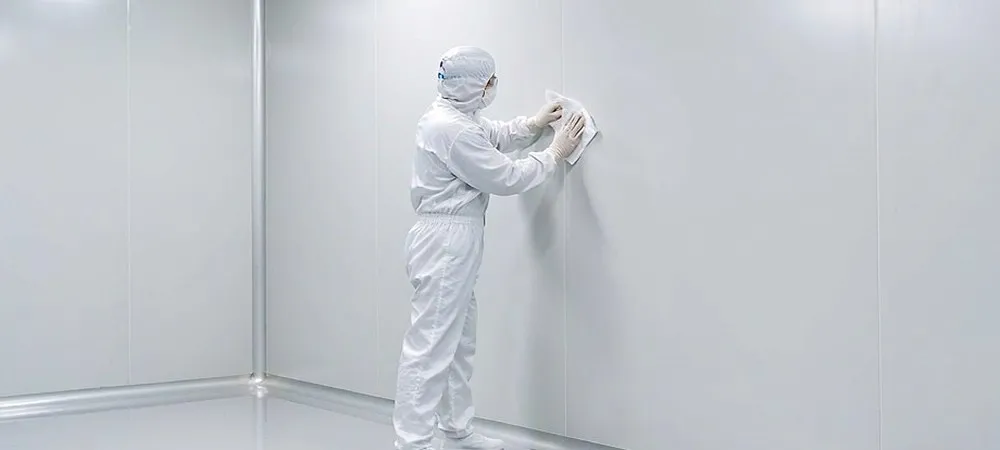
Cleanability depends on surfaces, joints, interfaces, and how they are detailed. Hardwall panels can provide smooth surfaces and defined joints, but cleanability also depends on sealants, coving, penetrations, and door interfaces.
Modular rooms can be designed for cleanability as well. The construction approach does not by itself determine how cleanable a room will be. The specific materials, joint details, and finishing determine the result.
Cleaning agents and tools must be compatible with the surfaces used. Compatibility should be confirmed with material suppliers and through facility evaluation, not assumed from a general product category.
Customization and Design Flexibility
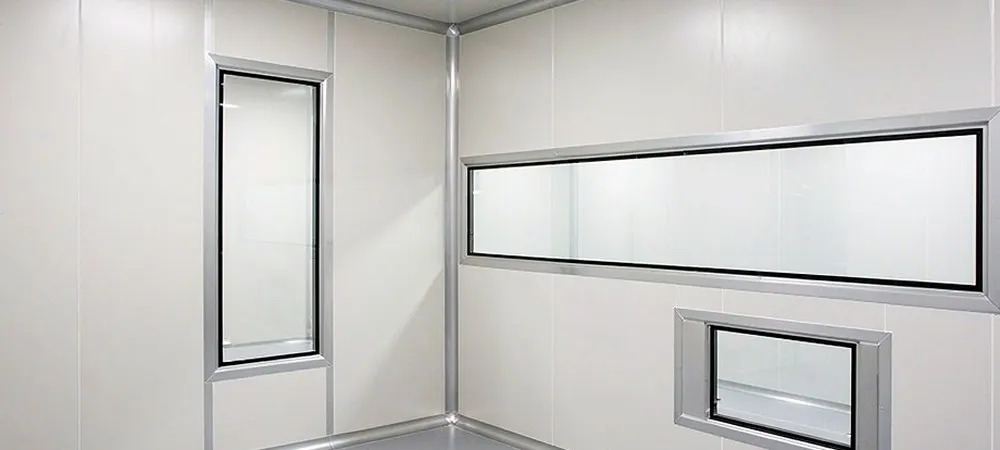
Both hardwall and modular approaches can be customized. Customization may involve room dimensions, panel selection, door and window placement, filtration, utilities, and controls.
As a company-published catalogue example, Deiiang lists MGO and MGO-rockwool panel options and 11 modular configurations with catalogue areas from approximately 6 to 80 m². These are catalogue examples, not project limits, and they do not establish panel thickness, fire rating, or installed performance.
The extent of customization depends on the supplier's available construction system and engineering confirmation. Catalogue options should not be treated as the full range of what a project can achieve.
Installation and Reconfiguration
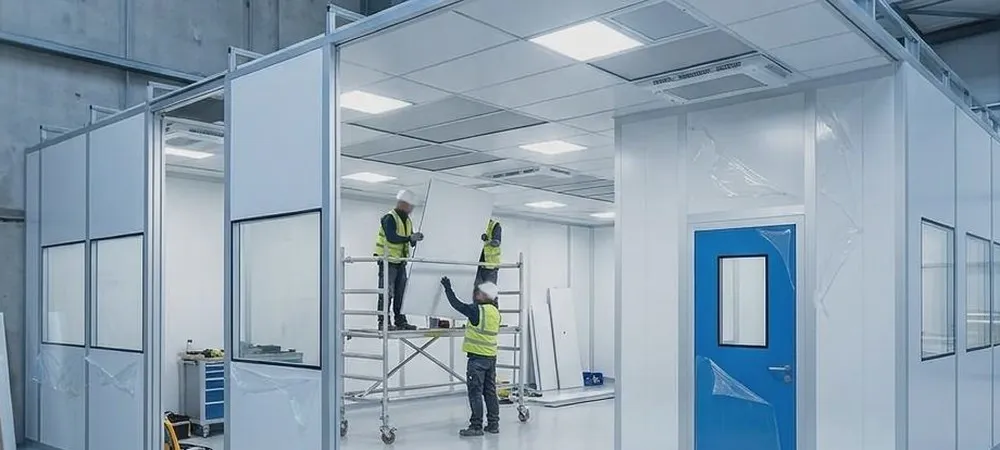
Modular construction can facilitate faster assembly and later reconfiguration when the enclosure, utilities, filtration, and interfaces are designed for it. Hardwall construction may offer more permanent geometry.
Installation time and reconfiguration potential depend on the specific system, site conditions, and project scope. No universal timeline applies. Site preparation, access, and available utilities also affect installation.
Where future changes are anticipated, the design should consider provisions for additional equipment, changed workflows, and relocated access points.
Lifecycle Cost Considerations

Lifecycle cost depends on many factors, including initial construction, maintenance, energy use, reconfiguration, and end-of-life considerations. No universal cost comparison applies, and no fixed lifespan should be assumed for either approach.
Costs can be influenced by panel selection, number of openings, filtration and HVAC requirements, utility integration, testing scope, and site conditions. A modular approach may reduce certain reconfiguration costs, while a hardwall approach may reduce certain maintenance costs. The actual result depends on the project.
Cleanliness and Compliance
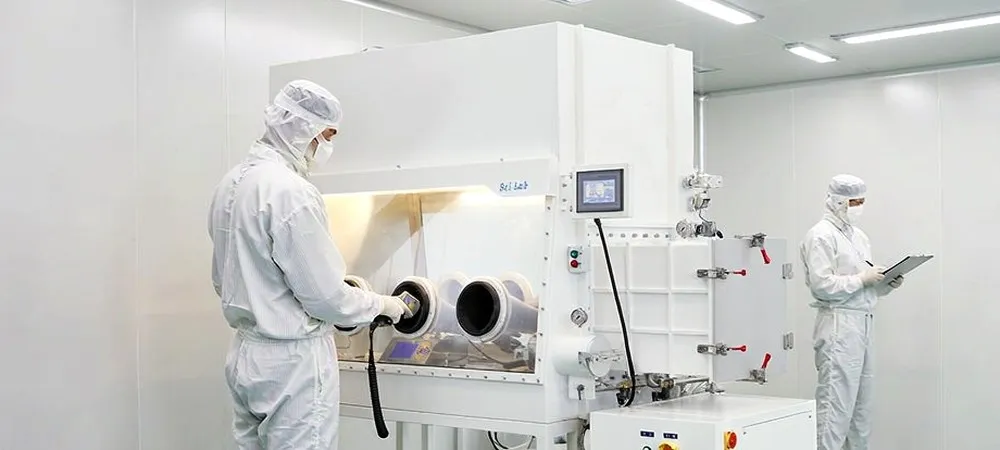
Neither hardwall nor modular construction automatically provides an iso classification advantage. iso 14644-1:2015 classifies air cleanliness by airborne particle concentration. Classification depends on the complete system, operating conditions, and installed-room verification (iso 14644-1:2015).
Compliance depends on the applicable regulatory framework and the facility's quality system. Construction type alone does not determine compliance. Design, construction, and start-up should follow the applicable requirements; iso 14644-4:2022 addresses these phases (ISO 14644-4:2022).
Material Options and Selection
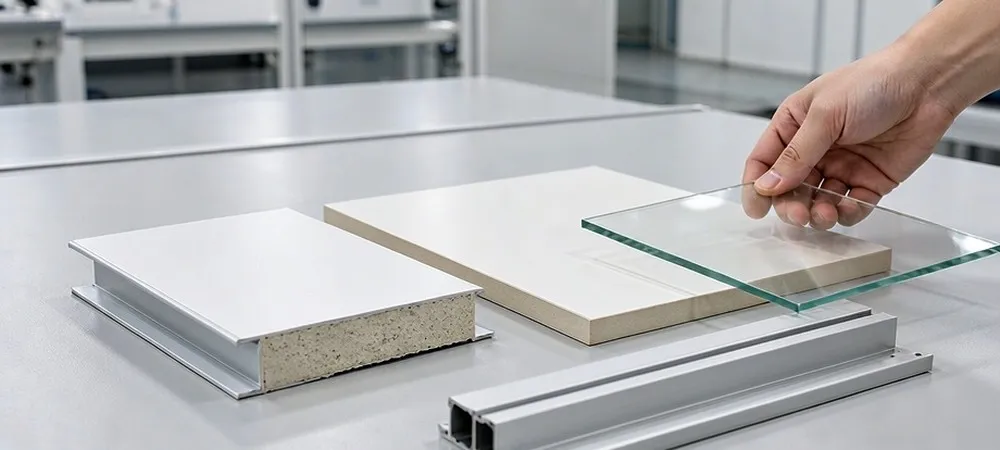
Material selection affects cleanability, durability, and compatibility with cleaning agents. Panels, sealants, gaskets, flooring, and coving should be evaluated together rather than in isolation.
Deiiang's company-published catalogue lists MGO and MGO-rockwool panel options. These are catalogue material options. Project verification is required for actual exposed finish, sealants, cleaning compatibility, and installed classification testing.
Selection should consider the process, contamination risks, cleaning requirements, and structural needs. Compatibility should be confirmed with suppliers and through facility evaluation.
Comparing the Two Approaches
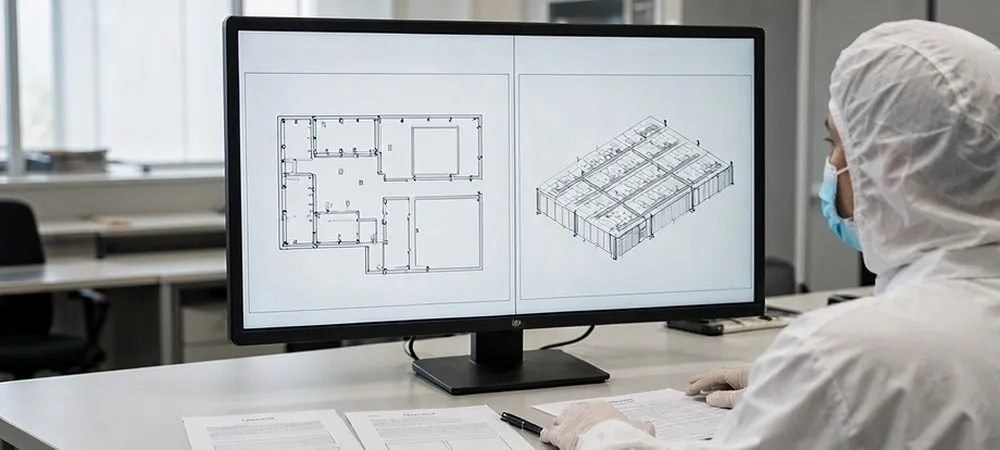
The following comparison summarizes common considerations. Actual results depend on the specific system and project.
| Consideration | Hardwall enclosure | Modular construction approach |
|---|---|---|
| Rigidity | Generally rigid enclosure with defined geometry | Depends on panel system and framing |
| Cleanability | Depends on surfaces, joints, and interfaces | Can be designed for cleanability |
| Customization | Dimensions, panels, doors, services | Prefabricated elements with configurable options |
| Installation | May suit permanent installations | Can facilitate faster assembly and reconfiguration |
| Lifecycle cost | Depends on maintenance and reconfiguration needs | Depends on system, scope, and site conditions |
| Compliance | No automatic ISO advantage | No automatic ISO advantage |
Rigidity
Hardwall: generally rigid enclosure with defined geometry. Modular: depends on panel system and framing.
Cleanability
Hardwall: depends on surfaces, joints, and interfaces. Modular: can be designed for cleanability.
Customization
Hardwall: dimensions, panels, doors, services. Modular: prefabricated elements with configurable options.
Installation
Hardwall: may suit permanent installations. Modular: can facilitate faster assembly and reconfiguration.
Lifecycle cost
Hardwall: depends on maintenance and reconfiguration needs. Modular: depends on system, scope, and site conditions.
Compliance
Neither approach provides an automatic ISO advantage.
How to Evaluate a Supplier
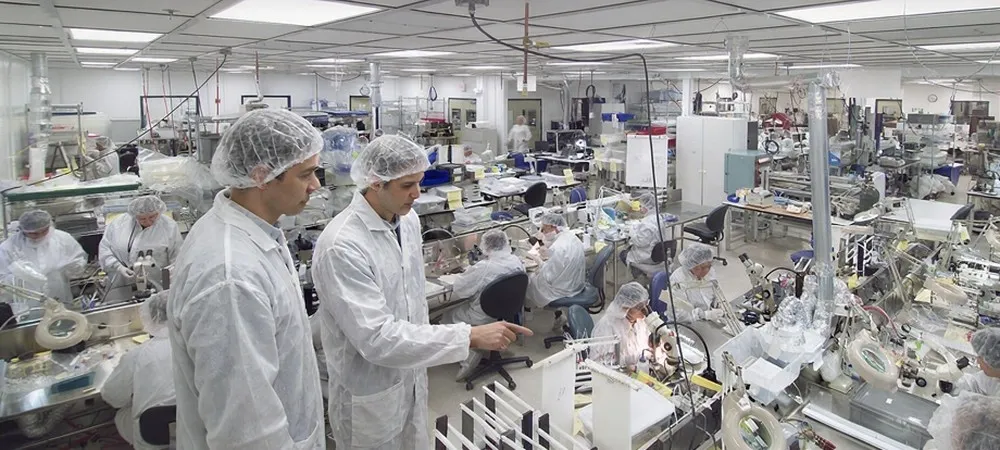
Supplier evaluation should focus on technical capability, scope clarity, and documentation. The construction approach matters less than whether the supplier can meet the project requirements.
Ask how the supplier translates the process into a design. Ask which values are catalogue data and which are project-specific commitments. Ask how scope boundaries are defined for enclosure, HVAC, controls, installation, commissioning, and testing.
Ask whether drawings and interfaces are reviewed before fabrication. Ask what documentation will be delivered. No verified Deiiang project case details are available in the supplied material, so evaluation should rely on verifiable documentation rather than unverified case descriptions.
What to Include in an RFQ

A complete RFQ helps suppliers respond accurately and reduces scope gaps. The following checklist covers key items.
Application and process description
Required cleanliness class and occupancy state
Room dimensions, layout, and ceiling coordination
Panel and material preferences
Heat, process, and occupancy loads
Airflow concept and supply/return strategy
HVAC, utility, and control requirements
Maintenance access and reconfiguration needs
Commissioning and acceptance criteria
Documentation and scope boundaries
Frequently Asked Questions
Is hardwall always better than modular?
No. Hardwall describes an enclosure type, and modular describes a construction approach. The two can overlap. Suitability depends on the project's structural, cleanability, customization, and reconfiguration requirements.
Does hardwall construction provide a higher ISO classification?
No. ISO 14644-1:2015 classifies air cleanliness by airborne particle concentration. Classification depends on the complete system, operating conditions, and installed-room verification, not on wall type alone.
Can a modular clean room use hardwall panels?
Yes. Modular construction can use different wall types, including hardwall panels. The construction approach and the enclosure type are separate decisions.
Which approach costs less over its lifecycle?
No universal answer applies. Lifecycle cost depends on initial construction, maintenance, energy use, reconfiguration, and site conditions. No fixed lifespan or price should be assumed for either approach.
How should materials be selected?
Material selection should consider the process, contamination risks, cleaning requirements, and structural needs. Deiiang's catalogue lists MGO and MGO-rockwool panel options as examples. Compatibility and installed performance require project verification.
Conclusion
Hardwall and modular are not opposing categories. Hardwall describes an enclosure or wall type, while modular describes a construction approach. A modular clean room may use hardwall panels, and a hardwall room may be built using modular methods.
Neither approach provides an automatic ISO classification advantage. Cleanliness and compliance depend on the complete system, operating conditions, and verification. Rigidity, cleanability, customization, installation, and lifecycle cost all depend on the specific system and project.
Supplier evaluation and a complete RFQ help clarify scope and reduce project risk. Catalogue information identifies available options, but it does not establish installed performance or room classification.
References
iso 14644-1:2015, cleanrooms and associated controlled environments — Part 1: Classification of air cleanliness by particle concentration. https://www.iso.org/standard/53394.html
iso 14644-4:2022, Cleanrooms and associated controlled environments — Part 4: Design, construction and start-up. https://www.iso.org/standard/72379.html
Deiiang company-published catalogue material: MGO and MGO-rockwool panel options; 11 listed modular configurations; catalogue areas from approximately 6–80 m². These are company-published catalogue examples and do not establish installed performance, classification, or project limits. No public URL was supplied for these documents.