+86 13638632902
 Jason@cleanroomequips.com


 MENU
MENU
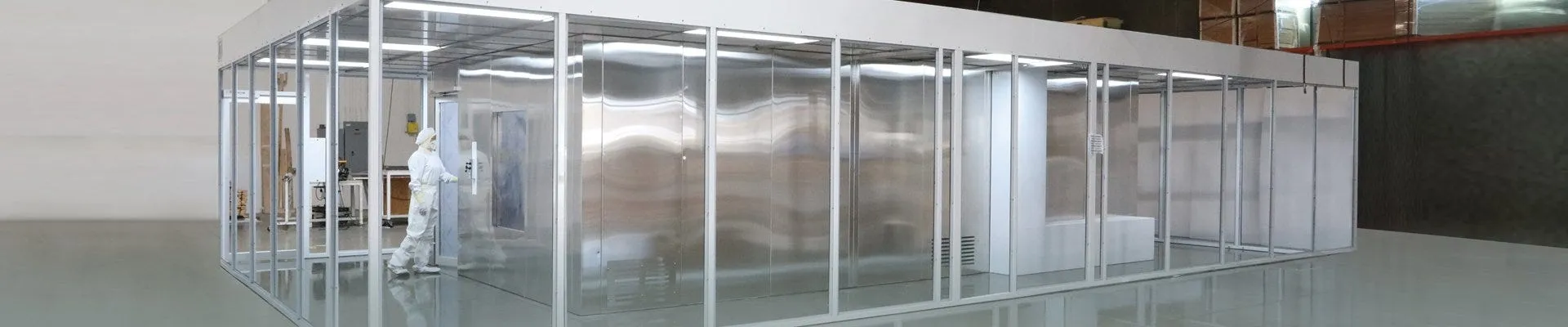
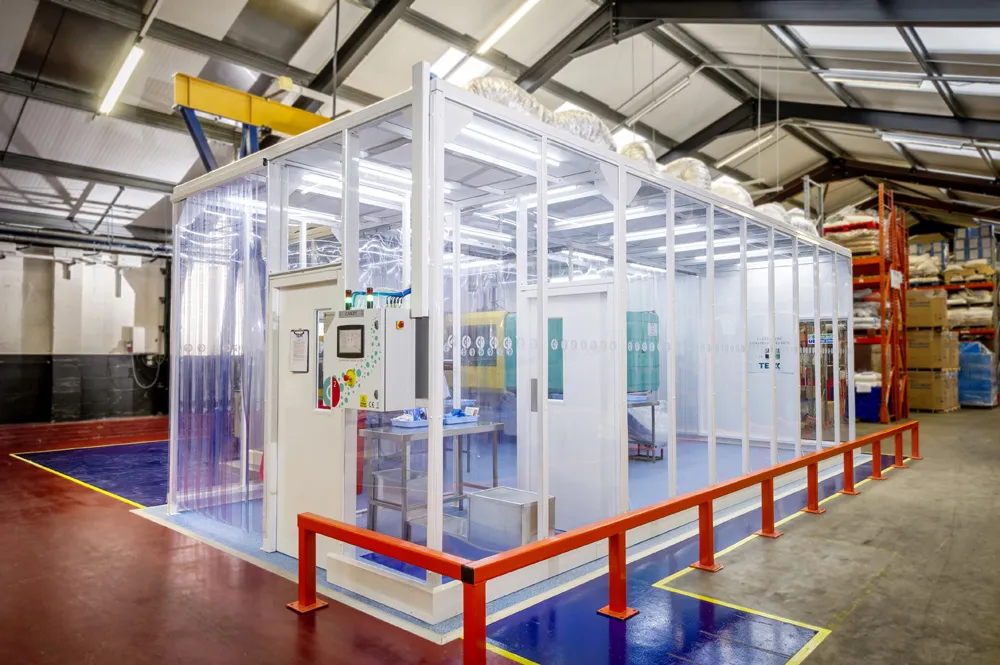
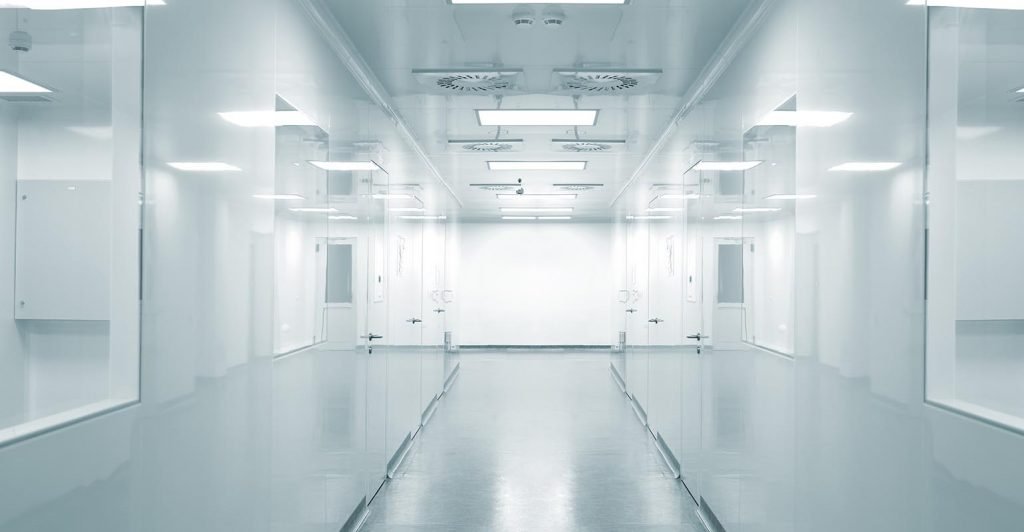
hardwall clean rooms use rigid panels, glazing, doors, and controlled interfaces to create a defined cleanroom boundary. Their potential benefits include stronger physical separation, more deliberate leakage control, durable cleanable surfaces, integrated services, and controlled access.
These benefits are conditional. A rigid enclosure does not automatically deliver an iso class, stable pressure, low energy use, rapid installation, or GMP compliance. The complete room must be designed around the process, built correctly, commissioned, tested, documented, and operated under appropriate procedures.
More Defined Physical Separation
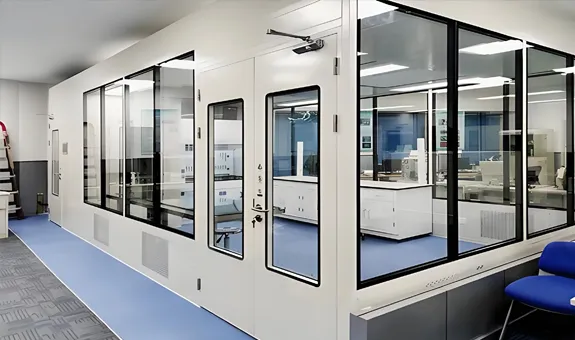
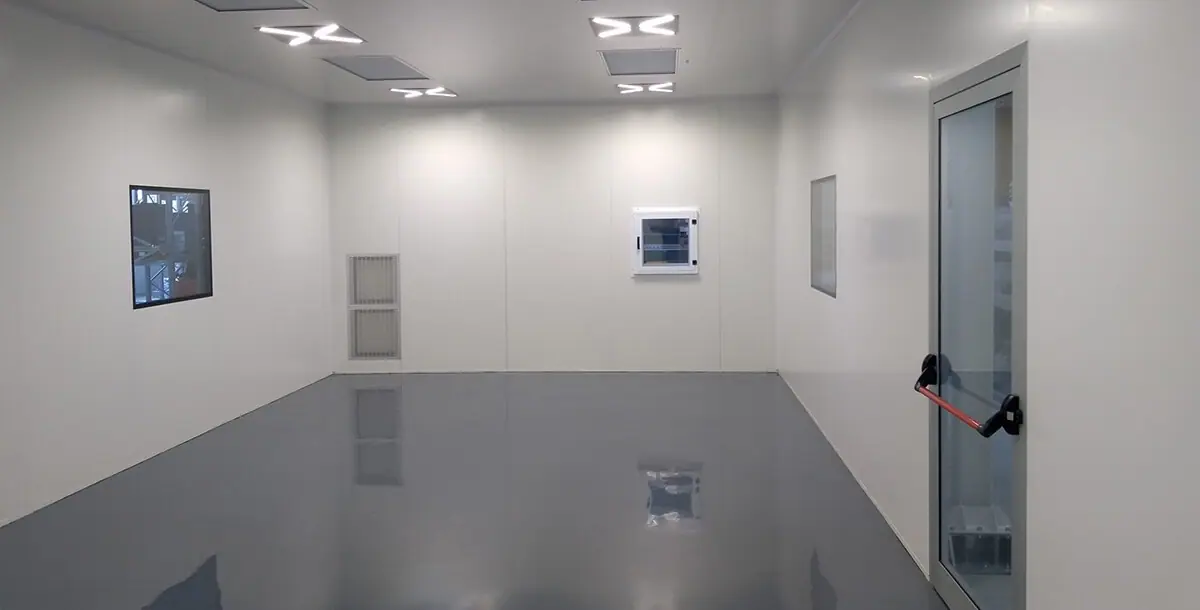
Rigid walls establish a visible and durable boundary between the controlled space and surrounding activity. Doors, windows, pass-throughs, and service openings can be placed at approved locations rather than treated as informal access points.
Defined boundaries can support zoning and segregation. Personnel, materials, waste, and equipment can be routed through selected entry points, with gowning or transfer steps matched to the contamination risk.
The enclosure can also protect the process from nearby traffic, drafts, dust-generating activities, and accidental contact. This protection depends on the wall, ceiling, floor, doors, penetrations, and air system working together.
Hardwall does not mean airtight. Every joint, threshold, seal, utility opening, and door creates a potential leakage path. If leakage performance matters, criteria and test methods should be defined rather than inferred from appearance.
Physical separation is also not the same as hazardous-material containment. Containment may require negative pressure, dedicated exhaust, filtration, decontamination, emergency response, and worker-protection measures designed for the specific hazard.
Greater Control Over Airflow and Pressure Relationships
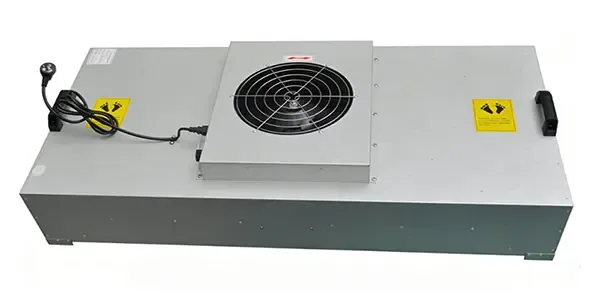
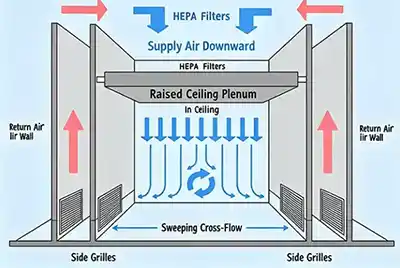
A rigid enclosure gives the airflow designer a defined room volume and more deliberate control over openings. Supply, return, and exhaust points can be coordinated with equipment, doors, and adjacent spaces.
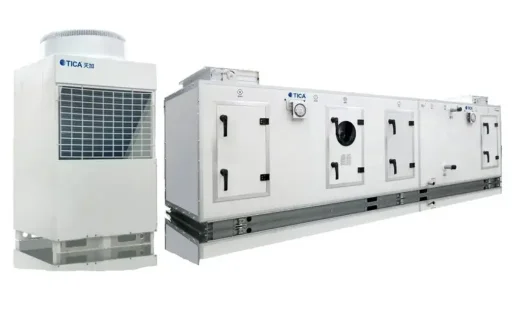
This can support stable room-to-room pressure relationships when the fan capacity, dampers, sensors, control logic, door behavior, and leakage assumptions are appropriate. It can also help establish pressure cascades across zones with different contamination risks.
The benefit is not automatic. An obstructed return, unexpected equipment exhaust, open penetration, misaligned door, or poor control sequence can destabilize a rigid room. Commissioning should verify airflow volumes, pressure direction, controls, alarms, and response under approved conditions.
Airflow visualization can help reveal how air moves around equipment and through critical zones. Its purpose and acceptance criteria should follow the process risk. A visually appealing smoke pattern is not a substitute for a complete verification plan.
Pressure and airflow should also be monitored at frequencies appropriate to the intended use. Monitoring shows continuing performance; it does not correct a design or installation defect.
Cleanable, Durable Interior Surfaces
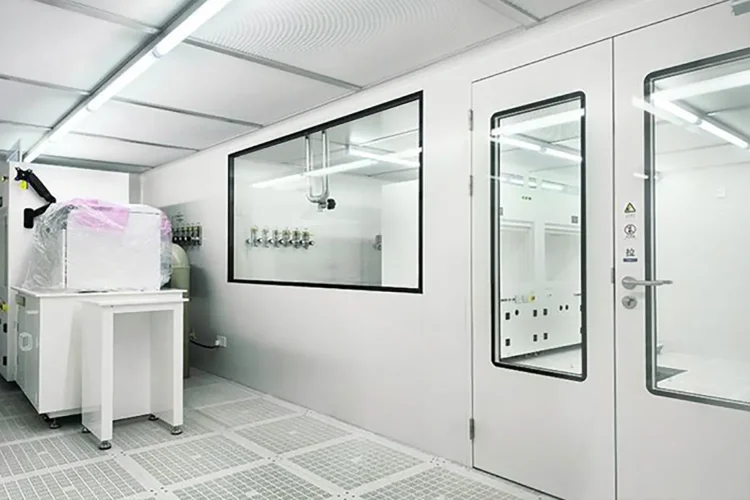
Hardwall systems can provide smooth, rigid interior surfaces selected for repeated cleaning, impact, moisture, and the operating environment. Corners, joints, and floor junctions can be detailed to reduce difficult-to-clean recesses.
Material choice should consider the actual cleaning or disinfecting agents, contact time, frequency, temperature, abrasion, corrosion, and repair method. A generic "cleanroom panel" label does not establish chemical compatibility.
Rigid surfaces can be easier to inspect for damage than moving curtains. Dents, delamination, failed sealant, corrosion, or cracked glazing still require documented repair. Repairs should restore cleanability and any relevant enclosure performance.
The local panel material reviewed for this article depicts a 50 mm tongue-and-groove connection and aluminium curved skirting or corner profiles. Because the document carries third-party Huijun identification, these details can only be described as catalogue examples. They cannot support Deiiang ownership, patent, or certification claims.
Material certificates and product data support component selection, but they do not prove the cleanliness or compliance of the completed room. Installed performance requires project-specific inspection and testing.
Easier Integration of Services and Controls
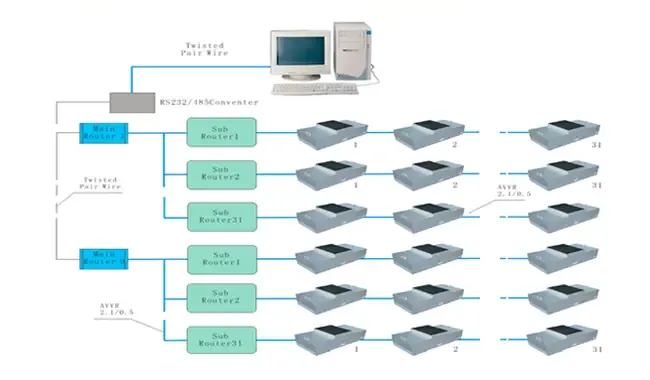
Rigid panels and ceilings can be coordinated with lights, terminal filters, pressure sensors, outlets, data points, process utilities, pass-throughs, windows, and access-control devices. Planning these features before fabrication can reduce uncontrolled site modifications.
Integration is valuable because eACH penetration is both a functional connection and an enclosure interface. Its location should support cleaning, maintenance, calibration, structural support, fire stopping, and the intended pressure or contamination-control strategy.
Sensors need suitable ranges, accuracy, mounting, calibration access, tubing or wiring routes, and alarm logic. Process utility points need defined quality, capacity, materials, drainage, identification, and isolation.
Modular coordination can also make equipment schedules and as-built records clearer. Labels on filters, sensors, dampers, and utilities should match drawings, control screens, calibration records, and test reports.
Poorly coordinated integration has the opposite effect. Late drilling, inaccessible test ports, crowded service zones, and improvised sealants can reduce cleanability and make commissioning or maintenance difficult.
Access Control, Security, and Operational Discipline
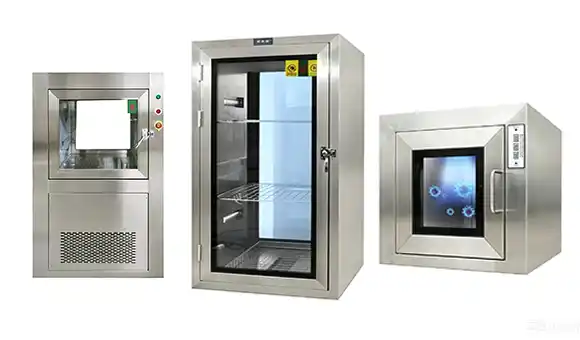
Hardwall rooms usually have defined doors rather than flexible entry around curtains. This can support controlled personnel access, material routes, gowning sequences, visitor management, and security for sensitive processes.
Doors may include closers, seals, automatic drop seals, vision panels, access readers, or interlocks when the risk assessment justifies them. Emergency egress, accessibility, and life safety must remain compliant with local requirements.
A local door catalogue describes a coated-steel configuration with three-side seals, an automatic drop-down bottom seal, and a flush double-glazed vision panel. Treat these as available configuration features requiring model verification, not as standard equipment or proof of room leakage, fire performance, classification, or GMP compliance.
Defined access supports procedures, but it does not enforce good behavior by itself. Personnel still need training in gowning, door use, material transfer, cleaning, maintenance, and response to alarms or deviations.
Vision panels can allow observation without unnecessary entry. Cameras or electronic access records may also support supervision where appropriate, subject to privacy, cybersecurity, and data-governance requirements.
Modular Adaptability and Lifecycle Value

Many hardwall clean rooms use prefabricated panels and repeatable connections. This can support phased installation, component replacement, expansion, or reconfiguration when the building and environmental systems are designed with future change in mind.
Adaptability can be valuable when production layouts change or new equipment is introduced. A panel may be physically movable, but the room is a balanced system. Changes can affect volume, airflow distribution, returns, exhaust, pressure, utilities, cleaning, monitoring, and emergency systems.
Formal change control should therefore include the reason, risk assessment, affected documents, implementation plan, inspection, testing, training, and release decision. Significant changes may require partial or full recommissioning, reclassification, or requalification.
Lifecycle value should be assessed across design, installation, operation, cleaning, maintenance, energy, repairs, downtime, future changes, and verification. It should not be reduced to the initial panel price.
Claims that modular construction is always faster, cheaper, more energy efficient, or easier to relocate require comparable project evidence. Without a defined baseline, scope, schedule, operating data, and acceptance result, those statements are marketing assumptions rather than demonstrated benefits.
Limits and Trade-Offs
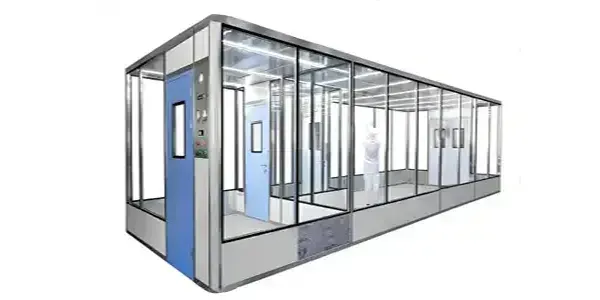
Hardwall systems bring more enclosure interfaces than an open or simple curtain zone. They require accurate dimensions, coordinated services, doors, seals, structural support, return paths, cleaning details, and document control.
Substrate tolerances can affect panel alignment and door operation. Late process changes may require new penetrations or replacement panels. Repairs can interrupt production and may need additional cleaning and testing.
Pressure control can also increase conditioning and fan requirements, depending on the design. The room may need dedicated returns, exhaust, monitoring, alarms, and backup strategies. Energy and maintenance effects should be evaluated rather than assumed.
Rigid boundaries can restrict access for unusually large equipment. Move-in routes, removable panels, ceiling access, and future maintenance clearances should be planned before the room is closed.
The final choice should compare alternatives against the same process requirements. In some cases, a localized softwall zone or separative device may be more appropriate. In others, a hardwall room provides the separation and integration the process needs.
Frequently Asked Questions
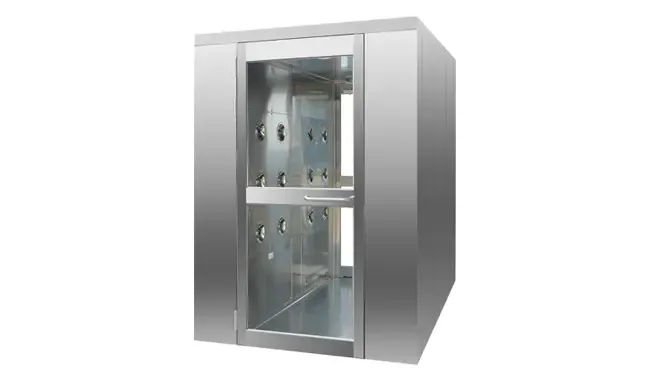
How can rigid walls support contamination control?
Rigid walls create defined boundaries that can be detailed with controlled joints, penetrations, doors, windows, and service interfaces. This can help manage access, airflow paths, cleaning, and separation from adjacent activities. The benefit depends on correct materials, installation, HVAC integration, procedures, maintenance, and verification; the wall system alone does not ensure cleanliness.
Do hardwall clean rooms make pressure control easier?
They can. A rigid enclosure allows leakage paths and openings to be designed more deliberately than a flexible curtain boundary. This may support stable pressure relationships when combined with suitable supply, return, exhaust, doors, sensors, and controls. Actual pressure performance must be commissioned and monitored against project-specific criteria.
Are hardwall interiors easier to clean?
They can provide smooth, accessible, cleanable surfaces and durable joint details, but suitability depends on the chosen panel faces, sealants, corners, floor junctions, penetrations, and compatibility with cleaning or disinfection agents. Cleaning performance also depends on procedures, tools, frequency, training, inspection, and timely repair of damaged surfaces.
Can utilities and monitoring devices be integrated into hardwall systems?
Yes. Rigid panels and ceilings can be coordinated with electrical outlets, process utilities, pressure sensors, controls, glazing, doors, pass-throughs, and terminal air devices. Integration should be designed before fabrication so penetrations, maintenance access, cleanability, structural support, calibration access, and future changes are controlled and documented.
Are hardwall clean rooms easy to expand or relocate?
Modular hardwall components may support future reconfiguration, but "movable" does not mean the change is consequence-free. Expansion or relocation can affect airflow, room volume, pressure balance, utilities, process routes, monitoring points, safety systems, and qualification status. Formal change control, revised drawings, commissioning, and appropriate retesting are normally needed.
Conclusion
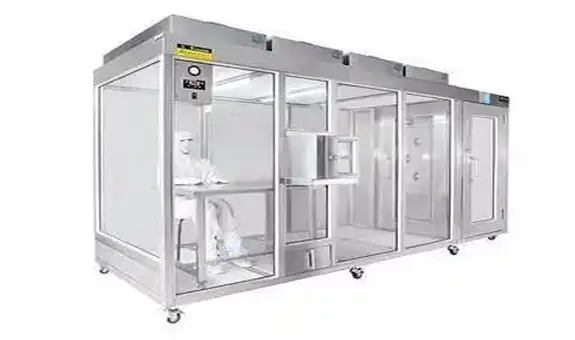
The benefits of hardwall clean rooms come from their defined rigid boundaries: controlled access, deliberate airflow and leakage management, cleanable surfaces, coordinated services, and potential modular change. These features can support a reliable controlled environment when they match the process requirements.
The trade-off is that rigid rooms need careful interface design, accurate installation, controlled changes, and complete verification. Evaluate benefits against risks, total lifecycle cost, process needs, and required evidence. The strongest claim is not that hardwall is always better, but that it can provide appropriate control when the complete system is engineered and demonstrated for its intended use.
References
- iso 14644-1:2015, Cleanrooms and associated controlled environments — Part 1: Classification of air cleanliness by particle concentration. https://www.iso.org/standard/53394.html
- iso 14644-2:2015, Cleanrooms and associated controlled environments — Part 2: Monitoring to provide evidence of cleanroom performance related to air cleanliness by particle concentration. https://www.iso.org/standard/53393.html
- iso 14644-3:2019, Cleanrooms and associated controlled environments — Part 3: Test methods. https://www.iso.org/standard/60598.html
- iso 14644-4:2022, Cleanrooms and associated controlled environments — Part 4: Design, construction and start-up. https://www.iso.org/standard/72379.html
- iso 14644-5:2025, Cleanrooms and associated controlled environments — Part 5: Operations. https://www.iso.org/standard/88599.html
What Are the Benefits of Hardwall Clean Rooms?
Hardwall clean rooms have become essential in various industries, including pharmaceuticals, electronics, and biotechnology. These specialized environments are designed to control contamination and maintain product integrity. This article outlines the key benefits of hardwall clean rooms, supported by quantitative data and relevant international standards.
1. Enhanced Contamination Control: One of the primary benefits of hardwall clean rooms is their superior contamination control. According to ISO 14644-1, a clean room must maintain a maximum allowable particle count per cubic meter of air. For instance, a class 100 clean room allows no more than 100 particles of size 0.5 micrometers or larger per cubic meter. Hardwall structures provide better barriers against contaminants, ensuring compliance with these stringent standards.
2. Structural Integrity and Flexibility: Hardwall clean rooms offer enhanced structural integrity compared to softwall alternatives. The rigid walls are constructed from materials such as steel or fiberglass, ensuring durability and a longer lifespan. Additionally, these clean rooms can be designed to accommodate various layouts, enabling facilities to adapt to changing production needs without compromising cleanliness standards.
3. Improved Energy Efficiency: Energy efficiency is another significant advantage of hardwall clean rooms. Research indicates that these environments can reduce energy costs by up to 30% compared to traditional clean rooms with less effective insulation. The robust construction minimizes air leakage, leading to lower heating and cooling demands while maintaining the required temperature and humidity levels.
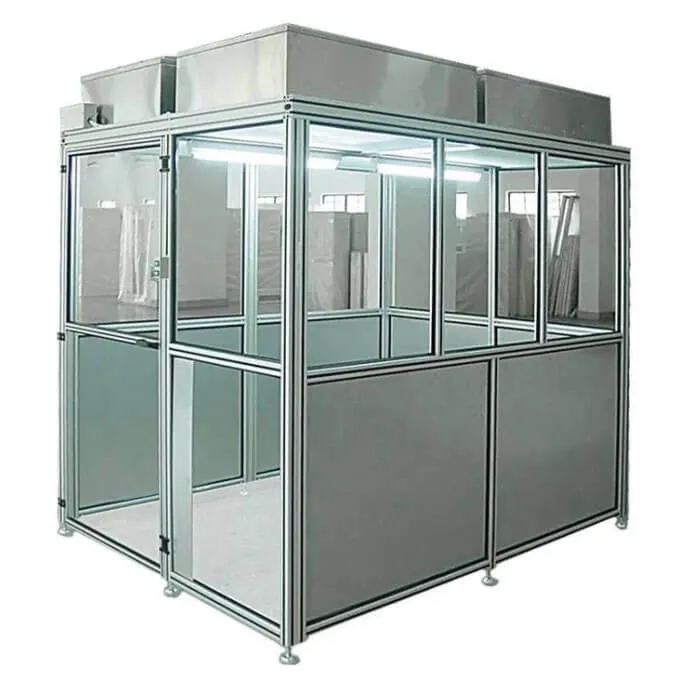
4. Effective Airflow Management: Hardwall clean rooms provide superior airflow management, crucial for maintaining cleanliness levels. The design allows for a more controlled airflow pattern, reducing the potential for cross-contamination. The use of HEPA or ULPA filters in combination with proper air circulation can achieve up to 99.99% efficiency in particle removal, aligning with standards set forth by ISO 14644-3.
Relevant Standards and Regulations
ISO 14644-1: Cleanrooms and associated controlled environments—Part 1: Classification of air cleanliness by particle concentration. This standard defines the maximum allowable particle counts for different clean room classes, ensuring effective contamination control.
ISO 14644-3: Cleanrooms and associated controlled environments—Part 3: Test methods. This standard outlines testing methods for assessing the performance of cleanrooms, including particle counting and airflow measurement.
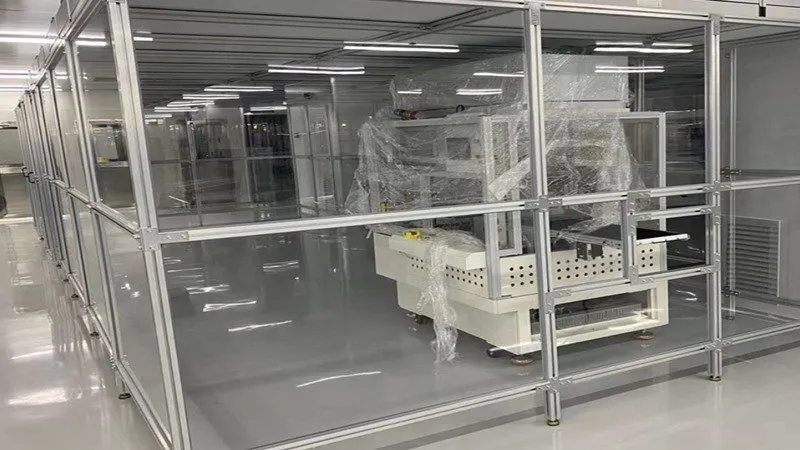
ISO 14644-4: Cleanrooms and associated controlled environments—Part 4: Design, construction, and start-up. This standard provides guidelines for the design and construction of clean rooms, ensuring that they meet operational requirements and regulatory standards.
FDA 21 CFR Part 210 and 211: These regulations govern current good manufacturing practices (CGMP) for pharmaceuticals. They mandate that facilities maintain appropriate cleanroom conditions to ensure product safety and efficacy.
EMA Guideline on Good Manufacturing Practice: This document outlines the requirements for cleanrooms in pharmaceutical manufacturing, emphasizing the importance of maintaining strict environmental controls.
What are Clean Rooms Used For?
Controlled Environments
Modular cleanrooms are specialized environments designed to minimize airborne particles, ensuring that sensitive processes can occur without contamination. They are critical in industries like semiconductor manufacturing, pharmaceuticals, and biotechnology.
Aerospace and Defense
Clean rooms play a crucial role in the aerospace and defense sectors, where the assembly of sensitive components requires strict contamination control. This ensures the reliability and safety of critical systems in aircraft and defense technologies.
Medical Applications
In healthcare, clean rooms are essential for producing sterile medical devices and conducting clinical trials. They help maintain the integrity of products that are vital for patient safety and effective treatment.
Why It Is Necessary to Put on Special Clean Room Suits
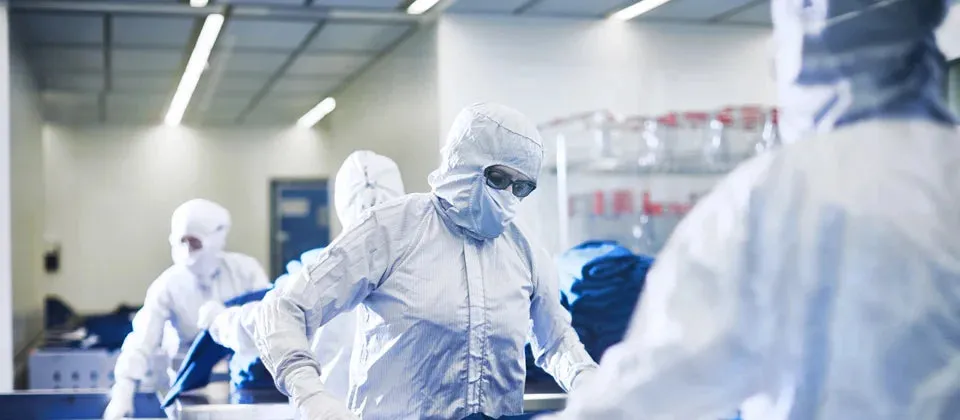
1. Contamination Prevention
Wearing special clean room suits prevents the introduction of contaminants from personnel, such as skin particles, hair, and clothing fibers. This is essential for maintaining the cleanliness of controlled environments.
2. Static Control
Clean room suits are often designed to control static electricity, which can damage sensitive electronic components. This protection is crucial in industries like semiconductor manufacturing.
3. Compliance with Standards
Special suits comply with industry regulations and standards, ensuring that personnel adhere to safety and contamination control protocols. This compliance is vital for maintaining clean room integrity.
Why Is It Important to Keep the Clean Room Absolutely Clean?
Product Integrity
Maintaining an absolutely clean environment ensures the integrity of sensitive products. Contamination can lead to defects and failures, impacting product performance and reliability.
Regulatory Compliance
Many industries are governed by strict regulations regarding cleanliness. Failing to maintain a clean room can result in legal issues and loss of certifications, affecting business operations.
Research Validity
In research settings, cleanliness is critical for obtaining valid results. Contaminants can skew data, leading to incorrect conclusions and hindering scientific advancement.
Safety Concerns
In medical and pharmaceutical contexts, contamination can pose health risks. Keeping clean rooms clean is essential to ensuring patient safety and the efficacy of medical products.
The Requirements for iso 8 clean room
Particle Count Standards
iso 8 clean rooms must maintain a maximum allowable particle count of 3,520 particles per cubic meter for particles ≥0.5 micrometers. This standard ensures that the environment is suitable for many manufacturing processes, particularly in pharmaceuticals.
air changes per Hour
ISO 8 clean rooms are required to have a minimum of 20 air changes per hour (ACH). This circulation rate helps to dilute and remove airborne contaminants, maintaining the necessary cleanliness levels for sensitive operations.
Construction Materials
The walls, floors, and ceilings of ISO 8 clean rooms must be made from non-porous, easy-to-clean materials. This helps to minimize particle generation and makes it easier to maintain the required cleanliness standards.