+86 13638632902
 Jason@cleanroomequips.com


 MENU
MENU
Introduction: Which Industries Actually Specify a hardwall clean room?
Ask someone outside the industry what a cleanroom looks like and they picture the hardwall version — solid white panels, glass doors, people in gowns. Ask what it costs and they usually guess wrong, because the price is driven by the class, not the walls.
Here is the thing though. The walls matter more than people think. A hardwall clean room is a modular box built from sandwich panels sitting in aluminium frames, and it shows up in at least nine different industries. Softwall curtain systems show up in fewer, and there is a hard technical reason for that.
A hardwall clean room costs more up front. Curtains are cheap and go up fast, but they leak air, they cannot hold a pressure difference between rooms, they fall apart under strong cleaning chemicals, and they will not carry a ceiling loaded with ffus. Once a process needs a stable class, a pressure cascade or regular washdown, the specification lands on hardwall panels. Every time.
So let us go through the industries one by one and see where a hardwall clean room earns its keep — the class each one runs, why the rigid wall earns its keep there, and the couple of cases where it honestly does not.
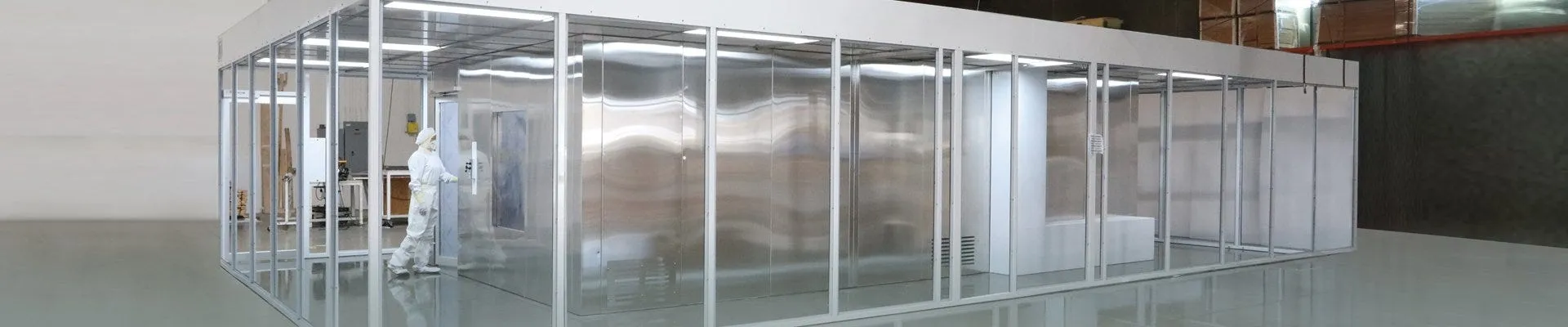
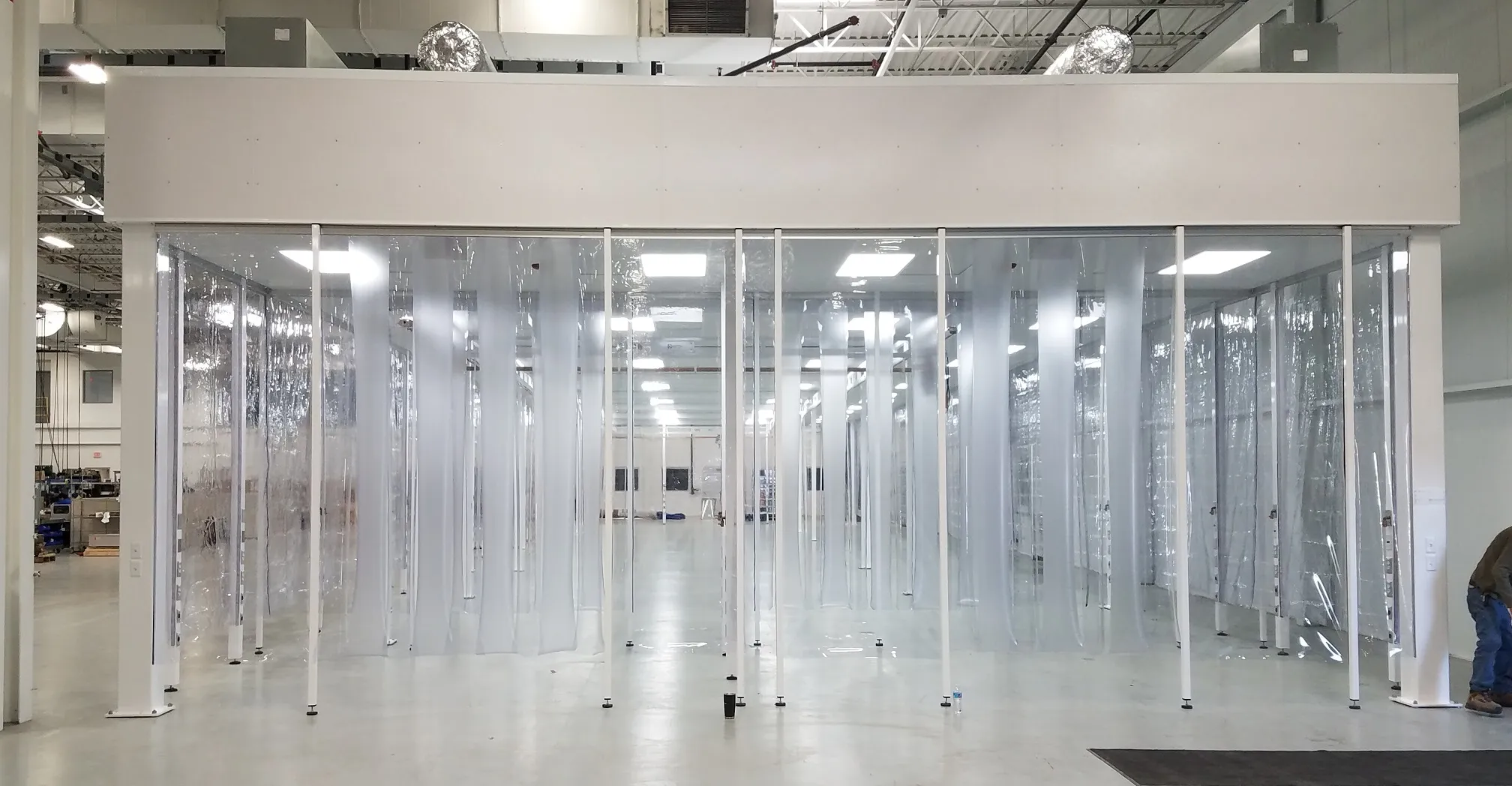
A rigid-wall modular cleanroom assembled from sandwich panels and aluminium profiles. The same envelope serves pharma, electronics, food and battery plants — what changes is the class, the filtration coverage and the door type.
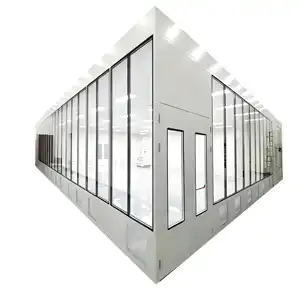
Fig.1 — A hardwall clean room built from bolted sandwich panels on an aluminium frame, the envelope format used across all nine industries covered below.
What Decides Whether an Industry Picks Hardwall
The Four Factors That Settle It
We have supplied both wall types for years, and the call on a hardwall clean room almost always comes down to four questions.
- Does the process need a pressure cascade between zones?
- Does the room get hosed down or wiped with chemicals every shift?
- Does the ceiling carry FFUs, ductwork or process kit?
- Will an auditor want to see documentation?
Two or more yeses and the answer is a hardwall clean room, not curtains.
A quick size check before you go further. Take a 68 m² room, 3 m high, running ISO 7 at 40 air changes an hour. That needs about 8,160 m³/h of filtered air. At roughly 500 m³/h a unit you are buying sixteen FFUs, which is about 22% coverage on a 1200 × 1200 grid. A curtain system is simply not rated to hang that grid. An MCS-70 T-grid inside a hardwall clean room takes it without an argument.
Industry Decision Matrix
| Industry | Typical class | Pressure cascade | Washdown | Recommended wall system |
|---|---|---|---|---|
| Pharmaceutical sterile | iso 5–7 | Yes | Yes | Hardwall |
| Biotech fermentation | ISO 7–8 | Yes | Yes | Hardwall |
| Semiconductor wafer | ISO 3–5 | Yes | Chemical wipe | Hardwall |
| Electronics assembly | ISO 7–8 | Optional | Wipe down | Hardwall or softwall |
| Medical device | ISO 5–8 | Yes | Yes | Hardwall |
| Aerospace and defense | ISO 6–8 | Optional | Wipe down | Hardwall or softwall |
| Optics | ISO 5–6 | Optional | Wipe down | Hardwall |
| Food high-risk | ISO 7–8 | Yes | Yes, caustic | Hardwall |
| EV battery | ISO 7–8 + dry room | Yes | Wipe down | Hardwall |
| Compounding pharmacy | ISO 5–7 | Yes | Yes | Hardwall |
| Industry | Class | Wall |
|---|---|---|
| Pharma sterile | ISO 5–7 | Hardwall |
| Semiconductor | ISO 3–5 | Hardwall |
| Medical device | ISO 5–8 | Hardwall |
| Food high-risk | ISO 7–8 | Hardwall |
| EV battery | ISO 7–8 | Hardwall |
| Compounding pharmacy | ISO 5–7 | Hardwall |
When Hardwall Is Not the Right Answer
It would be convenient to say a hardwall clean room always wins. They do not, and we tell clients so.
Short-life projects are the first case. If the room only needs to run a six-month trial line, the dismantling labour and revalidation cost more than the panels are worth at the end.
Small iso 8 rooms come second. Under about 30 m², once labour and re-validation are counted, the numbers rarely favour a hardwall clean room over a curtain booth.
And then there is layout churn. Panels reconfigure fine — quarterly, even. Weekly is a different story, and that is softwall territory.
Pharmaceuticals and Biotechnology
Where Hardwall Clean Rooms Are Unavoidable
Pharma is the market most people think of first, and it is the one where the hardwall clean room really has no substitute. Sterile filling, lyophilizer loading, API handling — all of it runs in a graded suite, Grade A or B for the critical zone, grade c behind it, Grade D for support.
EU GMP Annex 1 is what pins the envelope down. It wants the Grade A background held as one continuous sealed zone, defined pressure steps between grades, and surfaces that are smooth, impervious and coved. Try coving a vinyl curtain. You cannot, you cannot document it as impervious, and you cannot hold a steady 10–15 Pa step between grades through a curtain wall either.
Biotechnology specifies a hardwall clean room for the same reasons, with one twist. Fermentation and downstream purification rooms see aggressive chemicals and need humidity held steady, and rigid panels take both without complaint.
gmp grades, ISO Classes and Wall Requirements
| GMP grade | ISO equivalent | Typical use | Typical ACH | Pressure |
|---|---|---|---|---|
| A | ISO 4.8–5 | Aseptic filling, open sterile ops | 240–480 | Positive |
| B | ISO 5–6 | Background to Grade A | 90–180 | Positive |
| C | ISO 7 | Less critical steps | 30–60 | Positive |
| D | ISO 8 | Support, gowning, equipment wash | 10–25 | Positive |
| Grade | ISO | ACH |
|---|---|---|
| A | ISO 4.8–5 | 240–480 |
| B | ISO 5–6 | 90–180 |
| C | ISO 7 | 30–60 |
| D | ISO 8 | 10–25 |
Semiconductor and Electronics Manufacturing
Classes and the Contamination Drivers Behind Them
Semiconductor pushes the hardwall clean room to the sharp end of the classification scale, and the class swings hard depending on which step you are looking at.
| Process step | Typical ISO class | Dominant particle size |
|---|---|---|
| Photolithography, etch | ISO 3–4 | 0.1 µm |
| Wafer fab general | ISO 5 | 0.1–0.3 µm |
| Wafer test and sort | ISO 6 | 0.3 µm |
| Assembly and packaging | ISO 7 | 0.5 µm |
| Final test, marking | ISO 7–8 | 0.5 µm |
| Step | Class |
|---|---|
| Litho, etch | ISO 3–4 |
| Wafer fab | ISO 5 |
| Test and sort | ISO 6 |
| Assembly | ISO 7 |
| Final test | ISO 7–8 |
The part that catches people out is particle size. At advanced nodes a defect smaller than the node itself kills yield, so specs get written around 0.1 µm particles rather than the 0.5 µm everyone else worries about. Static makes it worse, because a charged surface pulls particles straight onto the wafer.
Why Rigid Walls Beat Curtains Here
Four reasons a semiconductor hardwall clean room outperforms a curtain booth on the same floor.
- Hard, non-shedding surfaces shed far less than vinyl film ever will
- The panel core does not build up static charge the way plastic curtain does
- Tight joints make chemical wiping and ESD-safe coatings actually work
- A rigid grid carries the dense FFU coverage that ISO 5 demands
We saw this go wrong once. An electronics client sealed their optical inspection bay with construction-grade silicone during a rush retrofit. Three months later the outgassing had fogged every lens under test and a whole batch of wafer trays went back through cleaning. Cleanroom-grade neutral-cure sealant costs next to nothing extra. That rework did not.
Medical Devices and In-Vitro Diagnostics
Medical device plants buy a hardwall clean room for the same reasons pharma does, then mix in factory throughput, and again the class follows the activity rather than the building.
| Activity | Typical ISO class | Notes |
|---|---|---|
| Sterile device assembly | ISO 5–7 | Class 7 most common |
| IVD reagent filling | ISO 5–7 with ISO 5 zone | Small batches, frequent changeover |
| Packaging and labelling | ISO 8 | Controlled but less critical |
| Component cleaning | ISO 8 | Feed to assembly |
| Activity | Class |
|---|---|
| Sterile assembly | ISO 5–7 |
| IVD filling | ISO 5–7 |
| Packaging | ISO 8 |
| Cleaning | ISO 8 |
IVD reagent filling is the tricky one. It hates both particulate and biological contamination, the batches are small, and the changeovers are frequent. Deiiang runs the same aluminium profile family across 50 mm and 100 mm panels, so a filling suite can be re-partitioned without touching the wall build — which is precisely what an IVD producer wants between campaigns.
Device and electronics assembly share the same discipline: controlled air, controlled people, controlled surfaces. What separates them is the particle size the process cares about and the cleaning chemistry the surfaces must survive.
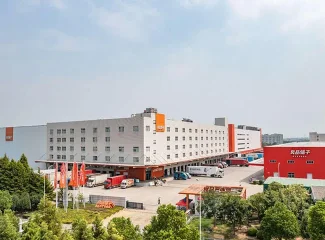
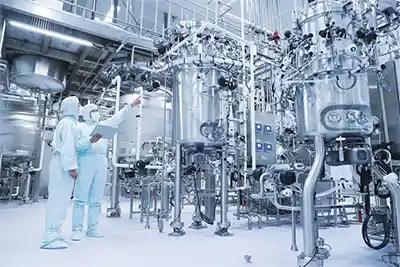
Fig.2 — Assembly and inspection work inside a hardwall clean room. Medical device and electronics lines share this envelope format at ISO 7 to ISO 8.
Aerospace, Defense and Optics
Aerospace and Defense
Hydraulic components, avionics, satellite hardware — aerospace assembly in a hardwall clean room runs ISO 6 to ISO 8. Not a biology problem, a reliability one. A particle stuck in a fuel valve or an optical bench turns into an in-service failure years later, and nobody wants that phone call. Defence work adds traceability paperwork, and numbered panelised construction makes that paperwork easier to keep straight.
Optics and Photonics
Optical coating and lens assembly inside a hardwall clean room run ISO 5 to ISO 6, and they are oddly sensitive to organic outgassing. Anything that emits VOCs will fog a coating run. That is why optics buyers insist on cleanroom-grade neutral-cure silicone and low-VOC adhesives throughout the envelope — and why they read the sealant datasheet, which most people never do.
Food, Beverage and Nutraceuticals
Why Food Plants Specify Hardwall
Food is the segment growing fastest for hardwall clean rooms, and almost nobody outside the industry expects that. Ready-to-eat lines, dairy, infant formula and nutraceutical blending all run high-risk zones at ISO 7 to ISO 8.
The fight is different from pharma. Food plants are battling mould, listeria and pests, not sub-micron particles. What they need is a sealed, washable envelope covering a big floor, and curtain systems cannot deliver that at hall scale. Deiiang's standard panel modules go up to 10 m × 8 m × 3 m, so a whole high-risk hall gets enclosed without a forest of intermediate posts.
Washdown, Chemical Resistance and Pest Control
Food cleaning is not gentle on a hardwall clean room or anything else in the building. Daily caustic washdown at temperature, plus sanitiser fogging, eats through vinyl curtains in a couple of years. Steel-faced panels with sealed joints just shrug it off, and the sealed envelope closes the gaps pests love.
A dairy job taught us this the hard way. Their cleaning crew pointed the hose straight at the panel joints, and six months later the sealant had washed out of every seam. The answer was not a fancier sealant. It was a written washdown protocol plus drop-seal clean doors rated at 450 N/m² airtightness, so the room could be hosed without blasting the gaskets. Hardware and protocol have to be bought together.
Doors matter as much as walls here. Where forklifts cross the clean boundary, Deiiang's high-speed soft PVC rolling door opens at 1.2 m/s, shuts at 0.5 m/s and is rated for a million cycles. The point is not speed for its own sake — a door that closes fast spends more time closed, and that is what actually holds the pressure cascade.
High-risk food halls run the same hardwall envelope as pharma suites, at a friendlier price. The panel finish and the sealed joints do the work: they survive caustic washdown and deny pests and mould anywhere to settle.
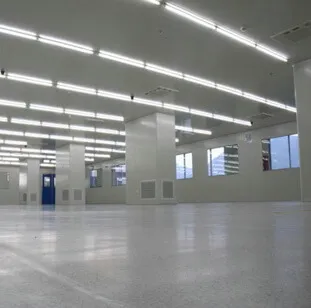
Fig.3 — A large hardwall clean room hall. Deiiang panel modules run up to 10 m × 8 m × 3 m, so full production halls can be enclosed without intermediate posts.
Automotive and EV Battery Assembly
Battery plants run two regimes side by side inside a hardwall clean room. Electrode handling needs a dew point down to −40 °C, while module and pack assembly runs ISO 7 to ISO 8 for particle control around electrical contacts.
The enemy here is metallic particulate. One stray metal particle inside a cell and you have an internal short. That is why battery clients ask for Deiiang's 100 mm MGO rockwool panels where everyone else takes 50 mm board — the thicker core stiffens wide spans and the rockwool adds fire separation between electrode and formation areas.
Compounding Pharmacies and Hospital Clean Rooms
Hospital compounding pharmacies buy a hardwall clean room because USP 797 and USP 800 leave no alternative. USP 797 wants an ISO 5 buffer inside an ISO 7 suite with an ISO 8 anteroom. USP 800 adds negative pressure for hazardous compounding, typically −0.01 to −0.03 inches of water column against adjacent spaces, with exhaust dumped outside.
Both effectively write "rigid construction" into the spec. You cannot hold a documented negative-pressure ISO 7 room with curtains, and you certainly cannot seal a curtain wall well enough to keep hazardous drug residue out of the ceiling plenum.
Industry × Class × Wall System: The Full Comparison
| Industry | ISO class | Wall system | Special requirement |
|---|---|---|---|
| Pharma sterile | ISO 5–7 | Hardwall | gmp documentation, coving |
| Semiconductor | ISO 3–5 | Hardwall | 0.1 µm particles, ESD |
| Medical device | ISO 5–8 | Hardwall | Changeover flexibility |
| Optics | ISO 5–6 | Hardwall | Low-VOC materials |
| Food high-risk | ISO 7–8 | Hardwall | Caustic washdown |
| EV battery | ISO 7–8 | Hardwall | Dew point to −40 °C |
| Aerospace | ISO 6–8 | Hardwall or softwall | Large spans |
| Electronics assembly | ISO 7–8 | Either | ESD flooring |
| Industry | Class | Wall |
|---|---|---|
| Pharma sterile | ISO 5–7 | Hardwall |
| Semiconductor | ISO 3–5 | Hardwall |
| Medical device | ISO 5–8 | Hardwall |
| Food high-risk | ISO 7–8 | Hardwall |
| EV battery | ISO 7–8 | Hardwall |
| Aerospace | ISO 6–8 | Either |
Cost of a hardwall clean room moves with class too, and not gently.
Indicative hardwall clean room build cost by class. Process utilities — chilled water, pure steam, exhaust — often cost more than the room itself.
Components Each Industry Asks For
Panels
The panel inside a hardwall clean room follows the industry. Deiiang supplies MGO and MGO rockwool sandwich panels in 50 mm and 100 mm. Their hollow magnesium oxide panel uses 5 mm facing sheets with eleven staggered ribs, so the thirteen splice points never line up on one straight line — a patented build (ZL2004100277716) that buys you better flatness, more load capacity and stronger fire performance than a standard MGO board.
Rockwool core goes to food and pharma for the fire rating. Electronics buyers stay with standard MGO for flatness and price. Standard modules run from 2 m × 3 m × 3 m up to 10 m × 8 m × 3 m.
Doors and Windows
Doors in a hardwall clean room split by industry too. Pharma and device plants take the painted steel clean door — 50 mm leaf, three-sided rubber-plastic seals, automatic drop-down sweep at the bottom — in 900 × 2100, 1200 × 2100 or 1500 × 2100 mm leaves, with 400 × 600 mm double-glazed vision panels flush in the face.
Food and logistics areas usually want the high-speed door instead: 1.2 m/s open, 0.5 m/s close, a million cycles, 450 N/m² airtightness. That combination earns its keep the moment forklifts start crossing the clean boundary.
Ceiling Grid, FFU and Filtration
The T-grid in a hardwall clean room decides how much filtration the room can carry, and most buyers never think about it until it is too late. Deiiang's MCS-55, MCS-60 and MCS-70 aluminium grids come in 1200 × 600 mm and 1200 × 1200 mm and take a 4000 N central point load, deflecting between 0.84 and 0.97 mm and staying under 0.08 mm of residual deformation.
Above the grid, Deiiang FFUs push 0.45 m/s ±20% across the outlet face. The FFU-3 and FFU-4 controllers speak RS-485 and network, keep their settings through a power cut, and group-control — handy when a room runs sixteen units that all need the same speed. Upstream, medium-efficiency fiberglass bag filters at F5 to F9 under EN779 protect the terminal HEPA media, and they keep working at 150 °C and 100% humidity.
A fan filter unit with its terminal HEPA module. Filtration coverage, not wall type, is what actually buys a cleanliness class — the wall system only has to carry the grid the FFUs hang from.
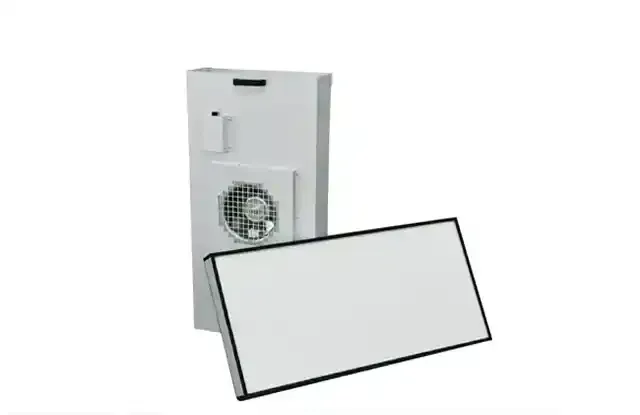
Fig.4 — FFU with HEPA terminal filter. Deiiang units deliver 0.45 m/s ±20% at the outlet face with RS-485 group control.
Deiiang Project Snapshot: One Envelope, Four Industries
Four different clients in one year, one hardwall clean room platform.
| Project | Class | Area | FFUs | On-site duration |
|---|---|---|---|---|
| Nutraceutical blending | ISO 8 | 96 m² | 6 | 12 days |
| IVD reagent filling suite | ISO 7 + ISO 5 zone | 74 m² | 14 | 18 days |
| Electronics assembly | ISO 8 + ESD floor | 120 m² | 8 | 14 days |
| Battery module assembly | ISO 7 + dry room | 88 m² | 12 | 21 days |
| Project | Class | Area |
|---|---|---|
| Nutraceutical blending | ISO 8 | 96 m² |
| IVD filling suite | ISO 7 | 74 m² |
| Electronics assembly | ISO 8 | 120 m² |
| Battery assembly | ISO 7 | 88 m² |
Same 50 mm panels, same MCS-70 grid, same door range in all four hardwall clean rooms. What moved between projects was filtration coverage, pressure scheme and door type. That is the quiet advantage of the hardwall clean room platform — one construction system, and it fits a lot of industries.
Deiiang™ builds hardwall clean rooms for pharmaceutical, semiconductor, medical device, food and battery applications from ISO 3 to ISO 8. Product designer: Jason Peng.
FAQ: Industries and Hardwall Clean Rooms
Which industries use hardwall clean rooms most often?
Pharmaceuticals, biotechnology, semiconductor and electronics, medical device manufacturing, optics, aerospace, food and nutraceuticals, EV battery assembly and hospital compounding pharmacies take the lion's share of rigid-wall installations. The common thread is a documented class plus a pressure or cleaning requirement a curtain wall cannot meet.
What iso class do most industries need?
Most hardwall clean rooms sit between ISO 5 and ISO 8. Semiconductor lithography and aseptic filling push up to ISO 3–5, while device packaging, food handling and general assembly live at ISO 7–8. The class follows the process step, not the industry name.
Why do pharmaceutical plants choose hardwall over softwall?
Pressure cascades, coved corners, washdown cleaning and GMP documentation all want a rigid, sealed envelope. EU GMP Annex 1 expects smooth, impervious, cleanable surfaces between grades, and a vinyl curtain cannot be coved, cannot be documented, and will not hold a steady 10–15 Pa step.
Can a softwall clean room meet ISO 7?
For a quiet, low-criticality ISO 7 space — packaging, inspection — a curtain booth can hold the particle count on a good day. It will not hold the pressure differential reliably and it will fail an audit that checks differential logs. Once you need documented pressure control, buy a hardwall clean room.
Are hardwall clean rooms suitable for food production?
Yes, and they keep turning up in ready-to-eat and dairy lines. Washdown-rated panels and doors take the daily caustic cleaning, and the sealed envelope keeps pests and mould out of the high-risk zone. Just pair it with a written washdown protocol, or the sealant will not survive the hoses.
What class do semiconductor clean rooms need?
Lithography and wafer processing run ISO 3–5, fabs generally ISO 5–6, and backend assembly or test at ISO 7–8. The spec gets written around 0.1 µm particles rather than 0.5 µm, which is why FFU coverage in a fab can run past 60%.
Can a hardwall clean room be used for a compounding pharmacy?
Yes. USP 797 expects an ISO 5 buffer inside an ISO 7 suite, and USP 800 hazardous compounding needs negative pressure around −0.01 to −0.03 inches of water column with exhaust to outside. Both need the rigid, sealed construction only a hardwall system gives you.
Which industry most often buys the wrong wall system?
Electronics assembly, more often than not. Buyers see the price of a curtain booth, install it, then find out the ESD coating will not stick to vinyl and the room loses pressure once the HVAC ramps up. Retrofitting a hardwall clean room after the fact costs more than specifying one on day one.
References
- ISO 14644-1:2015 — Classification of air cleanliness by particle concentration: iso.org/standard/53394.html
- EU GMP Annex 1 (2022) — Manufacture of sterile medicinal products: health.ec.europa.eu
- USP General Chapter 797 — Pharmaceutical Compounding — Sterile Preparations: usp.org
- USP General Chapter 800 — Hazardous Drugs — Handling in Healthcare Settings: usp.org
- FDA cGMP 21 CFR Parts 210 and 211: ecfr.gov
- iso 14644-4:2022 — Design, construction and start-up: iso.org/standard/71154.html