+86 13638632902
 Jason@cleanroomequips.com


 MENU
MENU
A hardwall cleanroom uses rigid, sealed panels, while a softwall cleanroom uses flexible curtains around a supporting frame. That basic difference influences pressure control, environmental stability, cleaning, utility integration, access, installation, and future changes.
Neither label is an ISO cleanliness class. iso 14644-1 classifies air cleanliness by measured airborne particle concentration. The right choice is therefore the enclosure that can be designed, operated, tested, and monitored for the actual process risk.
Short answer: choose softwall construction when a localized, adaptable clean zone meets the process requirement. Choose hardwall construction when the project needs a more defined envelope, stable pressure relationships, integrated services, or long-term controlled operation.
Side-by-Side Comparison: Hardwall vs softwall cleanrooms
The most useful hardwall vs softwall cleanroom comparison begins with function, not appearance. A rigid enclosure usually gives designers more control over leakage paths; curtains usually give operators easier access and greater layout flexibility.
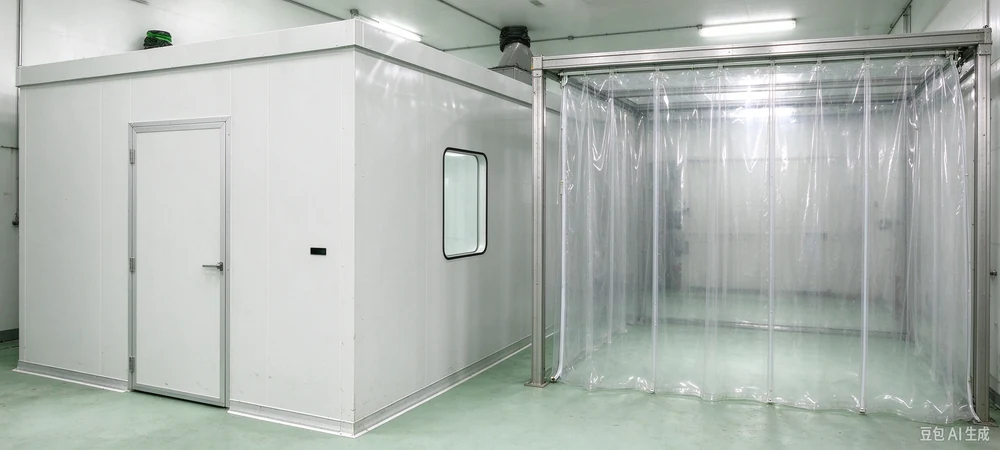
Compare the complete enclosure and airflow concept, not only the wall material.
| Decision factor | Hardwall cleanroom | Softwall cleanroom |
|---|---|---|
| Boundary | Rigid panels with defined doors, joints, and penetrations | Flexible curtains or strips suspended from a frame |
| Pressure control | Usually easier to define and maintain in a sealed envelope | More dependent on curtain gaps, movement, and the host room |
| Environmental control | Better suited to integrated temperature, humidity, and pressure systems | Often used for localized particle control within an existing space |
| Access | Through designed doors, airlocks, or material-transfer points | Through overlapping strips, curtain openings, or simple doors |
| Cleaning | Rigid cleanable surfaces; joints and seals still require inspection | Curtains are accessible but can flex, scratch, or need replacement |
| Change | Modular systems can change, but services and requalification add work | Usually simpler to relocate, resize, or reconfigure |
| Cost direction | Typically higher initial scope when fully enclosed and integrated | Typically lower initial scope for a simple localized zone |
| Option | Practical profile |
|---|---|
| Hardwall | Defined rigid boundary; stronger platform for pressure control, doors, utilities, and long-term operation. |
| Softwall | Flexible curtain boundary; useful for rapid, accessible, localized, and reconfigurable clean zones. |
| Both | Must be tested against the specified particle class and occupancy condition. |
The decisive distinction
A wall system is part of a contamination-control design. Filtration, air distribution, return paths, personnel, equipment, garments, cleaning, and operating discipline all affect measured performance.
What the comparison does not prove
It does not prove a cleanliness class, a pressure tolerance, a service life, or a compliance outcome. Those require a written specification and documented verification.
How Airflow and Pressure Behave
Both designs can supply HEPA-filtered air, but their return-air and leakage paths differ. Air follows the pressure field and available openings, so the enclosure changes how predictably designers can manage flow.
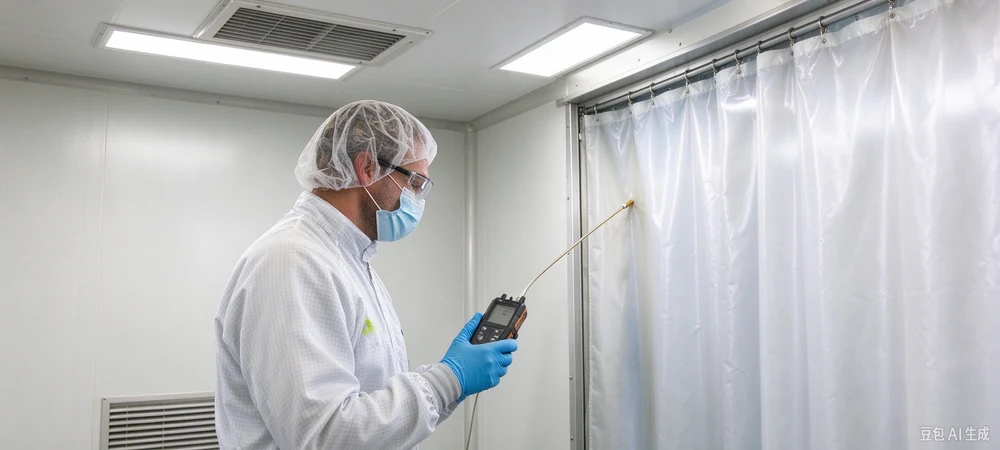
Airflow performance depends on supply, return, leakage, process heat, people, and equipment.
Hardwall control strategy
Rigid panels, fitted doors, and sealed penetrations create a more defined leakage boundary. This can support a pressure cascade between rooms, controlled return grilles, alarms, and integrated heating, cooling, or dehumidification.
Softwall control strategy
Filtered air commonly enters from fan filter units above the work zone and exits beneath or between curtains. The system may protect a local process effectively, but nearby doors, drafts, equipment heat, and curtain movement can influence the pattern.
Measurements to specify
- Target iso class and particle sizes, with the required occupancy state.
- Airflow volume or velocity and an agreed uniformity method.
- Room pressure relationships, alert limits, and response actions.
- Airflow visualization at critical operations and during interventions.
- Recovery, temperature, and relative-humidity criteria where relevant.
Cleaning, Materials, and Maintenance
Cleanability depends on surface finish, geometry, chemical compatibility, and the maintenance program. A smooth panel is useful only when seals, corners, doors, and penetrations are also accessible and kept in good condition.
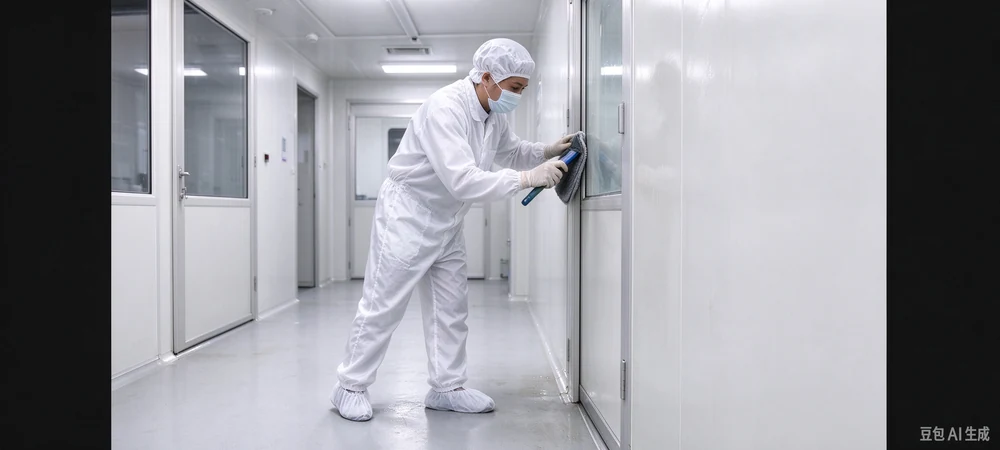
Cleaning procedures should match the material, contaminant, and process risk.
Cleanability questions for procurement
- Which detergents, disinfectants, and contact times are approved?
- Will the surface shed, craze, discolor, corrode, or retain residue?
- Can operators reACH both sides of curtains and all panel joints?
- How are damaged seals, strips, doors, and panels inspected and replaced?
Maintenance is part of contamination control
Flexible curtains can be easy to access, yet repeated contact may scratch or deform them. Rigid panels resist movement, but failed sealant or damaged joints can create retention points. Inspection frequency should follow risk and observed condition, not a universal calendar.
Installation and Reconfiguration
A softwall unit can often be assembled inside an existing room with limited building work. A hardwall project may require coordinated walls, ceiling, doors, controls, fire provisions, electrical services, process utilities, and HVAC interfaces.
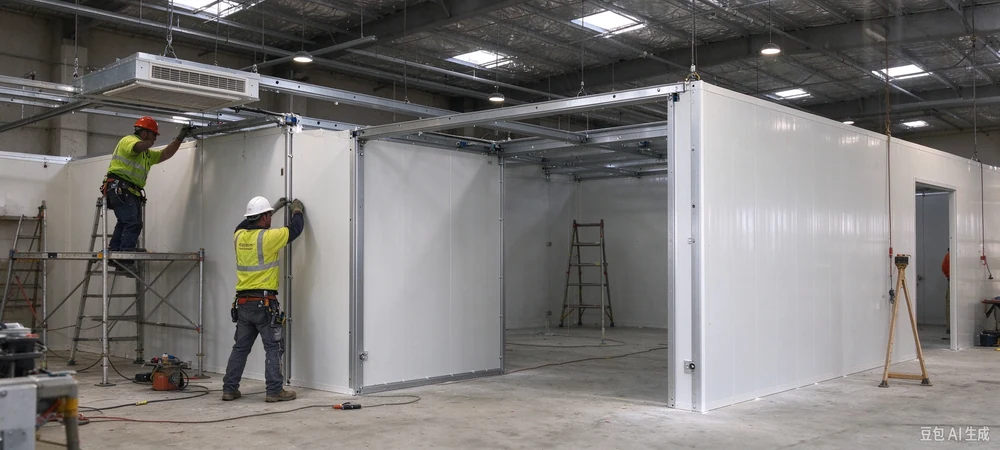
The host building and utility interfaces often determine the real installation effort.
Softwall deployment
Softwall construction suits a defined clean zone where the surrounding room already supports suitable temperature, humidity, power, floor condition, and housekeeping. Portability does not remove the need for safe anchoring, clearance, and testing.
Modular hardwall deployment
Prefabricated panels can reduce wet construction and allow future changes. However, relocating a qualified room still affects ducts, sensors, doors, utilities, finishes, and documentation.
Requalification after change
After a material change, use a documented impact assessment. Particle classification, airflow volume, filter integrity, pressure, recovery, or other tests may need repeating according to the approved change-control plan.
Cost and Lifecycle Value
There is no credible universal price gap between the two designs. Size, class, airflow, utilities, controls, finishes, site conditions, validation, freight, and local labor can change the result more than the wall label.
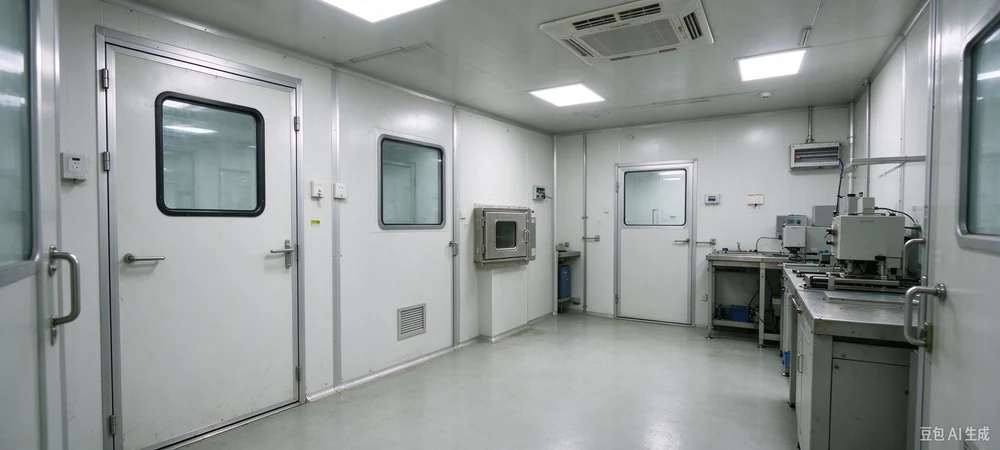
Compare equal requirements and equal boundaries before comparing quotations.
Compare equal scopes
A practical lifecycle model is: total cost = purchase + site work + utilities + commissioning + energy + cleaning + maintenance + replacement + change and requalification costs. Use the same study period and production assumptions for each option.
Cost inputs that change the answer
- Number of fan filter units and annual operating schedule.
- Cooling and dehumidification load from people and equipment.
- Doors, airlocks, pass-throughs, monitoring, and automation.
- Curtain replacement, panel repair, filter service, and downtime.
- Expected moves, expansions, or process changes.
Do not publish a Deiiang™ cost percentage or payback claim until an approved quotation and calculation define the compared scope.
Applications and Selection Scenarios
The best application is defined by process risk and the required controls. Industry labels can guide early discussion, but they cannot replace a user requirement specification, risk assessment, and qualification plan.
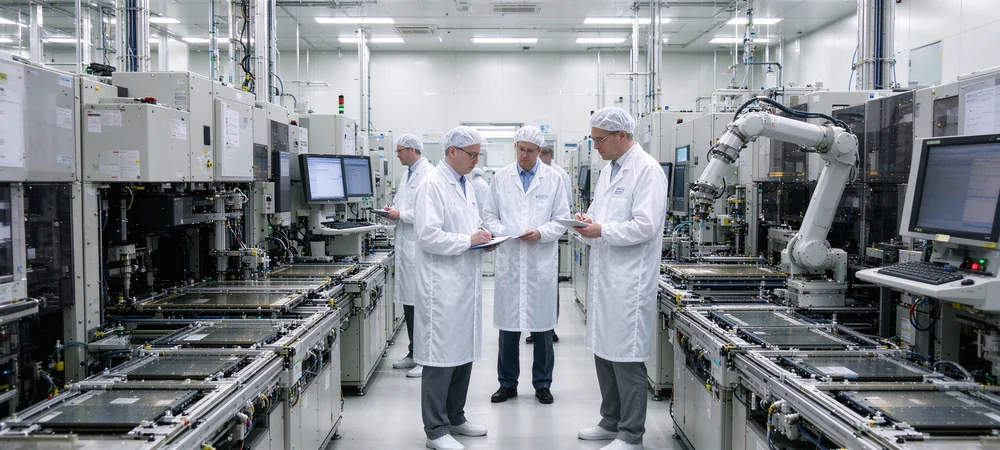
Start with the product, process, people, and contamination pathways.
When softwall may fit
Consider it for localized assembly, inspection, equipment protection, pilot work, temporary capacity, or a process that benefits from frequent access. Confirm that the host room and curtain-return arrangement can support the target condition.
When hardwall may fit
Consider it where stable pressure relationships, restricted access, integrated utilities, defined material flow, temperature or humidity control, frequent sanitization, or long-term regulated operation are central to the design.
When neither label is enough
Hazard containment, potent compounds, biological safety, explosive atmospheres, sterile processing, or very low humidity require specialist engineering. These needs can change airflow direction, exhaust, materials, safety systems, and validation.
What Are Hardwall and Softwall Cleanrooms?
These terms describe enclosure construction. They do not by themselves state particle class, airflow pattern, sterility, or regulatory status.
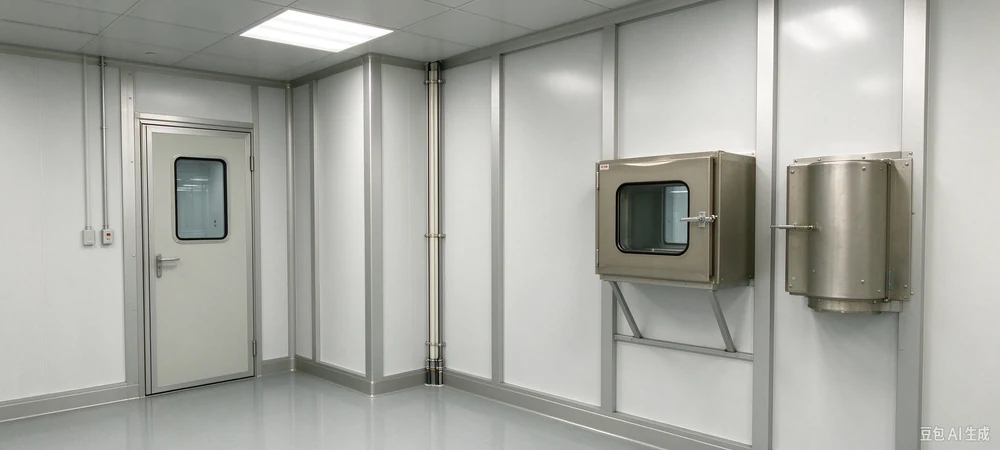
Wall construction is one design variable within the complete controlled environment.
Hardwall construction
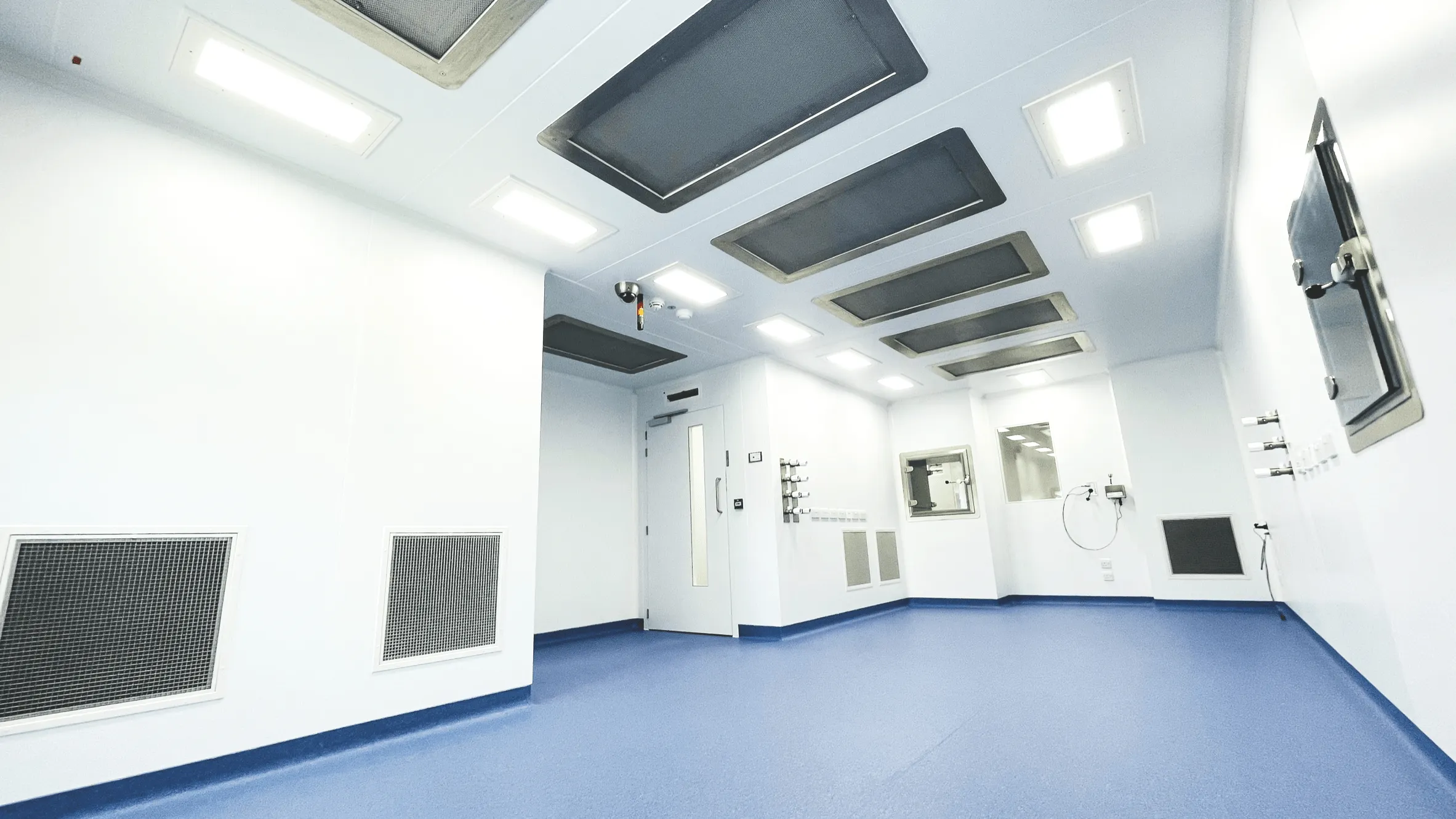
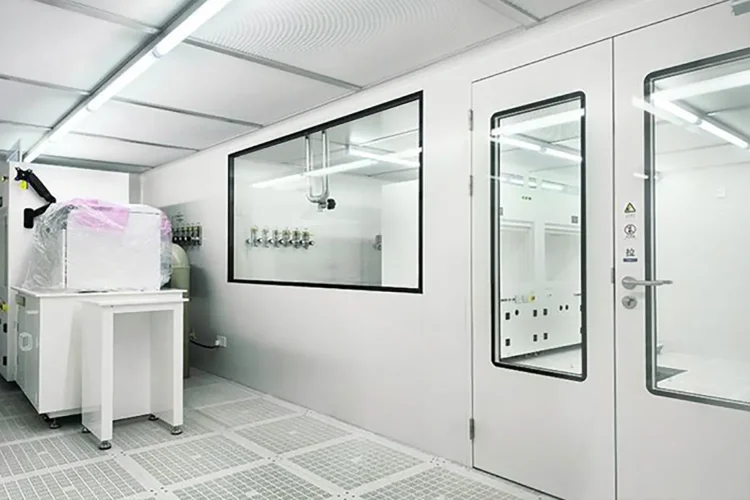
A hardwall cleanroom uses rigid panel surfaces supported by a structural system. Depending on the design, it may include sealed joints, flush windows, fitted doors, return-air paths, service chases, coving, and a walkable or non-walkable ceiling.
Softwall construction
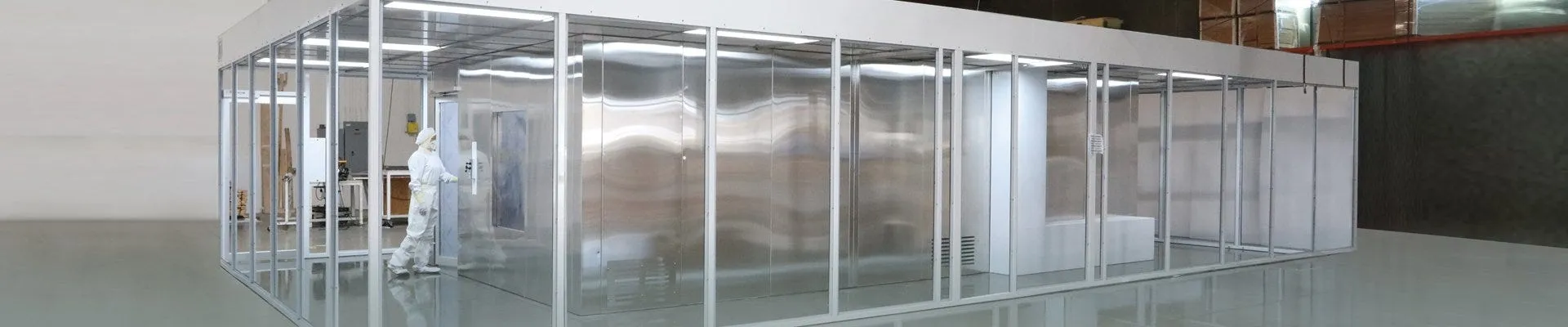
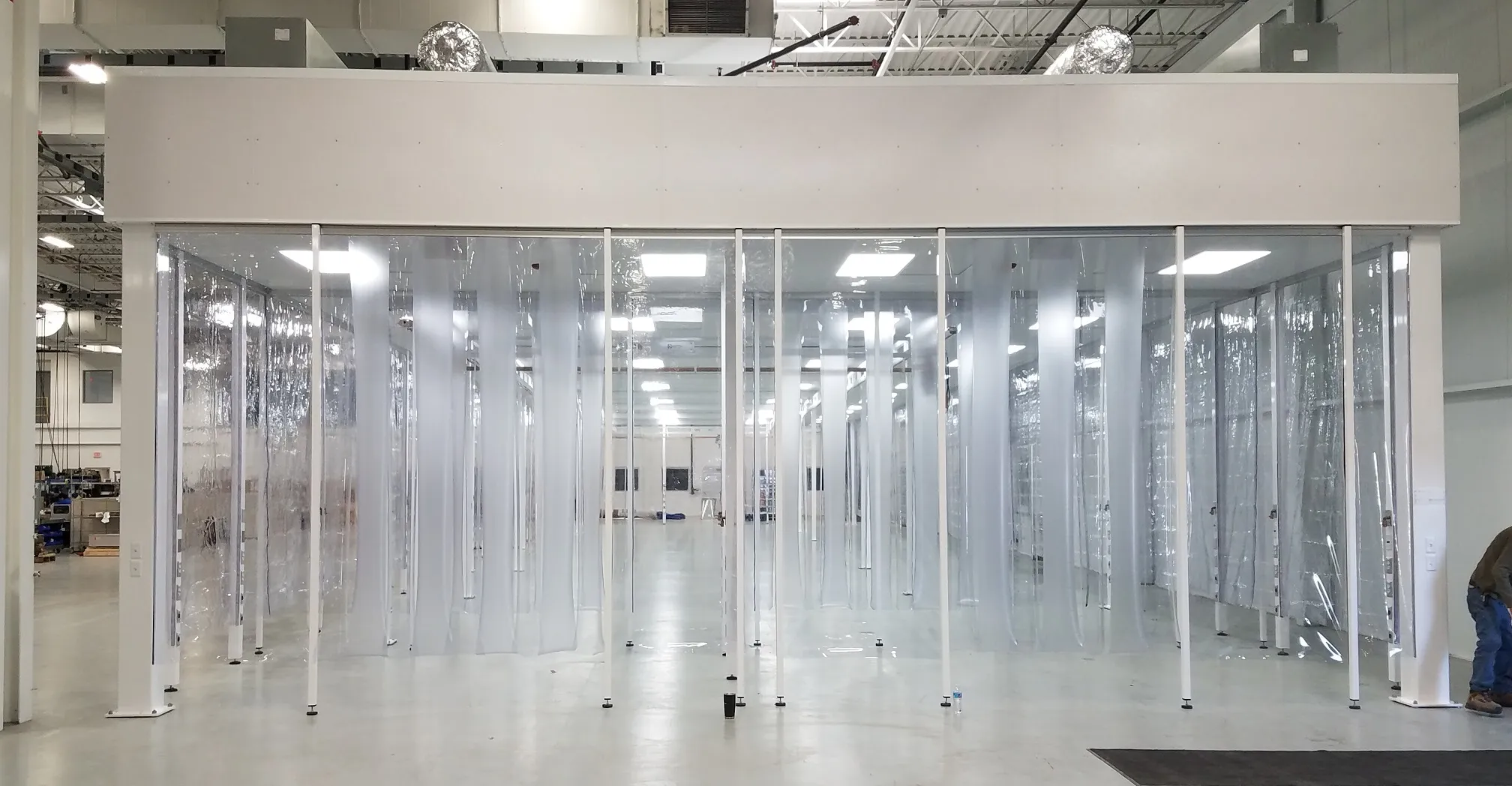
A softwall cleanroom uses flexible sheet curtains or overlapping strips around a frame. Fan filter units are commonly mounted above. The curtains form a practical boundary while allowing access and air discharge around the perimeter.
What Types of Cleanrooms Are Available?
Cleanrooms can be described in several independent ways. Mixing these categories creates confusion—for example, “modular” describes a construction approach, while “iso class 7” describes measured airborne particle cleanliness.
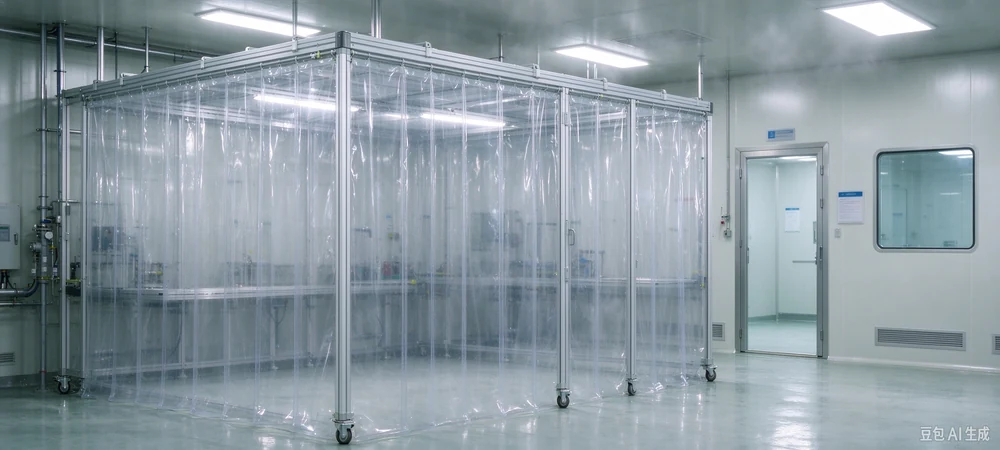
A complete specification uses several categories together.
| Category | Examples | Question answered | Not established by the category |
|---|---|---|---|
| Enclosure | Hardwall, softwall, isolator, mini-environment | What forms the boundary? | ISO class |
| Airflow | Unidirectional, non-unidirectional, mixed | How is clean air distributed? | Sterility assurance |
| Construction | Modular, conventional, prefabricated | How is it built and changed? | Measured performance |
| Classification | ISO Class 1 through ISO Class 9 | What particle limit was demonstrated? | Microbial status |
| Category | Meaning |
|---|---|
| Enclosure | Hardwall, softwall, or separative boundary |
| Airflow | Unidirectional, non-unidirectional, or mixed |
| Construction | Modular, conventional, or prefabricated |
| Classification | Measured airborne particle concentration |
Avoid mixing independent categories
A modular room may be hardwall or softwall. Either may use fan filter units. The project must separately define class, occupancy state, airflow, pressure, temperature, humidity, monitoring, and process-specific controls.
What Is a Hardwall Cleanroom Used For?
Hardwall construction is often selected when the controlled space needs a durable boundary and predictable interfaces for doors, services, return air, monitoring, and routine operations.
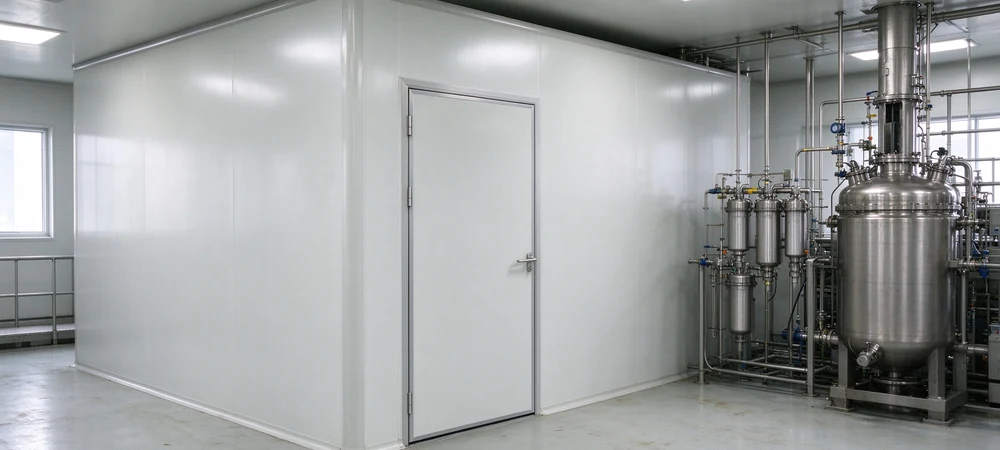
The use case should be tied to written process requirements.
Process-driven examples
Potential uses include medical-device assembly, electronics, precision manufacturing, pharmaceutical support spaces, laboratories, and controlled packaging. Suitability depends on the exact product risk, regulation, and verified room performance—not the sector name alone.
Evidence needed for a Deiiang case study
Before adding a project story, obtain approved site photos, floor area, target class, occupancy condition, airflow concept, project challenge, installed scope, test records, result, date, and customer publication permission. Without that evidence, present the passage as a design example rather than a completed case.
Cleanroom vs Aseptic Room: Are They the Same?
No. A cleanroom controls and classifies airborne particles. Aseptic processing also requires a contamination-control strategy addressing microorganisms, people, interventions, materials, sterilization, monitoring, and product exposure.
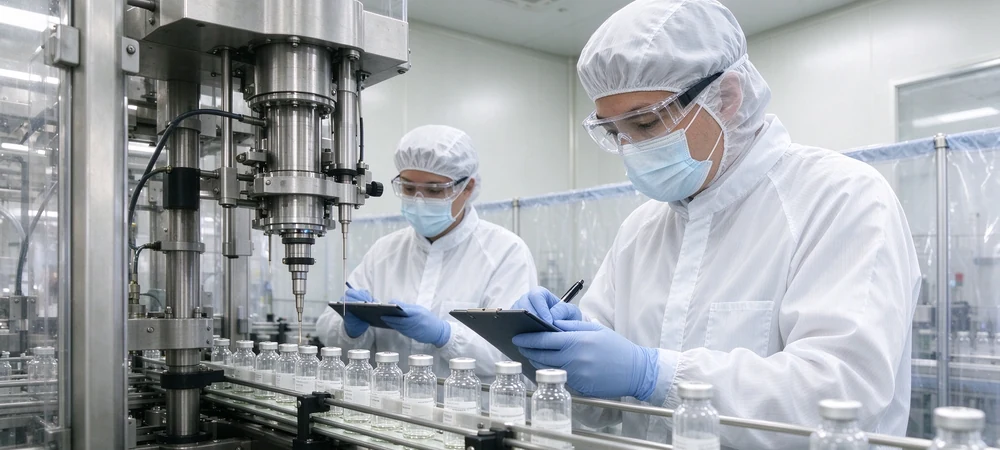
Particle classification alone is not proof of aseptic process control.
Why the distinction matters
EU GMP Annex 1 and FDA aseptic-processing guidance describe controls for sterile medicinal-product manufacture. A room can meet a particle class without meeting every expectation for aseptic processing. Intended use and applicable regulation must be identified before design begins.
For sterile manufacturing, involve quality, microbiology, process, validation, and engineering teams. Do not choose a softwall or hardwall format first and attempt to fit the contamination-control strategy around it later.
Dry Room vs Cleanroom: What Changes?
A dry room controls moisture, often using a low relative humidity or dew-point criterion. A cleanroom controls airborne particle concentration. One space may need either function or both.
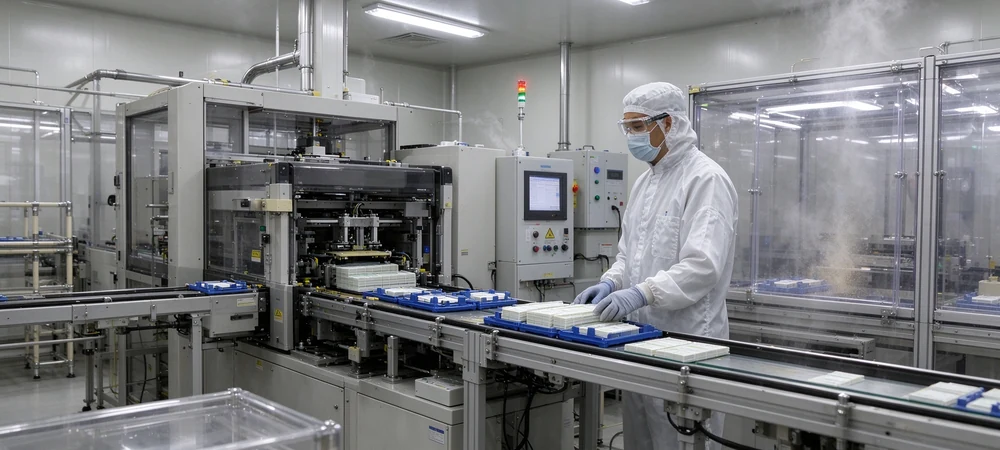
Humidity and particle limits are separate engineering and acceptance criteria.
Requirements can overlap
Battery, pharmaceutical, and precision processes may be sensitive to both particles and moisture. Low dew point can add substantial dehumidification load and place stricter demands on envelope leakage, door openings, personnel flow, and material transfer.
Specify separate acceptance criteria
- Particle class, particle sizes, sampling plan, and occupancy state.
- Relative humidity or dew point, tolerance, mapping method, and recovery time.
- Pressure relationships, door-open events, and alarm response.
- Product load, people load, equipment load, and operating schedule.
What Is the Cleanest cleanroom class?
Within ISO 14644-1, ISO Class 1 is the lowest-numbered and most stringent class. That fact does not mean ISO Class 1 is the best target for every product or operation.
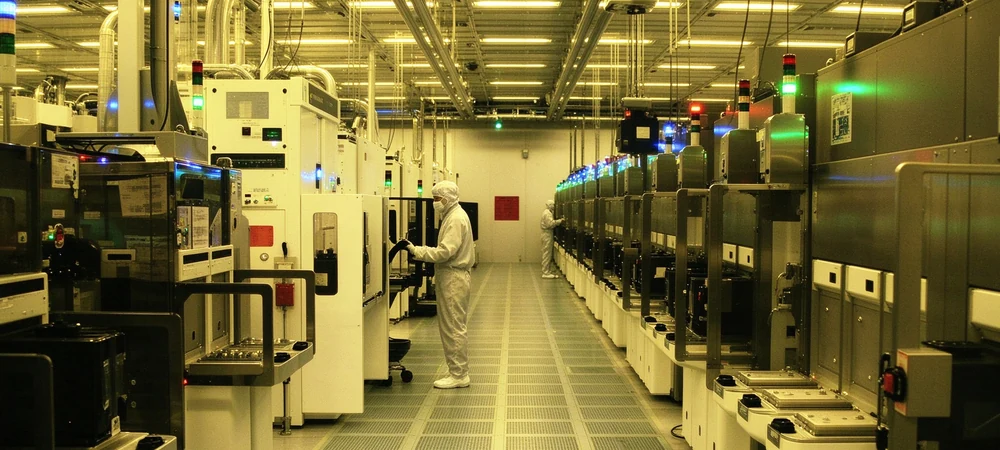
Select the class justified by process risk, then verify it by measurement.
Classification is measured, not assumed
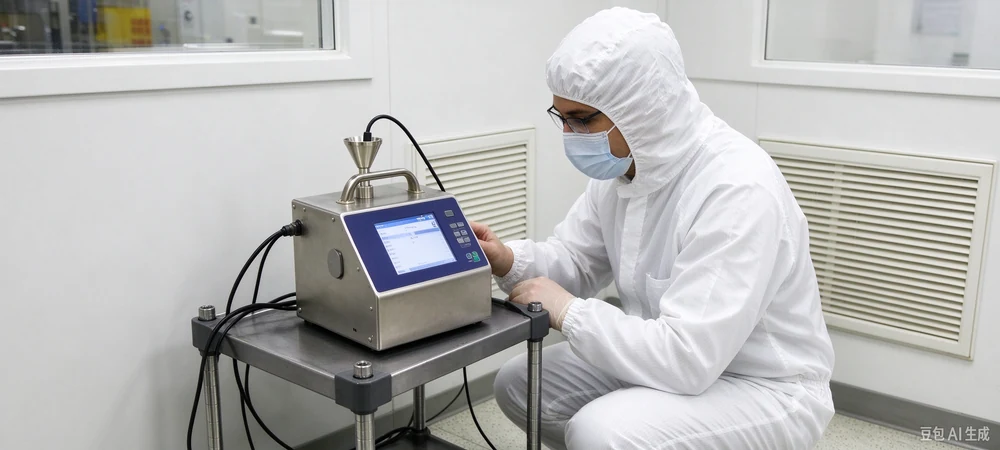
iso 14644-1 bases classification on airborne particle concentration at designated sampling locations. iso 14644-3 describes test methods for cleanrooms and clean zones in as-built, at-rest, and operational states.
Cleaner is not automatically better
An unnecessarily stringent class can increase airflow, cooling, filtration, monitoring, and qualification burden without improving the process outcome. Select limits through risk assessment and applicable regulatory or customer requirements.
Frequently Asked Questions
These answers address the questions buyers most often ask after comparing the enclosure types. Final decisions should still be based on a project-specific requirement and risk assessment.
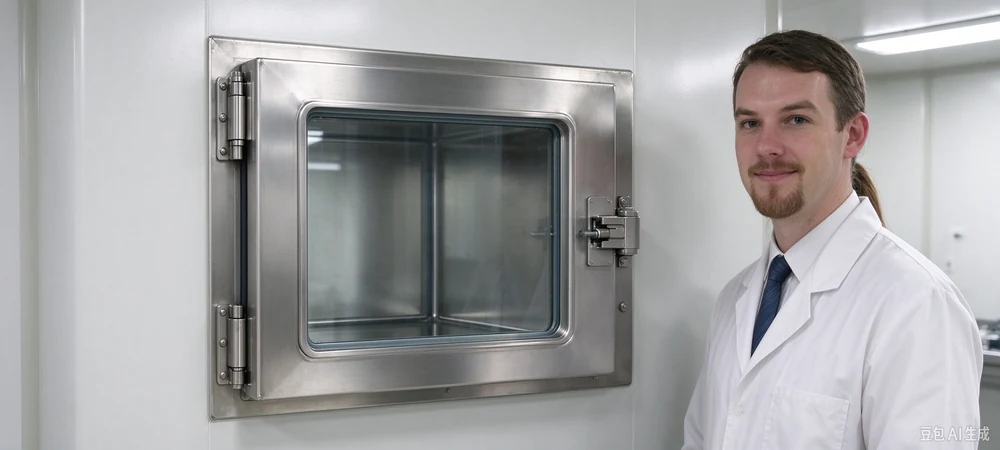
What is the main difference between a hardwall and a softwall cleanroom?
A hardwall cleanroom uses rigid enclosed panels, while a softwall cleanroom uses flexible curtains around a supporting frame. The structure affects pressure control, integration, cleaning, durability, access, and reconfiguration.
Can a softwall cleanroom meet an ISO cleanliness class?
Yes, if the installed clean zone is designed, operated, and tested to meet the specified particle limits. The wall label alone does not establish compliance.
Is a hardwall cleanroom always cleaner than a softwall cleanroom?
No. A hardwall envelope may make stable control easier, but cleanliness is demonstrated by qualification and monitoring. Airflow, filtration, people, equipment, procedures, and maintenance remain decisive.
Which option is easier to move or expand?
A curtain-based softwall unit is usually simpler to relocate. Modular hardwall systems can also change, but services, sealed joints, doors, controls, and requalification add work.
How should I choose between hardwall and softwall construction?
Start with process risk, class, pressure, temperature, humidity, cleaning, workflow, utilities, validation, project duration, and lifecycle cost. Compare designs against the same written user requirement specification.
Conclusion: Choose by Required Control, Not by Wall Label
A softwall cleanroom is often attractive for a localized, accessible, and adaptable clean zone. A hardwall cleanroom is often stronger when a defined envelope, integrated services, pressure relationships, and long-term operation are required.
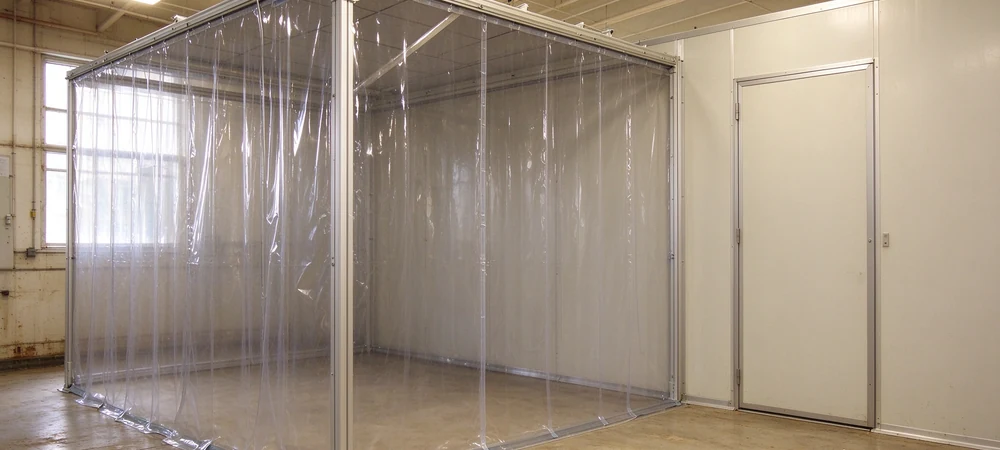
The defensible choice is the design that meets verified process requirements over its lifecycle.
Before requesting proposals, complete this short checklist:
Define the process, contamination risks, and applicable regulations.
State the ISO class, particle sizes, and occupancy condition.
Set airflow, pressure, temperature, humidity, and monitoring needs.
Map people, materials, waste, doors, equipment, and utilities.
Agree on tests, acceptance criteria, documents, training, and service.
When consulting a supplier such as Deiiang™, ask for a documented design review and evidence tied to the proposed configuration. Any public case study should use approved project records rather than estimated outcomes.
Suggested technical-review credit, subject to company approval: Product Designer Jason Peng.
References
The sources below define classification, monitoring, testing, and sterile-manufacturing expectations. They should be read together with applicable local regulations, customer standards, and the purchased editions of relevant standards.
- iso 14644-1:2015 — Classification of air cleanliness by particle concentration
- iso 14644-2:2015 — Monitoring to provide evidence of cleanroom performance
- iso 14644-3:2019 — Test methods
- U.S. FDA — Sterile Drug Products Produced by Aseptic Processing
- European Commission — EU GMP Annex 1: Manufacture of Sterile Medicinal Products